Used Porsche Panamera (Mk2, 2016-2023) buyer’s guide: a family car that’s guaranteed to make you smile
A full used buyer’s guide on the Porsche Panamera covering the Panamera Mk2 that’s was on sale between 2016 and 2023

Verdict
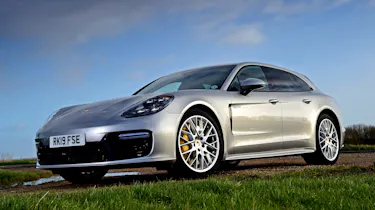
There’s a whole generation of car nuts who have grown up thinking of Porsche as a builder of family cars as much as sports cars, and when they’re as good as the Panamera (or the Macan and Cayenne), that’s understandable. Of course, the Panamera is expensive to run, and you could argue that it’s costly to buy, but in a world where the £40,000 Vauxhall Corsa exists, is this sleek five-door Porsche really that expensive? While running costs will be high, the Panamera is one of the most capable luxury cars at any price, and is superb to drive. Buy a nice one, look after it, and it’ll be all the car you could ever need.
For some enthusiasts, the only proper Porsche is a coupé with an engine in the back – even better if it’s an air-cooled flat-six. But Porsche moved on from there many years ago, with the mid-engined Boxster, the front-engined (and big-selling) Macan and Cayenne SUVs, plus the Panamera four-seat luxury saloon.
The latter was launched in 2009, and while its exterior design was challenging, the car sold well. The Panamera was such a success that an all-new model went on sale in 2016, with a sleeker exterior, more efficient engines, a much-improved interior and even greater dynamic abilities. The Mk2 was so good that the Mk3, which has just been launched, is in effect a comprehensive update, rather than an all-new model.
History
The Mk2 Panamera arrived in November 2016. On offer were the 434bhp 2.9 V6 4S, the 542bhp 4.8 V8 Turbo and the 416bhp 4.0 V8 4S Diesel. The 455bhp Panamera 4 E-Hybrid plug-in hybrid joined the range soon after, with a 2.9-litre V6 petrol engine.
In the summer of 2018, the Turbo S E-Hybrid arrived, packing a 4.0-litre V8 engine and a monstrous 680bhp. This version was launched alongside the Sport Turismo shooting brake with the same powertrain options, then in December 2018 came the GTS, with a 434bhp 4.8 V8.
Used - available now

2020 Porsche
Panamera
80,570 milesAutomaticPetrol2.9L
Cash £31,995
2023 Porsche
Panamera
34,000 milesAutomaticPetrol2.9L
Cash £57,989
2023 Porsche
Panamera
23,700 milesAutomaticPetrol2.9L
Cash £56,033
2025 Porsche
Panamera
32,400 milesAutomaticPetrol2.9L
Cash £59,990A facelift in September 2020 saw the 611bhp Turbo S replace the Turbo, the GTS gain 19bhp, and the 544bhp 4S E-Hybrid join the line-up. The Panamera’s exterior design was refreshed, and Porsche boosted the equipment levels, too.
Prices
Almost half of the cars for sale are plug-in hybrids, virtually all are V6s, but there are a few Turbo S E-Hybrids. Diesels are rare. The Panamera isn't cheap to buy, but there are plenty on the market. In fact, you can buy a used Porsche Panamera for under £25,000 through our Buy a Car service.
To check prices on a specific Porsche Panamera head over to our valuation tool.
Which one should I buy?
The Panamera Diesel is a fabulous car and one that’s well worth considering, but it’s very rare, so you’ll have to search hard to buy one. That leaves the option of either a petrol model or a plug-in hybrid; both of these are superb to drive and have lots of power. Even the entry-level 3.0-litre V6 petrol edition has 325bhp and more than enough performance. After that you just get greater power and bigger bills, so buy according to the depth of your pockets.
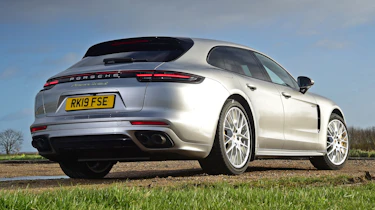
The E-Hybrids can be relatively frugal, but how you drive them and the type of journeys that you undertake make a huge difference to fuel economy and therefore running costs. And don’t overlook the Sport Turismo, which is as good as the hatch in every way, but usefully more practical.
Alternatives to the Porsche Panamera
The Audi A7, S7 and RS 7 are the Panamera’s only true rivals in that they offer five-door hatchback practicality with plenty of performance and cutting-edge tech. While Audi’s trio is great to live with, they are not as enjoyable to drive as the Porsche. The Mercedes CLS and AMG GT four-door coupé are worthy adversaries, too, but because they are saloons, they don’t have the ultimate practicality of the Panamera, although there’s always the CLS shooting brake option.
The BMW 8 Series Gran Coupé is another luxurious coupé-like four-door saloon that’s superb to drive, hi-tech and searingly quick with the right engine. A more left-field option is the Maserati Quattroporte, which looks great and is fun to drive. Or how about an Aston Martin Rapide? Its V12 engine makes it more special than the Porsche, but it’s not as slick overall.
What to look for
Four-wheel drive
All Panameras come with the security of all-wheel drive, apart from the rear-wheel-drive Diesel and 3.0 V6 petrol.
Chassis
Air suspension wasn’t standard on entry-level models. Most examples do have it, but not all, and it’s well worth having for a small premium.
Models
The Sport Turismo estate model carried a £3k or so premium over the regular Panamera. On the used market the difference is a bit less.
Electric range
Porsche claimed that its hybrid Panameras could do around 38-40 miles on a full charge. Expect to get around 30 miles in the real world.
Common faults
You're going to pay plenty in insurance and fuel, while road tax will be steep if the example is less than six years old. Maintenance also tends to be expensive, but a good independent can help to slash costs here, without cutting quality or mucking up the service history.
Interior
Porsche didn’t skimp on the cabin materials, with plenty of leather trim, or Alcantara for the GTS. The dashboard features large digital displays and the infotainment is wonderfully slick.
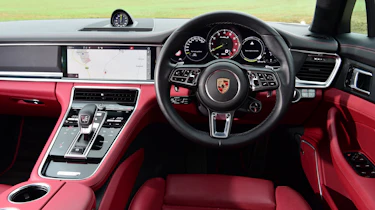
Most Panameras are four-seaters (there was a five-seat option from 2018), but there’s space for adults in the back. The Sport Turismo is even better in this respect, while Porsche also offered an Executive saloon with a wheelbase extended by 150mm.
Boot capacity is 500 litres, or 1,340 litres with the back seats folded; the Sport Turismo offers 520 or 1,390 litres.
Running costs
The Panamera needs to be serviced every two years or 20,000 miles, although Porsche recommends an annual check. An oil and filter change (along with a check-over of the car) costs £691. Get the brake fluid changed (due every two years) and this adds £159 to the bill, while fresh spark plugs are needed every four years, and Porsche charges £486 to replace these.
A change of oil for the rear differential is needed every 12 years or 120,000 miles, at a cost of £327, while the automatic gearbox oil has to be renewed every six years or 60,000 miles, at £616. There’s no set schedule to replace the coolant, and because the Panamera’s various engines are all chain driven, there are no cambelts to replace. All Panameras come with a three-year warranty as standard, which can be extended by up to 15 years.
Recalls
The Panamera Mk2 has been recalled 11 times, first in July 2017 because of faulty exhausts. There were three campaigns in 2018: accelerator pedal glitches (April), rear suspension problems (June) and failure of the electric power steering (December), and there were four in 2019. These centred on faulty brake pad wear software (March and November) and damaged power steering wiring (June), while the November campaign was because of excessive exhaust emissions.
There was one recall in 2021, due to sub-standard front suspension parts, and two actions were issued in 2023. The first came in April because of water getting into the climate-control system, leading to short circuits, while in July a campaign was launched because some rear seatbelts weren’t installed correctly.
Driver Power owner satisfaction
Porsche doesn’t sell enough Panameras for the model to get into our Driver Power surveys. The firm has just 0.75 per cent of the UK market, but that didn’t stop it coming top in our 2021 Brands survey. Porsche repeated the feat in 2022 and 2023, thanks to finishing first in the exterior, ride and handling, reliability and infotainment categories. It’s only value for money and running costs where things fall down.
Used Porsche Panameras for sale
2020 Porsche
Panamera
80,570 milesAutomaticPetrol2.9L
Cash £31,9952023 Porsche
Panamera
34,000 milesAutomaticPetrol2.9L
Cash £57,9892023 Porsche
Panamera
23,700 milesAutomaticPetrol2.9L
Cash £56,0332025 Porsche
Panamera
32,400 milesAutomaticPetrol2.9L
Cash £59,990
2023 Porsche
Panamera
53,000 milesAutomaticPetrol2.9L
Cash £53,989
2020 Porsche
Panamera
93,000 milesAutomaticPetrol2.9L
Cash £29,995
2025 Porsche
Panamera
29,391 milesAutomaticPetrol2.9L
Cash £64,990
2023 Porsche
Panamera
33,698 milesAutomaticPetrol2.9L
Cash £59,990
2023 Porsche
Panamera
5,500 milesAutomaticPetrol2.9L
Cash £66,990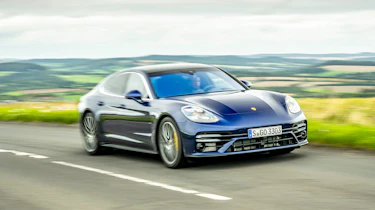
Porsche Panamera: what we said
Extracts from our Porsche Panamera test drive in October 2022
The Porsche Panamera Mk2 is a massive step on compared to its predecessor. It uses a new platform and features new engines, while the interior has also been improved. It even looks a lot more attractive than before, with sleeker lines and some interesting, eye-catching design details.
It rides like a proper luxury car, but the chassis still delivers the capability you expect from a Porsche when it comes to driving enjoyment.
Combined with a big hatchback, a sizeable luggage bay and with so much tech crammed into the cabin, it all makes the Panamera an incredibly easy car to live with. As well as one that’s comfortable and rewarding enough to drive to suit any mood.
Engines, performance and drive
Porsche is known for its sports cars, and even with its more refined models like the Panamera, it’ll outperform many rival brands.
The latest car has an all-new chassis, so the Panamera is more practical, but also more agile. There’s more aluminium used in the car's construction, so for its size it’s relatively light at 1,900kg, although it's worth noting the hybrid models, with the extra battery weight, range from around 2,200kg to 2,400kg.
The Panamera sits on the VW Group’s MSB platform for front-engined cars, which Porsche has been responsible for developing. The German manufacturer says this gives it “great versatility” as it means two different wheelbases (standard and long) can be produced, while “further body derivatives are also relatively easy to realise." One result is that there is a Panamera Sports Turismo estate on offer.
A facelift in 2020 saw the Turbo edition replaced with the Turbo S. It has a retuned version of the car’s familiar 4.0-litre twin-turbocharged V8 engine and produces 621bhp and 820Nm of torque - gains of 79bhp and 50Nm over the outgoing Turbo. It can crack 0-62mph in just 3.1 seconds, and reach a top speed of 196mph. The Turbo S gets a unique front-end look, with twin light bars and more body-coloured elements in the front bumper, to make the vehicle look wider.
Porsche also introduced the 4S E-Hybrid and Turbo S E-Hybrid. The former combines a 134bhp electric motor with a 2.9-litre twin-turbocharged V6 petrol engine producing 435bhp, delivering a total output of 552bhp and 750Nm. The more powerful Turbo S E-Hybrid uses a 4.0-litre V8 unit in tandem with the same electric motor to give a 690bhp output.
The new E-Hybrid versions feature a bigger battery than previous Panamera hybrids (up from 14.1kWh to 17.9kWh), allowing up to 31 miles of pure-electric drive.
GTS versions now include a re-tuned twin-turbo V8 unit, producing 473bhp and 620Nm (a 20bhp increase). Porsche claims the alterations have made the engine feel more like a normally aspirated motor, being keener to rev. The regular Panamera and Panamera 4 continue to use the existing 2.9-litre V6, with an unchanged power figure of 326bhp.
The Panamera's steering has just the right level of weight and feedback, while the grip and traction would embarrass some sports cars. Plus, the Panamera has real poise and balance considering its two-tonne weight. Taut body control aside, the Porsche switches to a luxury limo when you move from Sport Plus to Comfort mode.
0-62mph and top speed
Pick any Panamera version and you won't be lacking in raw performance. The 'standard' 326bhp Panamera and Panamera 4 are able to reach 0-62mph in 5.6s and 5.3s, respectively, while the 434bhp 4S variant cuts this to a seriously quick 4.3s.
The 4 E-Hybrid manages the same dash in 4.4s and the 4S E-Hybrid in 3.7s, with the GTS recording a time of 3.9s and a 186mph maximum.
At the top of the range, the Panamera Turbo S E-Hybrid and Turbo S models would keep most supercars honest with 0-62mph times of 3.2s and 3.1s, respectively. Top speed for both cars is 196mph.
MPG and CO2
As part of the Panamera’s engine line-up, all V8 variants get cylinder deactivation technology that will shut down some of the unit’s injectors on the move when maximum power isn’t needed, helping to save fuel.
Unsurprisingly, the 4 E-Hybrid is the most efficient Panamera on sale, with Porsche claiming up to 141.2mpg under WLTP testing and CO2 emissions between 45g/km and 57g/km. To realise this exceptional economy figure, you'll need to keep the battery topped-up and regularly exploit the 30-35 miles of all-electric drive.
The more powerful 4S E-Hybrid and Turbo S E-Hybrid still manage to return decent overall economy (128.4mpg and 104.6mpg, respectively) with just a slight drop in pure electric drive capability.
Move up through the increasingly powerful petrol models and you see obvious reductions in efficiency and higher emissions. The Panamera 4 achieves up to 27.2mpg, with CO2 emissions from 235g/km, while the GTS delivers 23.3mpg and a significant jump to 275g/km of CO2.
Predictably, the efficiency of the 4.0-litre V8 Turbo S isn't quite as good, with 22.1mpg and CO2 emissions of 289g/km. As ever, you may not match any of these numbers if you choose to exploit the Panamera's full performance.
Interior design and technology
Porsche’s designers tidied up the high transmission tunnel for this second-generation car, and found a way to reduce the button count, introducing a slick glass panel with touch-sensitive controls.
The digital theme is carried over for the instruments, too. Although the car retains Porsche’s trademark central analogue rev counter, either side of this is a seven-inch screen. The left-hand side features the speedometer, as well as various customisable options such as traffic sign recognition, speed limit indication and cruise control information. On-board computer details, such as the fuel gauge, range and economy, feature on the screen to the right of the rev counter, while there’s also the option to view the satellite navigation map.
The GTS model is set apart from the rest of the range with the addition of Alcantara trim for the steering wheel and seats, along with a handful of “GTS” badges for the rev-counter, tread plates and headrests. Opting for the Sport Chrono package adds a stopwatch to the top of the dash.
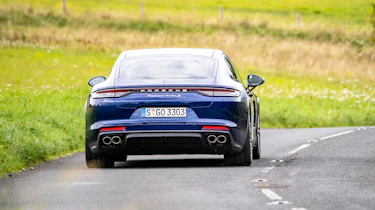
After a facelift in 2020, all Panamera versions now include the Sport Design front end as standard, with larger intake grilles, side cooling and a single-bar front light module. At the rear, there are new LED tail-lights, plus darkened clusters for the GTS variants. Three new alloy wheel designs have also been added to the range.
Sat-nav, stereo and infotainment
The Panamera's multimedia set-up is the most sophisticated system ever in a Porsche. You can turn the car into a Wi-Fi hotspot, connect to apps, get info on fuel prices and link your Apple phone or watch via CarPlay. However, it’s the slick way in which it all works so seamlessly that’s impressive.
Above the centre console there’s a 12.3-inch touchscreen showcasing the next evolution of Porsche Communication Management. Everything is controllable from this display, with even the central air vents opened and closed by sliding your finger up and down the screen. Apple CarPlay is included, while features such as Google Earth, Street View, in-car internet and info on fuel prices are all offered as part of Porsche’s Connect Plus system.
Practicality, comfort and boot space
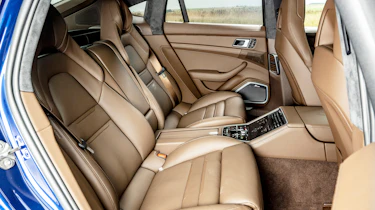
The Panamera range includes the standard car and the Sport Turismo 'shooting brake' estate. While the estate offers more space, the regular Panamera still offers plenty of room in the rear, despite the sloping roofline. The low seating position also means headroom isn’t too much of an issue. The long wheelbase model is 150mm longer, so you’ll definitely not struggle for legroom.
In the front, the rising centre console and high dash cocoon the driver, with plenty of adjustment available for the steering wheel and seats. It gives a sporty atmosphere, but with plenty of luxurious touches. Storage is also acceptable in the front, with a pair of cupholders, a bin between the front seats and long door bins that allow you to stow plenty of stuff.
However, while the Panamera offers lots of space in the rear, it’s only because it seats just four people. How it does this though is exquisite, with lots of opulent extras including business style seats featuring a massaging function.
Size
The Panamera is more than 5m long and nearly 2m wide, so it’s a vast car. The sleek styling means there’s not too much glass area, either, but visibility is actually alright, and even when parking in tight spots it’s not too difficult to manoeuvre.
It’s also low to the ground, but not that difficult to get into the front. Long rear doors open wide and help access to the back – although you’ll have to watch out for that flowing roof.
Leg room, head room & passenger space
As mentioned, legroom inside the Panamera is great; even more so if you go for the Executive model. There’s a good degree of flexibility thanks to the seating, too, while the cabin is at least as roomy as rivals such as high-spec versions of the Audi A7.
Boot
Despite its sloping roofline the regular Panamera offers 500 litres of luggage room up to the edge of the rear seats. Fold these down and boot space increases to 1,340 litres. The other body styles give some flexibility in load carrying capacity, with the Sport Turismo estate able to store a little extra at 520 litres with the rear seats in place and 1,390 litres with them folded. The Executive extended wheelbase variant offers the same boot space as the regular model when the seats are in place, but provides a 100-litre advantage (1,490 litres total) with the seats flat.
The power tailgate means loading bags is easy, although there is a little lip to lift them over and into the boot. There are tie down points to secure loads, while the boot floor is flat and uniform in shape, so you can easily carry bulky items.
Come and join our WhatsApp channel for the latest car news and reviews...