The biggest modern car failures: models that should have changed the world, but didn't
Sometimes things just don’t go to plan, as demonstrated by these promising models that ultimately disappointed

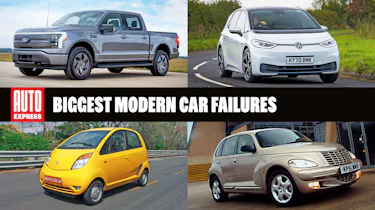
You may have seen our recent feature on the 50 modern cars that changed the world, but what about the expected sure-fire hits that didn’t hit the mark? The cars that looked like they had it all, but whether it was bad execution, bad timing, bad publicity or just bad luck, they instead go down as a what-if or a never-were. Or maybe they’re not remembered at all?
We’re not saying these were necessarily bad cars – some now have cult followings in one shape or another, and others could still be argued to be good cars – but they didn’t hit the giddy heights their makers expected, or we may have predicted.
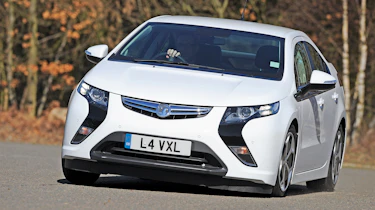
10. Vauxhall Ampera/Chevrolet Volt
- No. built: 100,000
- From: 2010-2015
- Price: from £3,700
- Our pick: 1.4-litre 4cyl petrol range-extender, 150bhp
- Top speed: 100mph
The Vauxhall Ampera sums up much of then-parent company General Motors’ product planning, in that it was probably slightly ahead of its time. But then management killed the car just as plug-in hybrids started to gather pace.
Although the Ampera – and its Chevrolet Volt sister car that was also sold here – were range-extenders rather than plug-in hybrids, the principle of charging at home to get around 25 miles of EV range before switching to petrol power is the same. However, the 1.4-litre petrol engine worked as a generator for the electric motor, rather than powering the wheels.
The car looked fairly stylish, although it rode as if the engineers had forgotten to fit suspension and the boot was borderline pointless. But it was very nearly the right product at the right time.
The decision to end production because of frustratingly slow sales came just months after the Mitsubishi Outlander was launched. Which proved to be the car that put plug-in hybrids on the map, just as Vauxhall dropped theirs.
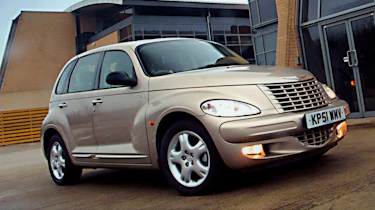
9. Chrysler PT Cruiser
- No. built: 1.3 million
- From: 2001-2010
- Price: from £2,000
- Our pick: 2.4-litre 4cyl, 139bhp
- Top speed: 121mph
The absolute embodiment of a firework car, the PT Cruiser arrived in a blaze of positivity and customer demand, with buyers across the world actually paying over list price to get hold of early models. But that desire quickly burned out and demand came crashing down to earth for a car that fashion quickly moved on from.
The Chrysler was a five-door people carrier that was supposed to bring some US retro cool to a sector dominated by the likes of the Vauxhall Zafira and Renault Scenic, but it dated quickly. Even a quirky two-door convertible version with a chunky rollover hoop couldn’t save a car that, if initial demand had continued, could have changed how family cars looked.
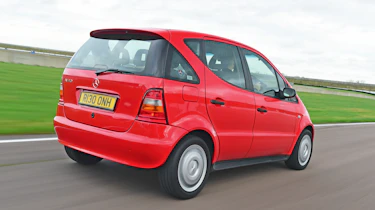
8. Mercedes A-Class
- No. built: 6 million
- From: 1996-present
- Price: from £700
- Our pick: 1.6-litre 4cyl, 101bhp
- Top speed: 113mph
Although the A-Class lives on to this day, and has been given a stay of execution as car makers rethink phasing out petrol models, here we’re looking at the innovative Mk1 car.
Mercedes’ first foray into small hatchbacks was developed with a so-called sandwich floor that meant interior space was comparable with that of a much larger car, but it added cost and complexity. And all the initial positivity around the clever design was turned on its head when a magazine conducting an evasive manoeuvre (the ‘elk test’) rolled an A-Class at 37mph.
The original A-Class never really recovered, despite Mercedes developing an electronic stability system and modifying the suspension. It was probably the firm’s smartest-ever design, but future generations switched to a more conventional chassis offering less space. If Mercedes had made it work, and made money on that sandwich floor, premium small cars could be packaged very differently today.
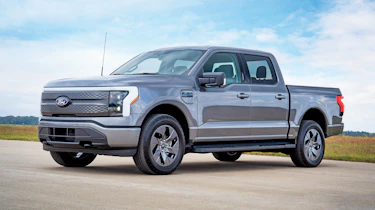
7. Ford F-150 Lightning
- No. built: 90,000
- From: 2022-2025
- Price: N/A
- Our pick: 98kWh, 446bhp
- Top speed: 106mph
The sun set late last year on what was supposed to be the new electric dawn of the big American pick-up truck. Although it was beaten to the punch by Rivian’s R1T, the F-150 Lightning EV was huge news when it was launched in 2022, because Ford’s F-Series pick-ups have long been the biggest-selling vehicles in the United States.
North American buyers didn't jump at the chance to go electric in the way Ford had hoped, though, with those high interest levels not translating into sales. The company is rumoured to have lost considerable amounts of money on each one it did sell, despite the high list price compared with petrol and diesel pick-ups.
Ultimately, the United States wasn’t ready to go electric with its trucks, and the Lightning’s replacement will be a plug-in hybrid to head-off buyers’ concerns, including the impact of towing on range. It’ll meet US drivers halfway in the face of cooling EV demand.
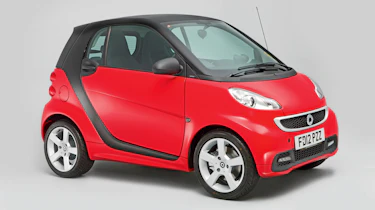
6. Smart ForTwo
- No. built: 2.5 million
- From: 1998-2024
- Price: from £1,200
- Our pick: 0.6-litre 3cyl, 44bhp
- Top speed: 84mph
Clever, cheeky, a bit cool and with a tiny footprint, the Smart ForTwo could have completely transformed urban mobility.
The first small car to have at least a hint of premium about it – thanks more to the brand itself than the admittedly funky-looking but solid plastic interior – the Smart ForTwo was born out of a joint venture between Mercedes and watchmaker Swatch, and was originally called the City Coupé. The compact rear-mounted engine meant the Smart measured less than 2.7 metres long and, where legal, could be parked nose-in to the kerb without sticking out into traffic.
But the semi-premium pricing, bouncy ride (courtesy of the short wheelbase) and the frankly horrific automated manual gearbox – you had to drive around its shortcomings to avoid lurching horribly when changing gear – counted against it. Although the ForTwo carried on through three generations and ended up as an electric-only two-seater, it never really made any money.
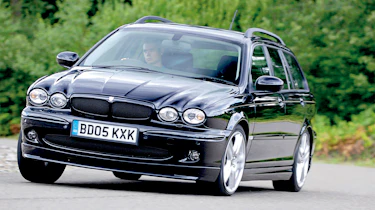
5. Jaguar X-Type
- No. built: 350,000
- From: 2001-2009
- Price: from £1,500
- Our pick: 2.5-litre V6, 193bhp
- Top speed: 138mph
Maybe it’s a stretch to say the X-Type could have changed the world. But Jaguar’s world, intriguing though it is in 2026, would look very different today if its compact executive saloon had succeeded in the way it hoped.
The BMW 3 Series and Mercedes C-Class were flying up and down motorways in big numbers as company cars at the beginning of the century and Jag needed an aspirational entry model to compete. But the X-Type’s design was too ‘old’ Jaguar, relying on hints of the XJ, and the new car was tainted, unfairly, by the accusation of being a Ford Mondeo underneath, despite only 19 per cent of parts being shared.
Another huge problem was that the initial offering – with all-wheel drive and a six-cylinder petrol engine – was the wrong thing for the company car market. And by the time the attractive Estate and more efficient engines with front-wheel drive arrived, the X-Type’s reputation, and its fate, were sealed.
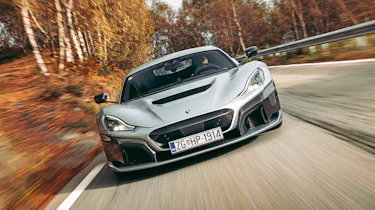
4. Rimac Nevera
- No. built: up to 150
- From: 2022-present
- Price: from £1.6m
- Our pick: 120kWh, 1,888bhp
- Top speed: 256mph
Not for a second will we deny that the Nevera is a spectacular success in a number of ways. But even Rimac’s charismatic owner, Mate Rimac, will admit that the wealthiest of drivers still want a more analogue feeling from their seven-figure supercars.
The Nevera’s production run was initially set at 150 cars, but despite the first delivery taking place in 2022 – to no less a buyer than former Formula One world champion Nico Rosberg – the most recent figures put worldwide sales at about only 50 so far.
The car is capable of a 250mph-plus top speed and a staggering 1.74-second 0-60mph acceleration time, as well as a 300-mile official range – although not all at the same time. So, although the Nevera is an undeniable technical marvel, it’s one that wealthy hypercar buyers don’t appear ready to desire just yet.
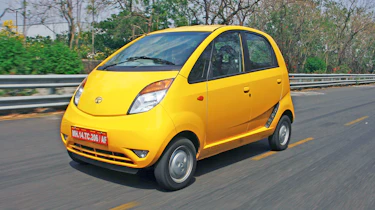
3. Tata Nano
- No. built: 300,000
- From: 2008-2018
- Price: N/A
- Our pick: 0.6-litre 2cyl, 37bhp
- Top speed: 65mph
A tiny car devised to get India off motorbikes and scooters and onto four wheels fell way short of its target of 250,000 sales per year. Heralded as the people’s car for the 21st century ahead of its launch, production delays, rising costs, some bad publicity around early cars catching fire, and concerns about the level of cost-cutting all worked against the little Nano.
That cost-cutting included fitting just a driver’s-side door mirror, a single wiper blade and only three lug nuts per wheel, as well as reduced amounts of steel in the construction. Even the boot was initially only accessible from inside the car, and didn’t actually open.
But the car itself fell between two stools, because it was neither cheap enough to tempt people off two wheels – especially when its prices rose sharply post-launch – nor well finished enough to tempt car drivers.
2. Volkswagen ID.3
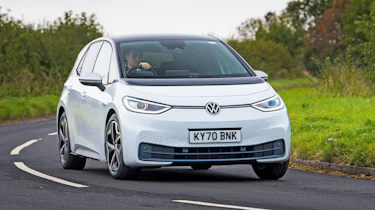
- No. built: Over 600,000
- From: 2020-present
- Price: from £9,000
- Our pick: 58kWh, 201bhp
- Top speed: 99mph
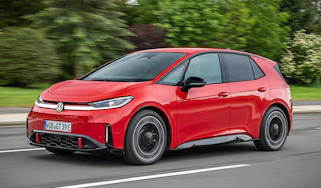
The ID.3 was supposed to be the spiritual successor to the original Beetle and Golf: the people's car for the electric era. But years later, it's not even one of the 10 best-selling EVs in the UK, although VW Group siblings in the form of Skoda’s Elroq and Enyaq, and the Audi Q4 e-tron and Q6 e-tron, all are. Meanwhile, the ID.3 is waiting for an upcoming hefty overhaul to boost its competitiveness.
It’s also become the poster child for Volkswagen’s hefty misstep in terms of its infotainment tech. This has not only come in for hefty criticism thanks to its user experience because of few physical buttons, it’s also laggy and been plagued with bugs. The decision not to back-light the climate or volume sliders was a huge oversight, too.
But the biggest problem is that the ID.3 is mediocre at best. When your own sister brands are building better cars on the same platform, it must be a kicker for Volkswagen. There’s still time to fix it, but the ID.3 hasn’t had the impact its makers expected.
1. BMW i3
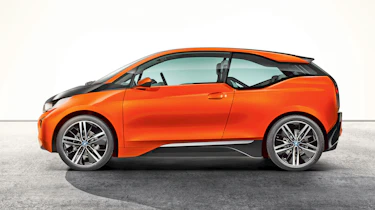
- No. built: 250,000
- From: 2013-2022
- Price: from £5,000
- Our pick: 42kWh, 170bhp
- Top speed: 93mph
One of the early entrants into the electric-car game, the i3 was built on its own bespoke architecture. This meant higher costs, but much better packaging, along with the kind of practicality you’d expect from a car in the class above; the i3 was shorter than a Renault Zoe, but much more spacious inside.
Initially, the BMW was available as either a full EV with a tiny 19kWh battery that gave an official range of only 81 miles, or a range-extender (REx) with a two-cylinder petrol engine topping up the battery. But the tiny fuel tank meant the combined range was a paltry 150 miles.
The REx was dropped in 2017, but the i3’s battery size increased during its life. By the end of the car’s production in 2022, the battery had grown to 42kWh, but that was still only enough for a sub-200-mile range.
Overall, the i3 was too expensive to build, too expensive to buy and too gawky-looking for many conservative buyers, although it was a success in terms of being a stepping stone to the more mainstream EVs BMW sells today. It handled well, too, especially for an EV in the mid-2010s, and designers still laud the bold styling.
But the fact it hasn’t been replaced speaks volumes about demand, and the cost of building this carbon-fibre-clad model. Yes, it was a pioneer, but EVs today are more conventional, less stand-out and less innovative than the i3.
Did you know you can sell your car through Auto Express? We’ll help you get a great price and find a great deal on a new car, too.