Audi A6 review
Some might be put off by the interior design and lack of practicality, but the A6 is comfortable and is packed with technology


Our opinion on the Audi A6
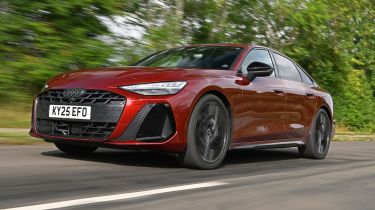
If you’re after an efficient, refined and comfortable executive saloon, you could do a lot worse than the new Audi A6. This is a well rounded package with excellent executive-car credentials, especially when fitted with the impressive e-hybrid plug-in powertrain. However, the pioneering status that former generations held in terms of design, interior tech and material quality doesn’t quite apply to this latest model – and that erodes key USPs that made the A6 such a compelling choice.
About the Audi A6
Together with the sleek A6 Avant estate, the Audi A6 saloon joins the all-electric A6 e-tron launched in Sportback and Avant bodystyles, creating a spread of powertrain options to rival the BMW 5 Series and electric i5 as well as the Mercedes E-Class and its EQE electric alternative.
While the electric A6 e-tron sits on the PPE platform shared with the likes of the Porsche Macan Electric and Audi’s own Q6 e-tron, the latest sixth-generation A6 uses a heavily modified version of the previous A6’s architecture, called PPC. You’ll find a range of petrol TFSI and diesel TDI engines under the bonnet, but the new chassis has been largely developed to integrate a new generation of plug-in hybrids, which the VW Group refers to as ‘e-hybrid’.
Used - available now


Beyond these, we’ll soon see the return of the range-topping RS 6 – Audi’s high-performance estate that will rival the BMW M5 Touring. Alongside the Avant, the RS 6 will also be offered as a saloon for the first time since the C6 generation was killed off in 2010.
Audi A6 prices and latest deals
Prices for the Audi A6 saloon are around £2,000 cheaper than the Avant throughout the range, so in Sport trim it kicks off at just over £52,000. S line, with its sportier look, costs from around £53,500, while the launch-specification Edition 1 gets underway from just over £58,000.
There prices are all for the entry TFSI petrol; the TDI diesel can be had in the same three trims, but costs around £4,000 more. The e-Hybrid, meanwhile, costs just under £62,000 in Sport trim, rising to around £62,500 for the S line and finally just under £68,000 for the Edition 1.
As you’d expect, the combustion-engined A6 is cheaper to buy than the A6 e-tron, which kicks off at over £62,000. If you want an A6 for even less, though, you can save by building your perfect Audi A6 through the Auto Express Buy a Car service. We also have a selection of A6 leasing deals to choose from, as well as used A6 models.
Performance & driving experience
Pros |
|
Cons |
|
The Audi A6 range comes equipped with a selection of 2.0-litre four-cylinder engines. The petrol unit has been used in a number of VW Group cars for decades, though it’s been updated over the years. In the A6, it’s mated to a seven-speed dual-clutch transmission and powers the front wheels only.
The diesel comes with Audi’s new ‘MHEV Plus’ system, which comes with a seven-speed auto ’box with an additional 1.7kWh under the boot floor which powers an additional 24bhp electric motor which can even drive the wheels for short periods. The diesel also comes exclusively with an all-wheel-drive quattro system.
As for the plug-in hybrid, that petrol engine is actually the same EA888 unit found in the regular petrol model with quattro all-wheel drive. The electrical side is made up of a 25.9kWh battery and a 73bhp electric motor.
Sadly, although there are petrol and diesel 3.0-litre V6s, these aren't offered in the UK market, as their emissions of up to 182g/km are deemed too high.
| Model | Power | 0-62mph | Top speed |
| A6 Avant 2.0 TFSI | 201bhp | 8.2 seconds | 151mph |
| A6 Avant 2.0 TDI quattro | 201bhp | 6.9 seconds | 150mph |
| A6 Avant 2.0 e-hybrid quattro | 295bhp | 6 seconds | 155mph |
Performance, 0-60mph acceleration and top speed
Although you get a four-cylinder engine no matter what version of the A6 you go for, they all provide a different feel. The petrol and diesel have the same power output, but the diesel has 400Nm of torque – 60Nm more than the petrol. That should give it a more muscular feel on the motorway, but conservative mapping of the diesel’s transmission puts you out of the available torque too often.
Electrical assistance means the plug-in hybrid’s 295bhp makes it the fastest A6, despite it weighing 2,130kg (a massive 360kg more than the petrol car). There’s no S6, so we expect quite the gap in performance when the RS 6 does arrive.
Town driving, visibility and parking
This is the largest A6 yet, so you do need to have your wits about you in tight urban streets, although a neat steering feel and optional rear-wheel steer aids manoeuvrability.
Given its size, busy car parks can be a pain, although a very clear rear camera and automatic parking system under the standard-fit ‘Driver and Park’ assistance package helps here.
Country road driving and handling
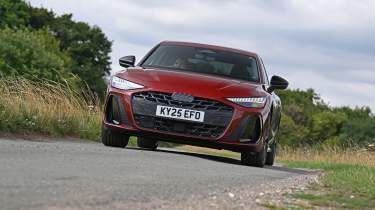
The A6 has rarely been the sharpest car to drive in the class – falling short of its key rival, the BMW 5 Series – but this latest generation definitely has an air of confidence about the way it flows down the road.
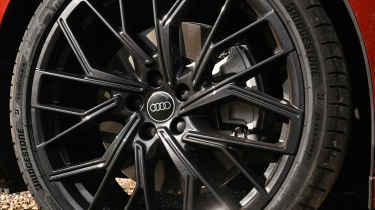
We’ve tested the A6 e-hybrid in ‘Launch Edition’ guise which has a sports suspension set-up, rear-wheel steering and 21-inch wheels (the largest available). Yet even with this relatively focused combination, the A6 felt unflustered by bumps and rough road surfaces.
The e-hybrid doesn’t feel too heavy behind the wheel, with a decent amount of poise and steering providing just enough feedback without being tiring. We’ve actually found the base car on the standard suspension and smaller 20-inch wheels to feel more engaging, without diminishing the ride comfort.
Motorway driving and long-distance comfort
The Balanced and Comfort drive modes seem well judged and prioritise efficiency. While the Drive Select button is touch-sensitive rather than physical, it is in a prime position on the centre console for quick changes. Stick it in Comfort or even Balanced and the A6 provides a well-judged ride that manages to soften bumps and ruts. Sport mode sharpens things up and gives you maximum performance, but we found the plug-in hybrid’s inherently good refinement makes it particularly unsatisfying to use in this manner. Where the A6 excels, no matter the powertrain you choose, is on a smooth motorway, with very impressive refinement and almost no wind noise thanks to its aerodynamically efficient body.
"This is now a big car, and a heavy one at over 2.1 tonnes, but it drives as if it’s hundreds of kilos lighter. That’s not to say the driving experience is particularly engaging, but it compares well to its rivals." - Jordan Katsianis, news editor.
MPG & running costs
Pros |
|
Cons |
|
The A6’s petrol and diesel options aren’t especially impressive when it comes to efficiency and emissions. Starting with the petrol, the claimed figure of 39.8mpg is a chunk better than the A6 Avant’s 37.1mpg, but a Mercedes E 200 will do 43.5mpg and the BMW 520i will be nudging 50mpg.
The diesel, so often the best choice for efficient, long-distance motoring in a big Audi, also doesn’t seem particularly great. Despite the new mild-hybrid system, the TDI’s 54.3mpg is a way off the 58.9mpg you can get from the Mercedes E 220 d. It’s got BMW beat, though, as the latest 5 Series isn’t offered with a diesel.
| Model | MPG | CO2 | Insurance group |
| Audi A6 2.0 TFSI | 39.8mpg | 161g/km | 31 |
| Audi A6 TDI quattro | 54.3mpg | 136g/km | 36 |
| A6 Avant 2.0 e-hybrid quattro | 128.4mpg | 50g/km | 40 |
Electric range, battery life and charge time
The e-hybrid’s 64 miles of electric motoring is pretty competitive for this class – the BMW 530e does the same distance and the Mercedes E 300 e gets up to 70 miles.
A 25.9kWh battery pack makes this possible, but it’s the 73bhp electric motor that ensures the petrol engine isn’t engaged until you really need it. There is Audi’s ‘quattro Ultra’ all-wheel-drive system, but the A6 is able to de-couple the rear axle under light acceleration to further help with efficiency.
On EV power, the e-hybrid will still accelerate up to, and happily cruise at, motorway speeds without the petrol engine. However when doing so, the A6 e-hybrid, like all plug-in hybrids, isn’t at its most efficient, so a bit of planning is often required to make the most of its technical toolkit.
This is done for you if the integrated navigation is set, because over longer distances the A6 will switch between petrol and electric power to make the most of the battery charge in anticipation of the journey ahead.
With the battery fully topped-up, the car’s trip computer also matched the 60-mile quoted electric range, and we found that figure to be accurate in a combination of low and medium-speed driving. Even if your place of work is more than 30 or 40 miles away from home, regular charging will keep you well within the powertrain’s sweet spot. There’s only AC charging on board and it maxes out at 11kW, but this will still fill the battery from empty in about two-and-a-half hours – ideal for parking up at work or home, but not for charging on the go.
| Model | Battery size | Range | Insurance group |
| A6 Avant 2.0 e-hybrid quattro | 25.9kwh | 64 miles | 40 |
Insurance groups
The A6 saloon has the same insurance group ratings as the Avant, so the TFSI starts in Group 31, while the TDI kicks off in Group 36 (likely because it’s quicker and has the added complexity of potential repairs to the hybrid electronics or quattro four-wheel drive system) and the e-hybrid is in Group 40 (again, due to its added complexity). With their extra kit and more expensive price tags, the S line and Edition 1 cars unsurprisingly sit a group higher.
Tax
All A6s comfortably exceed the luxury car tax threshold of £40,000, so the road tax charge will be £620 for years two to six. After that it reverts to the standard £195 a year.
For company car drivers, the TFSI petrol sits in the 37 per cent Benefit-in-Kind (BiK) tax bracket while the TDI diesel is in the 33 per cent category. However, once you factor in P11D prices, the difference in terms of tax is less than £100 pounds a year.
With its electric powertrain, the e-hybrid offers the biggest savings. Instead of the 52g/km the Avant puts out, the saloon’s 50g/km means it drops from 17 per cent to a 9 per cent banding (for the 2026/27 tax year). You’ll save almost £2,000 in costs when compared with the combustion-engined cars, although there are even bigger savings if you choose the all-electric A6 e-tron.
Depreciation
The saloon is cheaper to buy than the Avant, but it doesn’t retain its value as well – around three per cent worse on average. Expect the Audi to retain 42 to 45 per cent of its value after 36,000 miles and three years.
Compared with rivals, the A6 Avant is in a similar ballpark. It largely matches the BMW 5 Series, while the Mercedes E-Class is fractionally ahead of both.
Interior, design & technology
Pros |
|
Cons |
|
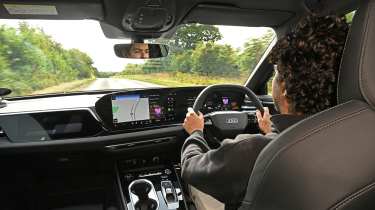
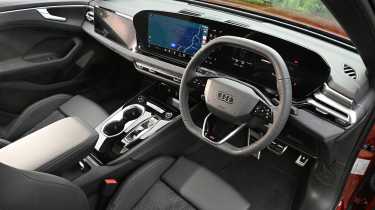
There’s little fundamentally wrong with the cabin – the driving position is nicely adjustable, the front pillars are thin, visibility is good and there are some elements that impress. However, there are also a lot of aspects that undermine Audi’s positioning as a premium brand.
Interior and dashboard design
Gone is the previous generation’s substantial gear selector and in its place is a plasticky matchbox-shaped mechanism that feels as if it’s been borrowed from a supermini, not from the class above, as Audi once did. This is only emphasised by the excessive use of scratch-prone black plastic on the entire centre console, and the random use of inserts on its edges, which are carbon fibre, or timber and silver plastic, depending on the model.
Materials and build quality
The soft-touch Dynamica fabric fitted on the seats and some of the lower dash looks and feels fine, but the materials that surround it do only an average impression of leather, and don’t feel right for this price bracket. The hard plastic section below the central air vents is also unforgivably cheap and scratchy.
There are some ergonomic quirks, too, such as the touch panel for secondary controls, including the side mirror and rear child door lock, being mounted where you’d prefer to see a grab handle – as on the passenger side door. The steering wheel controls also feel cheap and, like almost every hard surface inside, are prone to showing greasy fingerprints.
Infotainment, sat-nav and stereo
As standard, you get a driver’s display and 14.5-inch touchscreen that are connected into one curved unit. At first, the Audi’s infotainment layout looks a bit complex and intimidating, especially if you want to use it while driving. After a while, though, you should find it fairly intuitive with a crisp resolution.
There’s a panel for climate control at the base of the central touchscreen, although for functions such as seat heating and ventilation, you’ll have to dive into another layer of the menu. The old A6’s bespoke screen for climate controls was a far better solution.
Edition 1 cars come with another display for the front passenger. You can browse functions including mapping, for example, but we prefer the last A6’s option of including navigation info in the driver’s display. The third screen in Mercedes’ Hyperscreen set-up – which features in the electric GLC and is set to arrive on more models – seems more impressive, as it comes with video-playing capability, even while driving.
“The triple-screen infotainment set-up is easy enough to use, but the housing is chaotic, with huge bezels on the main section sitting uncomfortably with the haphazardly placed passenger screen.” - Jordan Katsianis, news editor.
Boot space & practicality
Pros |
|
Cons |
|
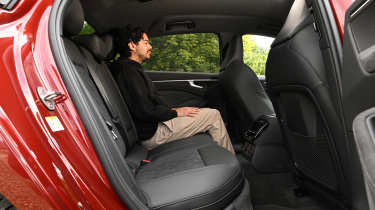
The A6’s sheer size means few will find it cramped inside, but we expect much more space from a five-metre long executive saloon.
Dimensions and size
| Dimensions comparison | |||
| Model | Audi A6 | BMW 5 Series | Mercedes E-Class |
| Length | 4,999mm | 5,060mm | 4,949mm |
| Width | 1,875mm | 1,900mm | 1,880mm |
| Height | 1,470mm | 1,515mm | 1,480mm |
| Wheelbase | 2,932mm | 3,000mm | 2,960mm |
| Boot space | 354 (PHEV) 452 litres | 520 litres | 370 to 540 litres |
Seats & passenger space
Space up front is fine, and there’s a good amount of storage for small items, including a wireless phone charger and two USB-C points. However, largely due to the need to package so many different powertrain elements, the second row is a little cramped, with less legroom than in its BMW and Mercedes rivals.
Boot space
The A6 Avant lags behind its estate competition from BMW and Mercedes for boot space, and sadly it’s the same with the saloon – whether you opt for the petrol, diesel or plug-in hybrid.
The boot is long and wide, but rather shallow, which leads to an average capacity for the class of just 354 litres in e-hybrid guise. However, the boot floor is at least flat and leaves an unobstructed space when the second row is folded, in contrast to a PHEV Mercedes E-Class saloon. There is no dedicated space to store the charge cable in the Audi, though.
Towing
The all-wheel-drive 2.0 TDI is the best of the bunch for towing, with a maximum capacity of 2,000kg. The 2.0 e-hybrid can also tow 2,000kg, although its performance will be affected by the amount of charge that’s in the battery, while the 610kg maximum payload weight is 15kg down on the diesel. The 2.0 TFSI can haul a maximum braked trailer of 1,800kg and has maximum loading capacity of 625kg.
Reliability & safety
Pros |
|
Cons |
|
Having launched in 2025, the A6 is still too new for customers to give us their thoughts in our Driver Power survey, but considering the overlap of platform and powertrain, it’s worth bearing in mind the previous A6 scored well for safety features, economy and infotainment.
In terms of safety, the A6 is good for the executive market. Active and passive safety kit is included under one umbrella, called the ‘Drive and Park’ assistance package. This includes adaptive cruise control, speed-sign recognition and alert, a rear camera and a parking assistant.
Other standard-fit safety technology includes lane departure warning, cross-traffic alert, swerve assist, front-turn assist and an emergency braking function with vulnerable road user recognition.
The A6 received a maximum five-star safety rating from Euro NCAP. Despite this, compared with the Mercedes E-Class the Audi was beaten in every area.
Audi’s three-year, 60,000-mile standard car warranty isn’t great because both BMW and Mercedes offer cover that lasts the same amount of time, but have unlimited mileage clauses. You can extend the warranty cover on the A6 Avant by one or two years at extra cost, but for the latter it costs nearly £2,000 extra, plus you still have a 90,000-mile distance limit.
| Euro NCAP safety ratings | |
| Euro NCAP safety rating | Five (2024) |
| Adult occupant protection | 87% |
| Child occupant protection | 88% |
| Vulnerable road user protection | 78% |
| Safety assist | 77% |
Buying and owning
- Best buy: Audi A6 TFSI Sport
As with the Avant, we’d choose the entry-level petrol version of the A6 because it’s the best to drive, less expensive to buy and cheaper to run. For company car buyers, the e-hybrid holds obvious appeal, but with its range of up to 437 miles, the all-electric A6 e-tron makes even more sense.
Audi A6 alternatives
We’ve made a lot of comparisons to the Mercedes E-Class and BMW 5 Series, but just as worthy are a suite of family SUVs. The Mercedes GLE, BMW X5 and Audi Q7 are solid shouts if you want more practicality without losing any premium appeal.
Deals on the A6 and alternatives