Ford Transit Connect van review
There are more capable vans in the class, but the VW-built Ford Transit Connect is modern, refined and easy to drive

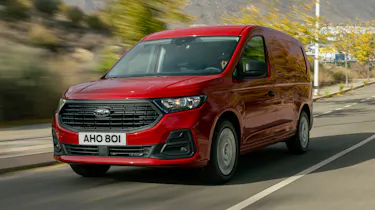
Our opinion on the Ford Transit Connect
Now based on the Volkswagen Caddy Cargo, the Ford Transit Connect comes with all the same attributes. These include strong diesel engines, a decent carrying capacity, a surprisingly plush interior for a van and the brilliant ‘FlexCab’ rear seating option that can transform into a ‘bulkhead’ in seconds to open up more load volume.
The same weaknesses are present, too - there’s the lack of an electric version, which seems a shame, while the infotainment system is fiddly. Some rivals, including the Citroen Berlingo and its Stellantis relatives, can cart around more cargo. Clawing back some ground, it’s worth noting that the Transit Connect is one of the fresher entries in the class, which now includes some aging contenders.
About the Ford Transit Connect
The Ford Transit Connect arrived in 2002 to replace the Escort van and Fiesta-based Courier that came before it with a more bespoke offering. It’s one of Ford’s smallest commercial vehicles, slotting between the Ford Transit Courier and the Ford Transit Custom.
The current version was launched in 2024 as the third generation of the Transit Connect, bringing with it more carrying capacity and a plug-in hybrid powertrain for the first time. All is not as it seems, though, because it’s not made by Ford, despite what those blue oval badges might suggest.
Used - available now

2022 MG
HS
43,600 milesManualPetrol1.5L
Cash £12,995
2023 MG
HS
4,531 milesAutomaticPetrol1.5L
Cash £17,595
2025 MG
S5 EV
5,387 milesAutomaticElectric
Cash £18,995
2025 MG
S5 EV
4,077 milesAutomaticElectric
Cash £18,995Ford has a commercial partnership with Volkswagen, and it goes in both directions. The current Volkswagen Transporter, for example, is merely a Ford Transit Custom with some light styling and trim changes, while the Ford Transit Connect we’re covering here is really just a Volkswagen Caddy Cargo with a different name.
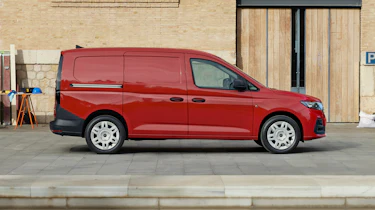
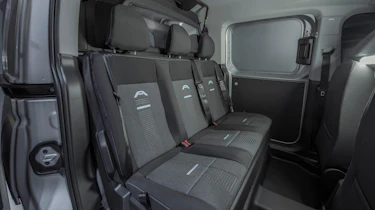
Short and long wheelbase versions called L1 and L2 respectively are available, and each can be specced as a ‘FlexCab’, the Transit Connect’s take on a crew cab with a flexible rear seat bench that can also be folded upwards to form a bulkhead.
MPG and running costs
Pros |
|
Cons |
|
It’s the norm for vans in the class to have an electric version. In fact, the only one of the Transit Connect’s rivals to do without one is the Volkswagen Caddy Cargo, and as we’ve explained, that’s the same van under a different name.
Electric powertrains particularly make sense for compact vans like the Connect, which are focused on more localised jobs, so it’s a shame it’s not available with one.
On the other hand, though, the Connect/Caddy are the only options in the segment with a plug-in hybrid powertrain, with enough electric-only range to be feasibly run almost exclusively without combustion power, depending on the kind of operation it's used for. The 156.9mpg official economy figure is worth ignoring, though - as with all PHEVs, the return will vary wildly depending on how far you’re going, the state of charge when you leave, and how you’re driving.
Both diesel models are frugal. The lower-powered diesel manual is the most efficient, managing up to 52.2mpg according to the WLTP Combined cycle, but the slightly pokier automatic isn’t far behind on up to 50.7mpg depending on the trim level.
Electric range, battery life and charge time
The Connect plug-in hybrid has a sizeable 19.7kWh battery pack, making for a healthy electric-only range of up to 72.7 miles, with some slight variations depending on the length and spec of the van. It can be difficult to replicate such figures in real-world driving conditions, but over 50 miles should be doable most times of the year.
That might be enough for some operators to rarely use the petrol engine, making for potentially very low running costs if combined with home charging and a variable tariff with a lower off-peak rate.
With a typical 7.4kW home wallbox, it’ll take three hours and 50 minutes to fully charge the battery. Away from home, an AC limit of 11kW makes for a full charge in two hours and 30 minutes, while a DC rapid charging capability of 50kW means a 10 - 80 per cent in about half an hour. The latter won’t be a particularly cost-effective way of getting around, though, given the high price of public charging in the UK.
Load space and practicality
Pros |
|
Cons |
|
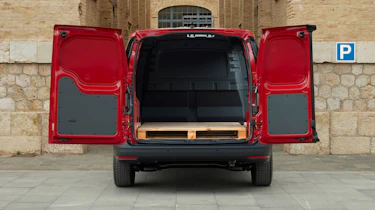
Cargo volume is up in the new Transit Connect compared to the old version, but not by a great deal. There’s 3.1 cubic metres of volume in the L1 version, up from 2.9, and 3.7 in the L2, compared to 3.6 in the old Connect L2.
The figures put the Connect slightly ahead of the Mercedes Citan, but behind many others, including the Renault Kangoo, which offers 3.3 to 4.2 depending on the configuration. It’s also a shame there’s no load-through bulkhead, as seen on the Peugeot Partner and its corporate cousins, which gives up to 4.4 cubic metres of volume on long wheelbase versions.
What the Ford does offer, though, is a brilliant take on the crew van format. Rather than having a fixed second row of seating with a bulkhead behind, FlexCab versions of the Connect have a clever seat bench which folds up and forwards to form a bulkhead when not in use. While inevitably chunkier than a traditional bulkhead, this gives far more load volume than a regular crew van, with a load length that’s only 277mm shorter than the equivalent two-seater.
There’s 2.4 metres of capacity in the L1 FlexCab, and 3.1 in the L2, which happens to be the same volume as the two-seater L1.
Two-seater Transit Connects have 1,797mm long load bays in L1 form, with the L2 stretching to 2,150mm. A payload of up to 790kg looks meagre when we compare once again to the Peugeot Partner and its relatives, which offer up to 984kg. You also lose a good chunk of that capacity if speccing the Connect as a PHEV, with the highest rated version managing 739kg, and the lowest just 606kg, compared to 722kg for the least capable diesel.
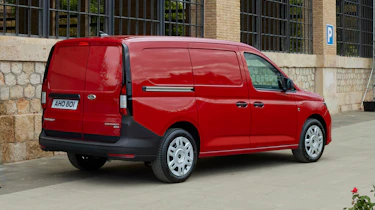
Asymmetrical ‘barn’ doors are fitted as standard to the rear, with a lift-up tailgate available optionally. The load bay can also be accessed via a single sliding door on the passenger side of the van, with dual sliding doors available in the configurator at an extra cost. Limited and Active versions of the Connect come with LED cargo bay lighting.
All diesel versions of the Connect are rated to tow braked loads of up to 1,500kg, with the PHEVs only slightly behind at 1,400kg. This puts the Connect in a similar territory to the Mercedes Citan, and a few hundred kilos ahead of the Peugeot Partner et al.
Reliability, safety and security
Pros |
|
Cons |
|
The previous-generation Transit Connect only had a driver’s airbag as standard, but commercial vehicle safety has moved on significantly since then, with the current version also featuring a passenger airbag, seat airbags and curtain airbags at no extra cost.
There’s plenty of technology aimed at preventing an accident from happening in the first place, including lane-keeping assist, a driver attention monitor and autonomous emergency braking. The Connect’s passive and active safety features were enough for it to earn the full five stars when tested by Euro NCAP.
In terms of security, all models come with an engine immobiliser, a Thatcham-approved alarm and dead locking. FlexCab versions feature unglazed rear and sliding side doors, helping keep the van’s contents more secure, although glass is available optionally.
The Auto Express Driver Power rankings don’t cover commercial vehicles, but the Transit Connect’s use of a passenger car platform and technology means the brand-by-brand results do give some idea of what to expect when it comes to reliability.
It’s Volkswagen you want to be looking at rather than Ford, as already explained, and it’s good-ish news on that front. VW finished 18th of 30 brands for reliability in the most recent Auto Express Driver Power survey, which is fairly average, but much better than Ford’s 24th place.
Also, had it been made by Ford, like the old one, the new Connect could have ended up with a ‘wet belt’ - a timing belt immersed in oil. Ford ended up revising the belt change intervals for some of its vehicles with this arrangement after some premature failures.
A warranty length of 100,000 miles or three years is pretty standard. Some rivals go above and beyond, though - if you buy a Toyota Proace City and keep it serviced at Toyota dealers, for instance, the warranty can be extended up to 10 years in total.
Driving and performance
Pros |
|
Cons |
|
Both the Transit Connect and the Volkswagen Caddy Cargo share the same underpinnings as the Volkswagen Golf hatchback, and that makes for a more car-like driving experience. The steering is light and quick, and the Connect is even fairly flat in corners, resisting excessive body roll despite its tall shape.
The ride is generally smooth, but it can be a bit bouncy over some surfaces when unladen. As with a lot of vans, the more you have in the back, the more settled the ride.
There’s a choice of two 2.0-litre diesel engines labelled EcoBlue, which are rebadged VW TDI units. That’s no bad thing, as these widely used diesel engines are reasonably refined as far as four-cylinder oil burners go, although things do get a bit rowdy when they’re worked hard.
There’s 100bhp and 280Nm in the entry-level option, which is fitted exclusively with a six-speed automatic gearbox with a light and easygoing shift. The 120bhp, 320Nm option switches the manual for a slick seven-speed dual-clutch automatic gearbox.
A unique offering in this segment (if we’re to take the Transit Connect and the Caddy Cargo as a single van, which they technically are) is a plug-in hybrid powertrain. It’s built around a smooth and refined 1.5-litre four-cylinder petrol engine, which is supplemented by a 19.7kWh battery pack and an electric motor for a total of 150PS and 350Nm.
This combined output makes for effortless progress, so you rarely have to thrash the 1.5-litre engine, which is good, because it can be a bit rowdy at higher revs, if not quite as much as the diesels. If you do call upon the full potential of the system, the Connect feels reasonably brisk. Transitions between the van’s power sources are generally smooth, as well.
Town driving, visibility and parking
The Transit Connect’s light steering makes manoeuvring easy, although we’d recommend getting the rear parking camera to make your life easier still. It’s included as standard on Limited and Active-trimmed models, and bundled as part of a driver assistance package on the entry-level Trend.
Using the six-speed manual gearbox is hardly a chore, but in especially congested areas, it’s definitely worth upgrading to the automatic, unless of course you’re going for the auto-only PHEV. Speaking of which, the PHEV is easy and relaxing to drive around town in its electric mode.
Motorway driving and long-distance comfort
The car-like driving manners of the Transit Connect mean long motorway journeys shouldn’t be too tiring. It feels stable and relaxed at speed, although the plastic bulkhead does increase the noise levels in the van.
All powertrains are quite happy sitting at 70mph, and in the PHEV, it’s actually possible to cruise at motorway speeds on electric power alone, although you’ll only want to be doing that on shorter stints - keep it up for too long and the range will quickly disappear.
Cab interior and technology
Pros |
|
Cons |
|
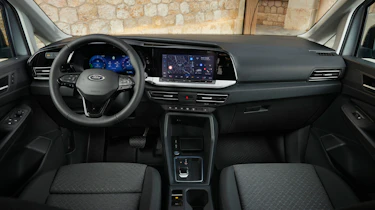
The Connect feels plusher inside than some competitors. It even has some soft-touch surfaces, albeit with the usual rubber flooring and hard-wearing fabric trim to ensure it stands up to life as a working vehicle.
The dashboard is dominated by a large and smart-looking unit, finished in gloss black on higher spec models, housing the digital instrument cluster and infotainment screen. Behind it is a useful storage area, which is one of a number of handy cubbies. The door bins are suitably large, too.
It’s a shame there isn’t an option for a double passenger seat to give seating for up to three in the cab (and therefore up to six in FlexCab versions) - by the looks of it, the car’s chunky centre console design means it just wouldn’t be possible. The passenger seat does have a trick up its sleeve, though - it folds fully forward on Limited models to create a table.
Infotainment, sat-nav and stereo
All models feature a 13-inch touchscreen infotainment system that’s referred to as SYNC 4, but it’s unrelated to thusly branded set-ups in ‘proper’ Fords. It’s a Volkswagen system, and one of the company’s older ones, which means it’s just a bit too fiddly, with a lot of operations requiring more touch inputs than we might like.
It’s also annoying having to use the unit to change climate settings, and although there are shortcuts for the temperature on the screen’s bezel, they’re unlit, so you won’t be able to see them at night.
A native navigation system is included as standard, and it works well. If preferred, it’s easy enough to use a third-party navigation app like Google Maps thanks to the inclusion of wireless Apple CarPlay and Android Auto. On the subject of smartphones, you’ll be able to keep your devices topped up via the pair of 45W USB-C sockets in the cabin, and/or a wireless charging pad if you’ve opted for a Limited or Active.
The Transit Connect has a four-speaker audio system as standard, with no option for a premium setup.
Buying and owning
The plug-in hybrid version of the Transit Connect might make some sense if you’re looking to go fully electric in the long term but fancy a halfway house in the meantime. Its running costs are potentially very low if you’re able to keep it charged cheaply at home and/or at a workplace, although that’s offset by a much higher purchase price.
You can’t really go wrong with the entry-level diesel manual, but for significant urban usage, it could make sense to pay the premium for the slightly more powerful automatic. In terms of trim levels, the entry-level Trend is reasonably well equipped, but upgrading to Limited does bring with it a useful increase in features, so it’s worth stretching to.
The equivalent trim on FlexCab models is Active, although you’re not given as much choice on those versions of the van - at the time of writing, the diesel manual FlexCab was only offered in Trend, with the diesel automatic only available in Active. The PHEV can be had with either.
Speaking of the FlexCab, whether or not it’s the one to go for very much depends on the use case, but its versatility compared to a traditional crew van means it’s worth considering for a far broader range of customers. It’ll be particularly handy if your van takes on family duties at the weekends.
Ford Transit Connect alternatives
The most obvious alternative is, of course, the Volkswagen Caddy Cargo. There’s little to separate the two, as you’ve probably gathered by now, so your choice could just come down to whatever offers are on at the time and whether you have an existing relationship with a dealership of either brand. There are more of the Ford Pro dedicated van dealer outlets than there are Volkswagen Van Centres, though, which might help swing it in favour of the Ford.
The Citroen Berlingo, Vauxhall Combo, Fiat Doblo and Peugeot Partner from Stellantis are all much the same, and although based on an older design, these vans have much better cargo capacities, and each is available with an electric powertrain. The same goes for the Mercedes Citan and Renault Kangoo.
Should you want to stick with the Blue Oval but have something which is more authentically Ford, there’s the smaller Ford Transit Courier to consider, which isn’t too far off the carrying capacity of the L1 Connect.
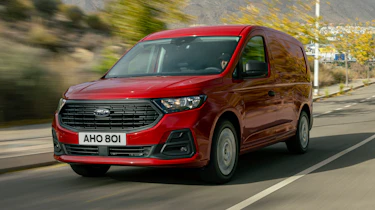
Ford Transit Connect pictures
Frequently Asked Questions
Although it’s one of the less capable options in the class in terms of cargo, the Transit Connect offers easy-going driving manners and a smart cabin at a competitive price.
Van dimensions
| Body style | Height | Width | Length |
| L1 | 1856mm | 2,100mm | 4,500mm |
| L2 | 1,860mm | 2,100mm | 4,853mm |
Load area dimensions
| Body style | Height | Width | Length | Volume |
| L1 van | 1,272mm | 1,628mm | 1,797mm | 3.1m3 |
| L2 van | 1,275mm | 1,628mm | 2,150mm | 3.7m3 |
| L1 Flexcab | 1,203mm | 1,628mm | 1,520mm | 2.4m3 |
| L2 Flexcab | 1,214mm | 1,628mm | 1,873mm | 3.1m3 |