Kia K4 review
Spacious compact hatchback relies on petrol power and a long kit list to draw in buyers

Our opinion on the Kia K4
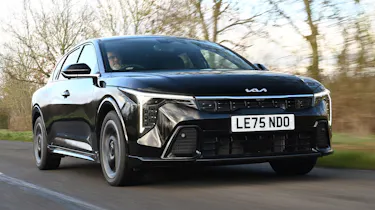
The Kia K4 has replaced the Ceed in the company’s line-up. It’s larger than its predecessor, so it has more space within its five-door hatchback body. This model isn’t going to revolutionise the sector, but it offers a competent all-round drive and will be attractive to buyers in a shrinking class thanks to its long kit list and warranty, plus the use of traditional petrol engines under the bonnet.
About the Kia K4
Demand for SUVs from buyers and electric cars from legislators mean that the compact hatchback sector has seen better days, but the Kia K4 is looking to make waves in the market. It’s a bigger model than many of its rivals, so it offers plenty of space for family life, while the in-car tech is carried over from models such as the Sportage and EV3, so it’s user-friendly on the whole.
The Kia K4 is offered in the UK as a five-door hatchback, but a more practical Sportswagon is also due soon. Under the bonnet, there’s no electrification to speak of, apart from a mild-hybrid petrol option.
We've driven various versions of the Kia K4, and we even included a 147bhp 1.6 T-GDi GT-Line as part of our Kia K4 versus VW Golf twin test. While we liked the amount of space the K4 provided, its high equipment levels, and long warranty period, it wasn’t as economical as the Golf, neither could it match the well-rounded driving experience of its VW rival.
Performance & driving experience
Pros |
|
Cons |
|
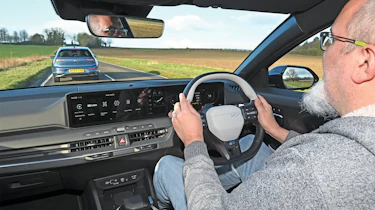
Overall, the Kia K4 offers a competent drive rather than an engaging one. There’s enough power from the 1.6 petrol and the chassis has a fairly compliant ride and decent grip, but there isn’t much fun to be had.
| Model | Power | 0-62mph | Top speed |
| Kia K4 1.0T-GDi GT-Line DCT | 113bhp | 12.3 seconds | 115mph |
| Kia K4 1.6T-GDi GT-Line DCT | 147bhp | 9.1 seconds | 128mph |
| Kia K4 1.6T-GDi GT-Line S DCT | 177bhp | 8.4 seconds | 128mph |
Performance, 0-60mph acceleration and top speed
First things first, the 1.0 T-GDi isn’t going to win any drag races. With 113bhp to haul around a hatchback with a kerbweight of around 1.5 tonnes, it’s slow by anyone’s reference. It’s even slower with the DCT twin-clutch gearbox attached, with a 0-62mph time of 12.3 seconds being a tenth of a second slower than the manual version’s.
Used - available now


However, once the car is up to speed, it’s easy enough to maintain momentum, and there’s enough torque on offer so that you won’t instantly feel the need to change down a gear or two if you need a greater burst of acceleration.
The 1.6-litre engines are better, but not by a huge amount. The 147bhp version dips below 10 seconds at least, but if you want real performance, look elsewhere – even the most powerful 177bhp K4 isn’t really a performance machine, especially when you consider the VW Golf with a 148bhp engine matches its 8.4-second 0-62mph time. It's also rather harsh-sounding higher up in the rev range.
The main hindrance to the K4’s performance is its DCT twin-clutch transmission. It behaves more like a CVT auto than VW’s DSG system, allowing the clutches to slip so as not to overload the transmission, resulting in more of a steady build-up of speed than any kind of instant punch.
Town driving, visibility and parking
With a shallow driving position, wide body, and low nose, the Kia K4 isn’t the easiest car to position at lower speeds. At least the light steering helps with manoeuvring, and there are plenty of safety systems on board to help you on your way. Lane assist is always on when you start the car, but we found the system to have quite a strong tendency to remain in lane, which could be a little disconcerting at times. A long press of a button on the steering wheel deactivates it.
Rear parking sensors and a reversing camera are standard on all models, while GT-Line adds a 360-degree system, but there are no front sensors available. One thing we’d like to see is the camera system activating if you’re crawling forward at very low speeds into a parking space. It would make it a lot easier to judge your position without having to fumble for reverse first.
The ride at lower speeds can get a little fidgety on bumpy roads at 30mph, especially in GT-Line cars with larger alloy wheels, but it’s not enough for it to be harsh, and overall, the K4 is reasonable. Throttle response is fine, but you’re not going to be sprinting off the line in any version of the K4, really.
Country road driving and handling
On faster roads, the suspension offers a reasonable amount of comfort, but not much in the way of driving fun. Overall, the suspension does a fair job of soaking up larger bumps, but uneven surfaces can cause the suspension to deliver an unsettled edge, taking the sheen off the car’s ability to deliver a relaxing drive.
At higher speeds the 1.6-litre engine is a decent performer, although the hesitant gearbox does limit its flexibility. Ask for more power, and it takes a moment for the gearbox to react and kick down, so if you do need a burst of speed, you need to plan ahead to use it. The six-speed manual is better to drive in this regard because of the fairly slick action of the gear lever, but it's only available on the entry-level 1.0-litre petrol rather than the stronger 1.6-litre.
As in town, the light steering is easy to manage, but there’s no real weight to the wheel and little in the way of feedback, which further limits the K4’s ability to deliver fun. At least there’s good grip on offer, although body roll is obvious when you’re pushing on.
Motorway driving and long-distance comfort
The K4 remains compromised at higher speeds, with the secondary ride delivering a fidget that spoils an otherwise comfortable experience. A long wheelbase helps the car to feel stable at speed, although road noise at the national limit, especially on concrete surfaces, spoils cabin comfort - particularly in GT-Line and GT-Line S forms with bigger 17- and 18-inch alloy wheels. The smaller 16-inch wheels entry-level Pure version do kick up less noise.
“The chunky T-shaped drive selector is one particular piece of engineering that seems out of place when many other companies are making their drive selectors as small as possible. - Dean Gibson, senior test editor.
MPG & running costs
Pros |
|
Cons |
|
The concept of a petrol hatchback is at odds with the range of cutting-edge electric vehicles that Kia has launched recently, and the Kia K4 certainly feels like a step back to another era. The lack of hybrid tech is an obvious omission, and the 1.0 T-GDi is the only version that offers fuel-saving mild-hybrid technology, too.
In comparison with most rivals, the Kia K4 offers poorer official figures, and the 1.6 T-GDi that we tested proved to be less efficient than a Volkswagen Golf 1.5 TSI with a nearly identical power output. While Kia quotes fuel economy of 43.5mpg for the 147bhp version of the 1.6, we just about managed 39.7mpg on a route that included a mix of motorway, country and urban roads. The Golf, on the other hand, has an official figure of 51.4mpg, and we saw 47.4mpg from the car.
Our drive of the most economical version is the 1.0 T-GDi in manual form, which yielded a result of 46.7mpg - not far off its official figure of 49.6mpg. However, the equivalent mild-hybrid versions of the Peugeot 308 and Vauxhall Astra get well over 50mpg.
Combine the VW’s figure with a 50-litre fuel tank, and you’ll easily achieve a 500-mile range, but the Kia has a slightly smaller tank at 47 litres, so it only manages around 400 miles on a tankful of unleaded based on the efficiency figure we achieved in the 1.6 T-GDi version.
| Model | MPG | CO2 | Insurance group |
| Kia K4 1.0T-GDi GT-Line DCT | 49.6mpg | 130g/km | 17 |
| Kia K4 1.6T-GDi GT-Line DCT | 43.5mpg | 148g/km | 24 |
| Kia K4 1.6T-GDi GT-Line S DCT | 42.2mpg | 152g/km | 27 |
Insurance groups
Insurance ratings for the Kia K4 range between groups 17 and 27 out of 50, so premiums will be pretty average by hatchback terms. In fact, this is rather similar to the Volkswagen Golf, which sits between groups 17 and 33. It’s also the same story with the Vauxhall Astra, which resides in groups 17 to 29.
Tax
Even the range-topping K4 manages to dodge the luxury car tax, but the near-total lack of electrification means company car drivers will probably want to look elsewhere. Fully electric cars attract the lowest Benefit-in-Kind (BiK) rates, so the Kia EV4 is a pretty obvious alternative. Elsewhere, there’s also models like the MG4, Renault Megane E-Tech and Volkswagen ID.3 to consider.
Depreciation
According to our market data, the Kia K4 is set to retain between 40 and 44 per cent of its original value after three years or 36,000 miles. Despite this model’s infancy, it manages to stay in the ring with the established Volkswagen Golf here, as that very well established rival manages 39 to 47 per cent. These numbers are the envy of the Vauxhall Astra, though, at only 30 to 40 per cent.
Interior, design & technology
Pros |
|
Cons |
|
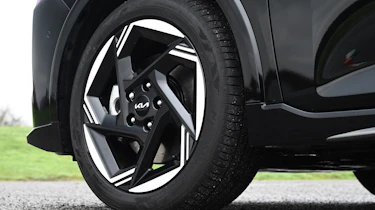
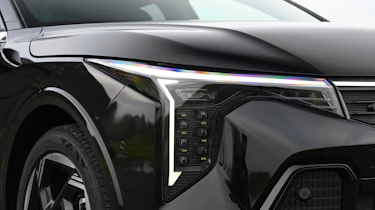
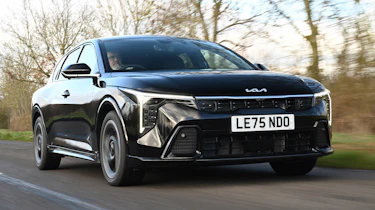
From the outside the Kia K4 has familiar Kia design cues yet still looks distinctive, with its slender lights and full-width grille helping it to look low and wide. However, the wheels do look a little small in proportion to the rest of the car.
Interior and dashboard design
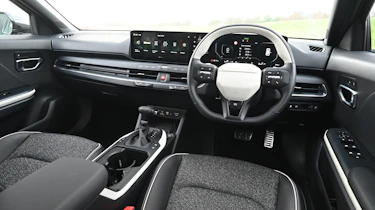
If you’ve sat in any recent Kia, then the K4 will be a home from home. The huge T-shaped drive selector seems a little out of place, but the rest of the cabin shares much with the rest of the Kia model range. There are flashes of light grey trim on the centre console, doors and steering wheel to break up the monotony of the dark grey and black interior, while the mottled fabric on GT-Line cars looks distinctive.
The twin-screen set-up is the same as you’ll find in cars such as the EV3 and EV9, but as with those cars, the square climate control panel that splits the two displays is obscured by the steering wheel rim, so you have to peer around it to find functions such as the heated screens or temperature settings. Thankfully the latter can be controlled via toggles below the central air vents, where you’ll also find air speed and direction toggles, which are linked to displays that pop up on the main screen. We wish all the climate settings were grouped together, and not spread across separate parts of the dashboard.
Materials and build quality
While the colours in the cabin are restrained, at least the quality of the materials is up to a good standard. The fabric upholstery feels good, as does the artificial leather, while Kia has moved away from gloss-black plastic on the centre console and dashtop, favouring a matt finish instead that should be more resilient to knocks and scratches.
Infotainment, sat-nav and stereo
As already mentioned, the K4 comes with a familiar touchscreen set-up, but Kia has fitted the shortcut keys from the EV3 here instead of the twin-function panel that’s seen in the Sportage. We’d prefer that to the secondary climate panel that sits between the infotainment screen and the driver’s display. Another issue with that display is that not only is it difficult for the driver to see, but if a passenger wants to use it, it’s a bit of a long reach away.
The main touchscreen is easy enough to use, and the graphics are fair, although the white on black format does look a little basic when compared with some rivals.
You can sweep the screen left and right to select different functions, but there are too many sub-menus to negotiate, especially for the driver assistance tech. Rather than keep everything on one screen, you must scroll down for some functions, which can be distracting on the road.
The standard six-speaker sound system provides decent sound quality, particularly in Pure trim with its lower level of background road noise. The upgraded eight-speaker Harman Kardon system that comes as standard in the range-topping GT-Line S is a step up from the basic system, but it is hamstrung at higher speeds by the increased road noise generated by this version's larger 17- or 18-inch wheel sizes. Smartphone connectivity is simple, though, and Apple CarPlay and Android Auto can both connect wirelessly.
"The entry-level Pure trim is pleasant enough inside, but it is a bit grey, and it has a less attractive-looking two-spoke steering wheel. Mid-range GT-Line introduces a sportier and more appealing three-spoke wheel and some lighter trim to give a classier feel." – Max Adams, online reviews editor.
Boot space & practicality
Pros |
|
Cons |
|
The K4 comes as a five-door hatchback, and it's relatively large when compared with cars such as the Volkswagen Golf, and this means there’s a decent amount of space inside for those looking for a practical family car.
However, a more practical K4 Sportswagon, which is similar in concept to the Kia Proceed shooting brake, is scheduled to arrive here later. What we won’t be getting is the K4 sedan, which is available in Australia and the Americas. This version is nearly a foot longer than the hatchback and has a sloping sportback-style rear end, although it still only has an opening tailgate - the glass is fixed.
Dimensions and size
While the Kia K4 is longer and wider than a Volkswagen Golf or Vauxhall Astra, it’s actually lower, giving it a bit of a sportier look than other hatchbacks.
| Dimensions comparison | |||
| Model | Kia K4 | Volkswagen Golf | Vauxhall Astra |
| Length | 4,440mm | 4,282mm | 4,374mm |
| Width | 1,850mm | 1,789mm | 1,860mm |
| Height | 1,435mm | 1,483mm | 1,441mm |
| Wheelbase | 2,720mm | 2,620mm | 2,675mm |
| Boot space | 438-1,217 litres | 381-1,237 litres | 422-1,339 litres |
Seats & passenger space
The part-artificial leather seats are comfortable on the whole, and have a good range of adjustment to get comfortable. We'd recommend getting a GT-Line trim because that comes with lumbar adjustment. Visibility is fair, although the bonnet does drop down ahead of you, making it tricky to know where the front of the car is. For that reason alone we’d like to see front parking sensors fitted.
Towards the rear, visibility is fairly good, although the rear wiper is tucked under the rear spoiler and sweeps down to clear the back window. When the screen is dirty, that means there are large parts of the screen that aren’t cleared by the blade, which limits rear visibility a little.
Storage space is good in the front, with a wide and deep centre console tray that has a pair of pop-out cup holders in it, and there’s a tray ahead of the drive selector which is where the wireless phone charging pad is located. Above this are two USB sockets.
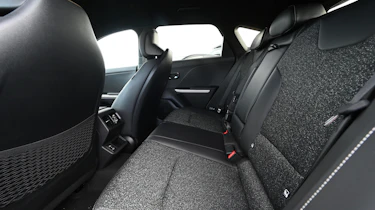
Legroom and headroom in the back are generous, and kneeroom is good, too, which is handy because the front seats have hard backs. A single cargo net is mounted to the back of the front passenger seat, while both front seats have Kia’s familiar humped backs that can be used to hang a jacket over. There’s a small transmission tunnel that encroaches on foot space for the middle seat, but otherwise room is fine. Twin air vents and a pair of USB sockets are included here, but the door bins are only big enough for a drinks bottle.
Boot space
There’s a generous 438 litres of space on offer in the back of the Kia K4, which is only really bettered by the Skoda Octavia in the hatchback class. The boot release takes some finding to start off with, because it’s offset by the reversing camera that’s located between the rear lights. It’s mounted to the right of the camera, while a high load lip will hamper lifting heavy items in and out of the K4.
There are no false floors or other tricks here, just a simple, rectangular floor with high sides and a back seat that has a small ski hatch and an offset split folding system that leaves a bit of a step in the floor.
"If you plan on pulling a caravan or trailer with your Kia K4, you'll need either version of the 1.6T-GDi for the highest towing capacity of 1,410kg. However, the Skoda Octavia can handle up to 1,600kg if you choose the 148bhp 2.0 TDI." - Max Adams, online reviews editor.
Reliability & safety
Pros |
|
Cons |
|
The Kia K4 was tested by Euro NCAP in 2025, but the Safety Pack makes a difference towards its final score. The K4 starts out with four stars just like the Vauxhall Astra, but adding in the Safety Pack brings it up to match the Volkswagen Golf with five stars. Fortunately, every K4 in the UK gets this pack as standard.
There is Lane Keep and Lane Follow assist included, although these can be deactivated via a button on the steering wheel if you find them a little too aggressive, while intelligent speed assist beeps to warn you of changes in speed limit and if you’re exceeding the posted limit. Again you can deactivate this via a long press of the steering wheel mute button on the volume control.
We did find that the system was quick to pick up on speed limit signs, although it did have a tendency to come up with false limits on occasion. Blind spot collision avoidance and auto hold are also fitted.
The Kia K4 is yet to appear in the Driver Power owner satisfaction survey, but the brand placed a rather meagre 25th out of 30 in the most recent best manufacturer survey. Running costs and practicality were two strong points, but owners were left wanting more in pretty much every other category.
| Euro NCAP safety ratings | |
| Euro NCAP safety rating | Five stars (with Safety Pack, 2025) |
| Adult occupant protection | 80% |
| Child occupant protection | 86% |
| Vulnerable road user protection | 77% |
| Safety assist | 75% |
Buying, prices and deals
Best buy: Kia K4 1.0 T-GDi GT-Line
In its entry-level Pure form, the Kia K4 starts from around £26,800, but there's a £1,500 premium if you want the automatic transmission. Due to its superior on-board kit and more pleasant interior, we’d move up to the GT-Line from £30,800 (£32,100 for the auto). While extra power is always tempting, no K4 can be described as massively quick so we’d stick with the cheaper 1.0-litre engine to save a few pennies.
You can save by building your Kia K4 with the Auto Express Buy A Car service. We also have a selection of K4 leasing deals and new K4 models to choose from.
Kia K4 alternatives
Being a slightly larger than average hatchback means that the Kia K4 falls between conventional rivals such as the Skoda Octavia and Volkswagen Golf. Both of these rivals are certainly worth considering, while other options include the Honda Civic, Peugeot 308, Toyota Corolla. A couple of slightly more left-field yet appealing options are the Mazda 3 and Cupra Leon/SEAT Leon.
Kia K4 pictures
Key updates of the Kia K4 review
- 10 September 2026: Latest line-up and pricing data.
- 9 March 2026: Driving impressions of the manual 1.0 T-GDi and 177bhp 1.6 T-GDi.
Deals on the K4 and alternatives