Vauxhall Astra Electric review
All-electric Vauxhall Astra is stylish, well-equipped and now costs less to buy, but there are more talented alternatives out there
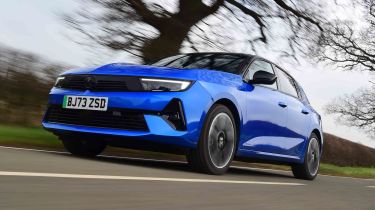

Our opinion on the Vauxhall Astra Electric
What the Vauxhall Astra Electric does perfectly is to provide what existing owners of petrol, hybrid, or plug-in hybrid models already know and love about the Astra, just in a smoother, quieter, and more responsive package.
Moreover, Vauxhall has been working to make the jump to electrification as painless as possible, to the point where its battery-powered family hatch is actually more affordable to buy than the plug-in hybrid version. So, while the all-electric Astra doesn’t offer any outstanding qualities compared to bespoke EV rivals such as the Skoda Elroq, Cupra Born, or Volkswagen ID.3, it does deliver decent value for money in an increasingly competitive class.
About the Vauxhall Astra Electric
As we’ve already mentioned, Vauxhall has boosted the EV Astra’s showroom appeal by slashing prices to bring things more into line with the regular hybrid and below those of the plug-in hybrid. Those after the more practical Vauxhall Astra Sports Tourer estate can get into one for between £500 to £1,200 more than the equivalent hatchback version, depending upon which trim level you go for.
The Astra has been a familiar sight on UK roads for over four decades, and the latest eighth-generation model, launched in 2021, is one of the best yet, combining style and sophistication with plenty of tech and choice of body styles. It’s also the first Astra to be available in fully electric guise, with the battery-powered model joining petrol and plug-in hybrid versions.
Used - available now

2025 Vauxhall
Astra
67,890 milesAutomaticPetrol1.6L
Cash £11,995
2019 Vauxhall
Astra
97,893 milesManualDiesel1.6L
Cash £3,995
2021 Vauxhall
Astra
33,970 milesManualPetrol1.2L
Cash £8,885
2025 Vauxhall
Astra
11,004 milesManualPetrol1.2L
Cash £15,731Currently, there’s only one electric motor and battery option, with a 54kWh lithium-ion pack powering a single 154bhp unit that drives the front wheels. Like the internal combustion-engined versions, the Astra Electric is available in Griffin, GS, and Ultimate trim levels. There’s no electric equivalent of the high-performance GSe plug-in, though.
We've tested the Astra Electric against the Cupra Born as part of a twin test, where the Vauxhall unfortunately lost out to the Cupra. It was hampered by its high price at the time, although that has since been addressed (and the Astra also qualifies for a government grant). However, we did find that the Born was more satisfying to drive, had a less drab interior, a bigger boot, and could be had with a wider range of battery size options. It wasn't a complete wash out for the Astra, because we rated its refinement and higher level of standard equipment.
Vauxhall Astra Electric prices and latest deals
The Vauxhall brand is among a growing number of manufacturers that qualify for the Government's Electric Car Grant (ECG) announced in July 2025. The Astra Electric is one of the Vauxhall models eligible for the £1,500 grant that is applied automatically when you buy.
If you're interested in getting yourself a Vauxhall Astra Electric, we can help. Configure your ideal Vauxhall Astra Electric now to get top offers from local dealers, check out the latest Vauxhall Astra Electric leasing deals, or search for used Vauxhall Astra Electric models with our Find A Car service. You can even sell your existing car for a great price with Auto Express Sell My Car.
Performance & driving experience
| Pros |
|
| Cons |
|
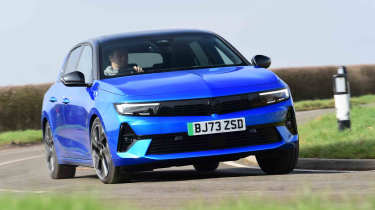
Overall, the Astra driving experience is pleasant and fuss-free. In terms of ride and handling, it sits between the agile Renault Megane and the smooth-riding VW ID.3, but runs both close enough that it’s the best compromise of the three. Throw in the fact that it’s better than either at muffling suspension knocks and road noise – sounds that become all the more obvious alongside an EV powertrain – and it’s a relaxing car to live with every day.
The Astra benefits from precise steering, as well as balanced and accurate handling. It’s not a fun car, but the Vauxhall always feels poised through a series of corners, responding crisply to your inputs. It rides well, soaking away bumps and potholes with just as much suppleness as the VW ID.3. If anything, the electric Astra is even more composed and comfortable than its internal combustion-engined relatives.
The brakes give enough power when they’re called upon, but the calibration needs a little more work. The first part of travel, which deals with motor regeneration, feels a little soft and mushy, and then the pedal stiffens up appreciably when the mechanical brakes kick in. The maximum regen level – accessed through the B mode on the drive selector – doesn’t offer anywhere near the one-pedal driving levels that many rivals provide. The traditional brake discs can feel a little grabby when used at low speeds.
Performance, 0-60mph acceleration and top speed
Compared to current EV standards, the 154bhp Astra isn’t especially quick. But as a family car designed to get from A to B, a 0-62mph time of 9.2 seconds is more than adequate. Indeed, the delay between pressing the throttle and getting any response has a greater bearing on the Astra’s lack of enthusiasm compared to its rivals. It’s surprisingly laggy for an electric car.
| Model | Power | 0-62mph | Top speed |
| Design | 154bhp | 9.2s | 105mph |
| Design Sports Tourer | 154bhp | 9.2s | 105mph |
Town driving, visibility and parking
The Astra is good for urban driving, but we find rivals like the Cupra Born to be a little better. It starts with the more immediate accelerator response of the Born, whereas the Astra feels a little numb, which isn't ideal for nipping into gaps in the traffic. The Astra does have quick steering to help when making tight manoeuvres, but the 10.5-metre turning circle falls just shy of the more wieldy 10.2-metre turning circle of the Born.
Where the Vauxhall feels better than a lot of its rivals is in the ride quality. It’s heavier than the petrol car due to its battery, but the Astra Electric is composed over rutted roads and speed bumps.
Country road driving and handling
The Astra Electric was never intended to be a car you relish taking the keys for a Sunday morning blast down a B road, but it does feel safe, predictable, and easy to get along with. The interesting thing we find with it is that it all feels remarkably similar to the regular petrol model despite accommodating a heavy battery pack, with the same light – if slightly vague – feeling steering, similarly strong levels of grip, and limited body lean in the bends.
Motorway driving and long-distance comfort
Cruising along the motorway is where the Astra Electric seems most comfortable. Aside from a touch of tyre roar and the odd whisps of wind noise around the windscreen pillars, the Astra makes for a fine long-distance companion. The ride never feels too harsh on bad surfaces or floaty on undulating roads.
“Don’t push the Astra Electric too hard and your reward will be a well-mannered and refined driving experience – although ultimately it’s a little dull.” – Alastair Crooks, senior news reporter
Range, charging & running costs
| Pros |
|
| Cons |
|
Electric range, battery life and charge time
At 54 kWh, the Astra’s battery is relatively modest by the standards of the class, but Vauxhall claims this is all to the Astra’s advantage. A smaller battery means less weight, which, in combination with the car’s aerodynamically honed bodywork, means greater efficiency. In fact, the brand claims the Astra is capable of 4.2 miles per kilowatt hour, which means an impressive WLTP range of 260 miles between recharges in hatchback form, and 255 miles for the Sports Tourer estate.
Our time behind the wheel of the hatchback model showed that figure isn't a flight of fancy. We didn’t quite match those claims, but with an estimated range of around 240 miles, we weren’t far off, and unlike the previous generation of Stellantis EV powertrains found in the earlier Corsa-e (now known as the Vauxhall Corsa Electric), the range doesn’t seem to nosedive once you edge towards motorway speeds. A standard heat pump should ensure that range isn’t compromised too severely when the weather turns chilly, either.
At 100kW, charging speeds are decent, but again, not class leading. The one advantage of a slightly smaller-than-average battery is that charging it up doesn’t take very long, with a 20-80 per cent top-up taking 26 minutes. Utilising a 7kW wallbox charger at home will take eight hours to fully recharge an empty battery.
| Model | Battery size | Range | Insurance group |
| Griffin hatchback | 54kWh | 260 miles | 25 |
| Design Sports Tourer | 54kWh | 255 miles | 26 |
Insurance groups
You'll also need to factor in that insurance premiums are likely to be pricier than the equivalent petrol or hybrid Astra, with the Astra Electric falling into a fairly hefty group 26 for most versions, and 27 for the priciest Ultimate trim. Still, with a Thatcham-rated alarm and immobiliser, the Vauxhall should be well protected against theft.
Tax
Of course, like all electric cars, the Astra makes a strong case for itself as a company car – especially now that the Astra Electric has a lower list price than the plug-in hybrid version. With zero tailpipe emissions, it has a lower Benefit-in-Kind tax compared with its more traditionally powered rivals, and presently attracts a three per cent rate, but this will rise to four per cent for the ‘26 to ’27 tax year, and five per cent from ‘27 to ‘28.
Things have changed for EVs in terms of vehicle excise duty (VED) road tax because electric cars no longer get to use the roads for free. Recent price reductions have now brought all versions of the Astra well below the revised £50,000 threshold where the luxury car tax kicks in for EVs (increased from £40,000 and comes into effect from 1 April 2026, although it applies retrospectively to cars registered from 1 April 2025).
EVs would also be subject to an eVED pay-per-mile fee if that comes into force from April 2028 onwards.
Depreciation
According to our expert data, the hatchback version of the electric Astra should hold on to 38 per cent of its original value after a typical three-year/36,000-mile ownership period. The more practical Sports Tourer does better, maintaining around 41 per cent over the same period of time.
Its sibling, the Peugeot e-308, does slightly better, at between 42 and 44 per cent, but the Astra Electric lags behind the Skoda Elroq, which is expected to maintain between 47 and 55 per cent of its value.
Design, interior & technology
| Pros |
|
| Cons |
|
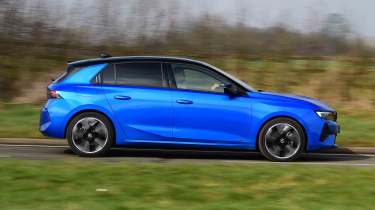
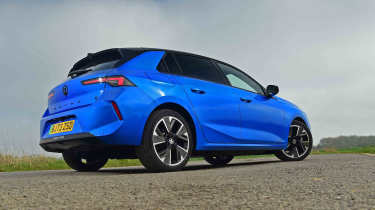
The previous generation Astra suffered from a dowdy and anonymous image that left it struggling well behind the class leaders, so Vauxhall pulled out the stops to push its family hatch upmarket. It’s now a modern, striking-looking machine with strong lines that work well with the manufacturer’s Vizor front-end design. However, under its sharply styled interior, the Astra is based on the same eVMP platform that also underpins the Peugeot E-308 and Citroen e-C4.
The trim structure consists of Griffin, GS and Ultimate. The Griffin models in electric form are equipped with larger 18-inch alloy wheels, compared with petrol and hybrid models that have 17-inch wheels. Inside, Griffin trim has a more basic single-zone climate control system than other models in the range, but the heated steering wheel and front seats are a classy touch.
The mid-level GS trim, gets everything from Griffin trim, plus a 360-degree parking camera system, sportier looking black exterior trim, and sports front seats. The flagship Ultimate trim adds adaptive LED headlights, a punchier sound system, a head-up display, a panoramic sunroof and wireless smartphone charging.
Interior and dashboard design
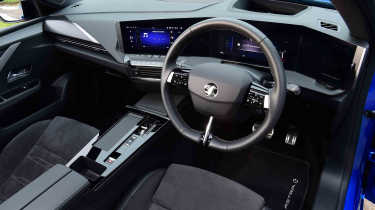
Climb aboard, and it’s clear Vauxhall has continued the Vizor theme, with the top of the dash featuring a wraparound driver display that houses both the 10-inch digital driver display and 10-inch central touchscreen.
Materials and build quality
Look more closely at the rest of the interior, and you will find that some cheaper plastics are used on the centre console and lower portions of the dashboard. Top-of-the-range Ultimate trim uses plenty of Alcantara trim on the front and rear door cards to give the cabin a more premium feel, but Griffin and GS trims don’t feel quite so plush, and we also worry that the piano black trim will be easily scratched during typical family life. If you need a car in this price range with the interior quality of one from the class above, try looking at a Skoda Elroq, which is very well-finished inside and is available with a range of interior themes.
Infotainment, sat-nav and stereo
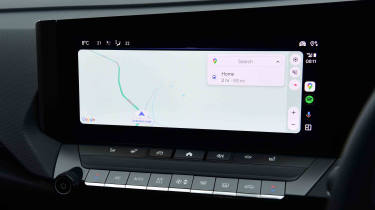
All Astras feature Vauxhall’s 10-inch Pure Panel Pro infotainment set-up with in-built sat-nav as standard, which sits alongside another 10-inch digital driver display that covers the speedo and other trip readouts.
Wireless Android Auto and Apple CarPlay are included, along with a natural voice recognition system that we found to be both intuitive and accurate. However, loading times are a little slow, plus there’s only a single USB connection if you need to plug it in to charge (wireless charging is standard).
The dual-screen set-up looks great, where the two screens are seamlessly joined together. Better still, the graphics look sharp, plus the reversing camera has great definition, too. More importantly, Vauxhall has stuck with physical shortcut buttons and climate controls that are easier to use when on the move than touch-sensitive sliders, which have been a real bugbear of the Volkswagen Golf.
“The position of the head-up display that features on Ultimate trim can be adjusted easily using the door mirror adjuster. All cars that feature a head-up display should copy this set-up, because it’s far easier to make adjustments compared with others, like BMW, which hide such controls within submenus in the infotainment screen.” – Max Adams, online reviews editor
Boot space, comfort & practicality
| Pros |
|
| Cons |
|
Like the best family hatchbacks, the Astra is packed with plenty of handy cabin storage and lots of useful standard equipment. There’s a big cubby located between the front seats, two trays with sliding covers and a fold-out section below the central air vent that can be used to store a phone or sunglasses. The glovebox is a good size, too.
Keyless start, front and rear parking sensors, automatic wipers, and cruise control are all standard features, along with a heated steering wheel and heated front seats.
Dimensions and size
The eighth-generation Astra has increased in length by a few millimetres over the previous model and now measures 4,374mm, which is 128mm longer than the VW ID.3. However, at 2,675mm, the Vauxhall’s wheelbase is around 100mm shorter than its German rival’s, which has a knock-on effect on interior space. The Sports Tourer estate is a little bit better in this regard at 2,732mm, and is longer overall at 4,642mm.
| Dimensions comparison | |||
| Model | Vauxhall Astra Electric | Vauxhall Astra Electric Sports Tourer | VW ID.3 |
| Length | 4,374mm | 4,642mm | 4,264mm |
| Width | 1,860mm (2,062mm with mirrors) | 1,860mm (2,062mm with mirrors) | 1,809mm |
| Height | 1,441mm | 1,443mm | 1,564mm |
| Wheelbase | 2,675mm | 2,732mm | 2,770mm |
| Boot space | 352-1,268-litres | 516-1,553-litres | 385-1,267 litres |
Seats & passenger space
The relatively short wheelbase compared with its rivals means occupants in the rear seats will find things a little tight. Not only is legroom below class standards set by rivals like the Skoda Elroq, but taller passengers will find their heads touching the roof lining. Still, there is at least decent space for their feet to slide under the front seats, plus there are Isofix points fitted on the outer rear seating positions.
Those sitting up front are far better catered for, with plenty of room to get comfortable and a wide range of seating adjustments. All versions have front seats that have received certification from the AGR (The Campaign for Healthier Backs in Germany), thanks to additional adjustments for lumbar support and under-thigh support.
Boot space
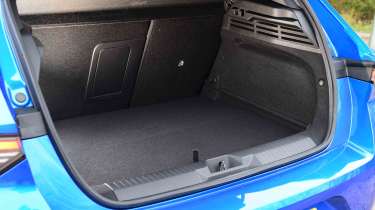
The standard internal combustion-powered Astra hatchback features a generous 422-litre boot, but accommodating the battery and other electronics that come with it necessitates a smaller 352-litre load bay in the electric version. However, the rear seats can be quickly and easily folded flat to increase the available space to 1,268 litres, and we did find it had the lowest loading lip during our Astra versus Born twin test (687mm for the Astra and 785mm for the Born), making it slightly easier to load heavy items.
Of course, if you need even more space, the electric Astra Sports Tourer estate increases carrying capacity to 516 litres or 1,553 litres with the rear bench lowered. That rear bench also folds in a more versatile 40:20:40 split, and it has a lower bumper height than its hatchback sibling, at 630mm.
Towing
Despite its healthy torque output, the Astra Electric isn’t rated for towing, so potential buyers looking to pull a trailer or small caravan will have to look towards the petrol and hybrid versions of the Astra.
“The Isofix points aren’t very accessible; they’re behind zipped covers and you have to fight through the internal seat foam to get at them properly.” – Alex Ingram, chief reviewer
Safety & reliability
| Pros |
|
| Cons |
|
Although the standard Astra petrol and plug-in hybrid have been rated by safety experts Euro NCAP, the same result doesn’t cover the electric version. However, the four-star result gives an indication of how the battery-powered Astra is likely to perform.
The Astra fell short of a full five-star score, largely due to the revised and tougher testing criteria introduced in 2022. In the end, the Vauxhall was awarded four stars, with testers highlighting the lack of a central airbag to protect front seat occupants in a side-on collision. They also noted the emergency braking system’s poor responses in recognising pedestrians.
Like all Astra models, the Electric gets the brand’s PureSense suite of active safety kit, which includes lane departure warning with lane-keep assist, speed sign recognition, a driver drowsiness alert and automatic emergency braking (AEB). Mid-range GS trim and above get a more advanced collision alert system that works at higher speeds, while top-of-the-range Ultimate adds blind spot monitoring and a lane position assist feature.
The latest Astra scored well in the 2025 Driver Power owner satisfaction survey, ranking third out of 50 cars. Owners praised the ride and handling, as well as the exterior styling. They were also impressed with the overall quality and reliability of their cars. The Vauxhall brand has climbed to fourth place out of 31 brands, which is a dramatic improvement over previous surveys, with running costs being the brand’s top-scoring category. This has no doubt been aided by the brand introducing electric versions of its popular models.
| Key standard safety features |
|
Buying and owning
Best buy: Vauxhall Astra Electric Sports Tourer Griffin
With only one engine and battery size to choose from, the only options available are body style and trim. The regular hatchback is likely to be practical enough for most needs, but the Sports Tourer estate offers greater practicality and versatility, thanks to its standard 40:20:40 split folding seats and a dedicated storage space below the boot floor to hide the charging cables.
Entry-level Griffin is our pick because it’s well-equipped and helps keep the price competitive with its rivals. While it misses out on the 360-degree camera system, dual zone climate control and ambient interior lighting of mid-range GS, it does come with all the basics you'd need, plus wireless phone charging, which isn't available on GS trim.
Vauxhall Astra Electric alternatives
The Astra Electric sits right in the heart of the still popular compact family hatchback class, which means it’s not short of rivals. Some follow the same formula as the Vauxhall by installing EV running gear in existing ICE architecture, while others are bespoke battery-powered designs.
Sitting in the former camp is the Peugeot E-308, which is built on the same platform as the Astra. It also uses an identical motor and battery, which means that the driving experience is largely similar. The same can also be said for the similarly closely related Citroen e-C4.
At the other end of the scale are the Cupra Born and VW ID. 3, both of which use the German firm’s EV-only MEB underpinnings. Each is more spacious than the hatchback Astra (the Sports Tourer estate has a bigger boot) and is just as composed on the road.
The Astra Electric’s biggest rival is the Skoda Elroq, which has won our 2025 Car of the Year award. It’s based on the same platform as the Born and ID.3, but offers a significantly nicer interior with increased passenger space. The Elroq offers a range of battery capacities, allowing you to choose more than the Astra’s 260-mile range.
Key updated for the Vauxhall Astra Electric review
9 January 2026: Updated to reflect the increased expensive car supplement threshold and mention the proposed pay-per-mile tax for EVs from 2028.
Deals on the Vauxhall Astra Electric and alternatives
Pictures of the Vauxhall Astra Electric
Frequently Asked Questions
The Vauxhall Astra has a three-year and 60,000-mile warranty, while an extended eight-year/100,000-mile guarantee covers its battery.