Best small electric cars to buy 2026
These small EVs offer great value and efficiency
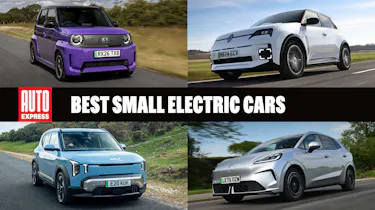
Diminutive EVs make so much sense in the UK. Whether it’s on our often narrow country lanes or our traffic-laden town and city streets, a small electric car makes for something very manageable, with all the benefits of zero emissions and low running costs.
You could argue that electric cars make most sense when used for short trips in urban areas. Assuming that you have somewhere to charge at home or at a place of work, a small EV with a range of around 200 miles is a fantastic option as a low-mileage first or second car. Even if you can’t charge at home, you might only need to find a public charging point once a week or so, with the kind of ranges currently on offer.
Beyond that, the brisk acceleration, near-silent running and beautifully simple driving experience all make these small electric cars very attractive. Whatever your requirements, our expert road testers have rounded up the top ten small electric cars you can buy right now, based on our extensive real-world test results.
Compare the best small electric cars
| Best small electric car ranking | Model | Overall Auto Express star rating (out of 5) | Prices from | Max. WLTP combined range |
| 1 | Cupra Raval | 4.5 | £23,785 | 279 miles |
| 2 | Renault 5 | 4.5 | £21,500 | 250 miles |
| 3 | MG4 Urban | 4.5 | £23,495 | 258 miles |
| 4 | Honda Super-N | 4.5 | £18,995 | 128 miles |
| 5 | Fiat Grande Panda | 4.5 | £21,000 | 199 miles |
| 6 | Kia EV2 | 4.5 | £23,245 | 281 miles |
| 7 | Citroen e-C3 | 4.5 | £22,500 | 199 miles |
| 8 | Volvo EX30 | 4.5 | £33,000 | 296 miles |
| 9 | BYD Dolphin | 4 | £30,200 | 265 miles |
| 10 | Leapmotor T03 | 4 | £16,000 | 165 miles |
Keep reading to see the best small electric cars to buy or click the links above to go straight to each individual car
1. Cupra Raval
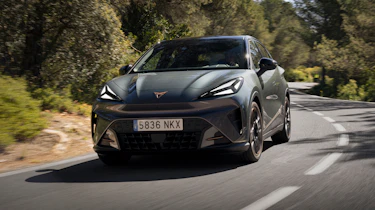
- Prices from £23,785
- WLTP combined battery range: up to 279 miles
Pros |
Cons |
|
|
Cupra’s EVs up until this point have generally been very good, but none have impressed us quite like the Raval. It looks, and is, sporty - with excellent handling traits and brisk performance in the VZ version, which will whisk you from 0-62mph in 6.8 seconds.
That’s not the only thing to like here. During our first sample of the car, we managed four miles per kWh despite driving in a manner not conducive to good efficiency. With more careful driving, the real-world range of the Raval should be very impressive.
In terms of the official numbers, you're looking at a range of 186 miles for the entry-level car with a 37kWh battery. The leggiest versions with a bigger pack are good for as much as 279 miles. While 186 miles might not sound much, the Raval’s efficiency means you might well be able to replicate it. And also, for a price of just £23,785 (before the application of the government electric car grant, which Cupra’s expecting it to qualify for), that’s a perfectly acceptable range.
It keeps getting better, because when we turn to practicality, the little Cupra impresses with a 441-litre boot. You even get proper buttons on the steering wheel rather than the fiddly touch-sensitive pads seen in other Cupras, but sadly, there’s a bit of a lack of ‘real’ buttons elsewhere in the cabin, which also might prove a bit ‘busy’ for some.
The good news on that front is the Cupra is only one part of a new era of EVs from the Volkswagen Group. If you’re not keen on the Raval’s sharp styling, there, you’ll also have its incoming Skoda Epiq and VW ID.Polo cousins to consider.
“The Raval is a proper pocket rocket in VZ form, and we reckon all versions will be fun to drive in their own way. But what we like about the baby Cupra is that it backs this up with great efficiency, excellent value and surprising practicality” - Richard Ingram, deputy editor
2. Renault 5
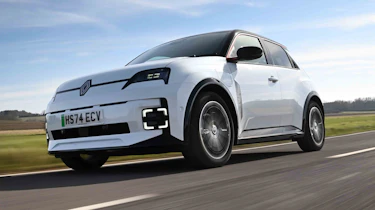
- Prices from £21,500
- WLTP combined battery range: up to 250 miles
Pros |
Cons |
|
|
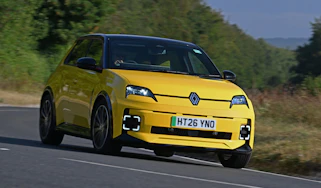
Small cars, electric or otherwise, don’t come much more stylish than the Renault 5.
Luckily, the 5 has more to it than just good looks. It’s also priced well, starting at around £21,500 for a 118bhp, 40kWh car in Evolution trim, and topping out with a 148bhp, 52kWh model in range-topping Iconic Five spec. We think the sweet spot is somewhere in the middle: Techno trim with the punchier motor and larger battery (which come as a pair), as you’ll get the quicker 7.9-second 0-62mph time and larger 250-mile claimed range without forking out as much money.
Whichever variant you pick, the Renault 5 is a fine all-rounder in terms of the driving experience. Smooth power delivery means there’s no unpleasant lurching, while the light and direct steering means you can have a decent amount of B-road fun. All of the usual small car qualities are present, too, including a tight turning circle and plenty of all-round visibility. One slight quirk is the lack of a ‘park’ gear, but it didn’t take too long for our road testers to get used to this.
The 5 is also a practical car by supermini standards. There’s just enough space for four adults inside, while the 326-litre boot will happily take on a sensibly-sized weekly shop. Every trim level is also generously equipped, and we’re big fans of Renault’s Google-based infotainment software; it looks great, functions quickly and is easy to operate.
Those who enjoy the charms of a retro car have an increasing amount of choice on the EV market. The closely-related Renault 4 shares a lot of components with the 5, but with a slight advantage in terms of practicality. There’s also the MINI Cooper Electric to consider, although this is pricier than the Renault.
"Renault has engineered a feeling of solidity into the way that the 5 behaves on the road. In terms of refinement and stability, it really doesn’t feel like a small car at all. It’s all very grown up and reassuring." - Alex Ingram, contributor
3. MG4 Urban
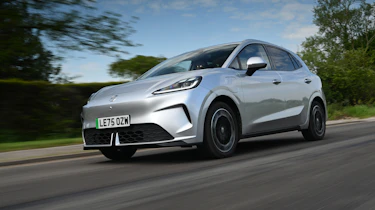
- Prices from £23,495
- WLTP combined battery range: up to 258 miles
Pros |
Cons |
|
|
The MG4 Urban has the potential to confuse. With a name like that, you might wonder if it’s simply an MG4 that’s been jacked up and given some body cladding. A spiritual successor to the Rover Streetwise, if you will (although nobody would want that).
Instead, it’s a completely different car on a separate platform, and despite being cheaper than the MG4, it’s larger and in a lot of ways better. Especially in terms of practicality – the MG4 Urban is excellent for cabin space, and the boot is massive.
Some versions of the regular MG4 go further on a charge, but considering the price of the Urban, up to 258 miles of running is perfectly acceptable. We’ve also managed to return great real-world efficiency in our testing of the car.
Alongside the 52.8kWh pack that’ll get you the 258-mile range, there’s also a 41.9kWh battery for the entry-level car. No version is especially quick, but 0-62mph in 9.5 to 9.6 seconds, depending on the version, is perfectly adequate.
Something has to give at this price, and sure enough, the cabin isn’t as well-built as the MG4 proper, nor a lot of the other cars on this list. It’s also not that great to drive, with an unsettled drive and a general sense of vagueness.
All of this is perfectly liveable if you’re on a budget, though. In value-for-money terms, the MG4 Urban might just be the best EV out there.
“You won’t care about the MG4 Urban’s confusing name nor the fact it’s mediocre to drive once you look at the price and see how much you’re getting for your money. It’s incredible just how much space and equipment is offered at this low price.” - Dean Gibson, senior test editor
4. Honda Super-N
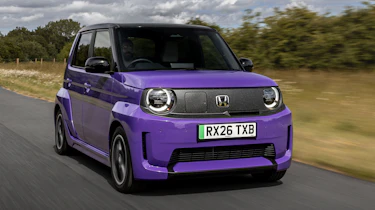
- Prices from £18,995
- WLTP combined battery range: up to 128 miles
Pros |
Cons |
|
|
The Super-N is the EV win that Honda desperately needed. It follows up disappointments like the Honda e and e-NY1, and at a time when a range of larger EVs has been cancelled. Time will tell if the Super-N proves as popular as it needs to be, but critically, it’s already a smash hit.
We awarded it 4.5 stars after our first drive, and more recently, it convincingly won our twin test with the much more expensive Hyundai Inster.
It’s something of a surprise to see just how good this car is, given that it’s essentially cobbled together from a lot of existing things. To make it, Honda took its N-One Kei car, lengthened it and widened it beyond what’s allowed by the Kei car regulations, then gave it more power by way of a boost mode.
OK, so 94bhp still isn’t much, but because the Super-N is so light, it’s quite brisk. And dynamically, it’s actually very well sorted, making it a riot to drive whether you’re on a twisty road or busy urban streets.
It’s more practical than you might expect, as well. Although the boot space is tiny, the Super-N’s boxy proportions mean there’s actually a decent amount of cargo capacity with the rear seats dropped. It also has a version of the Jazz’s Magic Seats, which flip up and are ideal for transporting taller, narrower items. Then, in its normal configuration the rear bench is surprisingly roomy.
To cap it all off, while the Super-N costs a fair bit more than the Dacia Spring and similar budget EVs, it is still very cheap. Perhaps we need more lightly enlarged Kei cars in the UK.
“The raw stats of the Super-N look like nothing special, with a tiny power output and a limited range. The reality of driving it tells a different story. It’s incredible fun to drive, yet very grown up, and surprisingly practical. Best of all, it’s cheap” - Richard Ingram, deputy editor
5. Fiat Grande Panda
- Prices from £21,000
- WLTP combined battery range: up to 199 miles
Pros |
Cons |
|
|
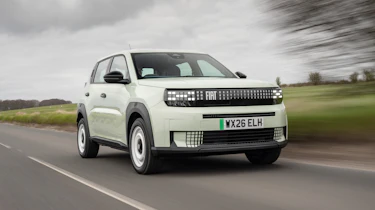
The Renault 5 has proved that a resurrected people’s car can be successful, and now the Fiat Grande Panda has arrived to cash in on this fledgling part of the EV market.
While it’s available in both hybrid and electric forms, it’s the latter we’re focusing on here. The latest iteration of Fiat’s long-standing small car is much more distinctive to behold than ever before, but it still maintains its crucial simplistic and low-cost ethos underneath. Every electric Grande Panda is fitted with a 44kWh battery that returns up to 199 miles on the WLTP Combined cycle. In an exclusive Auto Express experiment where we drove budget EVs until they completely ran out of charge, the Panda managed to cover 134 miles before hitting zero per cent. This isn’t a huge number by today’s standards, but it should still prove more than enough for most drivers’ daily needs.
The old Pandas were often used as deceptively small family cars, and while the ‘Grande’ aspect of this car does result in a reasonable level of practicality. 361 litres of boot space doesn't make this Fiat a class leader in this regard, but this is combined with some useful storage solutions elsewhere as well as an innovative coiled charging cable. Passenger space is a bit snug for longer journeys, but you’ll be able to ferry around taller occupants thanks to the boxy shape.
It’s still pretty no-frills, but the Grande Panda’s interior is still a far cry from its ancestors. While the materials are very budget-focused, Fiat’s engineers have done a great job of hiding this fact. There’s a pleasing amount of colour splashes, too, along with a dual-screen dashboard layout. It doesn’t feel quite as fancy as a Renault 5 inside, but it’s important to remember that the Fiat is cheaper to buy.
Speaking of the Renault 5, that car is one of the Panda’s most direct rivals. However, there’s also a competitor that resides a little bit closer to home: the Citroen e-C3. This former Auto Express Car of the Year is arguably a bit less characterful than the Fiat, but it offers a very similar level of sheer value for money.
“The Grande Panda rides remarkably well considering its short wheelbase. Even over the cruddy roads of central Turin that we experienced, the Panda never crashed into potholes or speed humps.” - Jordan Katsianis, news editor
Latest Fiat Grande Panda deals
6. Kia EV2
- Prices from £24,245
- WLTP combined battery range: up to 281 miles
Pros |
Cons |
|
|
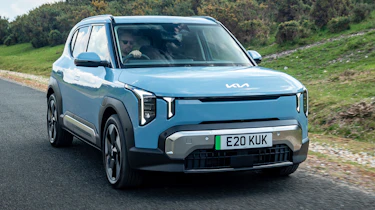
At last, Kia has taken its new set of EV principles and applied them to something smaller and more affordable. The results are mostly very good. Its boxy, mini SUV looks are cool and sophisticated without being quite as quirky as the old Kia Soul, and the minimalistic yet functional interior is a real highlight.
A range of 196 miles from the Standard Range car isn’t anything special, but given that the EV2 is better in built-up areas, perhaps that’s not such a big deal. In any case, there’s the option of a Long Range car with a more impressive 281 miles on offer. Neither is massively quick, but a 0-62mph time of 8.7 seconds from the EV2 Standard Range is decent enough.
It’s one of the pricier options here, starting at £24,245 and going up as high as £32,595 in GT-Line S form. The EV2 does feel a cut above the cheaper options on this list, though, so there is a sense of getting what you’re paying for. That said, it’s a shame that a heat pump is still optional on the range-topper, and not available at all on other versions.
“The efficient and very desirable Kia EV2 makes most sense as an urban runabout. It can handle out-of-town driving, but it’s not its strong suit thanks to a bumpy ride on typical British B-roads” - Jordan Katsianis, news editor
7.Citroen e-C3
Pros |
Cons |
|
|
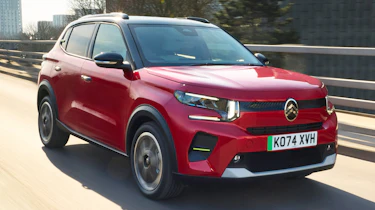
The Citroen e-C3 is a former Auto Express Car of the Year award winner for good reason. As well as being a talented little car in its own right, it was also a sign that the small EV market is becoming more accessible than ever.
The e-C3 starts at around £22,500, and it offers a refreshingly straightforward approach to fully electric motoring. Rather than going all-out with flashy tech and gimmicks, Citroen has opted to build a simplistic supermini that just so happens to be an EV. It’s still a pretty funky car to look at but there are of course some compromises at this level, although not as many as you get with the tinier and cheaper Dacia Spring or Leapmotor T03. You can’t get an e-C3 with a heat pump for instance, so the official 198-mile range is subject to the ambient temperature.
On the other hand, though, the ride quality and squashy seats make the e-C3 comfortable even on poorly surfaced roads. Performance certainly isn’t the most brisk with a 0-62mph of 11 seconds, but this Citroen is very easy to drive. In other words, this is a car that meets the sensible requirements. Some carefully thought out design work means there’s a fair amount of space inside, too, and the tall body makes the e-C3 easy to get in and out of.
The theme of simplicity continues when it comes to standard features, but you’ll still find the typical mod cons including a 10.25-inch touchscreen and air-conditioning. Our testers were pleased to find a number of proper buttons and rotary dials, too.
Those who crave simplicity have a few electric cars to choose from along with the Citroen e-C3. The Leapmotor T03 and Dacia Spring follow a similarly basic formula, but both of these cars are much smaller than the Citroen. The closely-related Fiat Grande Panda offers many of the same plus points as the e-C3, but with a few unique touches and brighter design tweaks.
“The high driving position makes it easy to see out - especially from the front seats - and light steering makes it easy to twirl the wheel as you move in and out of tight spots.” - Alex Ingram, contributor
8. Volvo EX30
- Prices from £33,000
- WLTP combined battery range: up to 296 miles
Pros |
Cons |
|
|
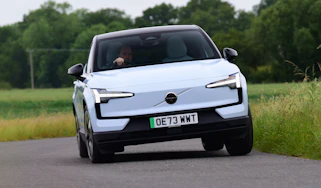
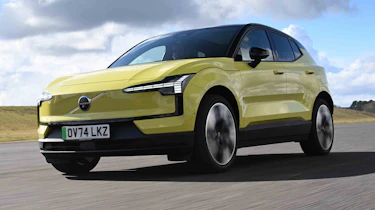
It’s pretty unheard of for a plush SUV to fall within a similar price bracket to much smaller and more barebones cars, but the Volvo EX30 has somehow managed it.
It’s not exactly the cheapest car on this list with its starting price of around £33,000, but the EX30 is easily one of the most upmarket cars you’ll manage to bag for this kind of money. As well as the badge appeal, our road testers couldn’t help but be impressed by the sheer level of comfort offered by this baby electric SUV, and an official battery range of up to 296 miles isn’t too shabby, either.
The EX30 is deceivingly quick, too, with a 0-62mph time of as low as 3.6 seconds. We’re willing to bet that few people are buying an electric Volvo for outright performance, though, so we’re also pleased to report that this one is a breeze to drive and remains nice and quiet at motorway speeds. Don’t expect much in the way of road-going excitement, though, this is still a sensible family car at heart, regardless of its seriously brisk acceleration.
It’s inside the EX30 where you’ll find one potential dealbreaker, and that is this car’s heavy dependence on its 12.3-inch central touchscreen. Nearly every single function, including door mirror adjustment, is operated via the infotainment system, and this was the cause of the occasional frustration during testing. If you’re a fan of minimalism and an embracer of tech, though, the cabin is a pleasant and well-built place to be.
You’re probably all too well aware of the abundance of electric SUVs that have arrived on the market, so the Volvo EX30 has its work cut out. The DS 3 E-Tense, Peugeot E-2008 and Alfa Romeo Junior all offer a bit of a prestige feel as well as fully-electric powertrains, but they simply can’t beat the Volvo on price.
“The Volvo’s punchy electric powertrain provides strong performance off the line and from low speeds, so you’ll never want for more power around town. The Swedish EV also deals with potholes and bumps pretty well.” - Alex Ingram, contributor
9. BYD Dolphin
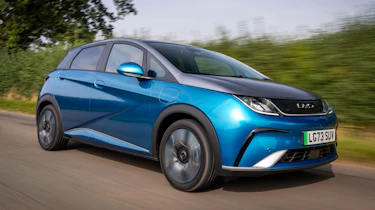
- Prices from £30,200
- WLTP combined battery range: up to 265 miles
Pros |
Cons |
|
|
China has carved out a niche for itself in the European market, offering great-value electric cars that mix size, equipment and price in a way more familiar brands sometimes struggle to match. The BYD Dolphin is one of those cars.
Unfortunately, the Dolphin’s starting price has crept upwards over time to £30,000+, but it is still an appealing package. For this money you’ll get a 60.4kWh battery pack that’s good for 265 miles. One area where the Dolphin lags a bit behind the competition is with its rapid charging speed, as a maximum 88kW peak capacity means a 10 to 80 per cent top-up takes around 41 minutes. In comparison, the MG4 will be done and dusted in just 24 minutes at a speed of 142kW.
Brand-new Dolphins also come exclusively with a 201bhp motor and seven-second 0-62mph time, but don’t expect any fireworks from the driving experience – the relatively soft suspension that soaks up bumps admirably in town means the Dolphin is unsettled on a country road.
The Dolphin’s interior offers the BYD quirkiness that we’ve come to expect, with quite an organic look to the dashboard, reasonable quality and a rotating touchscreen infotainment system. When you’re not playing “screen goes up, screen goes down”, it functions pretty well, and the Dolphin’s near-monobox shape means plenty of interior space and a decent 345-litre boot.
As we briefly mentioned, the MG4 is another competitively-priced Chinese electric hatchback (it’s actually a little bit cheaper than the BYD). Alternatively, those in the market for a smaller zero-emission family car may also want to look towards the Volkswagen ID.3 or Renault 5.
“You can easily provoke wheelspin from the 201bhp powertrain if you press the pedal too hard from a standing start, but this doesn’t really mean it’s all that much fun. Instead, it’s just a useful amount of additional power to help get up to speed faster when needed.” - Shane Wilkinson, senior content editor
10. Leapmotor T03
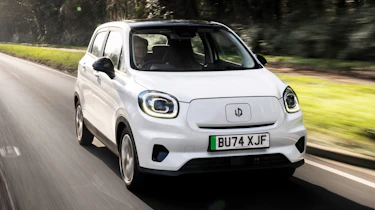
- Prices from £16,000
- WLTP combined battery range: up to 165 miles
Pros |
Cons |
|
|
Electric cars are expensive, right? Well, every rule has its exceptions, and the Leapmotor T03 bucks the trend of EVs costing far more than combustion-engined cars.
A starting price of around £16,000 means the T03 costs a fraction more than the similar Dacia Spring, but otherwise this is still one of the cheapest cars anywhere on the market, let alone among EVs. The reason we’ve picked the Leapmotor over the Dacia is because it offers just that bit more value for money. As well as a slightly longer claimed battery range of 165 miles, the Leapmotor is also a bit more powerful with 95bhp and 158Nm of torque on tap. 45kW charging is pretty speedy for an EV of this size and price, too.
As you can probably tell, this car is no speed machine, but the T03 offers plenty of all-round visibility thanks to its tall stance and driving position. This quickly comes in very useful when driving around the hectic city streets. The little Leapmotor didn’t feel too out of its depth when we hit the motorways, either, and it even managed to take on the occasional overtake without running out of puff.
Another area where the Leapmotor has a slight advantage over the Dacia is inside, as the cabin feels just a teensy bit plusher. Every variant is respectably equipped, and you don’t have to fork out extra cash in order to bag the 10-inch touchscreen. This infotainment system takes a bit of getting used to, but it’s perfectly ok when taking the car’s price into consideration. We did find the safety system warning chimes to be a bit overenthusiastic, though, and these soon became rather tedious.
There aren’t many electric cars that currently come close to the Leapmotor T03’s £16,000 starting price, but there are two options that make the grade. The Dacia Spring undercuts the T03, but you’ll have to make do with a reduced 140-mile claimed battery range. Alternatively, the BYD Dolphin Surf can cover a similar number of miles for just shy of £19,000. And just to hammer home the T03’s value proposition, it’s had £3,000 lopped off the price for a while as part of a ‘Leap Grant’.
The incessant series of bings and bongs from the various safety systems seems unnecessary. This is a familiar complaint about Chinese cars, and is as bad here as in any new model I’ve tested; what should be a help feels more like a hindrance." - Richard Ingram, deputy editor.
How we choose the best small electric cars
Small cars have long been associated with equally miniature running costs, and our exclusive Auto Express car buyer research only proved this further as a whopping 55.1 per cent of small car buyers prioritised value for money above all else when choosing a car. Our experts always have a car buyer’s needs in mind when conducting our in-depth road testing, so we pay very close attention to just how much bang for buck you’ll truly get from every small electric car on sale in the UK.
A generous helping of standard kit, sensible real-world battery range, tempting starting price and useful practicality all go a long way towards pushing a small electric car towards the top of this list. There’s no harm in a bit of fun, though, so a pleasant driving experience and punchy performance are two further factors that influence a car’s final score.
Of course, when it’s time to recharge, you don’t want to be sitting around twiddling your thumbs for ages, so we also find out whether an EV’s charging time matches a manufacturer’s claims on paper. The quicker the car is topped up, the happier our road testers are.
Hunting for a bargain? These are the cheapest electric cars...
Best small electric car deals