Best cars of the 1980s
The 80s saw a massive influx of stunning cars that broke new ground, so we’ve picked out our favourites

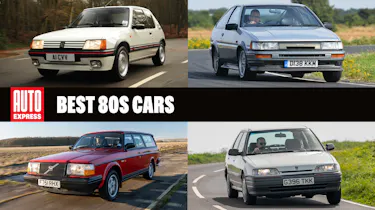
The 1980s: a decade of big hair, red braces, shoulder pads, New Romantics, mobile phones the size of bricks, and some absolutely outstanding cars. The best 80s cars encapsulated everything that was great about their era and we had a fantastic time choosing the cream of the decade’s crop for this list.
Some of the new 1980s technology, such as the microwave, remains in use today. Other innovations, such as the video player, ‘ghetto blaster’ and pocket television, are more likely to be seen on an episode of Stranger Things. It was the same story in the automotive world where some trends and technologies have endured as others have fallen by the wayside.
If one kind of car could encapsulate the spirit of the 1980s, it would be the hot hatchback. Sports cars and coupes were out, as the UK embraced the front-wheel drive hot hatchback with a souped-up engine, go-faster stripes and bodykits. The Volkswagen Golf GTI kick-started the revolution, with the Peugeot 205 GTI, Ford Escort XR3/XR3i and Vauxhall Astra GTE following suit.
The hot hatch was affordable to buy, cheap to run and a huge amount of fun. Unfortunately, it was also pretty tricky to handle on the limit and alarmingly easy to steal. The price of car insurance rocketed as motorists paid the price for a car crime epidemic. Naturally, there are plenty of hot hatches in our 80s car selection.
We’ve pulled together a list of the best cars of the 1980s. From fleet favourites to performance heroes, and sports cars to supercars, these are some of the cars that made the 80s such a formidable decade for motoring.
Peugeot 205
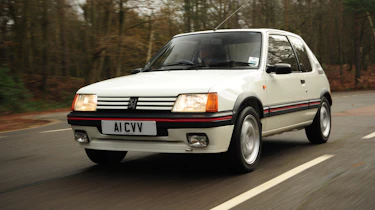
While plenty of eighties cars rewrote the rulebook in terms of technology and performance, the little Peugeot 205 turned up with a simple yet charming design, a very simple list of on-board kit and, most crucially of all, affordable pricing. It was a no-nonsense formula, and the 205 ended up selling in the millions because of it.
These old cars are still a pretty common sight in both the UK and continental Europe, and that’s largely because people love them due to being cheap to run and wonderfully simple to work on. Need a durable workhorse? The diesels are tougher to break than pure diamond. Need one of the greatest hot hatchbacks of all time? The 205 GTI will have you smiling from ear to ear. No matter which variant you go for, though, it’s still nigh-on impossible to escape the 205’s back-to-basics charm.
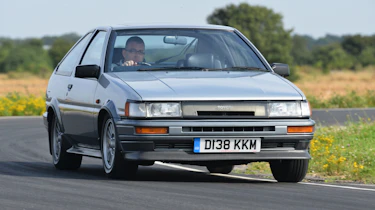
Toyota Corolla AE86
By Steve Walker
Corolla might have become a byword for earnest but dull motoring in recent years but that wasn’t always the case. The rear-wheel drive Toyota Corolla AE86 secured back-to-back British Touring Car Championship victories in 1986 and 1987, with Chris Hodgetts steering the car to victory.
The road-going model was built from 1983 to 1987 and featured the same 1.6-litre twin-cam engine as the touring car with power downgraded from 190bhp to 123bhp.
Just as the market was embracing front-wheel drive hot hatches the AE86 offered a little more finesse thanks to its balanced rear-wheel drive configuration, all-round disc brakes, coil springs and a limited-slip differential.
Its standing among enthusiasts and fans was only enhanced by its central role in the long-running Japanese anime series, Initial D and the AE86 has become a legend of the drift scene. This cult status is reflected in high prices for the unmodified cars that remain.
Volvo 240
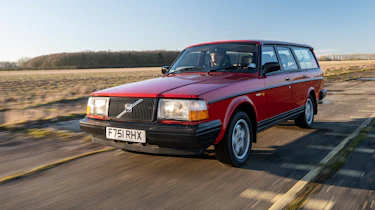
Even amid the surge of SUVs, Volvo has still remained synonymous with estate cars. That was largely driven by the 240, a car that left a lasting legacy for the Swedish brand. In fact it was only overtaken last year by the XC60 as Volvo’s biggest ever seller.
The Volvo 240 may have been introduced in 1974, but it stayed competitive for almost 20 years. It wasn’t quick or fun to drive (though its rear-driven layout and massive engine bay have proved popular with drifters), the 240’s success came from its practicality, reliability and safety. Its front and rear crumple zones were pretty advanced for the time, along with its reinforced passenger compartment. The 240 also got enhanced side-impact protection, which was later developed into Volvo's patented Side-Impact Protection System (SIPS).
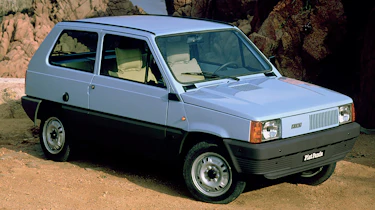
Fiat Panda (Mk1)
By Ellis Hyde
15 days: that’s all it took the legendary designer Giorgetto Giugiaro to create the timeless Mk1 Fiat Panda which he described as like "a pair of jeans" – simple, durable and unpretentious. This little bundle of joy was a triumph of packaging as it might have only been 3.38 meters long, but it was still spacious thanks to that boxy design, flat windows and a modular interior. You could even turn the rear seats into a hammock!
The back-to-basics approach and low-cost construction meant Fiat’s latest car of the people was cheap too, costing from around £2,000 which in today’s money would only be about £9,000! It appealed to all, from those in the city to those in the sticks, with the Panda 4x4 that arrived in 1983 proving a hit with Italian hill farmers and residents of the Alps in particular. No wonder more than 4.5 million during its 23-year run.
Nissan Skyline R32 GT-R
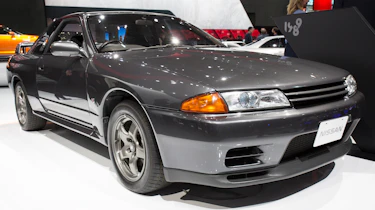
A cult favourite in Japanese car enthusiast circles, the 1989 Nissan Skyline GT-R didn’t so much as put the brand on the map in terms of high-performance cars, but it changed the game entirely. Unlike the Porsche 911 Turbos or Ferrari supercars it battled with in period, the GT-R was based on a simple family car platform, but packed serious technology that gave it even more performance and capability.
Fitted with a 2.6-litre straight-six petrol engine with twin-turbochargers, active all-wheel drive and a cutting-edge engine management system, it gave this otherwise pedestrian-looking model the firepower it needed to outperform the European competition, as well as dominate in Group N touring car racing worldwide. Its technology didn’t just trickle down, either, but also went up to traditional supercars that now feature much of the same technology.
Ferrari F40
By Tom Jervis
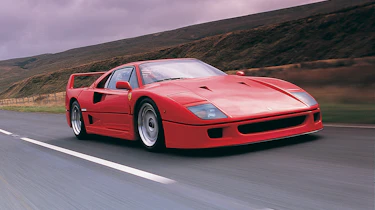
The last car overseen by company founder, Enzo, the Ferrari F40 is arguably the Italian marque’s greatest concoction of all time. Effectively an evolution of Group B racing prototypes, the F40 was designed to be as light as possible, with pull cords for door handles, a carbon fibre body and just two litres worth of Rossa Corsa paint – no other colours were offered – which left the carbon weave exposed.
Peeking out from under a lexan engine cover is the F40’s 2.9-litre twin-turbo V8 powerplant. This outputs 471bhp and, for those brave enough, will propel the Ferrari supercar all the way to a top speed of 201mph – a feat that made it the world’s fastest production car at the time.
Ford Sierra
By Ryan Birch
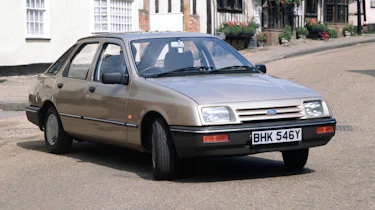
Ford has always been a popular brand here in the UK and the 1980s was yet another pivotal decade for the Blue Oval. The Ford Sierra followed in the footsteps of the hugely-successful Cortina, but it did get off to a rocky start. Rising fuel prices and external factors impacted the Sierra’s development.
Its aerodynamic ‘jelly mould’ design was penned to help the Sierra cut through the air as efficiently as possible but it definitely wasn’t a hit with the public and proved to be divisive, at least for the first few years.
The engines from launch were the same powerplants you’d find in the out-going Cortina and were dependable and reliable. As a result, the Sierra gained favour with fleet managers, and its independent suspension meant it was also comfortable and handled well; which went down a treat with drivers. Whatsmore, it served as a great base for the hot Sierra Cosworth which followed later.
The Sierra’s interior was a stark departure from the Cortina which it replaced thanks to its wrap-around dash and being relatively well-equipped for its class.
Ford pushed hard when it came to marketing the car following success in motorsport and other external deals. Ultimately it paid off because between 1982 and 1993 nearly one million Sierras were sold and it was the fourth best-selling car of the 1980s. Not bad at all.
DMC DeLorean
By Paul Barker
What could sum up the 1980s better than a boom-and-bust sports car more famous for being a film prop than anything it ever did on the road?
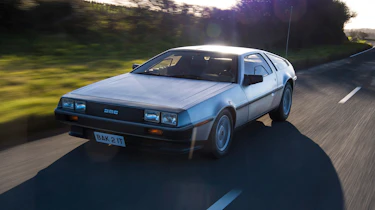
The DMC DeLorean’s legacy is its glorious failure, that it’s one of the most-loved cars of all time because it crashed and burned so badly that many people don’t even realise the time-travelling star of Back to the Future was actually a road car. Around 9,000 were built over three problem-plagued years where quality issues and a deeply underwhelming driving experience led to poor sales, and plenty of cars unsold when the company finally collapsed.
Typically, the company didn’t go down quietly, with founder and former General Motors high-flyer John DeLorean arrested in relation to a $24m cocaine deal. By the time he was found not guilty on grounds of police entrapment, the company was bankrupt, and the DeLorean’s place in history - including its crazy gullwing doors, brushed stainless steel panels and gutless performance (officially 8.8 seconds 0-62mph and 130mph flat out, although testers at the time couldn’t get close to those figures) - was confirmed.
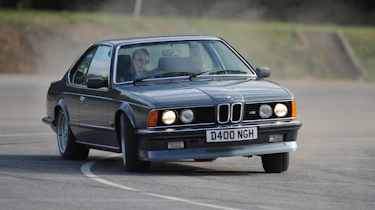
BMW M635 CSi
By Dean Gibson
Motorsport is in BMW’s blood, and in the 1980s it virtually dominated touring car racing. Having established its Motorsport department the decade before, and with the excellent naturally aspirated M88 in-line six from the M1 looking for a home, it made sense to place it in the 6 Series to create the M635CSi, a car that could take on all comers in production-based endurance racing.
It came at the peak of the ‘win on Sunday, sell on Monday’ philosophy that car makers used to justify their big-budget racing programmes, and the road-going M635 CSi flagship looked like it was just a livery away from hitting the starting grid. The in-line six made a healthy (for the time) 282bhp, and in a car with a kerbweight of just over 1.5 tonnes, this was good enough for 0-62mph in 5.8 seconds. Even better, a front-engine, rear-wheel drive set-up delivered a fine handling balance, while the distinctive ‘shark nose’ body made it a desirable coupe that made for an excellent long distance tourer.
Mercedes S-Class (W126)
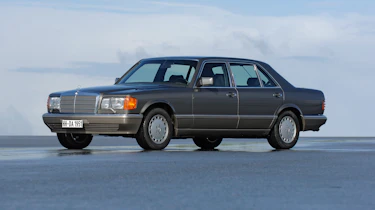
The Mercedes S-Class is an industry tech pioneer and a car that informs the innovations of tomorrow, today. While the W126 (the car’s internal code name) wasn’t the original S-Class, it’s widely considered the firm’s most successful, with more than 800,000 built during its 12-year production run.
As with every S-Class, the W126 marked a series of firsts for the automotive world. Safety was Merc’s number-one priority, marked by the inclusion of a driver’s-side (and later a passenger-side) airbag, seatbelt pre-tensioners and ABS – features that are standard on even the cheapest small cars today.
It put a focus on solidity and luxury, with orthopedic seats, wood trim and climate control. Yet launching at the height of the oil crisis, it needed to be more aerodynamic than its predecessor, and was even offered with a diesel engine in the US. The W126 set the benchmark for every Mercedes that followed and every luxury saloon sold since.
Rover 200 (R8)
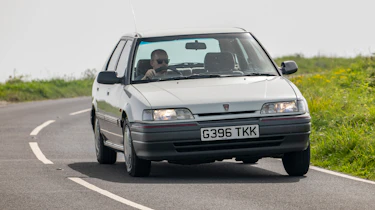
Although this generation of Rover 200 only just qualifies as an eighties car (it went on sale in late 1989), there’s no denying its impact on the UK’s car industry. When the R8 arrived, it quickly started to convince the nation’s wary drivers that the cursed shadow of British Leyland was finally starting to lift, thanks to Rover’s blossoming partnership with Honda.
This inclusion of Japanese engineering was certainly an attractive one. With plenty of influence from its Honda Concerto stablemate, the Rover 200’s build quality was worlds apart from what had come before, and this was then further complemented by electronics that actually functioned as expected. It wasn’t just a soulless rebadge job, though, because the 200 came with essential Rover touches such as wood on the dashboard and an enormous tea shelf.
The end result of all of these revolutions was a car that sold in droves and helped to ultimately keep this major British car maker alive and kicking (at least for a while).
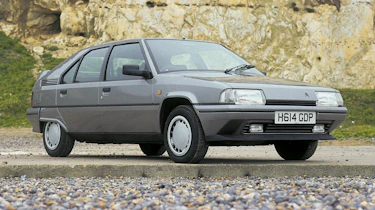
Citroen BX
By Steve Walker
Citroen’s past as a great innovator is often overlooked today, but the BX had a clear lineage traceable back to its 2CV and DS forebears. The brand’s entry into the eighties medium range family car rat race, the BX stood out with its lightweight design using plastic body panels, disc brakes at both ends and, of course, hydropneumatic self-leveling suspension.
Marcello Gandini, of Lamborghini Countach fame, handled the styling, even starring in a TV advert showing him leaving his house, walking past a Countach, then driving to work in a BX! The launch of a diesel version caught the attention of fleet buyers, while the hot GTi 16v version was the one to have for company car park oneupmanship.
The saddest part of the Citroen BX story is how few are left in the UK. More than 2.3 million examples were built between 1982 and 1994, but this hasn’t stopped UK numbers falling to critical levels. As the old saying goes, you don’t know what you’ve got until it’s gone.
Toyota MR2 (Mk1)
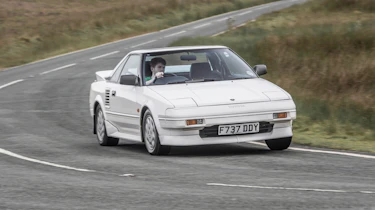
The Toyota MR2 story began with the SA-X prototype in 1979 when Toyota envisioned a fun-to-drive small car that was efficient - in response to the oil crisis a few years before.
Fast forward to 1984 and Toyota unveiled the tiny (it’s under four metres long and 1.25 metres tall) MR2 to critical acclaim - no doubt thanks to early development work on the prototype by F1 and NASCAR driver Dan Gurney (also of ‘Gurney flap’ fame).
Drive the first-generation, ‘AW11’ MR2 and you’ll revel in the steering brimming with feel, the rev-happy 1.6-litre four-cylinder, with four valves per cylinder, and a 977kg kerbweight that allows you to take liberties with the narrow 185-section tyres fitted to suitably dinky 14-inch wheels. The Mk2 MR2 became a little fatter and more powerful, while the Mk3 slimmed down and got closer to the original’s drive characteristics.
Porsche 959
By Ellis Hyde
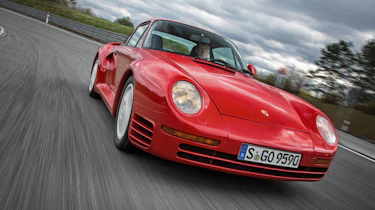
The antithesis of the raw, analogue Ferrari F40, the Porsche 959 was a vision of supercars of the future. It featured cutting-edge technology that had never been seen on a road car before, including adjustable suspension, magnesium wheels with a built-in tyre pressure monitoring system and an incredibly advanced four-wheel drive system that used a computer to split the torque between the wheels.
Delivering 444bhp at 6,500rpm was an air-cooled 2.8-litre flat-six engine with a pair of turbochargers and water-cooled four-valve cylinder heads. This propelled the 959 from 0-62mph in 3.7 seconds and onto a top speed of 197mph, which in 1986 made it the fastest car in the world. No wonder the 959 cost nearly £150,000 back then, however it turns out Porsche spent over £300,000 to produce each and every one of the 292 examples sold. And for that, we thank the company.
Mercedes 190E
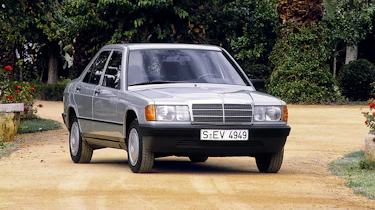
Tasked with bringing Mercedes-Benz’s world-class engineering and design to a more affordable price point, the 190E was the brand’s first foray into the compact executive class. But rather than being just a watered-down version of its larger models, the 190E set a template of engineering excellence that everyone, from BMW to Cadillac, had to live up to.
Designed during the tenure of iconic designer Bruno Sacco, the 190E didn’t just have classless lines and an exacting level of detail, but also introduced many engineering developments that spread to its future models. This includes five-link rear suspension, plus safety equipment such as airbags, ABS brakes and seatbelt pre-tensioners. It was a phenomenal success for the brand, selling over 1.8 million units over its lifespan.
Honda CR-X
By Tom Jervis
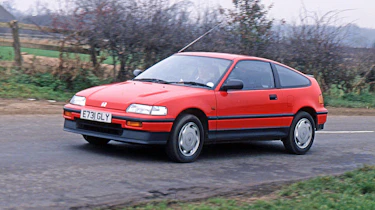
Front-wheel drive and up to 148bhp don’t exactly sound like the recipe for excitement, but at the time an Auto Express road test described the Honda CR-X as a “grown-up go-kart that defies virtually all attempts to be pigeon-holed”. Effectively a sleeker version of the Honda Civic, the CR-X tipped the scales in both its first and second generations at under a tonne, paving the way for the darty handling the car is known for.
In the UK, we were given the choice of 1.5 and 1.6-litre engines. The holy grail was the 1.6-litre VTEC SiR model which, as mentioned, produced just shy of 150bhp. Infectiously free-revving all the way to a redline of around 8,000rpm, today the hot CR-X exists as a reminder of unadulterated driving bliss.
Bentley Turbo R
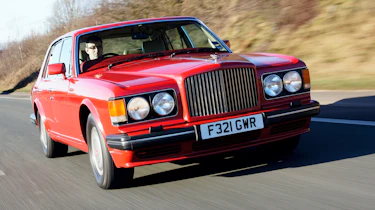
By Ryan Birch
If you’ve ever wondered what it would be like to drive around in a living room from a stately home, the Bentley Turbo R would be a great place to start.
It was developed from the old Mulsanne Turbo, but Bentley really transformed the ride and handling of the Turbo R. While the spring rates remained the same, the anti-roll bar rates were increased and the damping improved. In short, this put the Turbo R among the best in its class to drive. Combine this with the immense performance from a 6.75-litre V8 engine, and you get one of the best luxury cars of the decade.
I have been very fortunate to be chauffeured around in the back of a 1986 Turbo R. Granted, it was only a five-minute drive around an airfield, but the ride can only be described as “splendid”.
The leather seats, even after all this time, were incredibly comfortable and the cabin was almost silent – even at 70mph down the hanger straight. Although official power figures weren’t provided, the Turbo R is quick and had a limited top speed of 135mph. It’s not sports car-quick, but “progress is made” in an undramatic fashion. It’s exactly how you’d expect a Bentley to be.
Sales were very strong for a hand-built car, with some 4,111 examples leaving the factory during its nine-year production run.
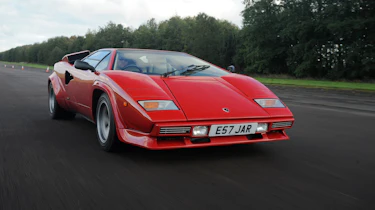
Lamborghini Countach
By Paul Barker
Originally a child of the seventies, the Lamborghini Countach is the automotive embodiment of the brash eighties, the least subtle of a batch of iconic supercars that included the Ferrari Testarossa, Porsche 959 and De Tomaso Pantera.
But the Bertone-styled so-called Italian Wedge shape of the Countach, its outlandish scissor doors, complete impracticality and – as it headed through the eighties – increasing number of spoilers made it one of the most recognisable and individual cars on the planet. Less than 2,000 were built across the Countach’s 16 years in production, more than half of which were the 5000 QV and 25 Anniversary models in the late 1980s. Powered by a V12 engine, the Countach evolved from its original 3.9-litre 370bhp engine to a 5.2 449bhp unit by the end of the eighties, capable of 185mph and a 4.5-second 0-62mph acceleration.
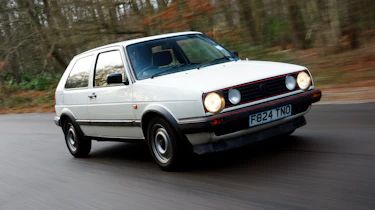
Volkswagen Golf GTI (Mk2)
By Dean Gibson
The second-generation Volkswagen Golf GTI built on the reputation of the original with a bigger body and more power, but stayed true to its predecessor’s philosophy of delivering an involving drive in a car that delivered everyday practicality. The fuel-injected engine increased from 1.6 to 1.8 litres, while the arrival of the 16-valve model brought with it another performance boost, although maybe not quite the same tractability as the eight-valve model, because you needed to give it some revs to really get going.
Okay, so the Golf GTI wasn’t the fastest hot hatch in town back in the eighties, but what it lacked in outright speed it made up for with accessible handling that could put a smile on anyone’s face. A feeling of solidity, the red detailing inside and out, not to mention the trademark tartan upholstery, mean the Golf GTI Mk2 is a definite eighties classic.
Audi Quattro
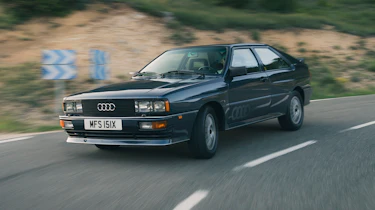
The Audi Quattro requires little introduction. Revealed at the 1980 Geneva Motor Show, it was the brainchild of chassis engineer Jörg Bensinger, who saw a gap in the market for all-wheel-drive road cars that could perform whatever the weather.
The original car had a 2.1-litre turbocharged five-cylinder engine making around 200bhp. Hardly quick by today’s standards, it did 0-62mph in around seven seconds and could barely hit 140mph flat out. But unlike its rivals, it could do that reliably on mud or on the motorway – come rain or shine.
The Quattro would lead Audi to great success in the world of rallying, eventually spawning the most iconic WRC car of all: the 1984 Sport Quattro. Built in limited numbers for homologation reasons – with a shorter wheelbase, an extra 100bhp and a good dose more torque – these versions now change hands for more than half a million pounds.
Making its name in rallying, the quattro moniker is still used nearly 50 years later as reference to the firm’s venerable all-wheel drive system.
Ford Escort (Mk3)
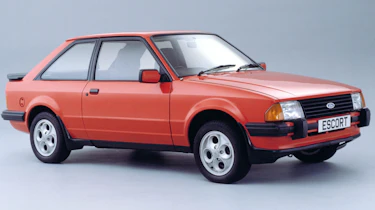
Ford occupied three of the top four slots on the list of the best-selling cars of the 1980s. The Escort was top dog, with some 1.6 million cars sold across the decade. It was all change for Ford’s popular family car, with the Mk3 Escort debuting in the 1980s as a front-wheel drive hatchback.
There was an Escort for everyone, from a lowly base model hatchback or estate, to a performance gem fit for royalty. Princess Diana famously took delivery of a black Escort RS Turbo. Back in the real world, Britain’s working and middle classes got their kicks in the XR3 and XR3i.
Austin Metro
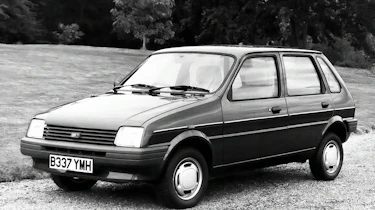
Even the most ardent of British Leyland fans would struggle to label the Austin Metro as one of the best cars of the 1980s, but it was one of the most significant. Launched in the 1980s as a replacement for the Mini, it was promoted as ‘a British car to beat the world’. It’s another car with a Princess Diana connection, albeit during her days as Lady Diana Spencer.
There were five models available at launch: standard Metro, L, HLE, 1.3S and 1.3 HLS. The MG and Vanden Plas models are the most desirable, but when the Metro died, the Mini lived on.
Lancia Delta Integrale
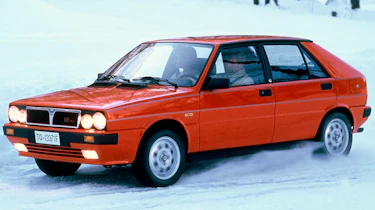
Lancia dominated the World Rallying Championship in the late-80s and early-90s. It was all down to one car: the Delta Integrale. At the hands of the likes of Juha Kankkunen and Miki Biasion, the four-wheel drive and turbocharged Delta was almost unstoppable on the world’s rally circuits, kick-started by the Delta HF in 1987.
Unlike the wild Stratos and 037, the Delta was based on a humble, Giugiaro-designed five-door hatchback, but the extreme bodykit and wide arches of the later versions gave the Integrale real presence. It died in 1994 and proved to be irreplaceable.
Saab 900 Turbo (Mk1)
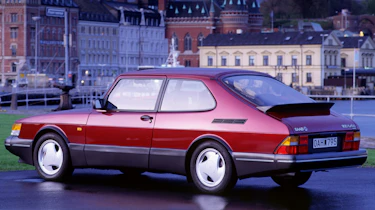
The Saab 900 technically arrived in the 1970s, but it deserves a place on this list. Essentially, the 900 came of age in the 1980s, with Saab developing the Turbo into an iconic performance car. The 175bhp 900 Turbo S arrived in 1984, followed by the limited-run 185bhp Carlsson in 1988.
Hatchback and saloon variants were joined by the 900 Convertible, which became one of the most popular four-seater convertibles of the 80s and 90s. The Saab 900 bowed out in 1993 with the Ruby special edition. It was the end of an era for the innovative Swedish company.
Renault Espace (Mk1)
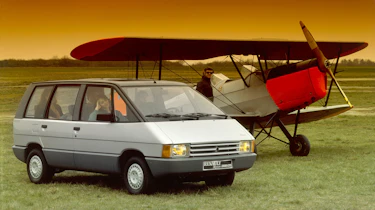
While Renault can’t claim to have invented the MPV, the Espace was Europe’s first mass-market people carrier. Unlike van-based MPVs of the past, the Renault Espace was designed from the inside out to offer maximum interior space and versatility. It could have been a Peugeot, but when the rival French company shunned the advances of Matra, Renault grabbed the baton.
Europe had never seen anything like it, to the point that the Espace made a disastrous start. Sales in the first month totalled nine, as European motorists failed to grasp the concept. Attitudes changed, with the Escape inspiring a new breed of family-friendly vehicles.
Vauxhall Cavalier (Mk2)
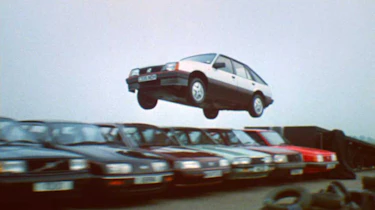
The Vauxhall Cavalier was one of the cars to benefit from the lukewarm reception to the Ford Sierra. Many buyers shunned the Sierra and turned to the conservative Cavalier, helping it to become the UK’s third most popular car of the 1980s. There was a time when the Little Chef car parks were filled with Cavaliers with a coat hanger dangling in the rear window.
The Mk2 Cavalier saw fleet buyers through most of the decade, before the curvy Mk3 Cavalier arrived in 1988. Although humble models were the most popular, the SRi and GSi versions offered some fun on the way back from the sales conference.
Lancia 037
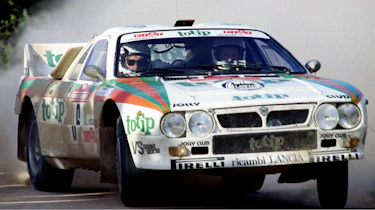
The rear-wheel drive Lancia 037 upstaging the four-wheel drive Audi Quattro to win the 1983 title is one of the greatest stories in the history of the World Rally Championship. It was the last rear-wheel drive car to win.
In an interview, Walter Rohrl said it was his favourite rally car. “From the pure driving view it was the Lancia 037. It was a car made for my styling of driving – I don’t like to steer. I believe the only secret in driving is to steer as little as possible”. A total of 207 road-going Stradale versions were built.
Porsche 944
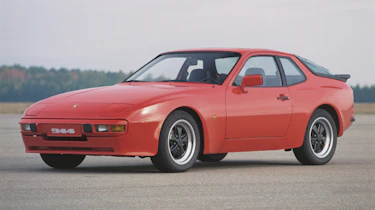
Porsche designed the 924 as an affordable sports car for Volkswagen, but when VW pulled out of the deal, bosses in Stuttgart were left with a car with no purpose. The company bought the rights and created an affordable version of its own. Some argued that it didn’t feel like a true Porsche, which led to the development of the 944.
This was the sports car the 924 should have been: wider, lower, stiffer and sharper. A new 2.5-litre four-cylinder engine delivered the performance, which gained a turbocharger for the launch of the 944 Turbo.
Ford Capri 2.8i
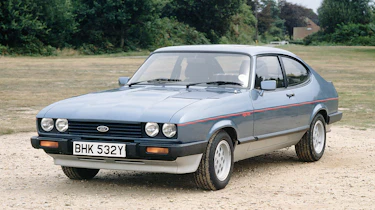
No other country embraced the Ford Capri quite like the UK. It delivered glamour and practicality to the family man, with the Capri enjoying its boom years in the 1970s. Time seemed to be running out when 1978 sales slumped to a third of the total in 1969. The launch of the Mk3 gave the Capri a new lease of life, with the 2.8 injection providing a much needed shot in the arm.
It was good enough to propel the Capri back into the top 10 sales chart, albeit with the backdrop of a growing image crisis. The 280 ‘Brooklands’ marked the end of production in December 1986.
Renault 5 GT Turbo
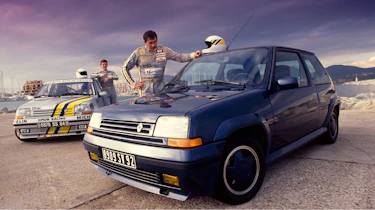
So many other hot hatches could have made this list. The Fiat Uno Turbo is an underrated gem, the Daihatsu Charade GTti was the world’s most powerful 1.0-litre car, while many people will have fond memories of the Vauxhall Astra GTE. However, the Renault 5 GT Turbo stands out as a true great.
Turbocharging was a big deal for Renault. The 18 Turbo was one of the pioneers of the concept of a turbocharged family car, but the 5 GT Turbo had even more universal appeal. A top speed of 125mph and 0-60mph time of 7.5 seconds delivered strong Top Trumps credentials.
BMW M5 (E28)
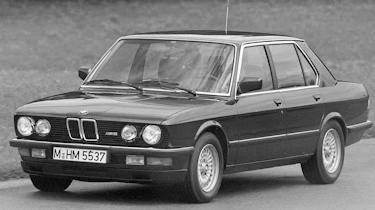
Understated to the point of anonymity, the E28 BMW M5 was one of the greatest performance cars of the 1980s. It was subtle by design, with BMW knowing that the car’s mature audience would prefer a sombre-suited saloon to anything too outlandish.
Its 3.0-litre straight-six engine lifted from the M1 supercar produced 278bhp. It was the perfect match for the sublime chassis, creating a package that was formidable enough to challenge the world’s greatest sports car. It was also one of the world’s first Q-cars.
Alfa Romeo GTV6
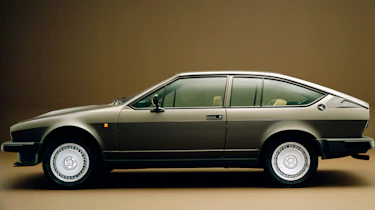
Like so many other Alfa Romeo models, the GTV6 was far from perfect, but on the right road, and in the right circumstances, you wouldn’t want to be in any other car. Key to its appeal was a sublime Busso V6 producing 160bhp, which delivered one of the best soundtracks of any performance car.
Launched in 1981, the GTV6 could hit 60mph in 8.8 seconds, before reaching a top speed of 127mph. However, outright pace was less important than the sweet-sounding symphony and the fine handling.
BMW M3 (E30)
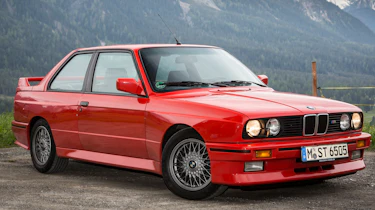
Even the E30 BMW M3’s left-hand drive only status didn’t stop it from becoming one of the most desirable performance cars of the 1980s. It was homologated to enable BMW to go racing against the Mercedes-Benz 190E Cosworth and Ford Sierra RS Cosworth, with power sourced from a four-cylinder, 16v engine derived from the six-cylinder unit in the M1.
Within a year of its launch at the 1985 Frankfurt Motor Show, sales had exceeded the 5,000 units required for homologation purposes. To satisfy demand, BMW launched Evolution and Evolution II models.
Audi 100
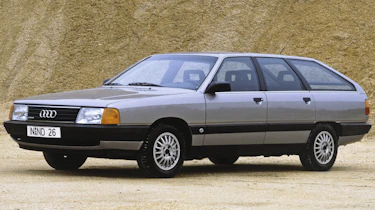
Audi began the decade with the world’s first mass-produced four-wheel drive performance car, but the Quattro wasn’t the only highlight of the 80s. Take the Audi 100, which arrived in 1982. At the time, it featured the best aerodynamics of any production car, while lightweight construction and the option of four-wheel drive set it apart from rival offerings.
It was also the first saloon to feature flush-fitting side windows, which helped the 100 to achieve a record-breaking drag coefficient of 0.30cd.
Lexus LS 400
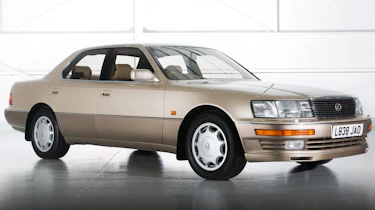
We conclude our look at some of the best cars of the 1980s with the Lexus LS 400. It arrived at the 1989 Detroit Auto Show and would become one of the defining cars of the 1990s. It was the result of near-obsessive levels of development, with Toyota determined to upstage the Mercedes-Benz S-Class. Nothing was left to chance.
A fitting way to end this feature and the perfect segue to a potential look at the best cars of the 1990s. The LS 400 would be one of the first cars on the list, swiftly followed by the Mazda MX-5. The sports car may have arrived in 1989, but it went on to define the automotive decade that followed.
Get even more from Auto Express, follow our channels...
• Google
• Reddit
• Whatsapp