Best low tax cars: New EVs and used ICE cars with cheap VED road tax
Want to minimise your VED road tax expense? We’ve rounded up some of the best cars which are cheap to tax

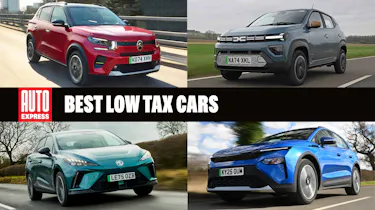
Running a car in 2026 is expensive. With fuel and insurance prices high, many drivers seek-out low tax cars to help cut costs.
Gone are the days when you could buy a new car with zero-rate VED road tax as all new cars will cost at least £200 per year to tax, but if you want to keep your car running costs in check there are still plenty of low tax cars that make ownership more affordable and we’ve listed the best below.
VED road tax changes
Up until recently, an electric car was the quickest route to paying no road tax. With no tailpipe emissions, they always sat in the lowest band A, and cost just £0 in VED.
Things have now changed thanks to new tax regulations introduced in April 2025. While the first-year tax rate of £10 doesn’t sound too bad, the rates from year two onwards are a little less wallet-friendly.
From the second year onwards, EV owners now have to pay the same £200 per year in road tax as everyone else – as will existing EV owners, if their car was registered after April 2017.
Expensive car supplement
While paying £200 per year in VED road tax might not sound great, opt for a petrol, diesel or hybrid car with a list price over £40,000, or an EV from over £50,000, and you’ll end up paying the Expensive Car Supplement, also known as the luxury car tax.
The Expensive Car Supplement, or luxury car tax is an additional tax of £440 per year, payable in the second to the sixth year after registration. Simply put, you’ll be paying a combined total of £640 per year.
Best low tax cars to buy today
So, what are the best low tax cars currently on the market? Below, we’ve selected five brand new EVs that escape that expensive car supplement surcharge (and are great all-rounders which won’t break the bank to run).
Further down the page, you’ll also find some pre-2017 used cars that are still taxed on the old system based on CO2 emissions. While still subject to VED, these older cars sit in the lowest possible tax band and will only cost you £20 a year, making them much cheaper to tax than an EV.
Finally, at the bottom of the page we've outlined our top-tips and things to consider when buying a low-tax car…
Dacia Spring
If you’re after a small car which won’t break the bank to buy or run, look no further than the Dacia Spring.
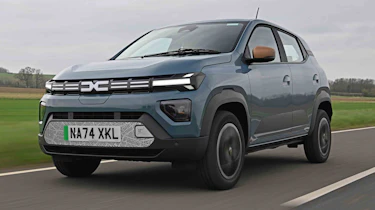
- Prices from £15,990
| Pros | Cons |
|
|
If we’re talking low tax, we might as well talk ‘low everything’. As one of the cheapest electric cars on sale in the UK, the Dacia Spring is probably about as little as you can get away with paying to run a car in just about every metric.
Starting with tax, its 0g/km CO2 rating means a £10 first-year tax bill, just like any electric car, and with a starting price from £15,990 it’s miles away from the luxury car surcharge, it’s the standard £200 per year after that, just like everything else.
But of course, being small and light with a small battery, charging isn’t going to break the bank either. A 0-100% top-up of the 24.3kWh pack, enough for a real-world range of more than 130 miles in our experience, won’t cost you more than about £2.50 on an overnight economy tariff when charging at home. Call it £20 to do a thousand miles.
Topping up at a public charger shouldn’t be too painful, either. While this is the least cost-effective way of running an EV with an average cost per kWh at around 49p, a complete charge from empty to full will set you back around £12. A 20-80 per cent charge can be completed in under 30 minutes, too.
And even if you’re a higher-rate taxpayer, BiK company car tax will only just scrape past £300 in 2026-2027. For those looking to buy a Dacia Spring as a personal vehicle, your annual car insurance policy shouldn’t be eye-watering either, with all Springs sitting in insurance group 28 or below.
See our new Dacia Spring deals
Citroen e-C3
Competitive pricing and a compact package, the Citroen e-C3 is a great small city EV.
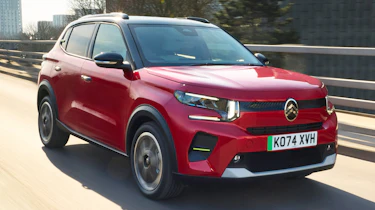
- Prices from £20,000
| Pros | Cons |
|
|
The Citroen e-C3 is another favourite here at Auto Express. So much so, it won our coveted Car of the Year title at the 2024 New Car Awards.
While not as absurdly cheap as the Spring to buy or run, you’re looking at identical VED bills, with the same £10 first-year rate and £200 thereafter. The sub-£20,000 starting price is barely even halfway to the £50k tax surcharge zone, and you don’t need to worry about opting for top-spec Max trim with optional extras, either, as you won’t even be close to paying the luxury car tax.
It’s not only the low running costs we like with the Citroen e-C3 though. Its compact body (just about 4 metres long on the dot) hides generous interior space, in part thanks to pseudo-SUV styling which allows for a high roof. This makes ferrying taller passengers in the rear a doddle, plus the boot is quite roomy for a car of this size at 310-litres.
Clever use of materials stops the cabin feeling too cheap, and it’s got a typical Citroen ride as well: smooth and relaxing, whether in town or on the motorway. We also really like the Advanced Comfort seats, which offer plenty of comfort and support.
See our new Citroen e-C3 deals
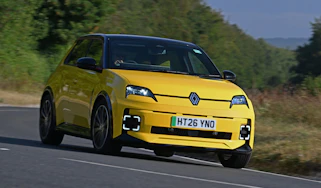
Renault 5 E-Tech
Want a low tax car with some retro charm? The Renault 5 fits the bill perfectly.
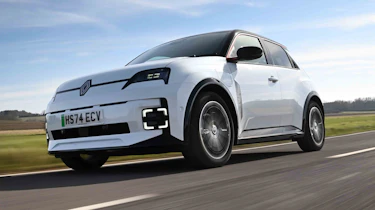
- Prices from £21,500
| Pros | Cons |
|
|
The fabulous new Renault 5 tops out at around £27,000 in its Roland Garros+ trim with the 148bhp motor and larger battery. In fact, even the sporty Alpine A290, the 5’s hot-hatch cousin, undercuts the luxury vehicle surcharge, so all 5s and A290s will cost the same £10 in VED in year one, and £200 per year afterwards.
The 5’s greatest appeal though is its styling, with part-retro, part-futuristic design that nods to the 5’s 1970s namesake, and knocks the MINI Cooper E off its perch as the most distinctive small electric car on the roads. The interior is also a nice place to be, feeling far from cheap.
On the road, it’s both grown-up to fun to drive, plus the 249-mile range of the more powerful, larger-battery cars is pretty good for a supermini EV too.
Cars don’t come more likable than the Renault 5, but if you needed more convincing, it also qualifies for the Government’s Electric Car Grant, making it even more affordable.
Skoda Elroq
It’s not just small city cars or superminis which are great low tax cars, mid-size SUVs like the Skoda Elroq are great choices, too.
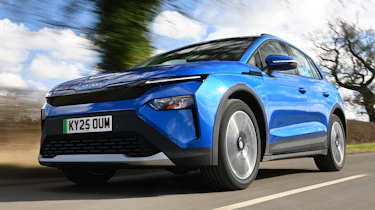
- Prices from £34,000
| Pros | Cons |
|
|
It’s not just small cars that are cheap to tax these days. Those looking for a mid-size family car can try something like the Skoda Elroq and not pay any more in tax than a supermini buyer.
We’re big fans of the Skoda Elroq and it’s not difficult to see why. Our 2025 Car of the Year is a great all-rounder, it’s efficient, the interior looks and feels good, and it’s comfortable to drive.
What we like most about the Skoda Elroq though, is that there’s a flavour to suit almost every buyer – from the practical and spacious Elroq SE L to the fire-breathing performance Elroq vRS.
All Elroqs, including the vRS, come in under the £50k limit which would see their VED skyrocket to £640 per year in their second to sixth year on the road. If you’re looking to buy a vRS, just don’t get too trigger happy with the optional extras as you can easily bump up the price to above the £50k luxury car tax threshold.
While the Elroq vRS will entice those who want a performance car in their life, it’s actually the £34,000 entry-level Elroq SE L 60 that would be our car of choice. Not only is the SE L 60 packed with all the kit you’d expect from a family car, its claimed range of up to 265 miles on a single charge should be plenty for most. It’s also the cheapest Elroq to insure, sitting in group 27.
MG4
MG is going from strength to strength in the UK, and the new MG4 is proof that the brand will be around for a long time to come.
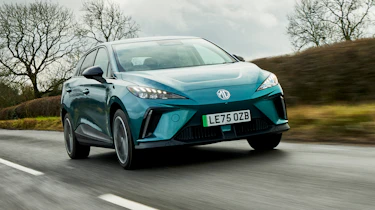
- Prices from £30,000
| Pros | Cons |
|
|
As an alternative to the Skoda Elroq, to serve that sensible electric family car role, how about the MG4?
Since launch it’s offered great value and despite price increases and a recent facelift, you can still get a lot for your money: just under £34,000 is enough for a Premium Extended Range model capable of up to 338 miles. Whatsmore, the slightly silly 429bhp XPower model is the same price, meaning all MG4s avoid a hefty tax surcharge.
We’d probably steer clear of the XPower in reality, as quick though it is (3.8 seconds from 0-62mph), range suffers (251miles) and it’s less fun to drive than the figures suggest.
All MG4s generally drive well, charge quickly, and come well-equipped. While the pre-facelift car lagged behind rivals a little when it came to interior quality, MG has taken steps to make sure the refreshed car is on par. The materials feel of higher quality, the infotainment system is much nicer to use, and we’re fans of physical climate controls.
The best pre-2017 low tax cars
If you’re really looking to avoid paying £200 a year for road tax, you’re going to have to look on the used car market.
Cars registered after March 2001 and before April 2017 fall under a different tax system which was determined by how much CO2 the vehicle emits, with the lowest-polluting cars having to pay very little.
Some cars used to be free of road tax, but since April 2025 this has no longer been the case. The good news is that taxing those previously free cars will still be very cheap: they essentially move up to the old Band B, which is still only £20 a year.
Citroen C1
If you’re looking for a cheap car to run and tax, the Citroen C1 is a great used buy.
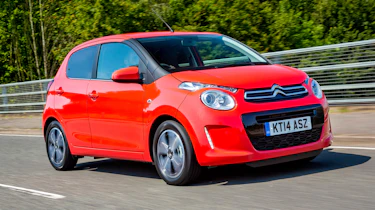
Cars like the Citroen C1 remain a popular choice with first-time drivers and those looking to keep car ownership costs to a minimum. They’re effortlessly economical, achieving 60mpg with ease, but this economy also meant that they had low CO2 emission ratings, and this meant little to no car tax.
It only applies to certain models, notably 1.0-litre cars registered before WLTP fuel economy tests were brought in. As these tests were stricter, combined mpg numbers tumbled and official CO2 emissions went up accordingly.
Thankfully, this was only implemented in 2019, and since we’re looking at pre-2017 cars, almost all will be either under 100g/km or 110g/km, both of which attract the same £20 bill. The same applies to the C1’s Peugeot 108 and Toyota Aygo siblings, as well as several variants of the Volkswagen up! and its SEAT and Skoda equivalents.
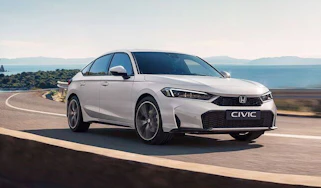
Honda Civic
The Honda Civic offers dependability and practicality in spades, and opt for the 1.6-litre iDTEC diesel and VED will be minimal.
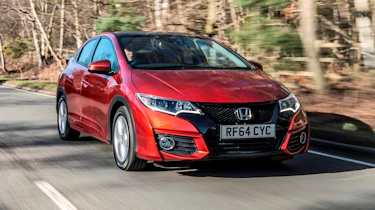
Diesel has fallen out of favour in modern vehicles but for a while it was the easiest way to achieve low CO2 figures, because official fuel economy figures in the 70-80mpg range just about guaranteed zero-rate VED. One of those offering intergalactic fuel economy was the ninth-generation Honda Civic, with the 1.6-litre i-DTEC diesel offered from 2012 until 2017.
While power was an unspectacular 118bhp, economy of 78.5mpg combined on the old NEDC test meant CO2 of only 94g/km, well under the old 100-gram limit for free tax. That means that while you now have to stump up some money for the Civic’s annual VED, it’s still only 20 quid.
Best of all, they’re very reliable and still return excellent real-world economy. In true Honda style, it’s also reasonably refined, even by modern standards.
See our used Honda Civic deals
Toyota Prius
We named the Toyota Prius as the most influential car of the past 30 years thanks in part to its low tax and running costs.
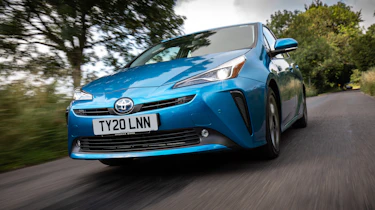
The Toyota Prius is the classic high-economy, low-emissions choice, so it’s no surprise at all that just about every past variant will still qualify you for low VED even after the April 2025 changes.
2016 fourth-generation Prius models offered a fuel economy figure of up to 67.3mpg, which meant 78g/km of CO2, or even lower if you find a plug-in model. Either way, that’s £20 a year in tax.
The third generation model ran from 2009 to 2015, promised economy in the 70mpg range, and again ducked well under 100g/km, so it’s £20 for those too. Only when you go back to the second-generation car, from 2004-2009, does CO2 climb over the 100g/km barrier, but since the £20 bracket goes up to 110g/km now, the annual tax doesn’t increase. Even the first-generation Prius, at 114/gkm, only costs £35.
See our used Toyota Prius deals
Volkswagen Golf GTE
Want a sporty-ish hybrid hatchback which is cheap to tax? The Volkswagen GTE has you covered.
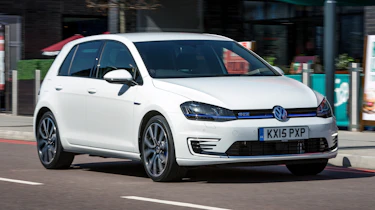
If the Prius is a bit dull, here’s a pre-2017 hybrid – specifically, a plug-in hybrid – that can still treat you to low VED bills but offers a little more in return for the driver. Essentially, the Volkswagen Golf GTE is a plug-in hybrid version of the celebrated Golf GTI – or that’s what VW would like you to believe, anyway.
The reality is that the GTE was never quite as fun as the GTI, its 1.4-litre hybrid powertrain and extra weight taking the edge off the GTI’s performance. But it was still brisk, with a 7.6-second 0-62mph time (1.1 off the GTI at the time), would get you roughly 20 miles of EV range, and had quoted CO2 emissions of 39g/km, for that all-important free VED at the time.
While it is no longer free from VED, it’ll set you back a total of £20 for the year. Based on the Mk7 Golf, it’s also just a brilliant all-rounder – and much cheaper to tax than the latest Mk8 GTE.
See our used Volkswagen Golf GTE deals
BMW i8
The BMW i8 is proof that you can have a performance car with cheap running costs.
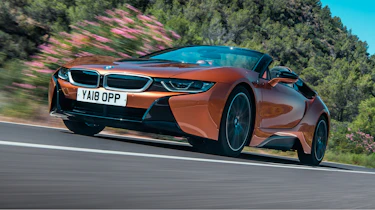
Here’s our wildcard choice. Short of a Tesla Roadster, a pre-2017 performance car won’t come much cheaper to tax than the BMW i8. The dramatically-styled coupe was launched in 2014 and thanks to its plug-in hybrid drivetrain, BMW claimed CO2 emissions of only 49g/km. That doesn’t look much by modern plug-in standards, but meant free VED at the time, and a scant £20 bill today.
Early cars will get you only around 20 miles of EV driving on a charge, but real-world economy of over 40mpg is eminently possible. If you can resist stretching its 357bhp part-electric, part 1.5-litre three-cylinder turbocharged drivetrain, anyway. The i8 is no Porsche 911 in the twisties but it’s still fun, and still looks incredible. 20-quid tax is just the cherry on the icing.
What to look out for when buying a low tax car
When buying a low tax car, there are a few things you need to take into consideration.
There are no new cars on the UK market which benefit from zero-rate VED road tax, so whether you buy a petrol, diesel, hybrid or electric car, you’ll be paying the same standard rate of £200 per year.
How to avoid paying the luxury car tax
Where you want to pay close attention is when it comes to the Expensive Car Supplement, or luxury car tax. Buy a petrol, diesel or plug-in hybrid car over £40,000, or an EV over £50,000 and you’ll be shelling out an additional £440 per year between years two and six after registration.
If there’s a car on your shortlist which is close to the luxury car tax threshold, consider opting for a lower trim level, or removing some optional extras to avoid paying the Expensive Car Supplement.
Alternatively, you could move down a trim level or two and add the optional extras to that cheaper version.
Just keep in mind that the luxury car tax is calculated on the P11D value, or the car's official price before any discounts, savings or dealer incentives, so a petrol, diesel or hybrid car that has a list price of £41,000 will always attract the tax even if you only pay £39,000 because of dealer discounts, incentives or promotional offers.
Buying a used low tax car
Buying a used low tax car is similar to buying a used car in general, there are just a few additional checks you’ll want to make in addition to the MoT or service history.
If you’re looking to buy something slightly newer at less than six years old, you’ll want to check and see if the car you’re buying incurs the luxury car tax. You can easily find this out by checking a vehicle’s tax on the GOV.UK website.
Simply enter the vehicle's registration number, confirm the details of the car you’re looking at and you’ll then be given a report.
If the car you’re looking at incurs the luxury car tax, the bottom line of this report will state Additional Rate applicable until followed by a date which tells you when the car no longer incurs the luxury car tax.
If there is no mention of the Additional Rate, you won’t need to pay the Expensive Car Supplement.
There’s more to life than taxes
Finally, don’t get too fixated on buying a car with low tax. Ultimately it’s a way of minimising your running costs and taxation is only a relatively small part of the total cost of ownership when it comes to cars.
The cheapest cars to run have low tax but also low insurance, low maintenance costs and good fuel efficiency. Look at the full package to get a true picture and choose the best car for you.
Our dealer network has 1,000s of great value new cars in stock and available now right across the UK. Find your new car…