Ford Explorer review
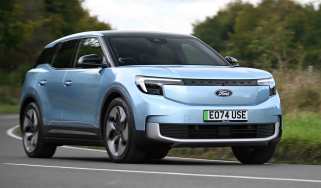
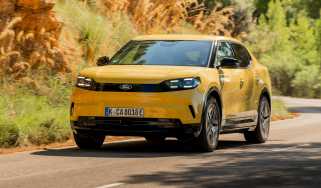
The Ford Explorer electric SUV has striking, chunky looks and appeal that’s more than skin deep

Our opinion on the Ford Explorer
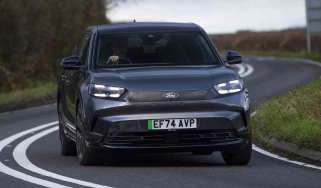
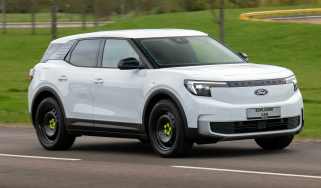
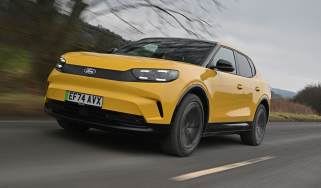
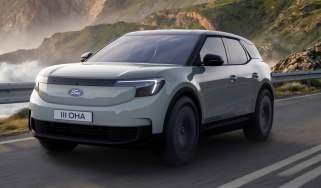
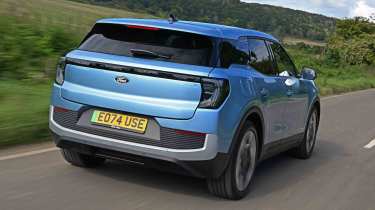
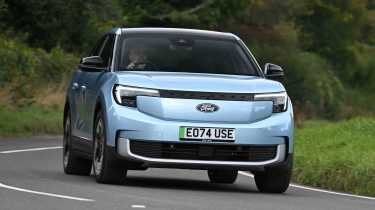
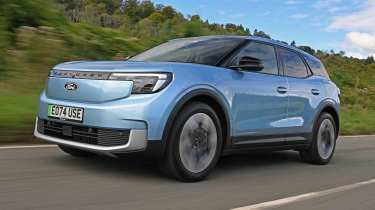
Standing out is no easy task, but the Ford Explorer manages to differentiate itself in the busy electric SUV market thanks to its smooth front and rear ends, squared-off lines and small windows, which all combine to give this car a purposeful look. It shares only its name with the Explorer sold in America, with this iteration being based on the same MEB platform created by the Volkswagen Group for its Volkswagen ID.4 or Volkswagen ID.5 EVs. We'd choose the Explorer over its VW cousins because Ford has tuned the chassis to make it more fun to drive and given it a better interior.
About the Ford Explorer
You have to feel a little sorry for the Ford Explorer. There’s no real history of Explorer in the UK – the American SUV was more famous for being in Jurassic Park than in regional Ford dealerships. It sits between the Ford Mustang Mach-E that came before and the Ford Capri that followed soon after. The latter stole quite a bit of attention away from the Explorer by resurrecting the well-loved name of an iconic coupe for an electric SUV. But of these three models that all use names from Ford’s back catalogue, the Explorer is probably the one that will cause the least controversy among Ford fans.
Used - available now

2025 Ford
Explorer
7,355 milesAutomaticElectric
Cash £31,995
2025 Ford
Explorer
4,000 milesAutomaticElectric
Cash £36,000
2025 Ford
Explorer
4,414 milesAutomaticElectric
Cash £33,195
2025 Ford
Explorer
17,665 milesAutomaticElectric
Cash £30,997The range is simple, starting with Style before going up to our recommended mid-range Select trim. The top-of-the-range Premium is the only way to get four-wheel drive and adds some extra niceties, but we don’t think it’s worth the additional cost over a Select trim. However, there has been some good news on this front, because most of the Explorer range now qualifies for the Government's band 2 Electric Car Grant, which discounts the price of the Style, Select, and the 58kWh rear-wheel-drive version of the Premium trim by £1,500.
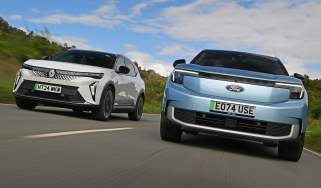
We’ve tested multiple variants of the Ford Explorer since it first arrived on the UK’s roads. We even pitted it against the popular Renault Scenic in one of our real-world twin tests, but it didn’t quite manage to defeat its French foe.
Ford Explorer prices and latest deals
How much does the Ford Explorer cost? Well, official ‘on the road’ prices range from £35,175 to £52,370 but you can currently save an average of £3,350 through the Auto Express Find A Car service, where prices start at £32,377. You can lease a Ford Explorer from £277 per month or buy a used model at prices starting from £27,300.
Check out our latest new car deals, leasing deals and used car deals for the top offers available now on Auto Express. And don't forget we can help you sell your car, too.
Performance & driving experience
Pros |
|
Cons |
|
Ford Explorer buyers have a few options to choose from based on whether they go for a Standard or Extended Range model. Most come as standard with rear-wheel drive, while the latter Extended Range is available with four-wheel drive in pricey Premium trim.
One of the few clues to the Explorer’s VW-derived tech inside is the drive selector. As with other MEB models, there’s a chunky column shifter to the right of the steering wheel, which has D and B drive modes, with the latter offering stronger energy recuperation to help top up the battery when decelerating. There’s no one-pedal setting, but adjusting the throttle in B mode means you’ll only really use the brake pedal when you need to come to a complete stop.
| Model | Power | 0-62mph | Top speed |
| Style Standard Range RWD | 187bhp | 8.0 seconds | 99mph |
| Select Extended Range RWD | 282bhp | 6.4 seconds | 112mph |
| Premium Extended Range AWD | 335bhp | 5.3 seconds | 112mph |
Performance, 0-60mph acceleration and top speed
The 58kWh Standard Range version of the Ford Explorer has 187bhp, a 0-62mph time of 8.0 seconds and a top speed limited to 99mph. The extra power of the 282bhp 79kWh Extended Range RWD model means it can accelerate from 0-62mph in 6.4 seconds, and should be more than fast enough for most drivers’ everyday needs.
Meanwhile, the four-wheel-drive models have a little more weight to contend with thanks to their dual motors, but the traction and extra power at 335bhp mean 0-62mph takes just 5.3 seconds. All of the big-battery models have a top speed that’s electronically limited to 111mph, while the standard range is 99mph.
Town driving, visibility and parking
The Ford Explorer features a high-set driver’s seat, so there’s a good view of your surroundings. Visibility is also helped in part by the novel C-pillar windows, which have a graphic on the outside, but are clear when viewed from the inside.
Front and rear parking sensors and a reversing camera are fitted, while light steering and well judged throttle response help with low-speed manoeuvres. From the lights, the Explorer pulls away briskly as power is sent to the rear wheels.
There’s a slightly unsettled ride when the car is fitted with 20-inch wheels – the Select model with 19-inch rims does better in this regard, but not by a huge amount. Another potential pitfall of these large wheels is their vulnerability to kerb damage.
Country road driving and handling
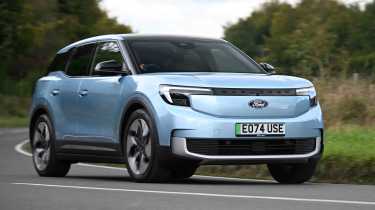
A healthy spread of torque means it’s easy to get up to speed in the Ford, and overtaking is simple, too. Plant your right foot and there’s a pleasant bit of shove on offer, but it’s far less harsh than the organ-rearranging nature of cars like the Tesla Model Y Performance. Unless you’re a massive thrillseeker, the Ford has just enough oomph to put a smile on your face.
There’s a soft edge to the handling, though, which results in some body roll, but the car never feels unstable or wayward, while the steering reacts quickly to inputs without making the SUV feel nervous. A consequence of the Explorer’s fairly soft suspension, though, is that it struggles to settle down on anything other than a perfectly flat surface. While we wouldn’t call it annoying, there’s a frequent bounciness to the ride that’s certainly noticeable, especially on more uneven B-roads.
Overall, the Explorer is a more pleasant and enjoyable car to drive than a VW ID.4, although it doesn’t quite capture the same sense of driving fun that other Fords have managed in the past. This can largely be put down to the car’s kerbweight of over two tonnes.
Motorway driving and long-distance comfort
At higher speeds on motorway-grade tarmac, the Explorer settles down to deliver great cruising comfort, with minimal road or wind noise. The general level of comfort here is better than you’ll find in the closely related Volkswagen ID.4. The Ford’s B drive mode is best turned off at higher speeds, however, because it makes the throttle response jerky.
Range, charging & running costs
Pros |
|
Cons |
|
Electric range, battery life and charge time
Ford quotes a maximum combined range of 273 miles for the 58kWh Explorer in base Select trim, or 258 miles in Premium trim. Our preferred 79kWh Extended Range with more power has a range of 374 miles, while the four-wheel drive version with a slightly smaller 77kWh battery only gets 321 miles of range.
During our time with an Explorer in Premium trim, we saw the trip computer return an average efficiency of 3.7 miles per kWh, even with some fast motorway use. This translates into a range of 277 miles for the 77kWh model, which will likely be enough for most driving needs. However, when outside temperatures fell below five degrees Celsius, the Ford struggled to pass the three miles per kWh mark.
One gripe we have is that a heat pump is a pricey upgrade on all models. Considering it's a much-needed add-on to help maintain battery range in colder winter months and that some cheaper rivals have one fitted as standard, it's a shame Ford doesn't include this feature.
If you’re going to be using DC charging, the company offers different maximum rates depending on which battery is fitted. The 58kWh battery can charge at up to 105kW, the 79kWh battery has a rate of 183kW, while the 77kWh battery with the four-wheel drive model manages 185kWs. None of the maximum rates is particularly outstanding compared with a Hyundai Ioniq 5 or Kia EV6, but the 10-80 per cent capacity top up time of under 30 mins for all versions is on par with most rivals.
Utilise a typical 7kWh wallbox charger at home, and you can expect recharge times of around 9 hours for the 58kWh battery, 12 hours for the 77kWh battery, and 13 hours for the 79kWh battery.
| Model | Battery size | Range | Insurance group |
| Style Standard Range RWD | 58kWh | 273 miles | 21 |
| Select Extended Range RWD | 77kWh | 374 miles | 28 |
| Premium Extended Range AWD | 79kWh | 321 miles | 33 |
Insurance groups
Ratings go from Group 21 for the Style trim with the smallest battery, all the way to Group 33 for the Premium in 335bhp four-wheel drive guise. These categories are in line with most electric SUV rivals, although compared with the combustion-engined Ford Kuga SUV (groups 16 to 25), they are higher overall. The Explorer’s sister car, VW’s ID.4, sits between groups 23 and 39.
Tax
With all EVs sitting in the lowest company car tax bracket, Benefit-in-Kind (BiK) costs all boil down to the list price. Since the Explorer is pricier than some rivals, it’ll cost business users more money each year, but we’re only talking a few pounds rather than the hundreds you’d have to shell out for a combustion-engined car.
Electric vehicles no longer benefit from zero vehicle excise duty (VED), so the standard rate of £200 will need to be paid annually. Most versions of the Explorer manage to come in under the revised £50,000 luxury car tax threshold and avoid the annual surcharge that applies from the second year the vehicle is taxed until it is six years old. Just be aware that higher trim levels can exceed this limit with few options.
Depreciation
According to our expert data from CDL, depending on specification, the Explorer is expected to hold on to between 48 and 56 per cent of its original value after three years and 36,000 miles. That's much better than the closely related Volkswagen ID.4, which only retains between 35 and 47 per cent, while the Tesla Model Y is predicted to retain between 42 and 53 per cent over the same period.
To get an accurate valuation on a specific model check out our free car valuation tool...
Interior, design & technology
Pros |
|
Cons |
|
There’s no escaping VW’s influence when taking a seat in the Ford Explorer, because the chunky steering wheel stalks and ever-irritating haptic controls are all too obvious. Aside from these touches, Ford still manages to differentiate the Explorer from its German counterpart and, in our opinion, give it a more stylish interior.
The entry-level Style trim gets all that you'd need, with 19-inch alloy wheels, LED headlights, adaptive cruise control, dual-zone climate, a reversing camera, front and rear parking sensors, and blind spot monitoring.
We'd recommend spending a little more to get the mid-range Select trim, because it adds:
- An electric tailgate
- Electrically adjustable driver's seat with memory and massage settings
- Heated front seats and steering wheel
- An auto-dimming rear-view mirror
- Keyless entry and start
Next up is the Collection trim, which adds 20-inch black alloy wheels, model-specific grey exterior paint, a contrasting black and orange interior, and the travel pack that's an option on other trims that includes a frunk organiser.
The range-topping Premium trim comes with a panoramic glass roof, full sensico upholstery, upgraded 10-speaker B&O sound system, matrix adaptive LED headlights, and ambient interior lighting.
Interior and dashboard design
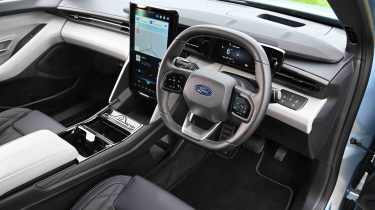
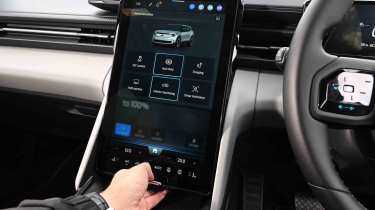
Considering Ford had some fixed parameters to work with when creating the Explorer, it’s not obvious from the cabin that its running gear is shared with any VW models. One big factor in that is the cabin layout, which has a large central tunnel separating the front seats. By comparison, the VW ID.4 has a more open feel up front. Of course, the other big difference between the two is the addition of Ford’s vast 14.6-inch portrait touchscreen.
Materials and build quality
Ford’s movable touchscreen display is one place where the cabin finish takes a bit of a backwards step, because the mechanism for the sliding screen leaves exposed edges that spoil the appearance of the centre console when the display is vertical. But overall, the cabin feels well constructed and features plenty of decent, high-quality materials.
Infotainment, sat-nav and stereo
With so much tech on offer, it’s no surprise that the majority of the Explorer’s functions are controlled via the portrait screen. The Ford’s vast 14.6-inch touchscreen is so large that the climate controls at its base only take up a fifth of the display, but they’re still harder to use than conventional buttons. The same goes for the customisable shortcut icons at the top of the screen, which can be difficult to interact with while on the move.
A carry-over from VW is the touch-sensitive volume slider, which needs a firm press to activate. The volume can be adjusted via the steering wheel, too, although this is also a haptic slider that’s inconsistent in its responses. In other words, adjusting the volume isn’t as quick or trouble-free as it should be.
The long piece of trim across the top of the dashboard is actually a sound bar, and is similar in concept to the sort of audio device that you’d find in your home. Premium models have a great-sounding Bang & Olufsen set-up, but the rest of the line-up comes with an unbranded system that still offers decent quality. Wireless phone charging is part of the £1,650 Comfort driving pack on entry-level Style trim, but comes as standard from mid-range Select trim.
Ford’s SYNC Move software is responsive and offers quick loading times, while voice control is available if you’d rather not use the screen. We didn’t have any problems getting the voice control system to understand what we were saying, but it didn’t always have the answers we were looking for and it feels like a more basic system compared to Renault’s AI assistant.
“The windows look like they’re on the small side, but there’s some clever tech going on with them to help boost all-around visibility and the sense of space inside.” - Dean Gibson, senior road test editor.
Boot space & practicality
Pros |
|
Cons |
|
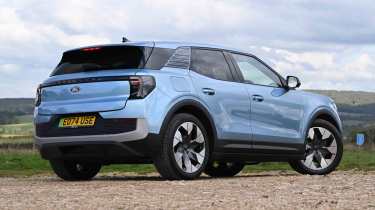
Ford’s designers have given the Explorer a distinctive look with its smooth nose and matching rear end. It’s a clean-sheet design that doesn’t refer back to any past models, while the car’s wide stance and squared-off shape help it fit the SUV brief. A long wheelbase and wide track help the Explorer to deliver decent passenger space, but the boot could be better.
Dimensions and size
The Explorer is one of the widest cars in the class, and its long wheelbase delivers as much interior space as the class best. A Renault Scenic has proportions that largely match, while the Volkswagen ID.4 and Volkswagen ID.5 are also (unsurprisingly) similar in size.
If you want more boot space, the Ford Capri has a longer tail with 572 litres of space in five-seat mode, which is 102 litres more than the Explorer has to offer.
| Dimensions comparison | |||
| Model | Ford Explorer | Volkswagen ID.4 | Renault Scenic |
| Length | 4,468mm | 4,584mm | 4,470mm |
| Width | 1,871mm | 1,852mm | 1,864mm |
| Height | 1,630mm | 1,640mm | 1,571mm |
| Wheelbase | 2,770mm | 2,771mm | 2,780mm |
| Boot space | 470-1,460 litres | 543-1,575 litres | 545-1,322 litres |
Seats & passenger space
A mix of different-coloured materials makes the cabin feel airy, while storage is excellent. There are the usual door bins (with dividers to stop loose items sliding up and down) and a decent glovebox, but the centre console bin is simply vast. Ford calls it the Mega Console, and it’s possible to remove the cup-holders ahead of the central armrest to create up to 17 litres of space – enough to fit a laptop or a couple of 1.5-litre bottles. There’s a handy slot ahead of the Mega Console under the main display to store the cup-holders when they’re not in use.
The Explorer’s display moves from reclined to vertical to help mitigate unwanted screen reflections, but we never really found that to be much of an issue during our time with the car. Moving the screen to a vertical position pushes the lower part of the display further away from the driver, making it slightly harder to use. On the plus side, there’s room for a couple of smartphones and twin USB-C charging sockets, and the space behind the screen is secured along with the rest of the car when it is locked.
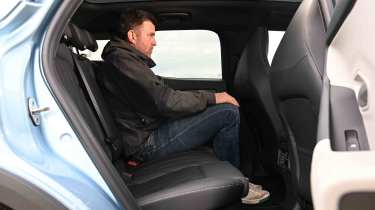
A wide body means there’s plenty of elbow room in the back of the Explorer, so seating three abreast shouldn’t cause any grumbles. The seat base is on the short side, and when combined with a high-set floor, it means under-thigh support is in short supply, which could be uncomfortable for taller occupants on longer trips. At least the flat floor means there’s enough space for all three occupants. Plastic tabs cover the two sets of Isofix mounts in the back, so fitting a child seat will be simple. You can’t get an extra mounting point on the front passenger seat, which is something you can get on its Volkswagen ID.4 sibling.
Headroom is adequate, even with the panoramic glass that’s fitted to Premium models. There’s no sun blind, just reflective glass, which helps reduce weight and boost the car’s efficiency ever so slightly.
Boot space
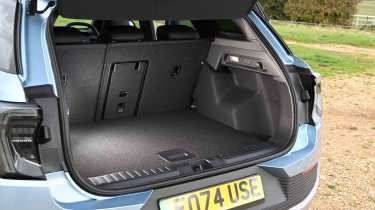
A low lip with a level floor helps with loading, but a boot capacity of 470 litres (445 litres in AWD Premium form) is adequate when compared with rivals. The back seats fold flat in a 60:40 split, providing 1,460 litres (1,417 litres in AWD Premium form) of space in this configuration. Some storage space is provided beneath the boot floor, but it is only big enough for charging cables.
Unlike rivals such as the Kia EV6 and Hyundai Ioniq 5, Ford hasn’t included a handy storage space as standard under the Explorer’s bonnet. However, the £300 Travel Pack includes a frunk organiser (standard on the Collection trim or available separately from the accessories catalogue for £150 on other trims), which provides a netted tray under the bonnet for storing items like charging cables. Don't think you can put valuable electronics in this space because it isn't waterproof.
Towing
If you want to use the Explorer to haul a trailer or caravan, Ford offers a towbar on the accessories list. The braked towing capacity is 1,000kg for the RWD model and up to 1,200kg for the AWD version. It’s the same story with the Volkswagen ID.4.
“Against the tape, the Ford Explorer and Renault Scenic are very similar in size. The Explorer is better for head and elbow room in the back, but both cars have high floors and shallow rear seat bases, so they aren’t the most comfortable.” - Dean Gibson, senior road test editor.
Reliability & safety
Pros |
|
Cons |
|
A five-star Euro NCAP rating matches its VW cousins and offers peace of mind. If you prefer to deactivate some of the electronic driver aids, you will need to navigate to sub-menus on the central touchscreen every time you start the car. There is a shortcut in the top right for the main driver-assistance menu, but it’s still fiddly when compared with the dedicated 'My Perso' button found in the Renault Scenic.
Various safety assistance features help to keep the Explorer on the straight and narrow, with lane assistance and forward-traffic detection able to adjust the car’s position and speed without any input from the driver. Even the compulsory speed-limit warning isn’t as intrusive as some systems, courtesy of the gentle chime that Ford has used it with. However, if you’d rather not use these systems at all, you can deactivate them via a menu that’s a couple of button presses away from the main touchscreen.
Standard safety equipment is good, with both trim levels getting lane-keep aid, adaptive cruise control, traffic sign recognition and cross-traffic and exit warning systems. It is a shame that if you want a head-up display, lane centring with lane-change assist, active park assist, or a 360-degree camera, you can only get them as part of a pricey Driver Assistance package, which costs £1,800.
The Ford Explorer has yet to appear in the Driver Power owner satisfaction survey, but the brand’s 23rd-place ranking out of 31 brands on the best manufacturer scoreboard leaves quite a lot to be desired. Ford’s arch nemesis, Vauxhall, scored a very impressive fourth place.
| Euro NCAP safety ratings | |
| Euro NCAP safety rating | Five stars (2024) |
| Adult occupant protection | 89% |
| Child occupant protection | 86% |
| Vulnerable road user protection | 80% |
| Safety assist | 72% |
Buying and owning
Best buy: Ford Explorer Select Extended Range RWD
While the entry-level Style trim is fine if you don't plan on tackling many long drives, we would recommend the mid-range Select trim because you get the larger battery pack with greater range, along with some useful extras such as heated front seats and steering wheel, wireless phone charging, and an electric driver’s seat with memory settings. We’d recommend adding the heat pump if you need to drive long distances in cold weather conditions.
Ford Explorer alternatives
The most obvious rivals for the Ford Explorer are the platform-sharing Volkswagen ID.4 and Volkswagen ID.5, plus the Skoda Enyaq. There’s also the Ford Capri, which is a little sleeker in profile and costs a couple of thousand pounds more.
Elsewhere, the Nissan Ariya and Renault Scenic E-Tech offer plenty of driving range for the money, while other options in a similar price band include the Hyundai Ioniq 5, Kia EV6, all-electric MINI Countryman and Toyota bZ4X.
Ford Explorer pictures
Key updates of the Ford Explorer review
18 May 2026: General updated to include the £1,500 Electric Car Grant discount
Deals on the Ford Explorer and alternatives
Frequently Asked Questions
Ford offers a three-year/60,000-mile warranty on the Explorer, whichever comes first. This is about as basic as you get on any car, but because it’s an EV, the electric powertrain components get an eight-year/100,000-mile warranty, guaranteeing the battery will still have at least 70 per cent of its original capacity during that period.