Best 1970s cars
The 1970s was a great decade for supercars, superminis and everything in between - here are our definitive favourites

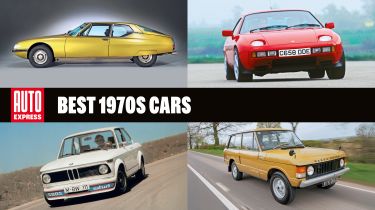
The 1970s may have been the decade that style forgot and a brutally challenging time for the automotive industry but the best cars of the 1970s showed innovation, charisma and engineering excellence in abundance.
The post-war automotive industry was defined by spectacular growth, innovation and financial success. British, European and American car companies were vital cogs in helping to kickstart economies and achieve renewed prosperity - employing thousands of workers and achieving enormous sales, both at home and through exporting abroad.
Great Britain, in particular, was at the centre of the motoring revival, with the Jaguar E-Type and classic Mini winning friends across the world. UK car production peaked at 1.92 million vehicles in 1972, but what followed was a period of rapid decline, government bail-outs, industrial unrest and turmoil. The quality of British cars was, at best, patchy, as production was interrupted by strikes.
The 1970s was also a decade of uncertainty for the American car industry, too. The 1973 oil crisis led to the decline of muscle cars as customers began looking for more fuel efficient alternatives.
But there were plenty of high points in the 70s to excite car enthusiasts. Back in Britain, the Range Rover encapsulated all that was good about the British car industry and the Rover SD1 even scooped the European Car of the Year award in 1977. What’s more, there was a true poster car from Norfolk in the shape of the Lotus Esprit Turbo and also the Caterham Super Seven - a car so successful it remains virtually unchanged to this day.
Across the channel, Europe was pumping out icon after icon as we were treated to the Mk1 Volkswagen Golf, Lancia Stratos and Citroen SM. And in Japan, the revolutionary rotary-engined sports car known as the Mazda RX-7 and the dreamy Datsun 240Z proved incredibly popular.
Find the best cars of the 1970s picked by the Auto Express team below...
Saab 99 Turbo
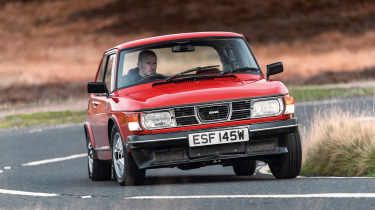
Saab was always coming up with odd ideas – the Swedes once even built a car that didn’t have a steering wheel. That plainly didn’t catch on, but in 1978 the company changed the motoring world with the Saab 99 Turbo.
While BMW, Porsche and Chevrolet had already experimented with this revolutionary technology in the pursuit of extra performance, Saab’s goal was to use turbos to preserve the efficiency of a four-cylinder engine, while giving drivers the big, smooth torque of a larger powerplant. It worked a treat and that’s the reason every modern family car that’s not an electric car has a turbo.
The 99 Turbo’s turbocharged 2.0-litre four-pot produced 145bhp and 235Nm of torque from as low as 3,000rpm, enabling 0-62mph in less than nine seconds. The combination of speed, practicality, unbeatable safety and unassuming looks is what makes this car such an icon.
Porsche 911 Carrera RS 2.7
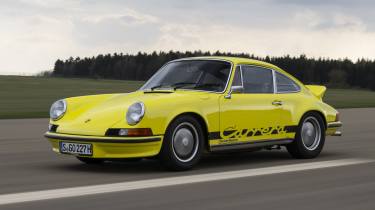
Created as a homologation special, the pure, raw Porsche 911 Carrera RS 2.7 really was a race car for the road, which is why it wore the letters RS that stand for Rennsport – ‘racing sport’ in German.
Made from thinner-gauge steel, with lightweight glass, fibreglass bumpers and a stripped-back interior, the Carrera RS 2.7 weighed less than 1,000kg. A car so light and so small powered by a busy 2.7-litre engine developing 210bhp needed just 5.8 seconds to sprint from 0-62mph and could hit a top speed of 155mph.
The iconic ducktail spoiler was the first spoiler ever fitted to a production car. It successfully decreased the lift at the rear of the 911 that made earlier models famously unpredictable at high speeds.
As was the case with so many of the greatest sports cars, sales bosses weren't convinced Porsche would be able to sell the 500 required to go racing. How wrong they were though – every one of the initial batch was snapped up within a week of the car’s international debut at the 1972 Paris Show and in total 1,580 examples were made.
Renault 5
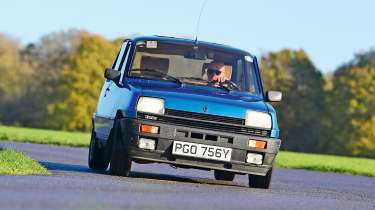
The rebirth of the Renault 5 in EV form has catapulted Renault’s small car back into the consciousness of modern motorists, but the newcomer really has its work cut out replicating the success of the seventies original. Renault churned out around 5.5 million Mk1 R5s over a 14-year production run, the little car becoming France’s bestseller every year from its 1972 launch until 1986.
There was substance behind the distinctive style. Borrowing heavily from the Renault 4, the Renault 5 offered the comfort and practicality you’d associate with a larger car. The compact dimensions (3,521mm long and 1,525mm wide) hid a roomy cabin close in size to that of the far bigger Renault 16.
Its profile was further enhanced by hot versions including the Renault 5 Alpine (badged Gordini in the UK) and the formidable 5 Turbo. The latter was a mid-engined homologation special powered by a 1.4-litre turbo engine.
Volvo 240
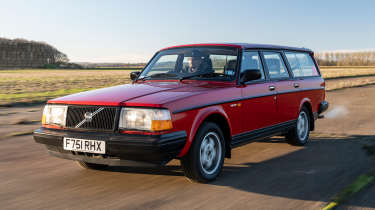
Volvo’s iconic estate car defined the brand for a generation with its unapologetically boxy design (courtesy of Jan Wisgaard) and focus on safety. It was launched in 1974 to replace the 140 and was built for 20 years, the 615,121 units becoming an integral part of family life for owners through the seventies and eighties. Initially there was the 242 two-door, the 244 saloon and 245 estate, but every version adopted the 240 name in 1981.
In the UK, the Volvo 240 became a symbol of middle-class life – it seemed like these cars came with a dog and a pair of green wellies as standard. Practical features including the removable boot space liner and underfloor storage area were ahead of the 240’s time, as was the aggressively ticking seatbelt warning light that made sure everyone always belted up.
Porsche 928
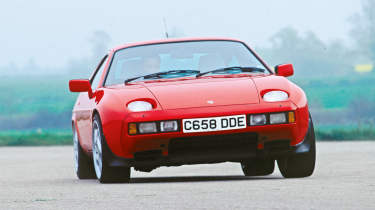
In the mid-seventies, Porsche was in quite a bit of trouble. The 911 was now more than 10 years old – and far from being an icon, it was seen merely as an ‘out of touch’ sports car with sales and interest waning.
Then, in 1977 Porsche launched the 928 coupe. This front-engined V8, four-seat GT introduced all sorts of world firsts, including body-coloured plastic bumpers, a transaxle layout with a 50:50 weight distribution (in this package), passive rear-wheel steering and adjustable dials attached to the steering column.
The engine was also a new string to Porsche’s bow, because the all-aluminium 4.5-litre V8 combined European technology with an overtly American-style beat. Power was rated at 236bhp, with 350Nm of torque and the unit was connected to either a three-speed automatic or a five-speed manual.
For all the tradition the 911 had fostered since the 356 Coupé was introduced in the late 1940s, the 928 was a true clean-sheet car that has since informed sports cars and GTs for the near five decades since its debut.
Mercedes G-Wagen
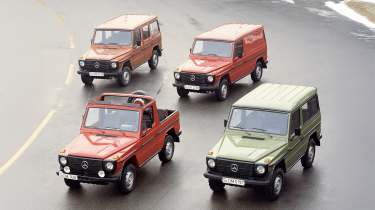
The G-Wagen just slips into our chosen decade, but we’re not sure that even Mercedes could have predicted what a long-tail success it would become. Following in the wheeltracks of Jeep and Land Rover, Mercedes initially designed the G-Wagen for the German military, under advice from the Shah of Iran no less.
In 1979, the first civilian version was put on sale, and like today’s model it was built not in Germany but Austria. It was available in a variety of bodystyles, including everything from short-wheelbase models with just three doors, to longer two-door troop carriers, convertibles and the five-door wagon shape we know today.
The G-Wagen, now called G-Class, has been on constant sale ever since, but its transformation from light personnel carrier and farm-hand to Hollywood’s own off-roader happened much later. For high-end, largely German clientele, AMG got its hands on the G-Class and fitted it with a 5.5-litre V8 in 1999. It was a later variant of this model that stars famously brought to Hollywood, kick-starting the G’s popularity that continues to this day.
Citroen SM
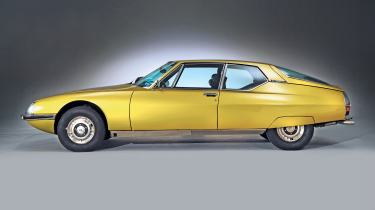
After leaving the world gobsmacked with the hugely advanced DS in 1955, Citroen faced the monumental task of bringing in an equally amazing new flagship in 1970. The Citroen SM was the car to take on this challenge, and while it was still crammed full of the French brand’s quirks and goodies, a key difference was its V6 engine from Maserati.
Along with having 170bhp on tap (rising to 180bhp in later examples), the Citroen SM featured a design that managed to stand out against cars costing several times as much. As with the DS that it replaced, hydropneumatic suspension was fitted to the SM, so it was an immensely comfortable long-distance cruiser even with that zesty Italian engine up front.
Unfortunately, the sheer level of mechanical complexity underneath meant this car earned itself a reputation for being unreliable without meticulous maintenance. This resulted in the SM being axed after only five years on sale, and it ultimately took the Citroen brand with it (before it was saved by Peugeot). Today, careful upkeep is ensuring many SM remain on the road, and the car’s sheer exclusivity only adds to the appeal.
Honda Civic
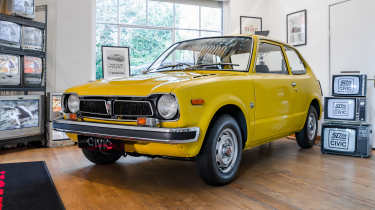
Let’s be brutally honest, reliability and build quality were anything but a given in the seventies. However, while many home-grown offerings were suffering as a result of the apparently never-ending problems at British Leyland, Honda came charging into the UK with the Civic Mk1.
Sales were a bit slow at first, but this was largely because British buyers were apprehensive about buying Japanese cars in general, rather than there being any glaring faults with the Civic itself.
However, there was little denying that instead of offering the spluttering engines and self-destructing interior trim favoured by some its rivals, the Honda Civic simply… worked. It was solidly put together, cheap to run, appealing to look at, spacious inside and affordable to buy. This all-too-obvious but crucial formula was the key to this little car’s success over the following years.
BMW E9 3.0 CSL ‘Batmobile’
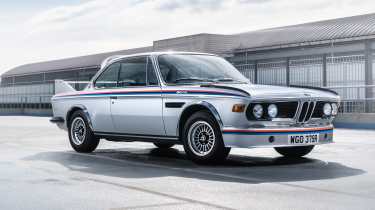
The blue, red and purple stripes, finely tuned engine, outrageous bodykit: the seeds of BMW’s magnificent M cars were planted with the E9 3.0 CSL of 1972.
BMW was sick of the Ford Capri’s domination of European Touring Cars, so it poached boss Jochen Neerpasch to turn the tables. BMW M – for motorsport – was born, and its first car was the CSL.
At its 1973 peak, the straight-six engine produced 206bhp, plenty of power in a 1,270kg saloon with thinner panels, perspex glass and shorn of its soundproofing, all in the pursuit of speed.
BMW made around 1,200 roadgoing versions to homologate the race car. Amusingly, German red tape banned BMW from supplying the car with the Batmobile rear wing in place, so customers had to fit it themselves. On track, the CSL proved unbeatable, winning six championships by 1979. A legend was born.
Alfa Romeo Alfasud
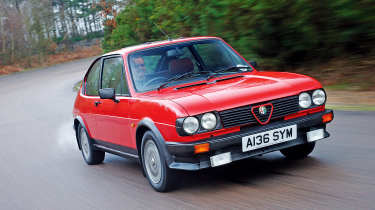
During Alfa Romeo’s heyday, it kicked off a leftfield project: a front-wheel-drive baby saloon, about the same size as today’s Mini. Styled by hitmaker Giorgetto Giugiaro, the Alfasud’s magic stemmed from its compact, flat-four ‘boxer’ engine, which enabled a low bonnet and dropped the centre of gravity. Coupled with sharp rack and pinion steering, the 1971 ’Sud was the finest-handling small car of its day.
Named after Alfa’s southern Italian factory in Naples, the Sud was the first car of a certain Carlos Tavares, igniting his love of driving and a car industry career that peaked in the acquisition of Alfa Romeo when he forged the Stellantis car group.
The Alfasud lived on in two-door Sprint form until 1989, which can’t be said for most of the saloons and hatchbacks: poor-quality steel meant the Sud dissolved like a Berocca tablet.
BMW 2002 Turbo
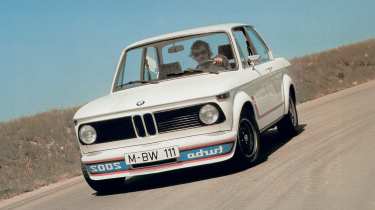
Slip into any modern-day, petrol-powered small car or SUV, and chances are you’ll find it fitted with a performance-enhancing piece of kit called a turbocharger. This tech, now considered commonplace in everything from Fiats to Ferraris, appeared for the first time in Europe in the seventies in the appropriately named BMW 2002 Turbo.
The motorsport-inspired BMW was the first series-production car ever fitted with a turbo. It boosted (quite literally) the 2.0-litre four-cylinder petrol engine from the standard car to 170bhp, slashing the 0-60mph time to less than seven seconds. It also got flared arches and special stickers, plus sports seats; all 1,672 examples were left-hand drive.
Those used to modern EVs will find the boisterous 2002 laggy and short of poke, but drive it properly with the turbo on song and you’ll find few cars – contemporary or classic – offer such a genuinely engaging and analogue feel.
Lamborghini Countach
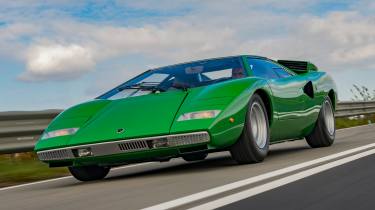
Those with a keen eye will notice the Lamborghini Countach features in our rundown of both the best seventies and the best eighties cars. That’s because this iconic supercar enjoyed an incredible 14-year production run from 1974 to 1990 – far exceeding its Miura predecessor’s seven years in the limelight.
Early cars were the cleanest in terms of design, but even without that iconic wing, the Countach’s angular lines, wedge shape and scissor doors cement the lurid Lambo’s place in this list. Throw in a rear-mid-mounted V12 sending power to the back axle via a five-speed manual gearbox and you just know you’re in for a treat.
The Countach was a challenge to drive in period, and modern advances haven’t made it any more approachable 50 years later. Perfect!
Range Rover
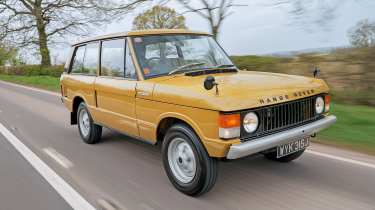
British Leyland was responsible for its fair share of shoddy cars in the seventies, but the Range Rover proved the company could still get things right. The concept of a more comfortable, road-going 4x4 came way back in the fifties and by the late sixties development really began to take hold. After BL used various test names including Velar and ‘100-inch Station Wagon’ to throw competing brands and the media off the scent, the Range Rover was revealed in June 1970.
Marketed as “a car for all reasons”, the Range Rover came with the iconic Rover V8 and disc brakes all round. More importantly, it also had permanent four-wheel drive and a fully coil-sprung suspension set-up to ensure off-road ability and on-road comfort – two core traits of every Range Rover since.
Volkswagen Golf Mk1
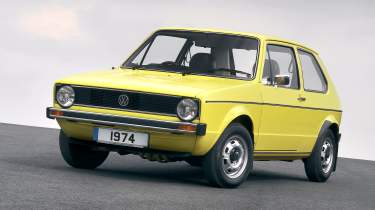
Producing the follow-up to an icon such as the Beetle would have seemed like a daunting task for most car manufacturers. Adding to the pressure, a global recession and low sales meant that by 1974 Volkswagen was losing hundreds of millions of Deutsche Marks each year. So it’s just as well that, in the very same year, VW unveiled the Golf.
Styled by legendary car designer Giorgetto Giugiaro, the Golf was an immediate hit – a million found homes within the first three years of production. The Golf’s design moved with the times, always painting a contemporary, safe picture with build quality and refinement above its peers. The Golf GTI Mk1 popularised the concept of a fun and practical front-wheel-drive hatchback and as with the Beetle, a cabriolet version expanded the Golf’s appeal even further.
Ford Capri
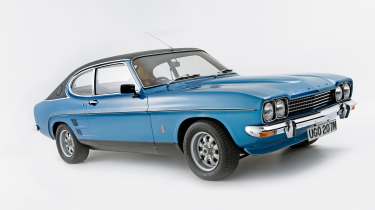
Forget the modern and rather controversial electric SUV, the Ford Capri will, for people of a certain age, always mean the long-bonneted coupe that ran across three generations from the late sixties to the mid-eighties, making it a true seventies legend.
A TV star in The Professionals, the third-generation car was the one that most solidified the Capri as a cult classic, and was so loved in the UK that right-hand-drive production carried on for a couple of years after the car was taken off sale in mainland Europe.
The Capri was based on the MK2 Cortina’s rear-drive layout, which made it both reliable and relatively cheap to produce, helping its reputation for being as attainable as it was desirable. Engine capacities stretching from 1.3 litres to 5.0 litres in the Mk1 car made sure there was a Ford coupe for everyone.
Rover SD1
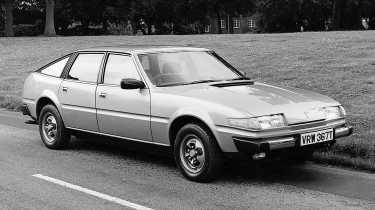
The SD1 is a curious seventies classic. It’s remembered more fondly than it was perhaps viewed at the time thanks to build-quality issues that plagued its decade on sale from the 1976 launch.
The big five-door executive fastback replaced the classic P6, launching with a V8 engine powering the rear wheels, before taking more efficient six-cylinder units soon after launch. Dressed in police livery, the Rover was a popular motorway patrol car across the country, although reports from the time suggest reliability wasn’t as strong as the Ford Granada, its big rival for blue-light duty.
Despite being known by its SD1 moniker, the hefty Rover was never badged as such, instead taking numbers based on engine size from 2000 to 3500, and although the mooted estate version never reached production, two prototypes survive in UK motor museums.
Lancia Stratos
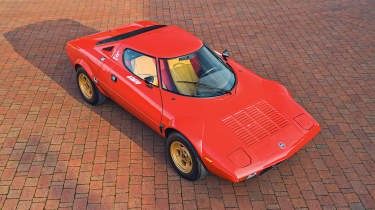
Few concept cars from the seventies actually made production (the Lambo Countach being one of the few exceptions), but Lancia went even further than most brands by taking a concept car and turning it into a rally legend. The Stratos first appeared as the wedge-shaped Stratos Zero in 1970, and while that car shared very little with the Stratos HF prototype that followed, they were both created by Italian styling house Bertone under the eye of Countach designer Marcello Gandini.
The Stratos was a radical departure from the front-wheel-drive Fulvia that preceded it, and its compact dimensions, short wheelbase and mid-mounted Ferrari Dino V6 meant it was able to dominate the World Rally Championship. It scooped the title three years in a row from 1974-1976, and even tightening regulations failed to stop its winning ways. The road car wasn’t as highly tuned, but still delivered lively handling, although the first challenge for most drivers would be trying to fit in the tiny, awkwardly shaped cockpit.
Aston Martin V8
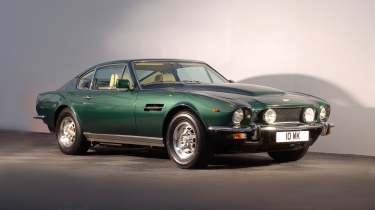
While the 1973 oil crisis saw the end of the US muscle car, things were only getting started at Aston Martin. The DBS had been on sale since 1969, and it only came with an in-line six, just like the DB6 that it was designed to replace. But that all changed in 1973 with the arrival of a 5.3-litre twin-overhead cam V8 designed by the firm’s Polish engine guru, Tadek Marek.
Aston Martin was never so vulgar as to talk about power outputs, but it was estimated to make around 320bhp, which was good enough for a 0-60mph time of 5.9 seconds and a 160mph top speed. Pretty impressive for a four-seat grand tourer. The engine wasn’t without its problems, with fuel injection later replaced by carburettors to boost efficiency. But once it was up and running, the V8 remained in production until the end of the eighties as the backbone of Aston Martin’s hand-built performance cars.
Nissan 240Z
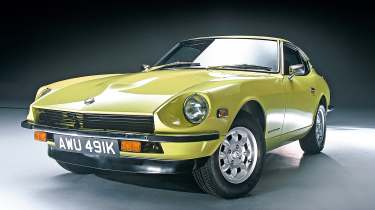
The Nissan 240Z was Japan’s answer to the likes of the MGB GT and Triumph GT6, as well as living proof at the time that the Land of the Rising Sun could make a desirable sports car.
Featuring a gorgeous grand tourer design, under the 240Z’s sweeping bonnet lies a silky-smooth 2.4-litre in-line six engine producing around 150bhp. This, paired with disc brakes, independent rear suspension and a kerbweight of just over a tonne, made the 240Z an extremely competent offering at the time, dominating the East African Safari Rally and Sports Car Club of America Championship alike. However, what put the Nissan among the proverbial pigeons was its famed reliability – something that truly cannot be said about its British counterparts.
BMW M1
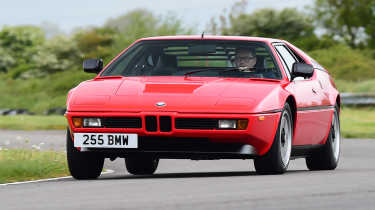
There is much debate as to whether the BMW 530 MLE was the first true ‘M’ car, however many argue that honour goes to the aptly named BMW M1. The result of a joint venture between BMW and Lamborghini, the wedge-shaped M1 was designed to compete in Group 5 racing, although perhaps the model’s most famous appearances were in the one-make ProCar Championship and the Andy Warhol-painted art car at the 1979 24 Hours of Le Mans.
Road-going versions were almost as driver-focused as their racing counterparts, with a mid-mounted 3.5-litre in-line six producing 277bhp, as well as adjustable Bilstein suspension and ventilated disc brakes. That aforementioned angular bodywork was also constructed out of fibreglass in order to keep weight to a minimum.
Ford Cortina
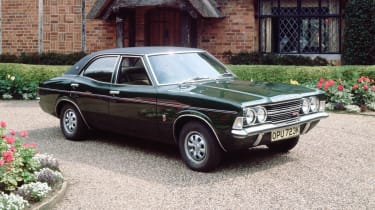
The Ford Cortina was by far and away the UK’s most popular car of the 1970s. It all started when Ford unveiled the handsome, American-influenced Mk3 at the 1970 London Motor Show. Essentially, the Mk3 replaced the Mk2 Cortina and Corsair, with Ford pinning its hopes on a larger saloon that targeted fleet and family buyers. From lowly base models to the plush GXL and 2000E versions, there was a Cortina for all budgets.
The Mk4 of 1976 was a heavily reworked version of the Mk3 but with squarer styling. This was followed by the updated Mk5 of 1979, which saw the Cortina through to the controversial launch of the Ford Sierra.
Lotus Esprit
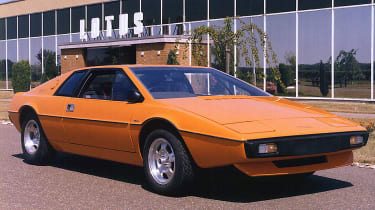
Known the world over for its starring role as ‘Wet Nellie’ in the 1977 James Bond film The Spy Who Loved Me, the Lotus Esprit was arguably one of Giorgetto Gigiauro’s finest designs. It was the company’s second mid-engined car, with power sourced from the same 2.0-litre engine as the Eclat and Elite.
Quality issues with the early cars rectified with the launch of the S2 in 1979, before the S3 arrived in 1981. However, it was the Turbo of 1980 that had the performance to secure the Esprit a place at the top table of the supercar elite.
Citroen GS
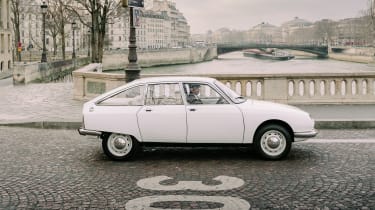
It might be a stretch to call the GS a Citroen DS for the masses, but it fully deserved its European Car of the Year award in 1971. Its arrival in 1970 signalled the start of a decade of mixed fortunes for the French company, which included near bankruptcy and the takeover by Peugeot.
Highlights included all-round powered disc brakes and self-levelling hydropneumatic suspension, while power was sourced from a range of charismatic air-cooled flat-four engines. The range included practical estate versions, although the later GSA featured a more practical hatchback body.
BMW 3 Series
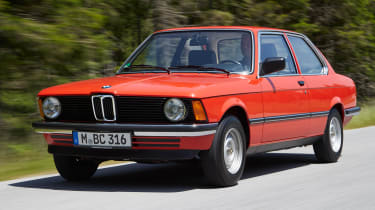
The E21 of 1975 built upon the foundations laid by the BMW 2002. Developed over five years, the first BMW 3 Series arrived as a compact two-door saloon – it was the smallest and most comprehensively engineered car BMW had ever built. Early four-cylinder cars weren’t particularly quick, but few cars were as good to drive.
The 3 Series came of age in 1977 with the launch of the first six-cylinder cars. Now the 3 Series had the performance to match the chassis, most notably the 323i with its fuel-injected 2.3-litre engine. Four-door versions wouldn’t arrive until the launch of the E30.
Mercedes S-Class
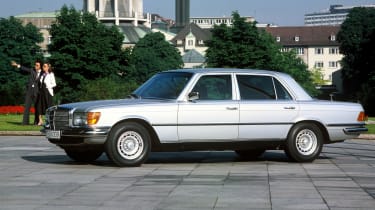
The Mercedes S-Class was born in 1972 and was arguably the best car in the world throughout the decade. Mercedes left no stone unturned in its pursuit for perfection, with the W116 offering a compelling blend of luxury, build quality and safety. Highlights included double-wishbone front suspension with anti-dive control and ‘self-cleaning’ rear lights.
The 450 SEL 6.9 represented the pinnacle of the W116 range. The successor to the 300 SEL 6.3 featured a powerful 6.9-litre V8 engine, self-levelling hydropneumatic suspension, central locking, air conditioning, headlight wash/wipe. A top speed of 140mph was possible in absolute comfort.
Ferrari 308 GTB/GTS
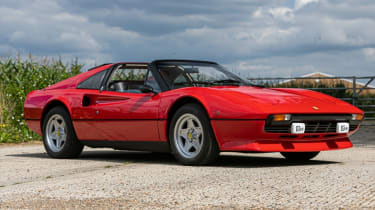
By Ferrari’s high standards, the 1970s was a relatively lean period for Maranello. The BB/BBi (Berlinetta Boxer) was an effective replacement for the beautiful but dated Daytona, but the 308 GTB and GTS are arguably the finest Ferrari models of the decade.
The 308 GTB was unveiled at the 1975 Paris Motor Show and was the first Ferrari to boast a fibreglass body. A return to a conventional steel and aluminum construction followed, before the launch of the open 308 GTS in 1977. The GTS, made famous by Tom Selleck in Magnum P.I., was the big seller.
Mazda RX-7
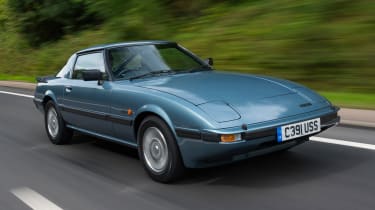
The NSU Ro80 had done so much to dent the reputation of the Wankel rotary engine, but Mazda’s perseverance with the technology paid off with the launch of the RX-7. The cheaper and better looking alternative to the Porsche 924 sold in good numbers, especially in the United States.
Early cars featured a 105bhp smooth-running rotary engine, but this was upped to 115bhp in 1981. The car also gained rear disc brakes and more equipment as standard. Mazda’s faith in rotary power culminated in a win at Le Mans in 1991.
Mercedes-Benz W123
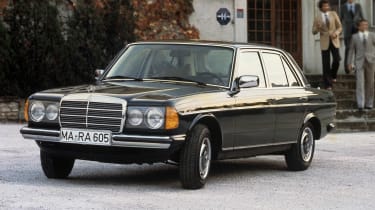
Today’s Mercedes E-Class can trace its roots back to the W123 of 1976. Mercedes-Benz started development in 1968 with the aim of building the world’s finest saloon car. An S-Class for the masses, with the latest safety equipment, outstanding build quality and superb ride comfort.
The W123 spawned the first Mercedes-Benz estate (‘T’ for Touring and Transport), along with a spacious coupe (‘S’ for Stationswagen). A total of 2.7 million were built before production ceased in 1985, with the durable 240D one of the most successful exports. Like so many cars of the era, rust is the enemy of the W123, but this is a saloon car you can use every day.
Jaguar XJ12
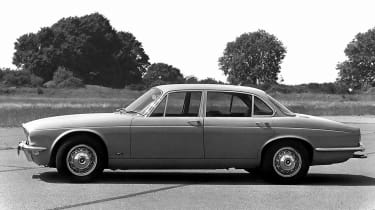
Although the Jaguar XJ6 arrived in 1968, the family saloon came of age in the 1970s. Key to this was the launch of the XJ12, which drew power from a 5.3-litre V12 engine. All XJ12 versions came with the longer-wheelbase body, which meant more interior space. A Jaguar that could live up to the promise of ‘grace, space and pace’.
Fuel injection arrived in 1975, while an improved GM400 automatic transmission was fitted from 1977. If you didn’t require the space, the XJ-C featured an elegant two-door coupe body and a choice of engines.
Porsche 911 Turbo
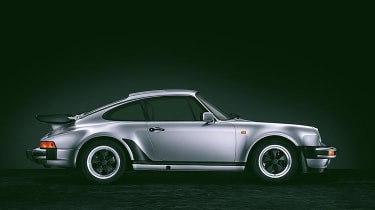
Turbocharging catapulted the Porsche 911 into the big league. Unveiled at the 1974 Paris Motor Show, the 911 Turbo may have been expensive, but it could sprint to 60mph in just 5.1 seconds. This was in a time when such acceleration was the preserve of Italian supercars with huge, thirsty engines.
The 911 Turbo (930) could do this with a 3.0-litre air-cooled engine producing 230bhp. At the back, the Turbo featured a flat rear spoiler that would become its signature feature through the late 70s and 80s. A larger 3.3-litre engine arrived in 1977 to see the 911 Turbo through to 1989.
Plymouth Superbird
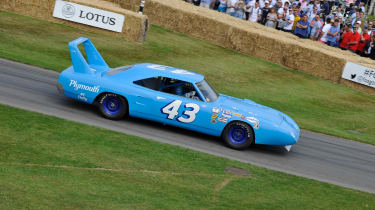
Although this list is focused on cars sold in the UK, the Plymouth Superbird will be familiar to anyone who has been to the Goodwood Festival of Speed. Young car enthusiasts will recognise it as Strip “The King” Weathers from the Cars film franchise.
The pointed shark nose and huge rear wing were designed to cut through the air and make the car a formidable force in NASCAR. Its V8 engines ranged from a 375bhp 7.2-litre V8 to the famous 7.0-litre V8 ‘Hemi’. The road-going Road Runner versions were actually quicker than the race cars, because they didn’t have the weight of the steel and giant wing.
Mercedes SL
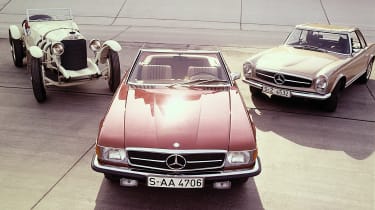
The Mercedes SL for the 1970s arrived in 1971, but it proved to be so popular, production continued until 1989. By that time, a total of 237,287 open-top two-seaters had found a home, with the Mercedes-Benz W107 particularly popular in the United States. The SLC (‘C’ stood for coupe’) premiered in October 1971 and was available until 1981.
This was the first time the Mercedes-Benz SL had been available with an eight-cylinder engine, with the car launching as the 350 SL. Although the SL was more a grand tourer than a sports car, the 500 SL had a terrific turn of pace.
Citroen CX
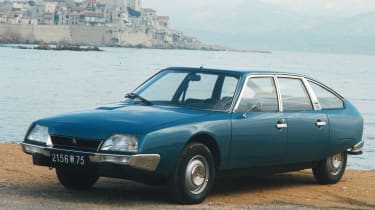
Not many car manufacturers can claim to have built three iconic cars in a decade. The GS and SM had arrived in 1970, but by then, Citroen’s attention had turned to the difficult task of replacing the DS. This job was left to the CX, a car many people believe was the last true Citroen.
It was brimming with technology, including self-levelling hydropneumatic suspension, hydraulic brakes and, standard from 1975, Vari-Power self-centering steering. Thanks to a top speed of 137mph, the CX-25 GTi Turbo-2 was the fastest French car of the era. Production of the CX continued until 1991.
Saab 900 Turbo
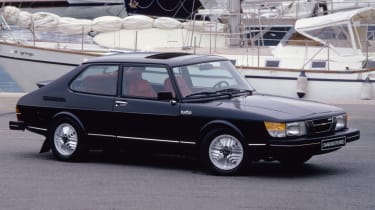
More commonly associated with the 1980s, the Saab 900 actually arrived in 1979. It was developed from the 99, but the larger and more sophisticated 900 propelled Saab into the big league, thanks in no small part to the legendary 900 Turbo. Its quirkiness and eccentricity attracted a legion of Saab fanatics, which helped the 900 to continue until 1993, by which time nearly a million cars had been produced.
The non-turbocharged models were safe, comfortable and a tad lethargic, while the 900 Turbo offered exhilarating performance. Turbo lag of the original models was, up to a point, reduced by the mid-80s.
Caterham Super Seven
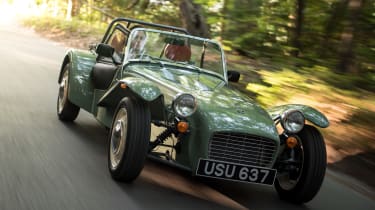
Caterham’s decision to secure the rights to the Lotus 7 was a stroke of genius. Although it dated back to 1957, Caterham had the foresight to realise that the need for a driver-focused, lightweight and hardcore sports car would never diminish. It’s why the car has enjoyed such a long life.
Thirty cars aren’t enough to showcase the breadth of cars available in the 1970s. Our shortlist could have been significantly longer if we could feature the many cars that didn’t make the cut. Some could easily replace the cars we selected.
Get even more from Auto Express, follow our channels...
• Google
• Reddit
• Whatsapp