Used Porsche 928 (1978-1996) buyer’s guide: you’ll need deep pockets, but it’s worth it
A full used buyer’s guide on the Porsche 928 that was on sale in the UK between 1978 and 1996

Verdict
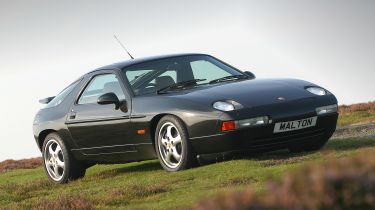
The Porsche 928 was special when it arrived and it’s still special these days, but you must always buy with care. If you don’t do your homework, you could buy a 928 that needs more spent on it than it’s worth. The best cars tend to be those that combine reasonable mileages (100-150k) with having had money lavished on them – which will hopefully be fully documented in the car’s service history. Compared with a modern car that will lose much of its value over the next few years, the 928 isn’t costly to buy. But although the modern car might cost very little to run, expect bigger bills for the 928 – though it could well reward you by going up in value rather than down.
By the start of the seventies, the Porsche 911 was getting long in the tooth and sales had slowed down. Porsche felt that it needed a replacement, so it developed something completely different: a front-engined, water-cooled grand tourer with an all-aluminium V8.
With passive rear-wheel steering courtesy of what’s known as a Weissach axle, and a 4.5-litre powerplant in the nose, the 928 was fast and brilliant to drive. When it was unveiled in 1977 it caused a storm and was awarded European Car of the Year in 1977 (the only sports car to take the honour in its 61-year history). The 928 is now a bona fide classic – and rarer than you might think. It’s been 30 years since the last 928 was made, yet the 911 remains in production to this day, in its eighth generation.
History
The Porsche 928 made its debut at the 1977 Geneva Motor Show and reached the UK a year later, with a 240bhp 4,474cc fuel-injected V8 engine. The 928 S arrived in January 1980 with a 300bhp 4,664cc V8, with the standard 928 sold alongside it until autumn 1981. Then, the 928 S2 took over, with a 310bhp 4,664cc engine. Power steering was now standard fit and air-con became optional. The 928 S4 of summer 1985 brought a 320bhp 4,957cc engine and upgraded Brembo brakes with anti-lock tech as standard.
Used - available now

2022 Volvo
XC40
37,000 milesManualPetrol1.5L
Cash £18,720
2015 Volkswagen
Sharan
121,000 milesAutomaticPetrol1.4L
Cash £5,790
2021 PEUGEOT
PARTNER
89,317 milesManualDiesel1.5L
Cash £7,794
2018 VAUXHALL
VIVARO
66,295 milesManualDiesel1.6L
Cash £6,995In the summer of 1988, the now highly collectable 928 GT appeared, with a five-speed manual gearbox and sports suspension. Then, in the summer of 1991, the S4 and GT models were replaced by the 350bhp 928 GTS with a 5,399cc V8 and a revised cabin.
Production of the GTS ended in summer 1995 with the final cars being sold in spring 1996.
Prices
S2s are the most affordable, and you’ll need to spend at least £10,000 to secure something usable – although it could easily be a money pit, which is why you’re better off spending a bit more.
As with any performance or prestige car, buying cheaply can be a major false economy, so don’t buy at the bottom of the market if you don’t have a decent repair fund available, unless you’re deliberately buying a project. Some collectors favour the original 928 and 928 S, so these fetch a bit more; £12,000 buys something worth owning, but the best examples fetch £30,000. The S4 is a little ahead of this, then there’s a jump to the 928 GT, which is worth £20,000-£50,000. The most valuable 928 of all is the GTS. Even average examples are worth £30,000 and superb examples command up to twice as much.
Check the price of a Porsche 928 with our free car valuation tool...
On the road
The 928 feels relatively big and heavy, so it’s more of a grand tourer than a sports car, and in this capacity it excels.
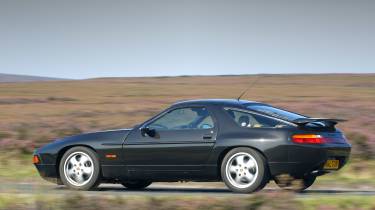
However, with a 50:50 weight distribution and a well designed multi-link rear suspension set-up, the 928 handles far better than you might expect; with a length of 4.5 metres and a weight of around 1.5 tons, this isn’t an especially big or heavy car compared with most modern family vehicles.
Over time the 928’s gearboxes, wheels, brakes and suspension were updated, so later cars feel different and sharper to drive than earlier models.
Which one should I buy?
You’ll get more for your money if you buy an early 928, but the later ones tend to have more spent on them because they’re that much more desirable.
For any given budget, a superb early car is a safer bet than a ropey later one. Four-fifths of 928s have an automatic gearbox (which suits the car), but the manuals are the most sought after by many buyers, especially Porsche purists.
Initially, the 928 was fitted as standard with a five-speed manual, or an optional Mercedes-derived three-speed auto (four-speed from 1980). From the 928 S2, the default transmission was the auto.
The 928 has always been unusual. The S/S2 was the most common with 410 manual and 1,845 automatic examples sold in the UK, compared with 833 S4s, 225 GTs and just 195 GTSs, of which 45 were fitted with a manual gearbox.
Alternatives to the Porsche 928
During the 18 years that the 928 was in production, several GTs came and went.
The Mercedes SEC (1979-1991) had various V8 engines and is less sporting, but a genuine four-seater with supreme build quality. The original BMW 6 Series (1976-1989) came with six-cylinder engines, but there’s still 140mph potential, and it’s great to drive. The Jaguar XJS (1975-1996) featured six-cylinder or V12 engines and there was a convertible option. The ride quality is sublime, but the driving experience isn’t very engaging.
Two left-field choices are the plastic-bodied Lotus Esprit and Renault Alpine GTA, but good examples of either are hard to find.
What to look for
Bodywork
The bodyshell is steel but the doors, bonnet and boot are aluminium. Floorpans corrode, along with the inner and outer sills. Also check the windscreen surround and make sure the headlights go up and down.
Engine
The 928’s V8 typically uses a litre of oil every 500 miles, but if it’s running poorly because of fuel injection problems, repairs tend to be very costly. Check for coolant leaks; replacing a radiator costs over £1,000.
Running gear
Everything is available in terms of brakes, steering and suspension, but revitalising a neglected 928 will cost plenty. Renewing the front and rear brakes costs around £1,100; a suspension rebuild is £2500+.
Leaks
Leaks from the tailgate and sunroof (if fitted) aren’t rare; check for damage to the trim and carpets. Reviving dead air-con tends to be expensive, and check the electrics all work – the system is quite complex.
Interior
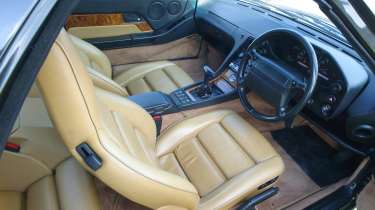
When new, the 928 featured a high-quality and fairly hi-tech cabin, but it’s all pretty dated now and some of the plastics don’t feel premium. But it’s all laid out intuitively, the seats and driving position are comfy, and the build quality is generally excellent. It’s definitely a 2+2, though, because the rear seats are very cramped.
Running costs
If you buy a neglected 928, the running costs could be ruinous. But buy a good one, use it sparingly, and your annual bills could end up being surprisingly low. The fixed costs are insurance and road tax. The former should be cheap on a classic policy, while the latter is £360 per year for all 928s (or £378 by direct debit). Fuel bills can be steep: later cars might return around 25mpg on a run, but earlier models get closer to 15mpg.
Specialists charge around £250 and £550 for minor and major services, respectively, plus £375 to service an automatic gearbox, and £95 for fresh brake fluid every two years. All 928 engines have a cambelt, which costs around £600 to replace (plus £400 for a new water pump). This should be done every four years or 48,000 miles on 16-valve cars, and every five years or 60,000 miles on 32-valve engines.
Recalls
The 928 was being replaced just as the recalls system we’re familiar with these days was being launched.
Not that it makes any difference, because with the newest 928s now 30 years old, anything that might have failed because of a manufacturing fault, will have been fixed years ago. The checklist gives a good idea of the weak spots, and while there are known weaknesses in the 928’s design and construction, what turns a good car into a bad one is a lack of maintenance, so scrutinise the service history.
It’s also worth having any prospective buy checked over by an expert, and make sure you have a good specialist for ongoing maintenance. Official dealers don’t have the expertise for these cars nowadays, which is why using a good independent is essential.
Driver Power owner satisfaction
The 928 has never appeared in our Driver Power surveys, so we spoke to long-standing 928 S2 owner Kevin Peach to get his take. He told us: “Nobody buys a 928 without doing lots of research first, so they know exactly what they’re getting into. In good condition the 928 is great to drive with strong acceleration and lovely steering with a comfortable ride. The build quality is good and so is the reliability – as long as there’s regular maintenance carried out by an expert.”
Did you know you can sell your car through Auto Express? We’ll help you get a great price and find a great deal on a new car, too.