Toyota C-HR+ review
Electric Toyota C-HR+ shares its name with the popular hybrid, and is a decent family EV


Our opinion on the Toyota C-HR
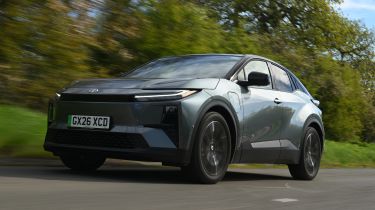
While it shares its name with the hybrid model, the Toyota C-HR+ is a completely different machine. For starters it’s a full electric car, with the rear-mounted motor driving the rear wheels, while the overall dimensions are larger than they are for the C-HR hybrid. In fact this Plus model shares tech with the bZ4X, and overall it offers a pleasing all-round driving experience. It feels nimble for an EV, and in long-range guise the C-HR has just enough performance and range to meet the needs of everyday EV drivers. It’s well equipped, while prices are similar to those of its rivals. We’d definitely recommend putting it on your shortlist if you’re in the market for an electric family car.
About the Toyota C-HR+
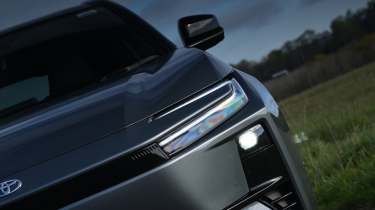
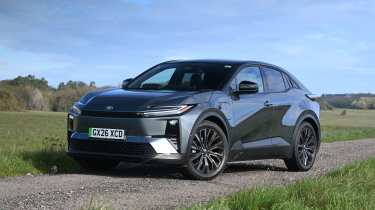
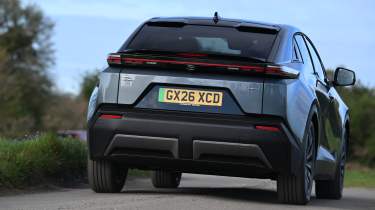
The arrival of the Toyota C-HR means the Japanese company now has three all-electric models in its line-up, and it sits in the middle of the range between the Urban Cruiser and bZ4X. It features the same e-TNGA platform as the bZ4X, but is slightly smaller in every dimension and has styling which is inspired by the C-HR hybrid, although no body panels are shared between the two models.
The C-HR features a front-mounted motor and front-wheel drive, and there are two power outputs on offer. The entry-level model has a 165bhp electric motor and a 57.7kWh battery, while the more powerful 221bhp car has a 77kWh battery. There are Icon, Design and Excel trims on offer, with the base model being the only version to come with the smaller battery.
Used - available now

2024 BMW
M135i
26,030 milesAutomaticPetrol2.0L
Cash £28,990
2024 BMW
i4
26,535 milesAutomaticElectric
Cash £37,490
2026 BMW
Z4
16,416 milesAutomaticPetrol2.0L
Cash £29,990
2015 Fiat
500
67,000 milesManualPetrol1.2L
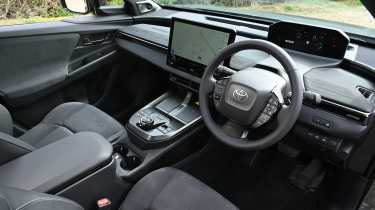
Cash £3,490Inside, the C-HR+ has a similar layout to the bZ4X, with a large 14-inch touchscreen and a smaller driver’s display that is positioned high on the dashboard so you can see it above the rim of the steering wheel.
Toyota C-HR+ prices and latest deals
Prices for the Toyota C-HR+ start from around £34,500, which is on a par with rivals such as the Skoda Elroq and Kia EV3. To upgrade to Design trim and the larger battery costs around £2,500 extra, while the top-spec Excel model is around the £41,000 mark. However, there are discounts available, including the £1,500 Electric Car Grant, and you can find excellent finance and leasing deals on the Toyota C-HR, as well as get a great price for your car, via the Auto Express Buy a Car service.
Performance & driving experience
Pros |
|
Cons |
|
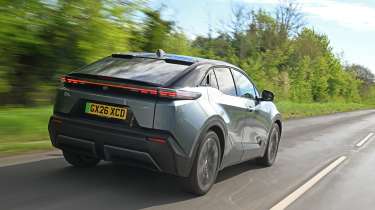
Weighing in at 1,910kg, the Toyota C-HR+ has the same weight problem as most other EVs, but the chassis is well set up to offer a good mix of handling and comfort, so we’d recommend it if you want some driving fun. The more powerful electric motor delivers good performance at all speeds.
| Model | Power | 0-62mph | Top speed |
| C-HR+ 57.7kWh | 165bhp | 8.4 seconds | 86mph |
| C-HR+ 77kWh | 221bhp | 7.3 seconds | 99mph |
Electric motors, 0-60mph acceleration and top speed
While the larger bZ4X can be had with two electric motors, the C-HR+ is exclusively front-wheel drive. Neither model is particularly slow, with the less powerful 57.7kWh car managing a 0-62mph time of 8.4 seconds, while the 77kWh model is even faster, at 7.3 seconds.
With 221bhp for the more powerful model, there isn’t a huge amount of power being sent to the front wheels, and you don’t feel the instant surge that you get from some other EVs. Instead, the C-HR+ builds initial speed smoothly before offering full power once you’re rolling. That means ‘in-gear’ response is good, with enough mid-range torque for quick overtaking.
Town driving, visibility and parking
The C-HR+ features plenty of driver assistance systems that help with low-speed manoeuvres. The steering is light at parking speeds, but soon weights up and has a heftier feel when compared with rivals. It’s not heavy as such, but it feels as if there’s a solid connection between the steering and the front wheels.
The cabin remains quiet and refined at lower speeds, while the suspension does a decent job of smoothing out bumps. There is a firm edge to the ride, but it’s not uncomfortable enough to upset passengers.
Country road driving and handling
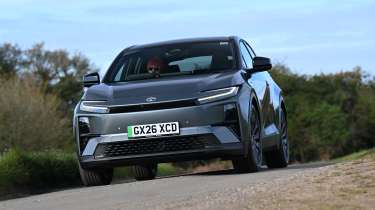
Toyota’s e-TNGA electric car platform sets the batteries low in the chassis, and when combined with the MacPherson strut front/double-wishbone rear suspension, it means the C-HR+ is actually a fairly engaging EV to drive. It also helps that the kerbweight has been kept to less than two tonnes – so it’s lighter than the Skoda Elroq. Overall, the Toyota feels stable and controlled, while that steering continues to offer decent weight.
The electric powertrain is punchy once you’re up to speed, but there’s no Power mode on offer, just Normal, Eco and Snow settings. That’s no hardship, though, because there are keen responses as standard, while the small steering wheel adds a sporty feel to the C-HR+.
Motorway driving and long-distance comfort
Increase your pace to the national limit, and while the C-HR+ is stable and fuss-free to drive, there’s more wind noise that we’d like, especially from around the base of the windscreen. It’s no deal-breaker, but the volume very obviously increases at exactly 70mph.
"All-round visibility in the C-HR+ could be improved instantly with the addition of a rear wiper. Yes it would spoil the car’s sleek overall shape, but we’re sure the benefits outweigh the aesthetics. At the moment, the rear screen relies on the car’s aerodynamics to keep the window clear, but if you’re in stop-start traffic in the rain, then there’s no easy way to clear the window. And if the car is left standing through a cycle of sun and rain, this can leave water marks that leave the glass foggy at all times." - Dean Gibson, senior test editor.
Range, charging & running costs
Pros |
|
Cons |
|
Prices for the C-HR+ are competitive when compared with rivals, while a price walk of £2,500 to upgrade from the standard battery to the larger one is pretty reasonable. Do the same in a Skoda Elroq and it’ll cost you £3,000-£4,000 extra.
Electric range, battery life and charge time
The entry-level Icon model is the only variant that comes with the 57.7kWh battery, which has a usable capacity of 54kWh. This is good for a range of 284 miles on the combined WLTP test cycle, which is nearly 20 miles longer than the range quoted for the 60kWh Skoda Elroq.
We’ve tested the 77kWh version of the C-HR+, which has a usable capacity of 72kWh. Toyota quotes a claimed range of 347 miles for the Excel model that we drove, or it’s 377 miles for the same car with smaller 18-inch wheels in Design trim. Those are good figures when compared with the C-HR+’s closest rivals.
Our test took place on a mild day and on a route that included a number of motorway miles, and we saw a return of 3.6 miles per kWh. The Elroq we tested at the same time achieved 3.7mi/kWh, so clearly the Toyota is on the money for efficiency. At that rate, there’s a range of 260 miles on offer, but because the Skoda has a larger battery, it has an extra 25 miles in reserve.
One feature that the C-HR+ has as standard is a heat pump, so the range shouldn’t suffer too badly in cold weather. It costs an extra £1,100 to add a pump to the Skoda Elroq.
Charging speeds are similar to those of rivals, with a maximum DC rate of 150kW on offer. That means a 10-80 per cent charge will take around half an hour from a powerful enough source. If you have access to three-phase AC power, then the Excel model has a maximum rate of 22kW (the others max out at 11kW), and you can fully charge the pack in three hours and 15 minutes at this rate.
| Model | Battery size | Range | Insurance group |
| C-HR+ 57.7kWh | 57.7kWh | 284 miles | 33 |
| C-HR+ 77kWh | 77kWh | 377 miles | 37 |
Insurance groups
The electric C-HR+ sits around 10 car insurance groups higher than the C-HR hybrid, with the standard-battery model in group 33, while both big-battery cars are in group 37. That’s a little higher than rivals such as the Skoda Elroq, too.
Tax
The raising of the luxury car tax threshold for electric vehicles from £40,000 to £50,000 helps the C-HR+ out, because unlike some rival ranges, it means the top-spec model qualifies for the same £200 a year road tax as the rest of the line-up.
Benefit-in-Kind costs will be cheaper than they are for the C-HR hybrid thanks to the EV’s zero emissions. So while list prices are higher, annual costs for standard-rate taxpayers are around a sixth of those for the petrol-electric model.
Depreciation
Residual values for the C-HR+ after three years and 36,000 miles are in the 49-52 per cent range. That is marginally ahead of the C-HR hybrid, which goes as low as 42 per cent in PHEV guise. It’s also better than the Toyota bZ4X, which is in the 42-44 per cent range.
Interior, design & technology
Pros |
|
Cons |
|
While the electric C-HR+ has similar design DNA to the hybrid model, it’s completely unique and no body panels or interior tech is shared between the pair of them.
Interior and dashboard design
There’s a coupé-like profile for the C-HR+, and it features conventional door handles front and rear, rather than the hidden C-pillar set-up for the hybrid version. Inside, the layout has plenty in common with the bZ4X, with a large central screen and a smaller driver’s display that’s set high on the dashboard and can be seen above the steering wheel rim. The centre console has a high section with an additional shelf beneath.
Materials and build quality
Material quality is good, and comes close to Lexus in places. The dashtop features a grained finish that has a rubberised plastic feel, while the seats are finished in soft suede-effect upholstery (which is also on the doors) and artificial leather. Everything feels well built, and the switchgear is satisfying to use with a positive action.
Infotainment, sat-nav and stereo
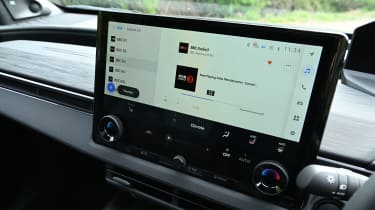
All versions of the C-HR+ come with a 14-inch infotainment touchscreen mounted forward on the dashboard, so it’s easy to reach. Across the bottom of the display are the climate controls, including clever rotary temperature dials that are set into the screen, plus a volume knob, which is something you don’t get in the C-HR hybrid.
Above this, the screen has a reasonable resolution, although rival systems have bolder fonts that are easier to read. There’s a permanent bank of shortcut keys to the right of the display, while live services mean the sat-nav can show traffic information and you can send destination info to the car via the MyToyota smartphone app.
One feature of the bZ4X that’s carried over to the C-HR+ is the seven-inch driver’s display. This is set further back than the main screen and is located high on the dashboard to create a pseudo head-up display. As a result, you look at it over the rim of the steering wheel, similar to how the dials are set up in modern Peugeots.
However, here the set-up feels a bit more natural, courtesy of a small steering wheel that doesn’t feel comical in size, while the lack of information in the bottom section of the display means you can move the wheel higher if that’s your usual preference.
"One improvement that the C-HR+ has when compared with the hybrid model is better access to its assorted safety systems. Rather than having to use the trip display and steering wheel buttons to navigate through them, they are easily accessed via the main touchscreen instead. There’s a shortcut to quick settings on the home screen, or you can delve further and activate each option as you see fit. It’s not as quick to use as some rival set-ups, but is certainly more convenient than the older system." - Dean Gibson, senior test editor.
Boot space & practicality
Pros |
|
Cons |
|
The coupé-style roof doesn’t have too much of an impact on passenger space, but the boot demands greater compromises.
Dimensions and size
The C-HR+ is on the money in terms of length and width when compared with rival electric models, while the coupé roof isn’t particularly low, either. The car is larger in every dimension when compared with the hybrid model.
Dimensions comparison | |||
| Model | Toyota C-HR+ | Skoda Elroq | Toyota C-HR hybrid |
| Length | 4,520mm | 4,488mm | 4,362mm |
| Width | 1,870mm | 1,884mm | 1,832mm |
| Height | 1,595mm | 1,625mm | 1,564mm |
| Wheelbase | 2,750mm | 2,765mm | 2,640mm |
| Boot space | 416 litres | 470 litres | 447 litres |
Seats & passenger space
As long as you’re comfortable with the dial arrangement in the C-HR+, it’s easy to find a good seating position. There’s a good view out, too, and the rear screen isn’t too much of a letterbox to look through.
Storage up front is fine. The central armrest features two-way opening towards the passenger or driver, while the shelf below the drive selector features charging sockets, although it’s a bit tricky to plug in leads when you’re sitting at the wheel. Alternatively, there are two wireless smartphone charging pads on top and ahead of the drive selector.
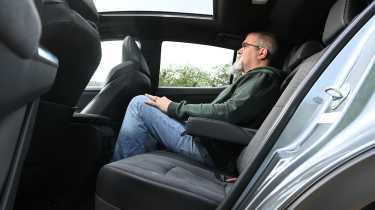
Large doors boost access to the back seats, and space once you’re in is decent. The rear seatback looks on the narrow side, but there’s plenty of shoulder room when travelling three-up. The seat bases are a little short and the floor is on the high side, so leg support is limited, but there’s good foot space across the rear cabin.
Upgrade the Excel model with panoramic glass (a £905 option along with a JBL sound system), and this makes the cabin feel more spacious. Plus, it doesn't have a significant impact on headroom, which is acceptable rather than generous if you’re tall.
Boot space
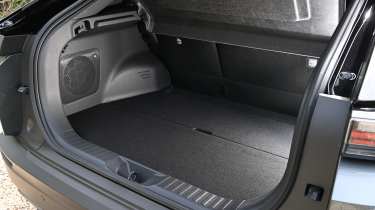
The powered tailgate (for Design and Excel models) opens to reveal a 416-litre boot, which isn’t the most generous in the class – a Skoda Elroq has 470 litres of space, while the larger Enyaq is even more roomy. The C-HR+ has an awkwardly-shaped cargo area, too, with tapering wheelarches that encroach on the space, while the load lip is high for lifting in heavier items.
There is a false floor, although it’s quite shallow underneath with only just enough room for a charging cable, and there’s no additional space in the C-HR+’s nose. Folding the back seats is easy enough, and fabric covers the join in the floor, but the backs don’t fold completely flat.
"While the C-HR+ has plenty of cabin space, the constraints of packaging the electric running gear under the bonnet mean there isn’t any storage space there. The under-floor space in the boot is only just big enough for a charging cable, too. "- Dean Gibson, senior test editor.
Reliability & safety
Pros |
|
Cons |
|
While Toyota’s standard warranty of three years and 60,000 miles is pretty ordinary, you can extend that to 10 years and 100,000 miles with franchise servicing. For some buyers, this will be a good enough reason to pay the extra that Toyota charges for scheduled maintenance when compared with rivals.
The C-HR+ hasn’t been tested by Euro NCAP, but the platform-sharing bZ4X was re-tested in 2025 and it earned the full five stars from the safety organisation. All three versions of the C-HR+ come with Toyota Safety Sense as standard, although Lane Change Assist is only offered with the Excel model. All cars feature adaptive cruise control, road sign assistance with speed limiter and warning, adaptive main beam headlights and lane-departure warning.
Neither the bZ4X nor the C-HR made the Driver Power model rundown in 2025, but both cars will have contributed to the company’s 14th-place finish (out of 31) in the manufacturer survey, two spots behind Skoda. Subaru, which has participated in plenty of joint ventures with Toyota, finished first.
| Euro NCAP safety ratings | |
| Euro NCAP safety rating | Five stars (for bZ4X, 2025) |
| Adult occupant protection | 88 per cent |
| Child occupant protection | 85 per cent |
| Vulnerable road user protection | 80 per cent |
| Safety assist | 79 per cent |
Buying and owning
- Best buy: Toyota C-HR+ 77kWh Design
Since the price walk to the Long Range battery isn’t too steep, we’d take the plunge with that, while the Design model is well equipped.
Toyota C-HR+ alternatives
The toughest contender for the C-HR+ is the Skoda Elroq, our 2025 Car of the Year and our pick in the electric family SUV class. However, the C-HR+ came close to it when we tested both cars back-to-back, so is well worth adding to your shortlist. Elsewhere, the Kia EV3 and Hyundai Kona Electric are worth considering, while the Ford Explorer/Capri, Volkswagen ID.4 and Cupra Tavascan are slightly pricier, but offer their own appeal.
Toyota C-HR+ Electric review pictures
Frequently Asked Questions
It fared well when we tested it against our class favourite, the Skoda Elroq, so if you’re in the market for an electric family SUV, we’d recommend sticking it on your shortlist. The biggest issue we have with the car is the lack of boot space when compared with rivals.