Best Chinese cars 2026
The Chinese have arrived in force on the UK car market and these are the current best of the breed

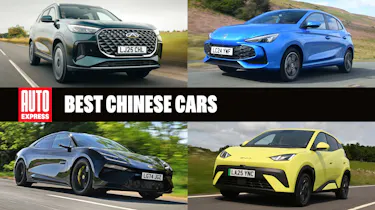
Chinese cars have come a long way in the past decade or so, going from automotive obscurity to serious rivals for the best contenders from Europe, Korea and Japan. The speed of progress from the country’s car brands has been head-spinning, with the very best Chinese cars seeking to conquer new markets with a range of models that often undercut established models on price while beating them on tech.
Why are Chinese cars so appealing?
Chinese cars of today are a far cry from those of the early noughties. Manufacturers from China were often the butt of motor show jokes as they filled their stands with half-baked rip-offs of well known European machines. When the Chinese marques did design and build their own models without ‘inspiration’ from established brands, they were bargain basement offerings that were dynamically way off the pace.
Today, that’s all changed, as was proven by the Jaecoo 7 being named the best-selling car in the UK in March 2026. Nearly 16,000 examples have left showrooms already this year – not far behind the Ford Puma’s sales numbers so far this year.
There are now a number of ambitious Chinese car brands vying for Brits’ attention, with most offering a wide range of models from affordable superminis to premium SUVs, and everything in between, including a drop-top two-seater sports car. Today’s top Chinese cars can match their established competitors in terms of kerb appeal, practicality, performance and even desirable on-board tech, which is especially true of many Chinese electric cars that can also deliver impressive range and charging capabilities.
Yet one aspect of the Chinese car hasn’t changed: the price. In almost every case, the models in our list of the best Chinese cars undercut their better-known European rivals by thousands, despite often offering more kit and a longer warranty, leaving more cash in your wallet when it comes to buying.
Compare the best Chinese cars
Below, we’ve got a rundown of the best Chinese cars you can currently buy in the UK, sifting out the top-10 candidates from various different sectors. We’ve cast our net not just over what most would consider ‘Chinese brands’, but also cars that are built in the People’s Republic too by familiar marques that you may not know are now part of Chinese conglomerates.
| Rank | Make and model | Price from |
| 1. | MG4 Urban | £23,495 |
| 2. | MG3 | £17,495 |
| 3. | BYD Dolphin Surf | £18,675 |
| 4. | Smart #5 | £32,960 |
| 5. | Lotus Emeya | £84,990 |
| 6. | MG HS | £26,495 |
| 7. | MG ZS | £20,495 |
| 8. | MG4 | £29,995 |
| 9. | Chery Tiggo 8 | £28,545 |
| 10. | Omoda 9 | £44,995 |
Keep scrolling to learn more about the best Chinese cars on the UK market. Alternatively, you can click the links in the table above to jump directly to a specific make and model..
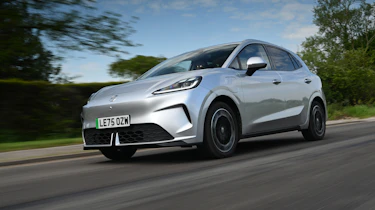
1. MG4 Urban
If you want a spacious hatchback with lots of kit and great value for money, the MG4 Urban embarrasses most of its competition.
| Pros | Cons |
|
|
- Prices from: £23,495
- Best Chinese car
If, like us, you thought the ‘original’ MG4 offered almost unbeatable value-for-money, the new MG4 Urban is on another level when it comes to bang for your buck.
For starters, prices start from less than £23,500, meaning this smart-looking all-electric family hatchback is one of the most affordable EVs currently on the market, costing about the same as superminis such as the Renault 5 and Hyundai Inster.
But it’s far more practical than those similarly priced but smaller cars. In fact, the 577-litre boot is on par with mid-size SUVs such as the Kia Sportage, and there’s also loads of space for rear-seat passengers.
Up front, MG’s new interior design represents a major leap forward in both onboard tech and quality compared with what the brand was delivering just a few years ago.
Every model features a sharp 12.8-inch touchscreen with wireless Apple CarPlay and Android Auto connectivity, a seven-inch digital driver’s display, plus a slim bank of physical dials and buttons for the climate control and some other key functions, which we always appreciate. That said, there are no controls for the headlights behind the steering wheel – you’re forced to use the touchscreen to adjust them, which is somewhat annoying.
The entry-level Comfort Standard Range model offers 201 miles of range from a 41.9kWh battery. Next up, for just under £25,500, is the Comfort Long Range which gets a larger 52.8kWh powerpack that’s good for a more useful 258 miles on a charge.
Finally at close to £28,000, the Premium Long Range gets the same upgraded battery and extended range, but adds luxuries such as a 360-degree camera and heated seats. It’s not often we’d recommend opting for a top-of-the-range model, however, considering it costs less than the most basic Vauxhall Corsa Electric, why not treat yourself.
“As you’d hope for a car with the name Urban, it’s easy to drive around town, thanks in part to an expansive windscreen and short bonnet that make it easy to place on the road. Plus there’s a proper one-pedal driving mode for the regenerative braking to help make stop-start traffic less stressful.” - Ellis Hyde, news reporter
2. MG3
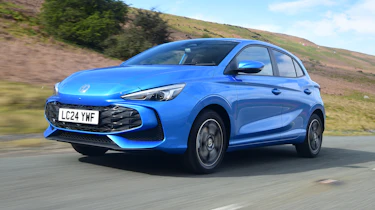
If you’re after a small car that’s well-equipped and value-focused, the MG3 could be perfect.
| Pros | Cons |
|
|
- Prices from: £17,495
- Auto Express Affordable Hybrid Car of the Year 2024 and 2025
MG pulled out all the stops for its second generation MG3 supermini, and all of this hard work clearly paid off when it went straight to the top of the small car sector when it arrived in 2024, taking home our Affordable Hybrid Car of the Year trophy in the process.
Starting from £17,495, the MG3 comes as standard with a 1.5-litre 113bhp pure-petrol engine and manual gearbox, but for just £2,000 more you can get the 193bhp Hybrid+ version, which would be our choice.
Compared with the base petrol model, the MG3 Hybrid+ is more refined at slower speeds thanks to short bursts of all-electric running and it leaves rivals standing when it comes to straight-line pace, too. Yet MG also claims a frugal 64.2mpg at the pumps – a figure our testers closely matched in real-world use.
While its predecessor was cheap, and felt it, the latest version combines the old car’s great value for money with class-leading driving dynamics.
On the road, the British-branded hatchback is surprisingly comfortable, and boasts a supple ride that soaks up bumps and potholes. This is helped in part by its small 16-inch wheels. The car is pretty hushed at low speeds, although we did notice tyre and road noise creeping in once you get close to the national speed limit.
Its interior isn’t quite a match for the Renault Clio when it comes to passenger or boot space, which is almost 100 litres less, at 293 litres. Material quality isn’t quite as plush either, but it’s not too far behind and is packed with standard kit.
The 10.25-inch infotainment screen is bright and responsive, allowing quick and easy connectivity to smartphones, plus the shortcut buttons means the MG3 is less touchscreen heavy when it comes to adjusting some car functions.
“The boot might not be the largest of all the superminis on the market, but I’ve found it’s easily big enough to swallow the carry-on bag and backpack I take with me on work trips. There’s room left over for a large duffle bag, too.” - Ellis Hyde, news reporter
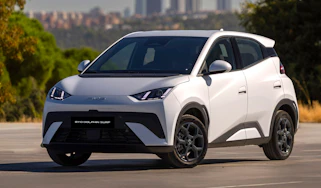
3. BYD Dolphin Surf
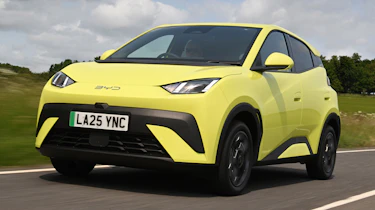
The BYD Dolphin Surf might be one of the cheapest electric cars on the market but it’s fun, efficient and far from Spartan.
| Pros | Cons |
|
|
- Prices from: £18,675
It’s hard to believe BYD only landed on UK shores three years ago, because the brand now has a range of 10 cars, and there’s more still to come! We’ve been impressed by pretty much all of them, but our favourite is the BYD Dolphin Surf which shook up the small electric car sector with its starting price of less than £19,000, roomy cabin, competitive range and particularly generous amount of standard kit.
While the surprisingly sharp-looking Dolphin Surf might be the smallest car BYD sells, it somehow manages to offer room to fit four adults comfortably plus 308 litres of boot space, which is about the same as the bigger Vauxhall Corsa.
It doesn’t feel like you’re sitting in the cheap seats driving the Dolphin Surf, either, because the cabin looks smart, quality is good for such an affordable city car and every model features a 10.1-inch touchscreen plus a 7.2-inch digital driver’s display.
While it’s not the most exciting car to drive due to its fairly uninvolving handling, its suspension is more than adequate to deal with the UK’s rough roads, and the light controls make it very easy to live with.
Entry-level Active and mid-range Boost models feature a peppy 87bhp electric motor, which is more than plenty around town. Meanwhile, the Comfort model packs a punchy 154bhp and this is the one we’d choose if you plan on doing more high-speed driving.
The base model only has a 137-mile range from its 30kWh battery, which may be adequate for those who only drive in town, however all others get a larger 43.2kWh powerpack that ups the range to 200 miles that gives drivers more flexibility.
Whichever version you choose, we think you should get close to the official range as we achieved an exceptional 5.6 miles/kWh when testing the car in warm summer temperatures, and a still very impressive 3.9 miles/kWh in the cooler temperatures we experienced during our affordable EV range test.
“Short bursts of acceleration in the mid-range Boost version are OK, like from 20-30mph; however, things tail off extremely quickly after that. That’s fine in a city, but on the open road you’ll wish you upgraded to the more powerful Comfort model.” - Ellis Hyde, news reporter
4. Smart #5
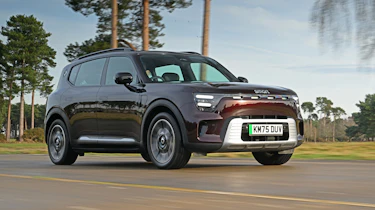
Smart might be known for making tiny city cars, but this compact electric SUV certainly proves the brand isn't just a one-trick pony.
| Pros | Cons |
|
|
- Prices from: £32,960
The Smart car brand may be synonymous with tiny runabouts, but since being revitalised by new owners Geely – the Chinese goliath that also owns Volvo and Lotus – its line-up is currently made up entirely of SUVs.
The Smart #5 is the biggest and best car the brand makes, and we think is a very worthy adversary to the enormously successful Tesla Model Y – the world’s best-selling EV – as well as others such as the Skoda Enyaq, Hyundai Ioniq 5 and Audi Q4 e-tron.
Prices start from less than £40,000 and there are no fewer than six different variants to choose from, including a rugged-looking Summit Edition and power-mad Brabus model. You get what you’re given with each one, with no option packs or different battery sizes to confuse matters. Customers simply select the look they want, plus the paint and interior colour.
Thanks in part of its boxy shape, the #5 is supremely spacious. Six-foot-tall adults can stretch out like they’re in business class, plus there’s a huge 630-litre boot that’s complemented by up to 72 litres of additional storage under the bonnet. The quality and tech onboard is similarly impressive, including the huge screens across the dashboard.
The #5’s range of up to 366 miles isn’t the longest in its class, and during some of our testing we found the powertrain devours energy. To make up for that, Smart says this big boy can charge at 400kW, meaning a 10 to 80 per cent in the massive 100kWh battery found in most versions should take just 20 minutes.
“Smart has always worked to create the most interior space possible, relative to their cars’ footprint on the road. Apply that philosophy to a mid-size SUV rather than an ultra-compact runabout, and – unsurprisingly – the #5 is supremely spacious.” - Ellis Hyde, news reporter
5. Lotus Emeya
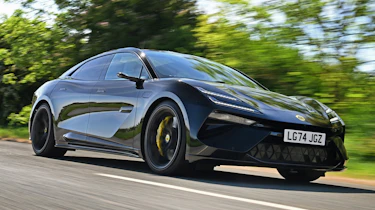
The Emeya might be a heavy electric GT car, but it feels very much like a Lotus.
| Pros | Cons |
|
|
- Prices from: £84,990
Lotus and Porsche have long been rivals in the world of sports cars, but now Norfolk’s finest also has a hugely powerful, bleeding-edge, all-electric five-door GT to compete with the Porsche Taycan. It’s called the Lotus Emeya, and it’s incredible.
Sure, a 2.6-tonne battery-powered ‘hyper-GT’ goes against the old Lotus philosophy of “simplify and add lightness”. However, fans of the brand will remember the Lotus Carlton of the nineties, which was also a high-performance four-door saloon meant to humiliate the best from Germany.
Like its forebearer, the Emeya is one of the most powerful cars of its kind. Two electric motors – one on each axle – spit out a supercar-troubling 905bhp and nearly 1,000Nm of torque.
Needless to say, performance is frankly ballistic, with 0-62mph done and dusted in as little as 2.78 seconds. More impressive though is the way the Emeya keeps its heft in check, thanks to an active air-suspension system that reads the road 1,000 times per second. Body control and ride comfort are more than a match for the Taycan, and it’s supremely refined because of noise-cancelling tech.
Meanwhile, the interior is truly a sumptuous and superbly well finished place to sit, plus the tech onboard is pretty slick and we found there’s more passenger space than you get in the Porsche.
Unsurprisingly, the Lotus Emeya is by far the most expensive car on this list, costing between £85,000 and £140,000, but what this car is capable of more than justifies the price tag.
“Judging suspension settings must be a real head-scratcher for engineers when creating a super-fast EV. Too soft and the amount of squat as all that torque sends the mass rearwards makes the chassis feel like it’s struggling to contain the power; too hard and the ride is terrible and the lack of movement makes it hard to judge the car’s behaviour. Lotus has struck a really sweet balance here, though.” - Alex Ingram, contributor
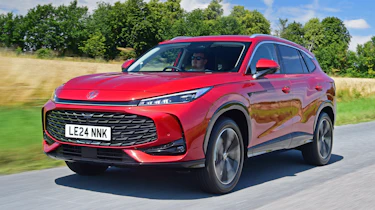
6. MG HS
The MG HS might be inexpensive, but being well-equipped and being built to a high standard, it's a great mid-size SUV.
| Pros | Cons |
|
|
- Prices from: £26,495
The MG HS is another demonstration of the brand’s expertise when it comes to delivering exceptional value for money. This is a mid-sized family SUV that comes generously equipped, feels spacious and is impressively refined on a motorway, yet its £26,495 starting price is less than the much smaller Ford Puma’s.
When it comes to practicality, because the new MG HS is slightly bigger than the last one and has a longer wheelbase, there’s plenty of room for even six-foot-tall adults in the back to sit comfortably. Meanwhile the 507-litre boot, which is the same in petrol and hybrid versions, offers more space than a Nissan Qashqai’s. Although it’s still a little way off the up to 587 litres the Kia Sportage boasts.
Then there’s the standard kit. Every MG HS features dual 12.3-inch displays, Apple CarPlay and Android Auto connectivity, LED headlights, a reversing camera, 19-inch alloys, adaptive cruise control and blind-spot monitoring. Don’t mind spending a little bit more? For just £2,500, Trophy trim adds a wireless phone charger, 360-degree camera system, better stereo, dual-zone climate control, a powered tailgate and heated front seats.
However, while standard kit isn’t a problem, we found the driving experience in the entry-level petrol model to be rather disappointing. That's why we advise buyers – even those who really like to get their money's worth – to spend a little more to get one of the hybrid versions. There’s the self-charging Hybrid+ version that starts from £29,495 and can return more than 50mpg, or the plug-in hybrid which is available from £32,495, offers up to 75 miles of pure-electric range and won our Chinese hybrid mega test last year.
“Our first experience of the MG HS was in the pure-petrol model, and to say we weren’t overly satisfied with the driving experience would be something of an understatement. Our drive in the plug-in hybrid version quickly revealed it to be the far superior choice.” - Ellis Hyde, news reporter
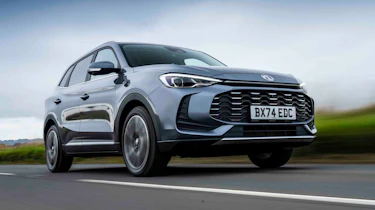
7. MG ZS
Chinese cars are known for being great value for money, and the MG ZS is no exception.
| Pros | Cons |
|
|
- Prices from: £20,495
As with the MG3 supermini, the latest MG ZS compact SUV retains the great value-for-money proposition of its predecessor but adds a dollop of desirability.
For starters, the Ford Puma and Dacia Duster rival looks smart enough on the outside while the interior mixes neat design with plenty of standard kit. It’s also very roomy, with class-leading leg and headroom for rear-seat passengers and a decent 443-litre boot that’s on par with its key competitors.
And while the quality isn’t quite a match for the best in this class, the MG feels solid enough and the tech looks good and is easy to use.
Under the bonnet is the same 113bhp pure-petrol or 193bhp hybrid powertrain you’ll find in the MG3, which means brisk performance in the Hybrid+ version, with 0-62mph taking 8.7 seconds, but it’s still efficient, with MG promising up to 55.4mpg.
During our time with the hybrid ZS, we achieved 48.7mpg, so a more sedate approach could easily see you hit the claimed efficiency figure. The pure-petrol version is unsurprisingly a little more thirsty, but you should see more than 43mpg, according to the MG. The hybrid system can be a little flustered when you want to accelerate in a hurry, but overall it’s smooth and unobtrusive.
The ZS lacks the dynamic sparkle of its smaller brother, but it handles accurately and benefits from a controlled ride. A little more motorway refinement would be welcome, however we think it's a shortcoming many customers will overlook when they consider that the £20,495 starting price – or £22,995 for the Hybrid+ – undercuts rivals by thousands of pounds.
“MG was once known for its sports cars, and the ZS hybrid is also reasonably spritely when you put your foot down. The hybrid electric motors help for a quick getaway from traffic lights, and while the petrol engine can be reluctant to kick in, you get a decent bit of extra shove when it does.” - Shane Wilkinson, senior content editor
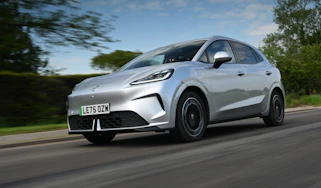
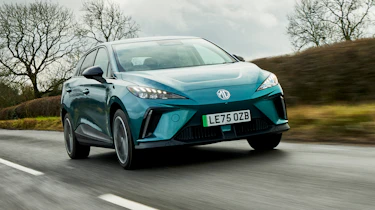
8. MG4
MG has been going from strength to strength since its UK return and the new MG4 is further proof the brand won’t be going anywhere soon.
| Pros | Cons |
|
|
- Prices from: £29,995
When the striking MG4 was launched in 2022, it proved Chinese cars could impress on more than just value-for-money. Aggressively priced and packed with kit, the all-electric family hatchback was pretty much unbeatable when it came to bang for your buck, but what impressed us the most was just how satisfying and even engaging to drive it was, and still is for that matter.
The MG4 recently received a mid-life facelift that included some relatively subtle styling tweaks, but the interior was overhauled with a new layout, better-quality materials and the brand’s latest tech, which addressed some of the few weak points of the original car. Now every model features a 10.25-inch driver’s screen, plus a 12.8-inch touchscreen. The new infotainment system is much better to use and MG even added physical dials and buttons for the climate controls.
The smallest-battery option was dropped during the car’s update, so the starting price has gone up, but the MG4 still costs less than £30,000 and still manages to undercut rivals such as the Volkswagen ID.3, Cupra Born and Renault Megane. Just not by as much as it used to.
If you want the most range from the MG4, you’ll want the Premium Extended Range model, which comes with a larger 77kWh battery for up to 329 miles on a single charge. Speaking of which, charging speeds are the fastest around, so a 10 to 80 per cent top-up will take around 40 minutes.
Buyers wanting a bigger adrenaline rush should look no further than the flagship MG4 XPower, which packs a 429bhp twin-motor set-up that delivers ballistic acceleration and a supercar-troubling 0-62mph time of just 3.8 seconds.
If you’re trying to decide between the ‘original’ MG4 and the MG4 Urban, the latter is more practical, with more space for passengers and their luggage. But the OG has more range and is better to drive, especially on a twisty B-road, thanks to its real-drive layout versus the front-wheel drive Urban.
“Interior packaging is good in the MG4, and passengers benefit from a decent amount of rear legroom and headroom, although there isn’t too much space underneath the front seats for passengers to stretch their feet into.” - Ellis Hyde, news reporter
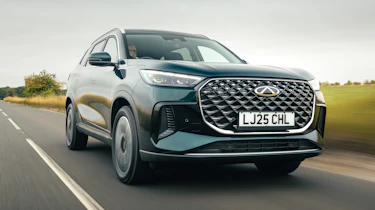
9. Chery Tiggo 8
If you’re after an affordable seven-seater, the Chery Tiggo 8 could be the ideal family car.
| Pros | Cons |
|
|
- Prices from: £28,545
If you’re looking for a large seven-seat family car that blends style, practicality, efficiency and a generous kit list but that doesn’t break the bank, there are very few SUVs which can do all that quite as well as the Chery Tiggo 8.
There’s no doubting the ambition of the Tiggo 8 as it’s taking on more expensive, more established heavyweights such as the Peugeot 5008, Kia Sorento and Skoda Kodiaq, while costing thousands of pounds less to buy.
The most basic Tiggo 8 gets a simple petrol engine that’s good for around 36mpg, but we’d recommend spending a little bit more to get the plug-in hybrid version. That’s available from £33,545, can cover up to 56 miles in pure-electric mode – thanks to a 18.4 kWh battery – and, according to Chery, can return up to 201mpg – so long as you charge the battery as often as possible, as with any PHEV.
For its low price point, we think Tiggo 8 looks and feels suitably upmarket, it drives nicely, is relatively quiet on the move and overall visibility is good, thanks to a high driving position.
On the tech side, you’re far from being short-changed, because a crisp 15.6-inch central touchscreen, wireless Apple CarPlay and Android Auto, a wireless-phone charging pad and 540-degree panoramic camera system are all standard. Our only real gripe is the fact the text on the infotainment system is a little on the small side, which might make it difficult to read for some people.
The Tiggo 8 is roomy enough, too, although the 495-litre boot with the rearmost seats folded down trails the best seven-seaters for space, such as the Skoda Kodiaq that offers some 351 litres more. Then again, the top-spec Chery Tiggo 8’s prices end where the entry-level Kodiaq’s begins.
“We found the interior build quality fairly impressive. The synthetic leather (which is used all over) is soft, the few buttons are nicely damped and there’s a sturdiness to the switchgear too.” - Alastair Crooks, senior news reporter
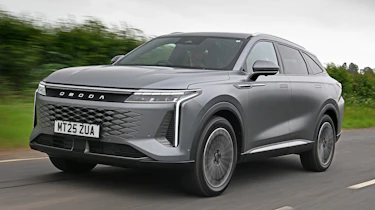
10. Omoda 9
If you're after a reasonably-priced family car which can take long-distance driving in its stride, you'll want to consider the Omoda 9.
| Pros | Cons |
|
|
- Price from: £44,995
The Omoda 9 SHS is its maker’s flagship SUV that at £45,000 costs about the same as a mid-range Volkswagen Tiguan. However, it has much higher ambitions than that, and instead has its sights on more premium heavyweights such as the BMW X3, Volvo XC60 and Lexus NX.
Having an unknown badge on the nose is likely to be a challenge too far for customers of the upmarket German, Swedish and Japanese brands, even those looking for something different to set themselves apart from everyone else in the company car park.
Nevertheless, we can’t fault the ambition, and the Omoda 9 has many appealing qualities. The plug-in hybrid powertrain in particular, which Omoda calls the ‘Super Hybrid System’, delivers heaps of power. It offers 443bhp to be precise, enough for 0-62mph in less than five seconds.
Meanwhile, a massive 34.46kWh battery provides up to 93 miles of zero-emission driving. In the real world, this translates to around 60 miles, but even so you’ll be able to glide to the office and back, and maybe back again, turning heads in this big and bold-looking SUV.
With the 1.5-litre turbo petrol engine and two electric motors working together, the Omoda 9 can supposedly cover more than 700 miles before it's out of juice. Combined with a quiet cabin and comfortable ride, this is an excellent motorway cruiser.
Inside, the Omoda 9 continues to impress. The cabin feels plush and offers a generous amount of space, plus there’s an exhaustive standard kit that includes dual 12.3-inch displays, heated and ventilated seats (front and rear), a Sony sound system with speakers in the headrests, a 360-degree camera with a "transparent" chassis view and plenty of driver-assistance systems.
While the tech onboard and handling aren’t on the same level as a BMW or Mercedes – or some more affordable mid-size SUVs for that matter – the Omoda 9 has its appeals.
“There are three main modes that affect how the powertrain operates. ‘Initial’ prioritises electric running and keeps things nice and quiet, while ‘Smart’ utilises both the electric motor and the petrol engine as the car sees fit. We found this setting worked well, juggling the two power sources almost imperceptibly.” - Richard Ingram, deputy editor.
How to choose the best Chinese car
From showroom novelty to mainstream success, Chinese cars have come a long way in the last decade or so. Buyers that took a look at the first MG models to hit the UK back in 2011 will be utterly amazed at the gargantuan improvements in quality, tech and driving dynamics.
Yet while the latest models are far superior to drive and live with, many have retained the attractive pricing that made those early cars so attractive to value-minded customers.
Narrow down your shortlist
There’s greater choice than ever, with the number of new brands hitting the streets getting bigger by the day – Leapmotor, Lepas, XPeng and Geely are just some of the most recent arrivals, and there’s more on the way very soon.
Some are more accomplished than others to say the least, which is why to help you narrow down your choices we ranked the best and worst Chinese brands currently in the UK.
Bear in mind, however, that many of these are just brand names for larger Chinese conglomerates. For instance, GWM, ORA and Haval are all part of the Great Wall Motor family, while Geely owns Polestar, Lotus, Smart and Zeekr to name a few.
Electric or hybrid power?
In general, the Chinese firms do tend to specialise in EVs, which overall are mostly a match for European rivals when it comes to quality and range, and in some cases are ahead when it comes to tech.
There are a handful of internal combustion and hybrid models such as the BYD Seal U and Jaecoo 7, however, these tend to feature engines and powertrains that trail the class leaders for refinement, power and efficiency, demonstrating that the Chinese brands still have some things left to learn.
Buy a car with Auto Express. Our nationwide dealer network has some fantastic cars on offer right now with new, used and leasing deals to choose from...