Best family cars to buy 2026
Family cars come in a variety of shapes, from hatchback to SUV. But which is best for you?

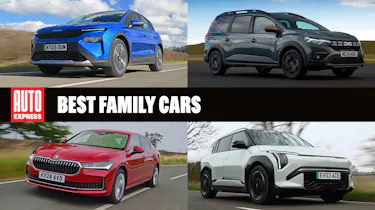
The best family cars in 2026 boast a diverse skill set, making them able to cope in the wide variety of different situations that life with children tends to throw up (hopefully not in the literal sense). These cars should be practical, reliable, safe, and solidly built to take all that life can throw at them.
But those are essentials; we also want a family car to look good, have a dash of style, and drive with more than a hint of agility. They should also be comfortable and come with lots of advanced tech to make life on the road with a family easier to manage. Oh, and we also want a selection of different powertrains so we can select what works best for us - petrol, diesel, hybrid, plug-in hybrid or electric.
With so many shapes and sizes of family car to choose from, be sure to also check out the following pages:
A tall order? Perhaps, but our road test experts have thoroughly tested every family car on sale in the UK and gathered this list of the top 10 best family cars that deliver across the board.
Compare the top 10 best family cars on sale
SUVs are all the rage, but it’s the Kia PV5 Passenger MPV that’s our best family car to buy in 2026. This is thanks to its immense interior space, funky styling and low running costs. The long-serving Skoda Octavia still holds a respectable second place, while the budget-focused Dacia Jogger resides in third.
| Rank | Car | Prices from |
| 1 | Kia PV5 Passenger | £33,200 |
| 2 | Skoda Octavia | £28,500 |
| 3 | Dacia Jogger | £19,000 |
| 4 | Skoda Elroq | £34,000 |
| 5 | Dacia Bigster | £25,200 |
| 6 | Skoda Superb | £38,100 |
| 7 | Kia EV3 | £31,600 |
| 8 | Skoda Kodiaq | £39,000 |
| 9 | Tesla Model Y | £42,000 |
| 10 | Citroen C5 Aircross | £31,000 |
Keep reading to learn more about the very best family cars you can buy right now. You can also click the individual links in our table above to go directly to a specific car..
1. Kia PV5 Passenger
Just when we thought MPVs were out, Kia pulled them back in.
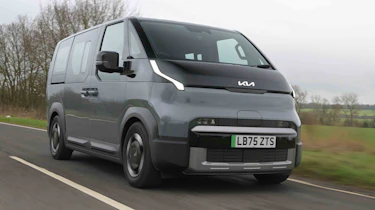
- Prices from £33,200
- Auto Express Family Car of the Year 2026
Pros |
|
Cons |
|
The SUV onslaught brought the demise of many traditional MPVs, but the Kia PV5 Passenger is proof that these cars can still offer massive appeal.
As is rather obvious, the PV5 Passenger shares its DNA with the Kia PV5 Cargo van. Normally this would all but eliminate the style factor, but Kia hasn’t held back with this EV’s design, so it actually looks more like a large car than an industrial load lugger. Of course, being a van at heart means there’s a serious amount of space on offer. You can opt for five or seven seats, and there’s an astonishing 1,320 litres of boot capacity.
While it’d be unfair to expect this to be a sporty car to drive, the PV5 is far more pleasant from behind the wheel than its look might suggest. The electric powertrain is responsive and feels surprisingly brisk, it remains comfortable at higher speeds, and it even remains reasonably composed in corners.
The PV5 is a purely electric car, and there’s the choice of a claimed 183-mile Standard Range or a 256-mile Long Range variant. Its real-world efficiency holds up rather well, too, as our Standard Range test car returned an average of 3.3mi/kWh. This translates to around 170 miles from a charge.
“The PV5 is more affordably priced than the similarly sized Volkswagen ID. Buzz, while it offers more space than many family-focused SUVs.” - Dean Gibson, senior test editor.
- Who will like it: Big families seeking low running costs.
- Who won’t like it: Those who simply cannot resist the lure of an SUV.
2. Skoda Octavia
Whether you go for the hatchback or estate, the Octavia offers immense space and value.
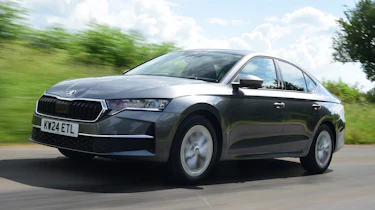
- Prices from £28,500
- Former Auto Express Family Car of the Year
Pros |
|
Cons |
|
‘All-rounder’ is a term coined for the Skoda Octavia. It simply does most things very well, and a few things brilliantly.
As you’d expect, the Skoda Octavia Estate is the most practical option with a stonking 640 litres of boot space, but the hatchback really isn’t far behind with 600 litres. In short, both variants can take on pushchairs, shopping and just about anything else you can throw at them. Passengers have a huge amount of space to enjoy, too, and even our tallest road testers had plenty of room to stretch their legs while sitting in the back seats.
The Octavia is primarily a sensible car rather than a fun one, although there is the option of the sportier vRS version if you desire a bit more power. The standard cars are respectably comfortable and refined, though, and munching up motorway miles is a complete doddle.
No version of the Octavia will be too harsh on the wallet. Opt for a petrol mild-hybrid model, for example, and you'll be able to achieve an average fuel economy figure of over 50mpg without much of a struggle.
“The load bay isn’t just big, it has some useful features, too. Beyond a couple of bag hooks, there are also levers in the luggage area so that the rear seats can be easily folded down.” - Shane Wilkinson, senior content editor.
- Who will like it: Those looking for a more traditional family car with plenty of luggage space.
- Who won’t like it: Drivers who prefer the ride height and sportiness of SUVs.
3. Dacia Jogger
The Dacia Jogger offers so much value for money that it’s almost absurd.
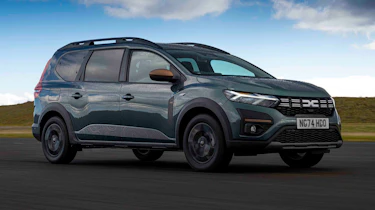
- Prices from £19,000
- Best value for money
Pros |
|
Cons |
|
Check out the price of the Dacia Jogger and you may think it lacks quality and equipment, but this is simply not true.
Sure, it’s not as plush as some of the other models in this list, but the Jogger offers van-like capacity for supermini-like money. It’s easily one of the cheapest seven seaters you can buy brand-new today. You can also fold those seats for up to 2,085 litres of cargo space, so it’s an excellent load hauler as well. If you do want to use all seven seats, we recommend reserving the rearmost row for your smallest passengers, as it’s a little tight on leg and headroom.
The Jogger isn’t exactly sporty in its appearance, and it certainly isn’t like this to drive, either. Both the petrol and hybrid models take over 10 seconds to accelerate from 0 to 62mph but, realistically speaking, this probably won’t matter when you’re on the school run. If you’re planning on taking longer trips, we were particularly impressed with how quiet the hybrid car’s engine remains at higher speeds.
The hybrid-powered Jogger also has the edge when it comes to fuel economy, as it claims up to 58.9mpg on the WLTP combined cycle. During our own testing against a Citroen C3 Aircross, the Jogger returned a steady 50mpg over a mixture of driving conditions, whereas the French SUV only managed 43.8mpg. The big Dacia’s 0.9 TCe petrol engine isn’t alarmingly thirsty, either, as it claims up to 48.7mpg. A starting price of less than £19,000 (for the petrol model) is arguably the biggest highlight of them all.
“One appealing aspect of the Jogger is that it’s only as wide as a Dacia Sandero from behind the wheel, so it feels like a supermini to drive. Some people might be more intimidated by larger van-derived people carriers because of their dimensions and boxy proportions, but with the Dacia there aren’t any issues like that to worry about.” - Dean Gibson, senior road test editor.
- Who will like it: Big families on a budget.
- Who won’t like it: Fashion- or brand-conscious drivers.
4. Skoda Elroq
The Skoda Elroq is such a solid all-rounder that we’ve previously named it our Car of the Year.
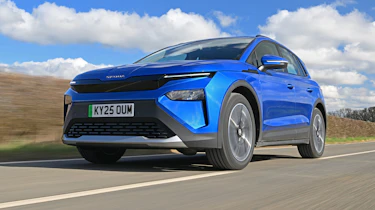
- Prices from £34,000
- Former Auto Express Car of the Year
Pros |
|
Cons |
|
The Skoda Elroq is only the brand’s second EV, but it’s also one of the best electric cars you can buy.
Although our reigning Car of the Year is a bit smaller than its Skoda Enyaq cousin, it’s still a very roomy car with a 470-litre boot as well as a number of useful storage compartments. As always, there are a number of useful ‘Simply Clever’ features, too, including adjustable boot nets, umbrellas, a tyre tread depth gauge and an ice scraper.
In typical Skoda fashion, the Elroq is very drama-free in the way it drives. The fully-electric powertrain means it’s a quiet car for the most part, too, although the door mirrors do cause a fair amount of wind noise at motorway speeds. If you’re driving in the city, the Elroq’s 9.3-metre turning circle makes it a breeze to manoeuvre in narrower streets. The amount of power on offer depends on your chosen variant, but even the base Elroq 50 has more than enough shove for most needs.
While electric cars are now eligible for VED road tax charges, they still offer a considerable amount of savings on running costs compared to combustion-powered cars, especially if you can charge at home. If you’re a company car driver, you can also take advantage of a very low Benefit-in-Kind tax rate.
“There’s a huge amount of space for a family, with plenty of room in the back seats for my children to do their thing without constantly kicking the seats in front.” - Pete Baiden, web producer.
- Who will like it: Those who want a drama-free car with affordable running costs.
- Who won’t like it: People who aren’t able to charge an EV at home.
5. Dacia Bigster
Dacia’s biggest SUV certainly doesn’t feel as cheap as it actually is.
- Prices from £25,200
Pros |
|
Cons |
|
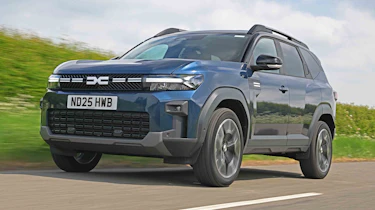
The Dacia Bigster takes the good bits of the Duster and puts them in a bigger car, hence the name.
While it’s more expensive than its smaller sibling, the Bigster still carries an appealingly sensible starting price that undercuts several of its mid-size SUV rivals. 612 litres of boot space make it one of the better load-luggers of the class, too, and both front and rear passengers have adequate head and leg room. Our road testers did find the seats to be a tad uncomfortable after covering long distances at the wheel.
Although it’s rugged to look at, the Bigster remains pretty well refined at cruising speeds. Moving at a snail’s pace does cause things to get a little bit bouncy, but this soon fades out when you gain a bit of momentum.
Neither the petrol or hybrid powertrains options can be described as powerhouses, but they make up for this with low running costs. Naturally, the hybrid offers the best fuel efficiency at up to 58mpg on the WLTP combined cycle, and we managed an average of 50.5mpg during our own testing. The Bigster also comes with the option of four-wheel drive, which helps it live up to its tough appearance.
Unlike some entry-level Dacia models that feel a bit Spartan inside, the Bigster Expression is pretty well equipped with touches like a 10.1-inch touchscreen infotainment system, dual-zone climate control and alloy wheels. We think it’s worth forking out a bit more on the mid-range Journey trim, though, as this brings a lot more kit without annihilating your bank account.
“The ride can be a little fidgety at lower speeds, the cabin is clearly built to a price and the hybrid powertrain is a little noisy in certain situations, but overall the Bigster offers great value for money that means it’s easy to overlook its shortcomings.” - Dean Gibson, senior road test editor.
- Who will like it: Outdoorsy families who need plenty of space.
- Who won’t like it: Those who prefer a plush cabin.
6. Skoda Superb
If you desire the finer things in life but without the immense price tag, the Superb is the car for you.
- Prices from £38,100
Pros |
|
Cons |
|
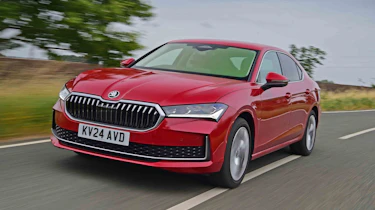
Few cars are as boldly named as the Skoda Superb, but this is indeed one our favourite family cars for a variety of reasons.
Whether you choose the Superb in hatch or estate form, they both have generous boots with up to 690 litres on offer when all five seats are in place. The Superb’s cabin also feels well put together with some excellent materials; it withstood our expert road testers’ prodding and poking, so we reckon it’ll stand up well enough to the tests posed by your youngest passengers as well.
Much like the slightly smaller Octavia, the Superb comes with the option of mild-hybrid or diesel power, and both variants can return over 50mpg. The Superb didn’t exactly surprise us with its sporty driving experience on the move, but it is as calm and refined as we’d expect from a much pricier executive car. If you do want to firm things up a little bit, Skoda’s optional ‘Dynamic Chassis Control Plus' pack introduces adaptive dampers, but this will set you back by over £1,200.
While it’s true the Superb is more expensive than ever before, it’s still a car that feels like true value for money. In entry-level SE Technology spec you’ll still get an upmarket cabin that’s adorned with useful tech including a 13-inch touchscreen infotainment system along with Skoda’s clever 'Smart Dials'.
“Passengers are treated to excellent levels of comfort with almost limo-like room to stretch out. This is great news for the family, plus the huge boot means there’s enough capacity to cart around all our stuff, and my photography gear, too.” - Pete Gibson, senior photographer.
- Who will like it: Families who desire a taste of luxury motoring.
- Who won’t like it: Drivers seeking thrills behind the wheel.
7. Kia EV3
While its looks are rather unconventional, the EV3 is one of Kia’s most sensible electric cars.
- Prices from £31,600
Pros |
|
Cons |
|
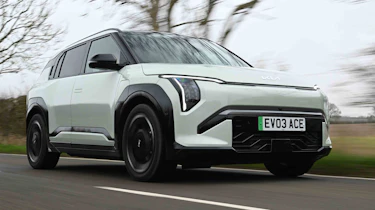
The Kia EV3 is one of the brand’s cheapest EVs to date, and it happens to be one of its best, too.
With a design that’s largely inspired by its EV9 big brother, the Kia EV3 is a very distinctive machine to behold, but it also ticks many of the fundamental family car boxes. It’s reasonably spacious for its size, with a decent amount of headroom on offer. The rear seats are best reserved for smaller passengers, though, as the passenger space is slightly sacrificed in favour of boot space (460 litres in total). If you are seating particularly young passengers in the back, the doors open wide so fitting a child seat and hooking it up to the Isofix points is a refreshingly straightforward task.
Being an electric car, the EV3’s acceleration is instantaneous which is particularly great for pulling away quickly from tricky junctions. Every EV3 has 201bhp on tap, but it’s better described as potent rather than entertaining. We’re big fans of Kia’s iPedal regenerative braking system, as it is highly adjustable and provides one-pedal driving should you want to use it.
If you have a wallbox charger on your driveway, a full charge should cost around £20, and this is far cheaper than an equivalent fill-up of petrol or diesel. Unfortunately, public chargers can push these costs to some alarming highs, so this particular benefit may be lost if you don’t have access to home charging. Opt for the larger 81.4kWh and the EV3 claims up to 347 miles on the WLTP combined cycle. We saw an average efficiency of 3.3 miles per kWh during our own testing in cold conditions. This equates to a real-world range of around 270 miles. While that’s a bit short of the official number, it’s still a reasonable performance, plus it was in winter - we’d expect this figure to improve during the warmer months.
“The EV3 is reasonably refined at speed, because its tyres don’t transmit too much road noise into the cabin. Its steering is also precise and pleasingly weighted.” - Alex Ingram, Auto Express contributor.
- Who will like it: Families considering making the switch to electric motoring.
- Who won’t like it: Some won’t be too keen on the EV3’s bold appearance.
8. Skoda Kodiaq
With its well thought-out design and an array of powertrains, there’s a Kodiaq for just about everyone.
- Prices from £39,000
Pros |
|
Cons |
|
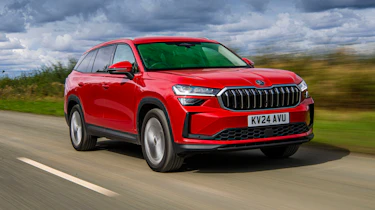
With oodles of space, ‘simply clever’ kit and general great value for money, the Skoda Kodiaq is a tempting option for larger families.
The number of seven-seaters on the market has waned slightly due to shrinking of the MPV class, but the Kodiaq SUV is one of the most practical seven-seat models out there. As is the case with a number of cars, the rearmost row is best reserved for the smallest passengers.
Alternatively, if you have a five-person family with an unhealthy obsession with luggage. The Kodiaq can take on a whopping 910 litres of cargo with the rear seats folded down. If you need all seven seats, this decreases to a still respectable 340 litres.
There’s quite a bit of choice when it comes to powering the Kodiaq, too, with petrol, diesel and plug-in hybrid power to pick from. We’d opt for the petrol option as it provides enough shove for most needs and can still return north of 45mpg. If you have lots of motorway miles to cover, the diesel is the better pick. It’s also worth noting that the PHEV is only available in five-seat form.
Whichever powerplant you choose, the Kodiaq is a comfortable cruiser for the most part, only falling foul of the very worst of the UK’s Tarmac. The engines pull well without much effort, too, so in-town driving is pretty easy for a car of this size.
You’ll need to stick to the lower end of the trim level spectrum if you want to avoid the luxury car tax, but there’s no cause for alarm as there’s still plenty of useful kit thrown-in with the base SE model. As you probably expected, Skoda’s ‘simply clever’ bits can be found here, including the all-too-important umbrella storage.
“This Skoda is a comfortable cruiser on the motorway, with minimal road and wind noise to be heard. Skoda’s cylinder-deactivation system is imperceptible in its operation – the only clue that it’s working is a small icon that appears within the dials” - Dean Gibson, senior road test editor.
- Who will like it: Those who appreciate sensible, ergonomic design.
- Who won’t like it: People who regularly drive through narrow streets.
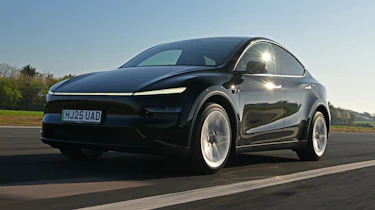
9. Tesla Model Y
The Model Y is a big seller across the globe, and for some very good reasons.
- Prices from £42,000
- Best for performance
Pros |
|
Cons |
|
Politics and controversies aside, the Tesla Model Y is still a hugely popular electric family car, and for good reason.
Although it’s primarily known for being tech-filled and alarmingly quick, the Model Y still gets the fundamental family car qualities right. There’s over 800 litres of boot space at the back, more storage under the bonnet at the front, and plentiful amounts of head, leg and foot room for all five occupants. Loading a big shop isn’t a nightmare, either, thanks to a low load lip and well thought-out load area design.
There’s more good capacity-related news from the battery department, too, as every model claims over 300 miles on the official WLTP Combined Cycle.
In typical Tesla fashion, there’s plenty of poke underneath the right pedal, too, as no variant takes more than six seconds to blast from 0-60mph. Charging can be equally quick, too, with a peak 250kW capability.
The usual Tesla minimalist theme can be found inside the refreshed Model Y, although the firm has thankfully grown out of its brief ‘no indicator stalk’ phase. We think Tesla’s infotainment system is one of the more intuitive on the current market, and it’s quick and easy to navigate. We do wish that Apple CarPlay and Android Auto would make an appearance, though.
“The Tesla’s regenerative braking is superbly composed. Nothing in this class can bring itself to a halt with the same limo driver-like smoothness as the Y, which makes low-speed manoeuvres very relaxing.” - Dean Gibson, senior test editor.
- Who will like it: Fans of the very latest and greatest tech.
- Who won’t like it: Those who hate the very latest and greatest tech.
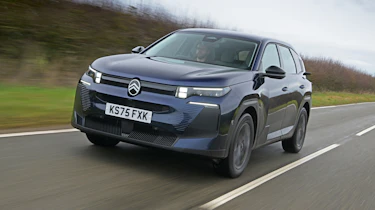
10. Citroen C5 Aircross
The C5 Aircross is a supremely comfortable SUV that doesn't cost a small fortune.
- Prices from £31,000
Pros |
|
Cons |
|
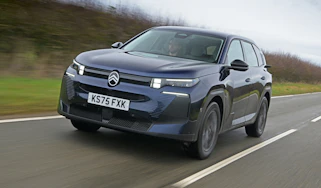
Citroen has long been a master of providing luxury car-like comfort at a modest price, and this is just one quality that helps the C5 Aircross to stand out in the crowded mid-size SUV market.
Supple suspension and soft seats are all well and good, but you and your loved ones will never be comfortable if you’re crammed into a tiny cabin. Thankfully, the C5 Aircross offers ample room for both front and rear passengers. In fact, it’s one of the roomier cars in the class, although this is exclusively a five-seater.
Oddly, you’ll need the smaller C3 Aircross if you want seven seats. The good news, though, is that the lack of extra seats means there’s a substantial amount of boot space in the C5 at no less than 565 litres.
Powertrain-wise, there’s a reasonable number of options to choose from. Starting off the range is a petrol model fitted with mild-hybrid technology to return over 50mpg on the WLTP combined cycle. Alternatively, there’s also a plug-in hybrid that claims over 50 miles of pure electric range. On the subject of zero-emissions, you can also opt for the fully electric Citroen e-C5 Aircross.
As you’ll often find, the price of having a comfort-focused car is that you’ll have to forego any mega driving thrills, and this is indeed the case with the big Citroen. However, opting for the PHEV means you’ll have a decent 193bhp under your right foot, so you’ll soon be up to speed for those chaotic last-minute school runs.
Inside, there’s a reasonable amount of goodies to accompany Citroen’s squishy seats. The portrait-oriented central touchscreen is clear to behold (if a bit distracting to use on the move), and a selection of soft materials give the cabin a generally upmarket ambience. One element that this Citroen has in common with sister brand Peugeot is a notably small steering wheel, which might not be to all tastes. As always, we recommend trying before you buy.
- Who will like it: People who desire maximum comfort without forking out luxury car cash
- Who won’t like it: Drivers who crave sportiness and like a full-size steering wheel.
Latest Citroen C5 Aircross deals
How we choose the best family cars
Exclusive Auto Express ownership survey data has helped us to understand exactly what the top concerns and requirements are for buyers looking for their next family car, and we weigh our criteria accordingly.
- The top concern is reliability with 63.5 per cent of our survey respondents identifying this as one of their main priorities.
- Value for money was chosen by 54 per cent
- 51 per cent identified running costs
- 48 per cent chose comfort
- 42 per cent picked ride and handling
- Design was given less importance than in most other sectors, only being chosen by 27 per cent of our respondents.
Our objective is to help you find the very best family car for your own needs, so these insights are a core part of our testing criteria.
Our road test team have driven every family car on the UK market over thousands of miles on the full range of different roads with this data in mind, and the best family cars listed above are the definitive view on today's top choices.
Key updates to best family cars
13 February 2026: Citroen C5 Aircross and Volkswagen Passat added to the Best family car list in ninth and tenth place, respectively. Citroen C4 and Toyota Corolla Touring Sports were removed.
7 July 2026: Kia PV5 has been added to the number one spot in the Best family car list. To make way for the PV5, the Volkswagen Passat has dropped out of the top 10 and removed from our list.
Did you know you can sell your car through Auto Express? We’ll help you get a great price and find a great deal on a new car, too.