Renault Twingo review
Affordable, efficient, pleasant to drive and most importantly, desirable – Renault’s hit a home run with its new Twingo


Our opinion on the Renault Twingo
Renault has built a fun, cleverly packaged and deeply desirable little car that appeals on many levels. A touch more high-speed refinement might broaden its abilities, but compared with its direct competitors, there are none that outperform the Twingo in terms of driving pleasure or value for money. Once again Renault has created a real-world electric car that pulls at the heartstrings, rather than just the purse strings.
About the Renault Twingo
If you’re in the market for an affordable, small and charismatic new car, the all-new Twingo is a very interesting proposition; it almost doesn’t matter that it’s electric. Not only will it help democratise BEVs with a sub-£20,000 price tag, but it will also answer the question of whether a European brand can design, engineer and develop a fresh model to a Chinese-style time scale. This is known as the 100-week car – let’s see if it delivers.
Firstly, the Twingo’s package is quite remarkable in itself. Including the cost of European manufacturing and the expense of a battery pack, Renault is still aiming to bring this city-sized EV to the UK from less than £20,000. In fact, “Significantly under” £20,000, we’re told.
This isn’t new ground, though. For comparison, the smaller and technically simpler Leapmotor T03 and Dacia Spring both sit at close to £16,000, while the BYD Dolphin Surf, with its larger body and more sophisticated interior, costs just over £18,000. But these are all based on existing and rather rudimentary city cars which are, let’s be polite, a little less desirable.
Used - available now

2021 Mercedes
GLE
57,166 milesAutomaticDiesel2.0L
Cash £31,399
2023 Hyundai
Tucson
20,714 milesManualPetrol1.6L
Cash £16,000
2018 Vauxhall
Astra
38,576 milesManualPetrol1.4L
Cash £6,873
2023 Dacia
Duster
13,691 milesManualPetrol1.3L
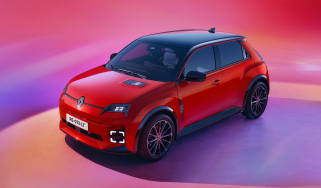
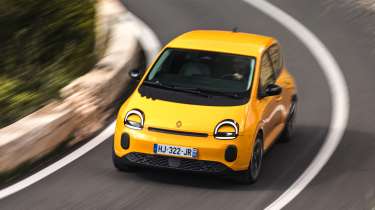
Cash £14,200The Twingo, on the other hand, is positively dripping with appeal from the moment you approach it. Unashamedly based on Patrick Le Quément’s nineties original, this new Twingo is a direct throwback to that car, but executed with ultra-modern touches that bring the design right into the 21st century.
Performance & driving experience
Pros |
|
Cons |
|
The battery pack powers a front-mounted 80bhp electric motor, which is capable of getting the car from 0-62mph in 12.1 seconds and onto an 81mph top speed. These figures make the Twingo perfectly capable of keeping up with motorway traffic, although it’s definitely aimed more at urban driving.
Around town, Renault has found a satisfying balance between ease and engagement. The steering might be light, but it’s very accurate and makes it simple to manoeuvre the car in tight spaces. The 9.87-metre turning circle is also great.
But you’ll be disappointed if you’re a fan of having various driving modes at your disposal, because there are none. A single Eco button is the only way to vary the driving experience, and does its best to eke out the most available range by dulling the throttle response and pulling back on the air-conditioning.
A very welcome surprise, though, comes via the ride and handling, which feel much more composed and refined than in any of the Twingo’s low-cost rivals. Comfort at urban speeds is good, even on our test car’s large 18-inch wheels, yet there’s still enough agility for the Renault not to feel leaden or unenthusiastic.
Both of these aspects are improved by the Twingo’s comparatively low kerbweight. At just 1,200kg, this is one of the lightest electric cars on sale, and you can feel it in the way the Twingo adeptly shrugs off potholes and tight corners. There’s no sense at all that this car was developed or engineered in just 100 weeks, nor that some of it’s been done in China, because the latest Twingo feels nothing other than European.
There are some compromises, however. Driving at speed reveals fairly high levels of road noise, and at around 50-60mph acceleration can be tedious. The car may be capable of getting to 81mph at full chat, but it’s not particularly comfortable doing so; if your driving regularly involves motorways, the limitations of the Twingo’s overall capability will be obvious.
Compared with its immediate electric rivals, it’s top of the class. But the new hybrid-powered Toyota Aygo X is more capable over a wider spectrum of driving circumstances – but then it is more expensive and isn’t a purely electric car.
| Model | Power | 0-62mph | Top speed |
| Twingo | 80bhp | 12.1 | 81mph |
Electric motors, 0-60mph acceleration and top speed
The Twingo’s performance is perfect for its intended home. This is an urban car, and the way Renault’s engineers have set this car up feels right for it, but explore faster roads and things get a little constrained. At low speeds, you can tell that the electric motor has been geared for quick-witted response and a zippy feel. The way it accelerates to 30mph feels more than adequate, and thanks to a well controlled throttle pedal, it’s a cinch to drive.
Out on the open road, though, things are a little more compromised. Accelerating from around 45mph or above can take a while, and getting from 40-70mph, as one might would when entering a motorway, is where the Twingo feels a little exposed.
Most small BEVs have the same feeling when driving at speed, but the Renault does feel just as exposed when driving over long distances at high speeds. The 81mph top speed is an example of this – we’d suggest driving from Normandy to Cannes at full speed on a French autoroute would be a pretty painful exercise.
Town driving, visibility and parking
It‘s best to stick to this portion of the road network. The Twingo seems to be made for quick-witted, agile movements around urban traffic. The throttle and brakes feel great at this speed, with good levels of control and accuracy that make short work of nipping into gaps or entering complex junctions.
The turning circle is also pretty good – if not quite as London cab-like as in cars such as the old Honda e – and the ride is exceptionally well sorted, especially considering the big wheels of our test cars. For the ultimate in urban competence, the smaller 16-inch wheels with their glossy-black covers will do the job even better.
There is one not so good aspect worth mentioning, though. Visibility up front is compromised by the tall dashboard, creating a relatively shallow windscreen.
Country road driving and handling
At speeds under 50mph, the Twingo is surprisingly competent and agile, with a sweet handling balance, nice steering and good ride quality. There’s plenty of grip from the big 18-inch tyres, so there’s a level of stability and control that’s not always a given on city-sized cars that often run smaller wheels.
The brakes also inspire confidence, and thanks to the car’s low kerbweight are more than up to the task of wiping speed off without too much trouble. Around corners, the body remains stable and doesn’t roll too much. We’d potentially like a Sport mode to sharpen things up further, but we’re so impressed with the car in its normal form that this isn’t an issue.
Above 50mph, the Twingo is still perfectly engaging and stable, but the lack of power from the electric motor dampens the fun somewhat.
Motorway driving and long-distance comfort
This is where motorways come in. Renault has been very clever about how they aim this car, and it’s certainly not designed to excel on motorways, but this is where its dynamic limitations reveal themselves.
Acceleration beyond 50mph is pretty slow, and its top speed is 81mph – just 1mph faster than the French motorway speed limit. At this speed, the Twingo’s charm does start to fade. So while this is not part of its core ability as an electric city car, some buyers will find themselves on motorways occasionally, and rivals do it better.
"The Twingo’s performance is perfect for its intended home. This is an urban car, and the way Renault’s engineers have set this car up feels right for it." – Jordan Katsianis, news editor.
Range, charging & running costs
Pros |
|
Cons |
|
In terms of sheer running costs, there will be few less expensive cars to run than the new Twingo. Thanks to the low kerbweight and efficient electric powertrain, this car has very impressive official efficiency ratings, and they are verified by our real-world testing.
The Twingo still has the run on its competitors when it comes to its technical bits, too. A 27.5kWh lithium iron phosphate (LFP) battery pack helps the Renault post an impressive 163-mile WLTP range figure. For context, the cheapest BYD Dolphin Surf is capable of just 137 miles, and you’ll need to spend closer to £22,000 to achieve a 200-mile range in a higher-specification model. The £16k Leapmotor, however, manages 175 miles from its 37.5kWh battery.
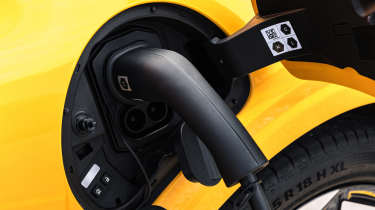
Charging isn’t the Twingo’s strong point, but then the car’s urban focus makes high-speed DC top-ups less of a priority. Renault quotes a 50kW peak, which means that despite the small battery, it’ll still take around 30 minutes to charge from 15 to 80 per cent. This is down on rivals, mind, with the Leapmotor capped at 70kW and the BYD capable of 65kW in its entry-level form.
| Model | Battery size | Range | Insurance group |
| Twingo | 27.5kWh | 163 miles | N/A |
Insurance groups
Data has not yet been released as to the Twingo’s insurance grouping, but from experience it should be very affordable, even by city car standards. But because BEVs usually sit in higher groups than their petrol-powered equivalents, we don’t expect it to be quite as low as the previous Twingo.
Tax
The Twingo costs £200 after the first year in VED road tax, and comes in well below the £50,000 threshold for the luxury car tax supplement. However, UK pricing for the car has not been announced, and while it’s expected to start at less than £20,000, the additional Electric Car Grant should see its list price further reduced. We expect it to qualify for the £1,500 level 1 grant, but this could be extended to £3,750 if the car passes a more scrupulous environmental check-list. Like every BEV, the Twingo is exempt from London’s ULEZ charge, but all cars – BEV or otherwise – are liable for London’s Congestion Charge.
Depreciation
While all BEVs do suffer from heavier depreciation than ICE-powered cars, the Twingo’s low purchase price and sheer desirability should help it retain a good portion of its value after three years.
Interior, design & technology
Pros |
|
Cons |
|
If there was a masterclass in reimagining an iconic design with pitch-perfect modern car design sensibility, the new Twingo would be on the front page of the syllabus. The new car has been unashamedly inspired by the original Twingo from the early nineties, which earned cult status thanks to the legendary design nous of Patrick le Quement. The same might be the case here, but for different reasons.
Retro car design is a well trodden path. The Fiat 500, Volkswagen Beetle and even the Renault 5 – each of these cars followed this trend by taking legendary designs and reimagining them for scores of new-car buyers. But what Renault has done with the Twingo is quite different. Rather than drawing its inspiration from so far back, this one is seated firmly in the nineties, and it’s been executed brilliantly.
There are six main colours, three of which are brilliantly vivid and capture the Twingo in its best light. And while the standard 18-inch wheels look great, the basic steel wheels and their plastic covers still look the business and will no doubt offer more protection from kerbs.
Interior and dashboard design
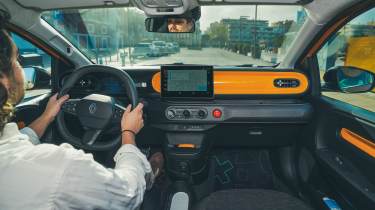
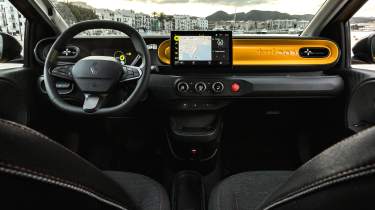
The cabin is a little more generic, but there are still enough Twingo references to know you’re not just in another humdrum city car. The body-coloured inserts on the dash do a lot of heavy lifting in this regard, so too the clever four-seat layout in which the rear ones can be folded independently. This is another nod to the original.
The only thing that drags the cabin down for us is the steering wheel, which is shared with mainstream Renault and Dacia models of a generation or so ago. It’s perfectly usable, but when surrounded by such strong design language, it can’t help but look out of step, aesthetically.
Materials and build quality
Build quality seems to be relatively good on the left-hand-drive cars we have tried so far, but the materials are a little scratchy. However, given the car’s position in the market and its price, this is to be expected. Renault has also been relatively playful with some of the fabrics, especially on high-spec models, and there’s more than a few clever ‘Easter Eggs’ throughout a cabin that harks back to the nineties.
Infotainment, sat-nav and stereo
When it comes to technology, the Twingo’s standard 10-inch touchscreen and seven-inch driver’s display do all they need to in order to feel fresh and up to date. Google integration on upper-level models is a particular bonus in this area of the market, matching some of the best infotainment systems in the business for usability and the voice-activated virtual assistant.
The touchscreen is a good size and fast to respond. It’s significantly better than the systems found in most rivals, including the Chinese offerings that may have more inches of screen space, but don’t use them as well. We also like the separate climate controls, and the chunky stalk behind the steering wheel that controls the stereo.
"What Renault has done with the Twingo is quite different. Rather than drawing its inspiration from so far back, this one is seated firmly in the nineties, and it’s been executed brilliantly." – Jordan Katsianis, news editor.
Boot space & practicality
Pros |
|
Cons |
|
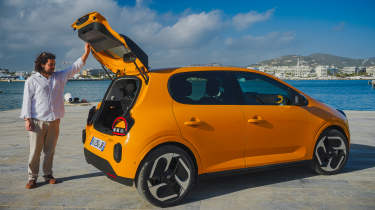
The car’s near-monobox shape makes the cabin feel bright and airy, but the tall dashboard takes some getting used to. The rear is a little tight for adults, yet the Twingo has a real party piece in that its rear seats are on rails, so you can balance legroom and boot space to suit your requirements.
Push the seats fully forward and the boot is rated at a very impressive 360 litres – which is only around 30 litres less than in the larger Renault Clio. Compared with a BYD Dolphin Surf it’s a little cramped, but against the Toyota Aygo X it’s streets ahead. It’s also better than the new Honda Super-N, although the Twingo’s rear seats are out-done by the Honda’s even cleverer ones.
Dimensions and size
| Dimensions comparison | |||
| Model | Renault Twingo | BYD Dolphin Surf | Honda Super-N |
| Length | 3,789mm | 3,990mm | 3,599mm |
| Width | 1,720mm | 1,720mm | 1,573mm |
| Height | 1,491mm | 1,590mm | 1,608mm |
| Wheelbase | 2,493mm | 2,500mm | 2,520mm |
| Boot space | Up to 360 litres | 308 litres | 162 litres |
The Twingo is a small car, but it does sit pretty much in the middle of its class. Something like the BYD Dolphin Surf is substantially larger and costs a similar amount, but is less desirable. At the other extreme is the Honda Super-N, which is based on Japanese Kei-car regulations and therefore quite a lot smaller than both – especially in terms of its width.
Seats & passenger space
The seats are relatively simple affairs, but fundamentally comfortable and adjustable. Each has manual adjustment, as you might expect, but once again that second row can slide and recline individually for maximum comfort or practicality.
The driving position itself is good, although as mentioned above, visibility is limited over the tall dashboard. Taller drivers will feel a little cramped up against the ceiling, but only the Twingo's larger Chinese rivals offer more headroom, and while the French car does have rear doors, they don’t open massively. The rear windows also don’t go down.
Boot space
Renault’s sliding second row unlocks a maximum capacity of 360 litres, which is huge for this class, but with that comes compromises to the rear legroom. However, choice is the name of the game here, because this variability massively increases the practicality in general. It’s really very useful. The load lip is a little high, and there’s limited underfloor storage, but for the class this is still a very practical little number.
"The rear is a little tight for adults, yet the Twingo has a real party piece in that its rear seats are on rails, so you can balance legroom and boot space to suit your requirements." – Jordan Katsianis, news editor.
Reliability & safety
Pros |
|
Cons |
|
The Twingo might be a small car, but it’s not short of safety tech, with six airbags as standard. Active safety is also well taken care of, with front and rear Autonomous Emergency Braking, adaptive cruise control, lane centering and lane-keeping assist, blind-spot monitoring, traffic sign recognition and all-round parking sensors fitted.
Even better, if you’re not inclined to use any or all of these functions, they’re easy to disengage quickly, reducing distractions and the need to furrow through digital menus.
Buying, prices and deals
We’ll have to wait and see how Renault UK sets up the new Twingo line-up, but in France it’s available in two variants: high and low grade. While it will often be the more sensible option to go for the entry-level model, with such great style it’d be hard to say no to a fully specified example – especially if the monthly finance cost is only a few quid more.
We're expecting the Twingo to cost less than £20,000 when it arrives in the UK. If you can't wait for its 2027 debut, you can find plent of other top car deals through the Auto Express Buy A Car service.
Renault Twingo alternatives
Those in the market for a city-sized electric car are fairly limited for choice right now, but this is soon to change. We’d generally avoid the Chinese options from BYD and Leapmotor, and the Dacia Spring is hardly suitable for anything other than being an airport pool car. So when the Twingo arrives in early 2027, it’ll no doubt shoot straight to the top of the class.
But this will change. Not only is the production version of the Volkswagen ID.Every1 concept due to arrive next year – expect it to be called the ID.Lupo or ID.Up – but the Honda Super-N has also arrived and it’s bursting with its own Japanese flavour of cute and cuddly charisma.
Frequently Asked Questions
Five years or 100,000 miles, whichever comes first. This is generally very good, but the warranty game is strong in 2026, with plenty of rivals offering seven or even eight-year options – although almost all cap at that 100,000 mile figure.
Electric city car deals