Best hybrid SUVs to buy 2026
Plenty of SUVs now come with hybrid power, and we’ve picked out the very best buys on today’s market
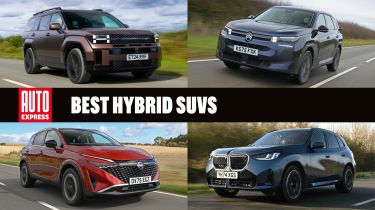
In 2026, the very best hybrid SUVs are able to blend efficiency, space, practicality and technology. Whether you need something small, compact and city-friendly, a capable family hauler, or a big premium model with serious power, there’s a hybrid SUV to fit the bill.
For this list of the best hybrid SUVs, we’ve chosen our current favourites from across the SUV market, including both plug-in and self-charging or full-hybrid configurations. We’ve also made our recommendations to cover the full range of small, mid-size and large SUVs, as well as varying budgets, so there should be something for everyone.
Our expert road testers have driven every hybrid SUV on the market, assessing real-world efficiency, usability, build quality, performance and driving dynamics to separate the best from the rest.
The different hybrid powertrains have their own merits and drawbacks, so we’ve outlined the key points you should consider when building your shortlist and taking test drives at the bottom of this page. For now, let’s take a look at the best hybrid SUVs you can currently buy in the UK.
Compare the top 10 best hybrid SUVs
The BMW X3 is currently the best hybrid SUV on the market. We think the Nissan Qashqai e-Power runs it very close and the MG HS is the best affordable hybrid car money can buy. If you’re after the best seven-seat hybrid car, the Hyundai Santa Fe is a great car for large families.
| Rank | Car | Prices from |
| 1 | BMW X3 30e xDrive | £60,440 |
| 2 | Nissan Qashqai e-Power | £34,875 |
| 3 | Dacia Bigster Hybrid | £26,715 |
| 4 | MG HS | £29,495 |
| 5 | Skoda Kodiaq | £44,840 |
| 6 | Citroen C5 Aircross Hybrid | £31,030 |
| 7 | Dacia Duster | £23,345 |
| 8 | Lexus NX450h+ | £46,695 |
| 9 | Hyundai Santa Fe | £49,000 |
| 10 | Volkswagen Tayron | £44,920 |
Keep reading to find out about the very best hybrid SUVs on sale in the UK. Alternatively, you can click the links in our table above to jump directly to a specific model and if you’d like to narrow or widen your search we have a range of other pages with hybrid and SUV recommendations..
1. BMW X3 30e xDrive
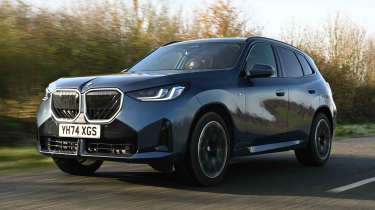
If you want a hybrid SUV that can double-up by being great family transport and a good driver's car, the BMW X3 is your answer.
- Prices from £60,440
- Best hybrid SUV
- Great driving experience
Pros |
|
Cons |
|
The BMW X3 30e xDrive is the type of car that doesn’t shout about itself, it just quietly gets on with being a great SUV.
The plug-in hybrid set-up here combines a 2.0-litre petrol engine and an electric motor to deliver 295bhp, hitting 0-62mph in 6.1 seconds, so this X3 is no slouch when you want to put your foot down. Plus, it’ll happily cruise on electric power for up to a stated 56 miles, making it perfect for short trips or commutes without burning a drop of petrol.
The ride is comfortable, and while the handling leans more towards sensible than thrilling, the steering still encourages you to push on a bit when the roads get twisty. Inside, the tech is spot on, but the materials don’t quite match the premium price tag. The boot capacity is a generous 450 litres, which is decent, though not the largest in its class.
Perhaps one of the biggest question marks over the latest X3 is how it looks; its bold front end with that huge grille is something you will either love or hate. Still, the X3 30e feels effortless in every way, making it one of the most complete options out there.
“Road noise is well isolated from the cabin, and there’s only the slightest bit of wind rustle around the edge of the windscreen which makes the X3 a great cruiser." – Dean Gibson, senior test editor.
- Who will like it: Family buyers wanting some driving appeal.
- Who won’t like it: BMW’s styling won’t appeal to everyone.
2. Nissan Qashqai e-Power
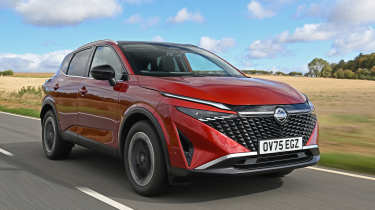
The Nissan Qashqai is one of the best-selling cars in the UK, and with the e-Power hybrid engine it’s clear to see why.
- Prices from £34,875
- Highly commended at the 2026 New Car Awards
Pros |
|
Cons |
|
The Nissan Qashqai has been an undeniable hit for the Japanese brand ever since the first-generation car hit the roads around 20 years ago.
The Qashqai is now in its third-generation but a recent facelift and the introduction of the revised e-Power hybrid powertrain has turned this already good SUV into one of the very best.
Unlike other hybrid powertrains where the petrol engine is assisted by the electric motor, the e-Power system utilises a 1.5-litre petrol engine that acts as a generator for the electric motor and drives the front wheels directly. What this means is that you get a similar driving experience to that of an EV with high levels of refinement.
During our testing, we found when the petrol engine did kick in, it was pretty hushed and barely noticeable when compared to key rivals from Renault, Kia and Hyundai. Running costs shouldn’t break the bank with e-Power models achieving well over 62mpg on the WLTP combined cycle.
On the road, the Nissan Qashqai is far from the best handling SUV on the market but it was never meant to be a driver's car. Instead, Nissan has made sure that the handling is safe and predictable, while focussing on a ride which is comfortable, even when fitted with the larger 20-inch wheels you’ll find on the top-spec models.
The interior is intuitively designed even if it isn’t the most exciting to look at, with plenty of durable yet soft-touch plastics used throughout the cabin.
Practicality is good in both the front and rear of the car, and the door openings are nice and wide so getting in and out is pretty easy, so too is fitting or removing a child seat. The boot space is rated at 479 litres, which is more than the Ford Kuga at 412 litres, but less than the Kia Sportage at 591.
The 12.3-inch infotainment touchscreen is crisp and easy to use, and all cars come with Apple CarPlay and Android Auto, as well as Google-powered infotainment features in higher spec models.
“The rear doors open to 85 degrees, which means – provided that there isn’t a car parked next to you – that fitting a child seat (and even putting a child into their child seat) is a lot easier.” - Shane Wilkinson, senior content editor.
- Who will like it: Anyone wanting a no-nonsense, comfortable family car.
- Who won’t like it: Buyers wanting exclusivity, there are lots of Qashqais about.
3. Dacia Bigster Hybrid
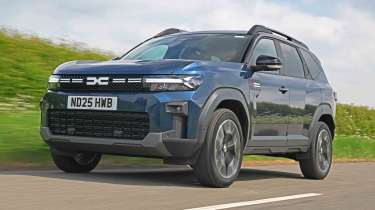
The Dacia Bigster Hybrid is proof you can still have a big car at a low price.
- Prices from £26,715
- Best for value
Pros |
|
Cons |
|
Dacia has a reputation of making cars which are practical without costing the earth to buy or run, and the Dacia Bigster Hybrid fulfills that brief perfectly.
With a combined 153bhp on tap courtesy of the 1.8-litre engine and electric motor, the Bigster provides plenty of poke when it comes to merging onto motorways and driving on faster roads. Around town, the hybrid powertrain is smooth and in no way jerky or intrusive when it switches between petrol and electric power.
Dacia claims the Bigster hybrid can return up to 58.0mpg on a WLTP combined cycle. During our testing, we managed to achieve between 53 and 54mpg, so if you drive with a considerate approach, we can’t see why you wouldn’t be able to get close to the official figure.
The Bigster might share the same platform as its smaller Dacia Duster sibling, but thanks to some clever packaging, the Bigster is an even larger and more practical family car. The Bigster is strictly a five-seater, but there’s plenty of adjustment for front occupants, while adults in the back shouldn’t feel cramped thanks to ample knee and headroom. The 612-litre boot is large for its class, and easily outshines the 587 litres on offer in the more expensive Kia Sportage hybrid.
To demonstrate how good the Bigster is when it comes to value, a top-spec Bigster Hybrid in Extreme trim costs around £6,000 less than an entry level full-hybrid Kia Sportage or Nissan Qashaqai.
“The cabin is clearly built to a price and the hybrid powertrain is a little noisy in certain situations, but overall the Bigster offers great value for money that means it’s easy to overlook these shortcomings.” – Dean Gibson, senior test editor
- Who will like it: If your focus is on value for money, the Bigster excels.
- Who won’t like it: Those wanting their hybrid SUV to feel a little luxurious will want to look elsewhere.
4. MG HS
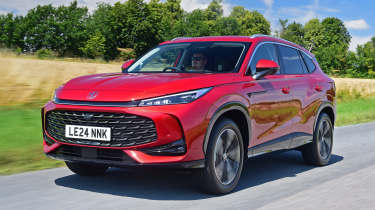
The MG HS is such a good all-rounder that we named it our Affordable Hybrid Car of the Year for 2026 at our New Car Awards
- Prices from £29,495
- Auto Express Affordable Hybrid Car of the Year
Pros |
|
Cons |
|
MG has been on a roll recently, most notably with its HS. Not only is this mid-size SUV one of the best-selling cars in Britain at the moment, it’s such a compelling package that we crowned it our Affordable Hybrid Car of the Year for 2026.
While other cars on this list major on plush interiors, space or driving dynamics, the MG HS is accomplished across the board, while retaining its focus on value and low running costs.
Not only does the hybrid version start at under £30,000, the plug-in car has a long 75-mile all-electric WLTP range and wallet-friendly running costs with all cars sitting in insurance groups 27 and under.
In our real-world PHEV megatest, we managed to travel 68.1 miles on the battery alone, as well as seeing economy figures of 46.3mpg once the battery was depleted. This performance made the HS’s powertrain the clear winner compared to 16 other hybrid systems. MG claims the full-hybrid HS can return 51.3mpg.
MG of old might be known for making fun-to-drive sports cars, and while this family SUV won’t rewrite the rule book on driving dynamics, it’s sprightly, refined on the motorway and composed on twisty roads. We did find it a little firm when travelling at lower speeds, although it’s far from uncomfortable.
Inside, the cabin materials feel of a decent quality which impressed us considering the price you pay. Yes, go looking hard enough and you’ll find some scratchy plastics lower down, but all of the main touchpoints make use of soft materials.
There’s a generous amount of tech on offer too, even on entry-level cars. Our major gripe is with the HS’s infotainment system which is slow to respond, although we suspect most people will bypass it using Apple CarPlay or Android Auto. The driver assistance tech is also too intrusive for our liking.
Practicality is a strong point in the HS. Boot space is reasonable at 507 litres, and there’s a decent amount of head- and kneeroom in the back, so even taller passengers can get comfortable on longer trips. Middle-seat rear passengers might feel a tad squashed though, so keep this in mind if you regularly carry three people in the back.
“There isn’t an option to get an uprated sound system, so the only difference is that you get a 6-speaker system with the entry-level SE or an 8-speaker version in the top-of-the-range Trophy.” – Max Adams, online reviews editor.
- Who will like it: Warranty-conscious buyers will be pleased with MG’s long seven-year/ 80,000-mile warranty.
- Who won’t like it: Those travelling in the middle seat in the back.
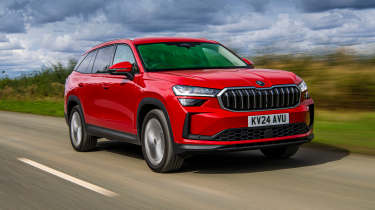
5. Skoda Kodiaq
If you need a large and practical SUV then the Skoda Kodiaq should be near the top of your shortlist.
- Prices from £44,840
- Best for families
Pros |
|
Cons |
|
If you want an SUV that just gets on with the job, the Skoda Kodiaq plug-in hybrid is simply too hard to ignore.
It’s not flashy or dramatic, but it doesn’t need to be. With a combined 210bhp from its 1.5-litre petrol engine and electric motor, it feels brisk enough, hitting 0-62mph in 8.4 seconds. You also get a claimed 75 miles of electric range from a single charge, putting the Kodiaq’s up among the highest all-electric ranges for a plug-in hybrid SUV. The hybrid unit was also a strong performer in our PHEV megatest where it finished second.
Inside, there’s space in abundance, with clever touches that make family life simpler. The boot capacity is a huge 745 litres, and there are plenty of thoughtful storage options scattered around the cabin. It feels impressively upmarket for the price, although the rotary dials could feel more solid.
It’s not the most eye-catching SUV in its design, and on big wheels, the ride can be a bit uneasy, but that misses the point. The Kodiaq is all about comfort, practicality and making everyday driving easy, and it does exactly that.
If you need the space offered by the Skoda Kodiaq but aren’t quite on board with its looks, the closely-related Volkswagen Tayron might be right for you. It boasts the same long all-electric range as the Kodiaq, has a boot which is equally as large, but feels slightly more upmarket in places. If you need seven seats, the Hyundai Santa Fe will be able to accommodate everything a large family can throw at it, but it’s more expensive with its starting price of over £50,000.
“The standard of the materials used in the Kodiaq is pretty good, and the grey plastic trim on the doors and across the middle of the dashboard has been given a unique finish that’s somewhere between rubber and fabric.” – Dean Gibson, senior test editor.
- Who will like it: Families who need a big and practical SUV.
- Who won’t like it: Buyers who need seven-seats - In hybrid form, the Kodiaq is only a five-seater.
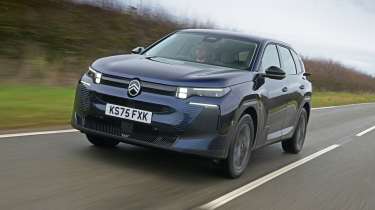
6. Citroen C5 Aircross Hybrid
Citroen is well-known for making comfortable cars at an affordable price, and the C5 Aircross Hybrid is exactly that.
- Prices from £31,030
Pros |
|
Cons |
|
Citroen is known for building cars which prioritise comfort and a relaxing drive, and the C5 Aircross continues this strong legacy.
The C5 Aircross is available with either a full-hybrid powertrain or plug-in hybrid powertrain. Despite the official all-electric range of 53 miles and generally lower running costs for the plug-in hybrid, we’d opt for the C5 Aircross Hybrid 145 as it’s around £7,000 cheaper to buy and can still return over 53.3mpg. It will also be much easier on the wallet when it comes to insurance as the Hybrid 145 sits in insurance group 18, compared to the plug-in hybrid’s 29.
With the C5’s focus on comfort, you’ll find there’s a distinct trade-off when it comes to driver engagement on a twisty road. Enter a corner a little too quickly and you’ll soon discover the C5 Aircross suffers with a noticeable amount of body roll.
Drive the car in a sedate manner though and you’ll find the Citroen is an impressive and comfortable cruiser. Tyre and road noise is pretty hushed, and the suspension makes light work of Britain's pockmarked stretches of Tarmac.
Inside the boxy cabin, you’ll find the C5 Aircross is incredibly capable. Space is generous for the class and there are a lot of useful storage bins dotted around the cabin.
Headroom is good, plus the flat floor means passengers can easily stretch out their legs on longer journeys. What's more, you also get Citroen’s fantastic Advanced Comfort seats which are really supportive, especially on long-distance journeys.
The boot is decent at 565 litres, although it is a little smaller than in rivals like the Kia Sportage and Dacia Bigster at 591 and 612-litres respectively.
“Citroen has segmented the big touchscreen into chunky tiles to make it easy to use: tap the ever-present air-con section to control the climate, although there’s a bank of physical switches for defrost, max A/C and air recirculation.” – Phil McNamara, editor-at-large.
- Who will like it: Families who want to prioritise both comfort and space.
- Who won’t like it: If you value driving dynamics then the C5 Aircross isn’t for you.
Latest Citroen C5 Aircross deals
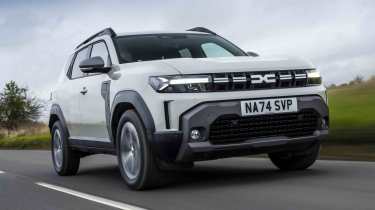
7. Dacia Duster
If you like the look of the Dacia Bigster but don’t need the same levels of space it provides, look no further than the smaller Duster Hybrid.
- Prices from £23,345
Pros |
|
Cons |
|
The Dacia Duster Hybrid offers a straightforward approach to electrified motoring, delivering practicality, space and efficiency, all for an attractive price.
With 153bhp from its 1.8-litre petrol engine and electric motor, the Duster Hybrid hits 0-62mph in 9.4 seconds, which is far from thrilling, but it gets you where you need to go without fuss.
Efficiency is solid too, with Dacia claiming the Duster can return up to 61.4mpg. During our time with the Duster Hybrid, we saw economy figures of 55.6mpg across a varying mix of urban, country and motorway miles.
Inside, the Duster feels roomy for passengers, although boot space in the Hybrid car is only 349 litres, down from 474 litres in non-hybrid cars, due to the battery and false floor. It’s a nice cube-shaped space though. The interior is all about functionality, with hard-wearing materials that might not win any awards for style, but are built to last.
While there’s a bit of wind noise at motorway speeds, it remains comfortable overall. The three-star Euro NCAP safety rating isn’t the best, but there’s enough safety tech to keep most drivers at ease. For those after a no-nonsense hybrid SUV, the Duster delivers exactly that.
“Unlike rivals which opt for a sporty ride, the Duster gently wallows from one bump to the next is both refreshing and calming.” – Alex Ingram, contributor.
- Who will like it: The Duster represents great value for money and the 4x4 version has genuine off-road ability.
- Who won’t like it: Those who want their SUV to make a fashion statement.
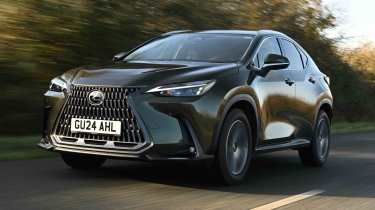
8. Lexus NX450h+
If you’re after a hybrid SUV which has a grown-up, plush and premium feeling to it, then the Lexus NX could be an ideal choice.
- Prices from £46,695
Pros |
|
Cons |
|
The Lexus NX450h+ is a great premium all-rounder, boasting a plush interior that’s ergonomic and practical, but it’s the hybrid powertrain that’s the real highlight.
Toyota was a pioneer of hybrid technology, and its luxury sub-brand Lexus shares this wealth of knowledge. The 2.5-litre four-cylinder petrol-electric plug-in hybrid powertrain is the same as you’ll find in the Toyota RAV4, but Lexus has worked on making the NX even more refined.
The hybrid system is particularly clever because once the 18.1kWh battery is depleted (over 40 miles of pure-electric running is possible) it reverts to acting like a normal hybrid so you still have some sort of electrical assistance to help keep running costs in check.
The NX is also much more refined and comfortable than its Toyota cousin, and it rides better without sacrificing body control. It’s really comfy and compliant when driving around town, but up the speeds and it performs well as a competent motorway cruiser.
Practicality is good for a car of this class, with the boot space measuring in at 521 litres. There are lots of storage and cubby spaces dotted around the cabin which are ideal for families, but we found that the ISOFIX child seat mounting points were quite fiddly to access, so bear this in mind if you need to fit and remove child seats regularly.
“Due to the NX’s e-CVT transmission, the 2.5-litre engine will flare up with plenty of revs under hard acceleration, but it’s well isolated from the cabin, so it rarely sounds harsh or unpleasant." – Alex Ingram, contributor.
- Who will like it: Buyers looking for an SUV which is a little left-field compared to the mainstream.
- Who won’t like it: The price tag can shoot up quite a lot if you start equipping optional extras.
9. Hyundai Santa Fe
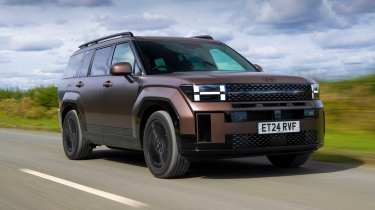
With striking styling and acres of space, there’s lots to like about the new Hyundai Santa Fe.
- Prices from £49,000
- Best for large families
- Seven-seats as standard
Pros |
|
Cons |
|
From a distance, the Hyundai Santa Fe might have a whiff of the Land Rover Defender about it, yet this Korean car has a distinct charm and design of its own.
Unlike its rivals, the Hyundai Santa Fe only comes with the option of one hybrid powertrain, a 1.6-litre engine teamed with an electric motor and battery which can return up to a claimed 38 miles on a single charge. This will prove useful in keeping running costs in check on short journeys or commutes, but is far from class-leading.
Hyundai claims the Santa Fe PHEV can achieve 40.4mpg on a WLTP combined cycle which we think is fairly accurate. During our time with the car, we saw fuel efficiency figures in the mid-30s when driving on the motorway, later rising to the mid-40s when around town.
Unlike the other hybrid SUVs on this list, the Hyundai Santa Fe comes as standard with seven seats. This makes it an ideal choice for large or growing families who need the additional seats and space. The boot space isn’t as large as the rivals like the Volkswagen Tayron, but put all the seats down and you have a van-like 1,959 litres of space. The Hyundai is packed full of safety kit and all the tech you’d expect from a large family SUV, too.
“The Santa Fe’s boxy shape is very on trend right now, but more importantly, it provides a huge amount of cabin space for both passengers and luggage.” – Dean Gibson, senior road test editor.
- Who will like it: The Santa Fe comes with seven-seats as standard, making it ideal for larger families.
- Who won’t like it: It isn’t the cheapest option on the market if you don’t need the extra seats.
10. Volkswagen Tayron
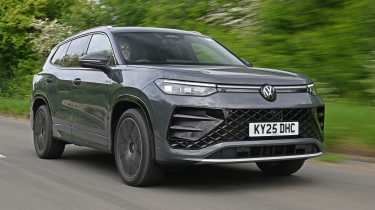
If you’re not quite sold on the Skoda Kodiaq, then the Volkswagen Tayron could be just the ticket if you’re after a large SUV with strong PHEV credentials.
- Prices from £44,920
- Long PHEV all-electric range
Pros |
|
Cons |
|
Volkswagen doesn’t have a shortage of SUVs in its line-up, but the new Volkswagen Tayron is one of its most practical to date.
Where the Tayron shines is with its claimed all-electric plug-in range of 73 miles on a single charge. In the real world, we only managed to get 58 miles of electric running across various road types during our plug-in hybrid megatest, it was a strong performance though and the Tayron finished in second position. Either way, keep the battery topped up and running costs should be kept to a minimum.
The Volkswagen Tayron is far from the most exciting plug-in hybrid SUVs when it comes to driving dynamics, but with a combined power output of 201bhp from its 1.5-litre petrol engine and electric motor, it’s no slouch when you need to get up to speed when merging onto a motorway, hitting 0-62mph in 8.6 seconds. Overall, it’s a quiet car on the move and relatively comfortable.
Volkswagen’s engineers have been especially clever when it comes to eeking out space inside, which there is no shortage of. The boot capacity is one of the largest in its class, measuring in at a huge 885 litres, and there are plenty of thoughtful storage options scattered around the cabin which families should find useful.
The majority of materials used feel plush for a car of this price point, although look hard enough and you’ll find cheaper materials have been used lower down in the cabin. It’s not the most eye-catching SUV when it comes to styling, and the Tayron can get quite expensive when you start selecting optional extras.
“The Tayron’s longer wheelbase means its turning circle is 40cm greater than the smaller mid-size Tiguan’s 11.7-metre radius, but it doesn’t feel like an overly large car when navigating around tight streets.” – Alastair Crooks, senior news reporter
- Who will like it: Buyers looking for a solid and dependable large SUV.
- Who won’t like it: Those wanting a seven-seat PHEV car will need to look elsewhere.
Latest Volkswagen Tayron deals
How we choose the best hybrid SUVs
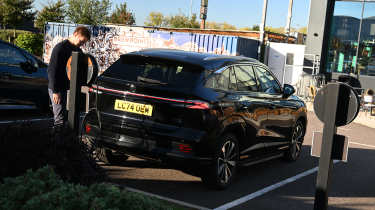
Choosing the best hybrid SUVs isn’t just about comparing fuel economy figures or electric range on paper, it’s also about how well these vehicles perform in the real world.
With electrification now available in everything from compact crossovers to full-size family haulers, finding the top options requires a thorough evaluation of their running costs, practicality and driving experience. That’s where our expert road testers come in, putting each model through its paces to determine which ones truly stand out.
In 2025, we put a number of Chinese hybrid cars to the test to see which car performed best in the real world when it came to battery range and efficiency.
We then followed this up in 2026, where we conducted a larger plug-in hybrid megatest to see which powertrain was best in the real-world. We tested 16 hybrid systems found in 59 cars.
Efficiency
Fuel-saving technology is a crucial part of any hybrid SUV, but not all systems are created equal.
PHEVs need to deliver a meaningful electric range when charged, while self-charging set-ups should provide better mileage without needing to be plugged in. We assess how smoothly each system operates, how well it balances petrol and battery power, and whether regenerative braking effectively recovers energy - all of which impact real-world affordability.
Usability
Everyday usability is just as important. SUVs are built for space and versatility, but some hybrids lose boot capacity or passenger room because of the battery’s location. We test how well each model accommodates occupants and luggage, whether the rear seats are comfortable for long trips, and how easy it is to fit child seats or load bulky items. A great hybrid SUV should be just as functional as its petrol or diesel equivalent.
How the cars perform on the road
Ride and handling also play a big role. Hybrids can be heavier than an equivalent non-hybrid model because of their battery packs, and this can affect agility and comfort. Our testers evaluate how each SUV performs on different types of roads, from tight city streets to motorways and winding lanes. We look at acceleration, braking response, and how well the powertrain integrates with the overall driving dynamics. A top model should feel smooth, responsive, and effortless to drive.
Once we’ve gathered all this information, we compare every contender to identify the best hybrid SUVs on the market. Only the ones that excel in economy, practicality, and overall performance make the cut. Whether you’re after a small, city-friendly hybrid or a spacious family SUV, our expert testing ensures you’re choosing from the very best.
Things to consider when picking the right hybrid powertrain for you
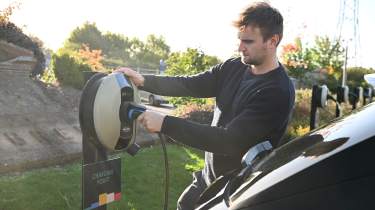
When choosing a hybrid car, you need to consider which type of hybrid powertrain will suit your needs most.
Plug-in hybrids
In order to maximise the benefits of low running costs in a plug-in hybrid, you’ll want to keep the battery topped up which means you’ll probably want to have access to an EV home wallbox charger or cheap charging at work.
By keeping the battery topped up, you’ll be able to take full advantage of the all-electric running, while reducing your fuel consumption. For the best figures, you’ll need to avoid longer trips and stick within the car’s EV range.
Energy companies also offer EV and hybrid car specific tariffs, which make charging the battery even cheaper with off-peak unit rates from 7p per kWh.
If you don’t have access to home, or cheap charging, then you might want to avoid buying a plug-in hybrid SUV as charging using the public network can be quite costly.
For example, charging a Skoda Kodiaq’s 25kWh battery from flat to full would cost around £1.80 when charging at home on an EV tariff, compared to £21 when using a 50kW public charger.
Full-hybrids
If a plug-in hybrid SUV isn’t suitable for you, then a full-hybrid could still be a perfect match.
While full hybrids might not be as efficient as their PHEV counterparts, you don’t need somewhere to plug them in. Some of these cars can run on all-electric power for short periods of time, too.
So, if you spend a lot of time in stop-start traffic, or on low-speed roads, you should see a reduction in fuel consumption compared to a regular petrol or diesel car. You’ll usually benefit from a smoother and quieter drive compared to a pure petrol or diesel model.
Full hybrids don’t have the long EV ranges of plug-in hybrids but they also don’t have the same drop-off in efficiency on longer journeys. Plug-in hybrid technology is relatively expensive and heavy so it tends to be offered in larger cars. Full hybrid tech can be found in smaller, cheaper models.
Mild hybrids
We haven’t included mild hybrids in our best hybrid SUVs run-down because most modern petrol and diesel engines now have some level of mild hybrid assistance. There are different kinds of mild-hybrid technology but most systems do not drive the car at all and are instead used to harvest energy to power the car’s electrical systems and save fuel.
Key updates to best hybrid SUVs
31 March 2026: Nissan Qashqai e-Power added in 2nd place following facelift. Citroen C5 Aircross added in 5th. Mercedes GLC and BMW X1 removed.
20 July 2026: Our 2026 Affordable Hybrid Car of the Year, the MG HS, has been added to our top 10 list at number four. As a result, the remaining cars have each moved down one place, causing the Toyota Yaris Cross to drop out of the list entirely.
Buy a car with Auto Express. Our nationwide dealer network has some fantastic cars on offer right now with new, used and leasing deals to choose from...