Nissan Micra review
The Nissan Micra takes the formula established by the Renault 5 and adds some Japanese flair

Our opinion on the Nissan Micra
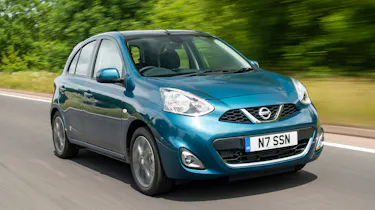
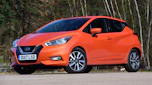
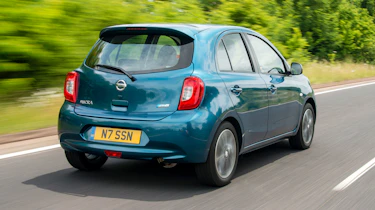
The Nissan Micra is back and better than ever, with a fresh look and an efficient electric powertrain that will help keep running costs down. Nissan has done a decent job of giving the Micra a look of its own on the outside compared with the Renault 5 it’s based on, while the decision to retain Renault’s in-car tech means it’s a user-friendly supermini.
We wouldn’t call the Micra fun to drive, but at least the ride is reasonably comfortable, and the electric motor helps the Nissan feel nippy in urban driving. It doesn’t feel out of its depth on longer trips, either, especially in Extended Range guise.
About the Nissan Micra
The sixth-generation Nissan Micra is quite a step change from what came before it. Up until this point, the Micra has largely been powered by asthmatic combustion engines, but these have been consigned to history with the arrival of a fully electric powertrain.
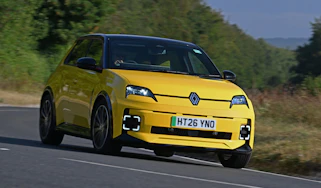
Like the previous generation Micra, it shares parts with sister company Renault. Rather than sharing parts with the Renault Clio, the latest Micra is based on the same AmpR platform as the Renault 5, which is one of our favourite electric superminis
Nissan offers a choice of 40kWh or 52kWh batteries (Nissan quotes the net usable capacity of each car). The former is connected to a 120bhp electric motor, while the latter comes with a more potent 148bhp unit. Power is sent to the front wheels on both cars.
Used - available now
2022 Nissan
Micra
50,726 milesAutomaticPetrol1.0L
Cash £9,7692022 Nissan
Micra
25,507 milesAutomaticPetrol1.0L
Cash £12,2052018 Nissan
Micra
27,870 milesManualPetrol1.0L
Cash £8,2952010 Nissan
Micra
48,000 milesAutomaticPetrol1.2L
Cash £5,499We’ve tested the Nissan Micra and Renault 5 alongside each other in a special twin test.
Performance & driving experience

Pros |
|
Cons |
|
It won’t be a surprise to learn that the Micra drives in largely the same fashion as the Renault 5, thanks to the substantial parts sharing between them. However, that’s very much a good thing, because there’s strong performance on offer, and the chassis delivers a decent mix of big-car refinement and reassuring handling.
| Model | Power | 0-62mph | Top speed |
| Micra Standard Range | 120bhp | 9.0 seconds | 93mph |
| Micra Extended Range | 148bhp | 8.0 seconds | 93mph |
Electric motors, 0-60mph acceleration and top speed
While there are two power outputs on offer in the Micra, you can only get the more potent electric motor with the larger battery. The official figures state that the Standard Range car with 120bhp and 225Nm of torque manages 0-62mph in nine seconds.
The Extended Range version’s 28bhp power advantage and 245Nm of torque make light work of the extra 70kg that the 52kWh battery adds to deliver an eight-second 0-62mph time.
Both versions feel quick off the line due to the instant torque that’s available from their electric motors, and the standard car only really feels as if it runs out of steam at higher speeds.
The Eco driving mode setting throttles back on the car’s responses to boost efficiency, and Sport adds a twitchiness to the pedal that makes the Micra feel more eager to accelerate, but takes a bit of getting used to if you normally drive in the standard Comfort mode.
Town driving, visibility and parking
Most Micras will be used as urban runabouts, and here it performs well. It’s quiet and refined, and the ride is reasonably settled. The chassis is stiff, so the suspension fidgets over uneven surfaces, but it’s also very well damped, meaning the car doesn’t crash over bumps. The steering is light and quick to react, while all-round visibility is good, with a reversing camera fitted to help when parking.
There are four levels of energy recovery, and these are adjustable via the paddles on the back of the steering wheel. At its strongest, there’s a one-pedal mode that harvests as much energy as possible, and can even bring you to a full stop.
Country road driving and handling
The Micra’s layout places the battery low in the floor between the axles, which improves stability in corners. While the Nissan feels heavier than your average petrol supermini, there’s plenty of grip, it’s sure-footed and inspires confidence. There’s a decent level of response from the electric motors, and the brakes feel positive, too.
Motorway driving and long-distance comfort
Since there are only modest power outputs on offer, the Micra is a little less responsive at higher speeds, but it still feels pretty accomplished at the national limit.
The seats are comfortable, the ride settles down at higher speeds, and while there’s a bit more wind noise from the door mirrors, overall the Micra is a comfortable cruiser over longer distances.
We recommend setting the energy recovery to its weakest setting here so the car simply coasts when you lift off the throttle. In the stronger settings, driving can become a little jerky as regen dips in and out.
"The more powerful Micra feels nippy around town and at low speeds, but loses some of its verve on the motorway." - Jordan Katsianis, news editor.
Range, charging & running costs

Pros |
|
Cons |
|
The 40kWh battery model is primed for urban use, with an official WLTP range of 198 miles. Driving distance will reduce if you use the Micra for consistent high-speed cruising, and this is where the higher capacity 52kWh battery with its 260-mile range becomes the better option for longer motorway journeys. The latter is our pick of the two packs.
To help take some load off the powertrain, the Micra has a heat pump as standard. We saw a return of 4.2 miles per kilowatt-hour on a route that included a number of motorway and dual-carriageway miles, and this meant a range of 218 miles is possible. Keep to urban roads and lower speeds, and you can expect that range to increase even further.
It’s worth noting, however, that the heat pump will have its work cut out during the colder months. When testing the 52kWh Renault 5 on our long-term test fleet, we saw this car’s efficiency drop to 3.3mi/kWh when temperatures dropped to near-freezing. This is equivalent to around 170 miles of range, and it’s fair to assume that the technically identical Nissan Micra would face a similar problem.
In order to make the Micra affordable without compromising on the high amount of standard kit, the battery performance and charging speeds aren’t groundbreaking. The 40kWh battery has a maximum DC charging rate of 80kW, which can perform a 15 to 80 per cent top-up in 30 minutes. The larger 52kWh battery increases the maximum charging speed to 100kW, but that just means it also takes half an hour to charge from 15 to 80 per cent.
Both batteries come with 11kW charging as standard, so they can take advantage of three-phase AC power sources. From a conventional 7.4kW home wallbox charger, the Standard Range car takes six-and-a-half hours to fully recharge, while the Extended Range takes two more hours to go from zero to 100 per cent capacity.
One feature that Nissan has added to the Micra that isn’t offered on the Renault 5 is a pair of paddles behind the steering wheel that let you adjust the amount of regenerative braking on the fly. There are three levels of resistance, plus a one-pedal mode that’s capable of bringing the car to a complete stop without the need to use the brakes.
Frustratingly, the Micra resets to the default energy recovery setting, so if you’re a serial e-pedal user, you’ll need to re-select it every time you get in. It’s only mildly annoying, seeing as all you need to do is tap the paddles to reset it, compared with using the ‘B’ selector in the Renault 5.
| Model | Battery size | Range | Insurance group |
| Micra Advance 40kWh | 40kWh | 198 miles | 21 |
| Micra Engage 40kWh | 40kWh | 198 miles | 21 |
| Micra Advance 52kWh | 52kWh | 260 miles | 23 |
Insurance groups
The Nissan Micra’s insurance groups range from 21 to 24 out of 50, depending on the battery size and trim level. These group ratings are pretty much on par with a number of other electric superminis, but they’re actually higher than the Renault 5, as this is in groups 18 to 22. The electric Fiat Grande Panda resides in groups 23 and 24, and every variant of Citroen e-C3 is in group 24.
Tax
You could go absolutely crazy with the Micra configurator and still not come anywhere near the £50,000 luxury car tax threshold for EVs. However, you will need to take the standard rate of VED road tax into account. Of course, being an electric car means the Micra also incurs the lowest applicable rate of Benefit-in-Kind (BiK) company car tax.
Depreciation
Even in terms of depreciation, there really isn’t much to separate the Renault 5 and Nissan Micra. Our market data shows that the Micra should retain between 44 and 47 per cent of its original value after three years or 36,000 miles, while the R5 manages 45 to 46 per cent.
Elsewhere, the electric Grande Panda only retains 41 to 44 per cent after the same amount of time or mileage, while the Citroen e-C3 clings on to 40 to 42 per cent.
Interior, design & technology

Pros |
|
Cons |
|
On the outside, the Nissan Micra features styling cues inspired by earlier generations. The distinctive circular daytime running lights are a nod to the third-generation K12 Micra, while the fashion-led design of the exterior follows a similar formula that was adopted by the company’s Pike models (which included the two-seater Figaro) that were a hit with buyers in Japan back in the nineties.
All versions of the Micra are well equipped, with LED lights, a heat pump, the 10-inch infotainment and driver displays and 18-inch alloy wheels fitted to all cars as standard.
Our preferred mid-range Advance trim adds Google Maps to the satellite navigation system, along with adaptive cruise control, front and rear parking sensors, a reversing camera and blind-spot monitoring, among other equipment.
At the top of the range is the Evolve model, which comes exclusively with the Extended Range battery. This features a Harman Kardon sound system, heated front seats and steering wheel (these are part of a £500 ‘Cold Pack’ option pack on mid-range Advance trim), plus two-tone metallic paint.
Interior and dashboard design
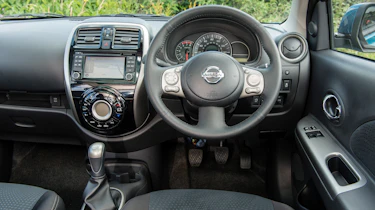
While the Micra has plenty of visual differences to the Renault 5 on the outside, the cabin has been carried over. It feels well designed and comes with plenty of interesting details, such as the waffle-style roof lining and contrasting fabrics on the doors and dashboard. There aren’t as many colourful fabric upholstery finishes inside, and in this respect the Micra actually echoes the sportier Alpine A290 rather than the R5.
The Micra’s seating position is a little high, but then it needs to be to see over the screen housing, which feels a little clunky and plasticky in contrast to the thin, low-profile housings you see in other Nissan models.
One Renault-inherited element which we’re less fond of is the number of stalks behind the steering wheel. There are no fewer than three different sets of controls to the right of the wheel, which can be confusing if you’re not used to the layout. One is the drive selector itself, which does without any form of Park mode and forces you to select Neutral when you come to a halt and engages the parking brake automatically. It doesn’t feel natural to do this, but it’s something you become accustomed to.
Materials and build quality
Overall, the Nissan’s build quality is very good for a supermini. The Micra is produced at the same ElectriCity plant as the Renault 5 and Alpine A290 in France, and everything feels tightly screwed together. However, there are elements such as the large expanse of scratchy plastic on the centre console and doors, plus the squidgy artificial leather on the dash, that might not fare well after a few years.
Infotainment, sat-nav and stereo
The Micra’s dual-screen layout feels high-spec and well executed for a car in this class. If you’re coming from a different Nissan, then you’ll notice there isn’t much in common between the systems, because in fact it’s a straight carry-over from the Renault 5.
The main 10-inch touchscreen is well sized and easy to use. Its menu structure is clear, and the always-visible options bar and climate control elements make it easy to navigate. The mid-range Advance trim has Google Maps directly embedded into the infotainment system, so you get active route planning, live traffic alerts and even location data, such as how many EV chargepoints are in use at public fast-charging hubs.
If you log into your Google account, it’ll even show all your favourite locations and suggest different destinations based on the times of the day that you usually travel. The built-in system is good, but wireless Apple CarPlay and Android Auto are fitted as standard.
The driver’s display is highly configurable, but shows key information clearly. It can also display sat-nav instructions, regardless of which navigation app you’re using – but it can be a little slow when changing between views.
"The Micra has a few little touches that help to distance it from the Renault 5. Open the tailgate, and you’ll find an outline of Mount Fuji on one of the pieces of black plastic trim that sits on either side of the boot opening. There’s a similar design used on the rubber slip matt that lines the centre console tray, too." - Dean Gibson, senior test editor.
Boot space & practicality

Pros |
|
Cons |
|
Small electric cars tend to be larger than their petrol counterparts to make room for their batteries and electrical systems, so while the Micra has enlarged external dimensions when compared with previous models, the amount of space on board hasn’t grown exponentially. There’s no problem with space up front, but rear room is tighter, while small windows, a dark roof lining and tall dashboard all contribute to the feeling that there’s a lack of space.
Dimensions and size
At just under four metres long, the Micra is marginally shorter than the last-generation supermini, but it’s nearly 90mm wider, around 45mm taller and has a 16mm longer wheelbase, which moves it close to the hatchback segment in terms of size. The extra height is entirely due to the location of the battery under the floor.
| Dimensions comparison | |||
| Model | Nissan Micra | Renault 5 | MINI Cooper Electric |
| Length | 3,974mm | 3,922mm | 3,858mm |
| Width | 1,830mm | 1,774mm | 1,756mm |
| Height | 1,499mm | 1,498mm | 1,460mm |
| Wheelbase | 2,541mm | 2,540mm | 2,526mm |
| Boot space | 285-1,106 litres | 250-932 litres | 210-800 litres |
Seats & passenger space
There is good small-item storage up front, including decent-sized door bins, cup-holders in the centre console and even a storage compartment that’s about the perfect size for a set of wireless earbuds – Nissan knows who its intended audience are. Front occupants also get lots of headroom and decent legroom, but the door sills are relatively high for a supermini.
Moving into the back seats, the first obstacle is the short back doors. Wheelarch intrusion creates a narrow opening, which can make access tricky, and those with long legs will also find a lack of knee room in the back. There’s a flat floor across the rear, but the high position means that foot space under the front chairs is on the shallow side. Headroom is acceptable rather than outstanding.
Boot space
The Micra has a 326-litre boot, which is about average for the supermini class. While the space is square with flat sides, the load lip is quite high, and this is compounded by the car’s relatively high ride height.
You can fold the seats down in a 60-40 split, although the canvas straps are easier to access from the passenger compartment than they are through the narrow boot opening. When folded, the seat bases don’t leave a flat floor, while the maximum capacity is 1,106 litres.
There’s no under-floor storage or cargo space under the bonnet, so you’ll need to store the charging cables in the main space.
"When lined up side-by-side it’s clear from the outside that the Micra has a wider tailgate than the Renault 5. However, this is entirely cosmetic and is down to the design of the tail-lights that are part of the rear door. It gives it more of a clamshell-style appearance than the Renault’s squarer bootlid." - Dean Gibson, senior test editor.
Reliability & safety

Pros |
|
Cons |
|
While Japanese brands have a strong reputation for reliability, the Micra is at the mercy of its French underpinnings. But we don’t think that’s anything to be concerned with, because Renault’s recent offerings have performed well in our hands, without issues.
The Micra has a four-star Euro NCAP safety rating, which is essentially the Renault 5’s score transferred to the Nissan. So criticisms of that car are repeated, with the organisation highlighting the lack of consistency in the car’s performance with differently sized occupants, and the fact that it lacks a centrally mounted front airbag.
All versions are well equipped with safety-assistance tech, but Advance trim and above add blind-spot monitoring, rear cross-traffic alert and adaptive cruise control.
Neither the Nissan Micra nor Renault 5 appeared in the 2026 Driver Power owner satisfaction survey. However, the brands ended up pretty close to each other in the best manufacturer results. Renault managed an 11th place finish out of 30, but Nissan took the lead in ninth. Nissan owners largely praised their cars’ handling, ride quality and powertrains, but servicing costs were a sore point.
| Euro NCAP safety ratings | |
| Euro NCAP safety rating | 4 stars (2024) |
| Adult occupant protection | 80% |
| Child occupant protection | 80% |
| Vulnerable road user protection | 77% |
| Safety assist | 68% |
Buying, prices and deals
- Best buy: Nissan Micra Extended Range Advance
Since the 40kWh Micra qualifies for the Government’s £1,500 Electric Car Grant (ECG), prices start from around £21,500, which gets you behind the wheel of a Standard Range car in Engage trim. The Standard Range Advance starts at around £23,500, but thanks to qualifying for the larger £3,750 ECG, the 52kWh Extended Range Advance costs a little less, at around £23,300. At the top of the range, the Evolve version costs just over £26,000 and only comes with the larger battery.
Even if it didn’t have a bigger discount, the 52kWh Extended Range Advance would still be our choice thanks to its longer kit list and better driving range.
You can save even more by building your new Nissan Micra with the Auto Express Buy A Car service. We also have a range of Micra leasing deals for those who prefer a shorter commitment, and we can even help you to sell your car.
Nissan Micra alternatives
Obviously the Renault 5 is the Micra’s main rival, and it remains at the top of the list for alternatives. However, if you’re not so keen on the retro-chic design of the Renault and want something that looks a little more modern, the Micra is an excellent choice. Prices are all but identical, so it could be a decision between which company offers the more attractive financing or even which colour you might prefer.
Alternatively, if you have a larger budget and desire some sporting flair, there’s also the Alpine A290 to choose from. This is yet another relative of the Nissan Micra and Renault 5, and it’s the fanciest of the three.
Outside of this pairing, Micras fitted with the smaller 40kWh battery could be put up against the Fiat Grande Panda or Citroen e-C3. Neither feels as well specified nor as substantial as the Nissan, but they are less expensive and have just as much charm. The excellent Kia EV2 and the spacious BYD Dolphin would also be worth considering.
The larger 52kWh model knocks on the door of more expensive rivals, but still sits below the electric MINI Cooper or Peugeot E-208 on price, offering similar range and kit for less.
Nissan Micra pictures
Key updates of the Nissan Micra review
- 24 August 2026: Latest pricing and depreciation data.
- 17 April 2026: Driving impressions from our UK comparison with the Renault 5.
Frequently Asked Questions
Nissan offers a simple three-year/60,0000-mile warranty on the Micra, while the battery is covered for eight years or 100,000 miles.
Deals on the Micra and alternatives