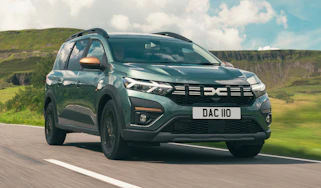
Dacia Jogger review
The Dacia Jogger is an affordable seven-seat car that’s hard to ignore

Our opinion on the Dacia Jogger
Finding a direct rival for the Dacia Jogger was incredibly difficult at the time of its launch. Yes, there were plenty of seven-seaters around, and there were lots of estate cars and SUVs, too, but none managed to merge those three qualities together in one car, nor offer anything similar for anywhere near the price. Even van-based people movers such as the Citroen Spacetourer were much more expensive.
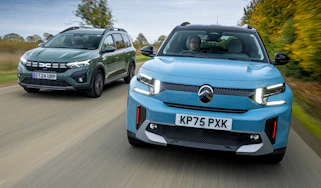
Now, the Jogger has much closer rivals in the forms of the Citroen C3 Aircross and Vauxhall Frontera – two seven-seaters that share a lot of tech – but the Dacia holds an advantage in a few key areas. Huge space, low running costs (thanks to frugal powertrains and strong resistance to depreciation) and keen pricing make it a compelling, if unusual, option.
About the Dacia Jogger
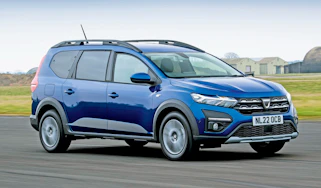
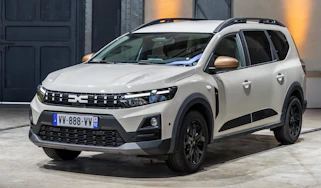
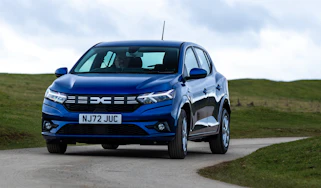
Despite the new Striker and the Bigster SUV being longer, the Jogger is the only seven-seat Dacia you can buy, and it's also the cheapest seven-seat new car on sale today. More than just being a passenger carrier, the Jogger offers versatility and low running costs, and it drives surprisingly well.
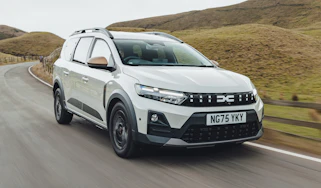
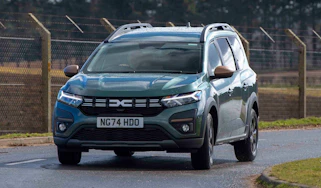
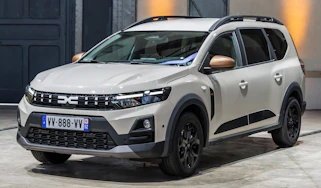
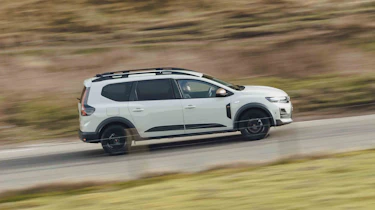
Essentially, it’s a stretched Dacia Sandero supermini with an estate-car body and some SUV-style design touches. But overall, it’s a no-nonsense car that follows a template that hasn’t done Dacia’s other models any harm. The Jogger hides its budget roots very well – it’s only really noticeable in the quality of some of the materials used in less obvious places in the cabin – while the frugal petrol and hybrid engine options offer enough performance for family duties.
Used - available now

2024 Dacia
Jogger
42,733 milesAutomaticPetrol1.6L
Cash £15,933
2024 Dacia
Jogger
24,637 milesManualPetrol1.0L
Cash £14,999
2024 Dacia
Jogger
37,258 milesManualPetrol1.0L
Cash £11,399
2023 Dacia
Jogger
2,279 milesManualPetrol1.0L
Cash £15,995Every model has front-wheel drive, and there are two engine options offered: a 1.0-litre three-cylinder petrol, or a 1.8 four-cylinder full hybrid, with the latter coming exclusively with an automatic gearbox.
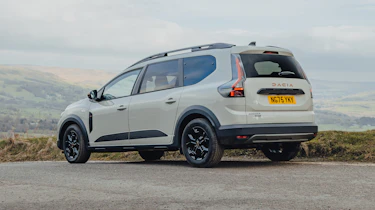
Unlike van-based seven-seaters that have sliding side doors, the Jogger retains conventional side doors, while there’s an estate-style top-hinged tailgate at the rear. Inside is a seven-seat cabin, with a pair of removable chairs in the boot, so you can choose between taking passengers and maximum cargo capacity.
We've tested a number of different versions of Jogger since it arrived in the UK, with our latest twin-test being the hybrid Dacia Jogger versus the Citroen C3 Aircross. Despite the Citroen being the more refined car, we made the Dacia the winner because of its superior practicality, better body control, and remarkable efficiency. We've also run a petrol Jogger as part of our long term test fleet.
Dacia Jogger prices and latest deals
How much does the Dacia Jogger cost? Well, official ‘on the road’ prices range from £18,705 to £24,410 but you can currently save an average of £661 through the Auto Express Find A Car service, where prices start at £18,465. You can lease a Dacia Jogger from £268 per month or buy a used model at prices starting from £9,999.
Check out our latest new car deals, leasing deals and used car deals for the top offers available now on Auto Express. And don't forget we can help you sell your car, too.
Official ‘on the road’ prices range from just under £19,000 for the petrol option in entry-level Essential spec. Expression trim costs just over £20,000, while the flagship Extreme is priced from around £21,500. The Hybrid 155 variant isn’t offered in Essential guise, but in Expression and Extreme you’ll pay an additional £3,035 premium over the petrol versions.
That’s not all, though, because you can currently save an average of £616 through the Auto Express Find A Car service, where prices start at £18,464. You can lease a Dacia Jogger from £238 per month or buy a used model for less than £12,000.
Check out our latest new car deals, leasing deals and used car deals for the top offers available now on Auto Express. And don't forget we can help you sell your car, too.
Performance & driving experience
Pros |
|
Cons |
|
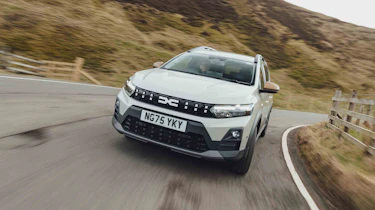
The Jogger is relaxing, comfortable and composed enough for family life. High-speed refinement could be better, but otherwise it gets the job done without much fuss.
The Dacia Jogger is powered by a 1.0-litre, TCe three-cylinder turbocharged petrol manual or a newer four-cylinder 1.8-litre petrol hybrid with an automatic gearbox. The pure-petrol is an adequate option in a car with space for seven people, but it’s not exactly powerful, so those who want a little more performance can turn to the Hybrid model.
The Hybrid 155 arrived with the Jogger’s mid-life facelift in 2025 to replace the old Hybrid 140. It might have a similar name, but this hybrid system is quite different. Designed by HORSE (a Renault and Geely joint venture), the Hybrid 155 has a 1.8-litre, four-cylinder petrol engine and two electric motors. A 49bhp motor can power the front wheels and a supplementary motor acts as a starter/generator, but can also recoup energy through regenerative braking. The old Hybrid 140, in contrast, had a 1.6-litre petrol unit with a single electric motor.
| Model | Power | 0-62mph | Top speed |
| Jogger 1.0 TCe | 108bhp | 11.2 seconds | 111mph |
| Jogger 1.8 Hybrid | 153bhp | 9.0 seconds | 111mph |
Performance, 0-60mph acceleration and top speed
The 108bhp 1.0-litre three-cylinder petrol does a fine job overall, but its long 11.2-second 0-62mph acceleration time means you'll need to make good use of its six-speed manual to keep it on the boil outside the city limits. Our creative director ran one for a long-term test and found that on motorway trips and even when partially loaded, the Jogger struggled. He'd also need to plan overtaking manoeuvres or stick to life in the slow lane.
The Hybrid 155 feels quick enough in a straight line with a 0-62mph time of 9.0 seconds, although its responsiveness isn’t great. That’s partly down to the new gearbox – a four-speed automatic for the petrol engine and a two-speed for the electric side of the system. Preferring to slur its gearchanges, the transmission is smooth, and only occasionally do you feel a lurch on a downchange if you’re braking heavily.
Pressing the start button in the Hybrid 155 causes a short jingle to sound, which is just as well because the petrol engine won’t fire up immediately. In fact, the Hybrid 155 doesn’t really engage its petrol engine until you get above 30mph. Around town the electric motor feels more than perky enough to keep up with traffic – especially from rolling starts.
In the hybrid there’s also a little bar on the driver’s display that tells you the level of battery charge, although because it’s so small you can actually see it drop in real time as you drive along. On the flip side, you can see the bar topping up as the brake recuperation does its thing. Stick it into ‘B’ for extra regenerative braking and the battery charge tops up pretty quickly. The braking force is fairly smooth too, although it’s a long way off a true one-pedal system where you rarely need to use the brake.
Town driving, visibility and parking
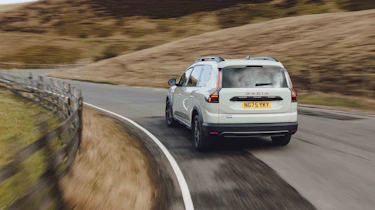
The Jogger’s wheelbase is large for its size, falling only about 100mm short of an Audi A8’s. That doesn’t help with low-speed manoeuvrability, though, and the Jogger’s turning circle isn’t great. Fortunately, rear parking sensors are standard across the range. Visibility is very good in the Jogger, with a low bonnet line and big windows all around.
Aside from a distant hum when running purely on the battery, the hybrid is pretty refined at low speed – only when the petrol engine bursts into life by either mashing the throttle or going too quickly is that refinement lost. The petrol engine’s clatter seems more intrusive than in the Hybrid 155 version of the Bigster SUV.
All versions of the Jogger come with 16-inch wheels – alloys only for Extreme trim – so the ride is comfortable at urban speeds.
Country road driving and handling
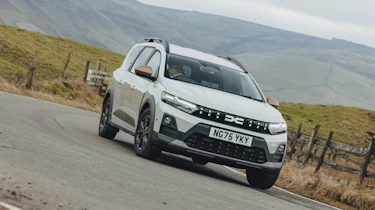
The Jogger’s ride isn’t set up to be sporty in any way, with comfort a priority. However, its ride is firmer than the C3 Aircross’s – not to the point of being harsh by any stretch, but enough to make it feel a little better controlled over bumpier roads.
Despite being almost 180kg heavier than the pure-petrol TCe, the Hybrid 155 doesn’t feel too different when cornering. It contains its mass surprisingly well in bends, and the steering is more than communicative enough. The ride doesn’t exactly isolate you from the road surface, and large thuds sometimes reverberate around the massive cabin with its lining of hard plastics, but it’s far from uncomfortable overall. We think that with all seven seats on board filled, the added weight might well help the Jogger cope with rough roads and undulations even better.
Motorway driving and long-distance comfort
At high speeds, the Jogger allows quite a lot of wind and road noise to reach the cabin, a sign perhaps of where Dacia has cut costs, with less sound deadening being fitted here than in more expensive models. It’s comfortable, though, and despite those slab sides, it remains stable, too.
The 1.0 TCe just about copes with keeping pace with traffic, although having a full load on board is likely to be a struggle when the road gets steep. The Hybrid is a better option for those tackling long motorway drives on a regular basis.
“In the Hybrid 155 you can feel vibrations through the transmission tunnel and the car’s floor when you’ve got your foot down – which isn’t too often in urban areas because the electric motor has just enough pep for most scenarios.” – Alastair Crooks, senior news reporter
MPG & running costs
Pros |
|
Cons |
|
Starting at less than £19,000 and barely breaking the £25,000 mark even if you loaded every imaginable option, shows that the Dacia Jogger offers seriously impressive value for money. And that value character continues once you’ve been handed the keys.
For all the earlier hybrid system’s quirks, it was hard to argue with its ability to sip fuel at town speeds, and the latest Hybrid 155 continues this approach. The battery is larger in the Hybrid 155 compared with the Hybrid 140, but only by 0.2kWh, taking the capacity to 1.4kWh. As you might expect with such a tiny battery, there’s no claimed electric-only range figure for the Jogger Hybrid 155 – but Dacia says in urban areas it will run up to 80 per cent of the time on electric power. The Hybrid retains the same 50-litre fuel tank as the TCe, so expect a very impressive maximum range that’s well in excess of 600 miles.
After steady driving around town and on some country roads, the Jogger Hybrid 155 rewarded us with a fuel economy figure of 64.6mpg. That’s higher than the official 61.4mpg and much better than the 56.5mpg the old Hybrid 140 was meant to achieve.
Despite the obvious efficiency of the system at low speeds, at higher speeds it starts to struggle. During a section of A-roads with inclines, fuel efficiency dropped to 48.5mpg, which isn’t disastrous by any stretch of the imagination. However, the use case for the Jogger Hybrid 155 is clearly centred on urban areas, where the car is also helped by excellent all-round visibility for the driver.
As for the pure-petrol, during our long-term testing, we averaged 41.3mpg, which isn't bad considering it spent a fair amount of time trundling around in London traffic, with occasional jaunts to Somerset.
| Model | MPG | CO2 | Insurance group |
| Jogger 1.0 TCe | 47.1mpg | 136g/km | 13 |
| Jogger 1.8 Hybrid | 61.4mpg | 104g/km | 20 |
Insurance groups
Insurance groups for the Jogger start at 13 – not much more than for a supermini. Even the more powerful hybrid, in top-spec Extreme trim, only climbs as high as 20.
Tax
Both engines and trim levels in the Jogger are subject to the same rates of Vehicle Excise Duty road tax. The first year of road tax is absorbed into the on-the-road price – from then on, it’s a flat rate of £195 annually. Obviously, the Jogger comes nowhere near the £40,000 luxury car tax threshold.
Business users will benefit from the lower emissions of the Hybrid model over the TCe. The latter is quoted at 136g/km, placing it seven tax bands above the Hybrid models, which have figures of 104g/km. If you must have a seven-seat company car, then PHEV or all-electric models are available that offer even lower Benefit-in-Kind (BiK) company car tax costs.
Depreciation
According to our expert CDL valuation data, the Jogger is expected to maintain around 50 per cent of its original value after three-years/36,000 miles. There’s not much difference between the various specifications, ranging from 48 per cent to 51 per cent.
For comparison, the Citroen C3 Aircross and Berlingo are also expected to hold on to half their original price, while the Vauxhall Combo Life is only likely to maintain between 39 and 42 per cent over the same period of time.
Interior, design & technology
Pros |
|
Cons |
|
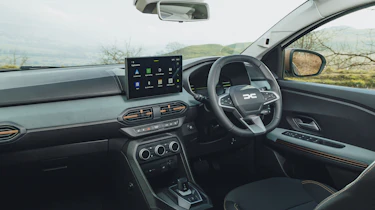
A facelift for the Jogger arrived in 2025 with new headlights and a Sandstone paint finish, but the Jogger’s exterior remains a no-nonsense affair. Higher-spec cars are enhanced by off-road-inspired plastic cladding and skid plates, and the Extreme model also benefits from copper-coloured detailing, although we think that Cupra might have something to say about this design flourish.
The cabin follows a similar theme, with a simple layout that foregoes any flashy design statements for a logical arrangement of the climate and infotainment controls. As with the exterior, top-spec Extreme models add some more distinctive details, but overall it's a fairly straightforward affair.
Entry-level Essential is the one that comes with all the basics, including manual air-con, auto lights and wipers, a driver-attention monitor, lane-keep assistance and warning, traffic-sign recognition and autonomous emergency braking. However, it lacks a touchscreen infotainment system that comes with mid-range Expression, along with single-zone climate control, keyless entry, a reversing camera, snazzier interior fabrics and a soft-feel steering wheel.
However, we'd recommend going for the top-of-the-range Extreme, because it has:
- 16-inch alloys
- Privacy glass
- Front and rear parking sensors
- A 360-degree camera system
- Auto high-beam assist
- Heated front seats and steering wheel
- Sat-nav
- A six-speaker Arkamys audio system
- Wireless phone charging
Interior and dashboard design
It’s not the most exciting cabin, but it’s hard to fault the Jogger’s functionality. Big dials, chunky buttons and clearly labelled switchgear make everything easy to figure out, and included among the physical switches are controls for the heating and ventilation – there’s no need to dive into a touchscreen here.
Dacia makes it easier than most brands to switch off driver-assist systems, too; preset your preferences on a touchscreen menu, and they’re programmed into the ‘My Perso’ button to the right of the steering wheel. With two prods of that, your selection is engaged.
Materials and build quality
Much like the overall design, the choice of materials inside seem like they’ve been selected to keep costs down rather than to feel nice. There’s some flex in the doors if you pull the interior door handle, and noises tend to echo around the cabin. Look beyond the hard, scratchy plastics, however, and everything feels screwed together well enough. A soft-plastic top and fabric inserts have been added to the dashboard to boost the cabin’s appeal, and all models feature fabric upholstery, with a more upmarket finish for Extreme trim to help it stand out.
Infotainment, sat-nav and stereo
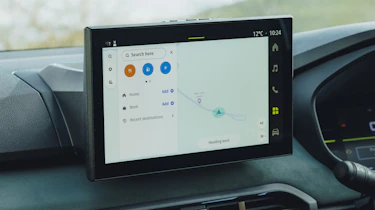
There is a distinct demarcation between the base version of the Jogger and the other two variants, because Essential trim does exactly as it says, by having the bare minimum these days of a DAB radio, Bluetooth, only two speakers and a smartphone holder on the dashboard for you to use your own device for anything more advanced.
Compared with the rest of the cabin, the Jogger’s digital driver’s display almost seems at odds with the budget-first nature elsewhere. The screens are sharp and colourful, while chunky steering wheel buttons make it easy to switch between the trip and driving data menus.
A less modern function is the audio-control stalk that is located behind the steering wheel; models from Dacia’s parent group Renault have been using a near-identical design for these switches since the nineties, but it’s so intuitive and conveniently placed that there’s no need for change.
The Expression trim has a 10-inch touchscreen but doesn’t feature built-in navigation, but it still has Apple CarPlay and Android Auto, so that’s no big loss. If it operates, that is – we found connecting a smartphone via USB didn’t always work. The Dacia’s touchscreen looks tidy, though; it’s not the largest on the market, but the display is sharp, and the graphics are simple yet easy to read. What few features are present are accessed via a main menu page, where they’re laid out in six clear icons. The range-topping Extreme features sat-nav, wireless smartphone mirroring, and wireless charging. You also get three USB-C charging ports to keep various devices topped up.
"We particularly like the neoprene-style fabric inserts on the seats in the Extreme model that are more interesting to the touch than regular fabric. The surface is wipe-clean, which should be useful for family life." - Dean Gibson, Senior road test editor.
Boot space & practicality
Pros |
|
Cons |
|
For a seven-seater, the Jogger is compact on the outside yet huge on the inside. There are a few useful features, too, but nothing like the selection offered by Skoda’s ‘Simply Clever’ set-up.
Dimensions and size
Park the Jogger next to a Sandero, and you’ll see that they’re the same width, but the former measures nearly half a metre longer and has a longer wheelbase, too. It also has a taller roof to create more headroom in the back. There aren’t many other cars with similar proportions, with the most direct rivals being boxy van-based MPVs with sliding side doors.
| Dimensions comparison | |||
| Model | Dacia Jogger | Citroen Berlingo XL (7 seats) | Citroen C3 Aircross (7 seats) |
| Length | 4,547mm | 4,753mm | 4,395mm |
| Width | 1,848mm | 1,848mm | 1,850mm |
| Height | 1,691mm | 1,818mm | 1,660mm |
| Wheelbase | 2,898mm | 2,975mm | 2,672mm |
| Boot space (7/5/2 seats) | 160/565/2,085 litres | 209/1,050/3,500 litres | 40/330/1,470 litres |
Seats & passenger space
From up front, the Jogger doesn’t feel much different from the Sandero supermini. The driving position is a little raised, but it’s easy to see out of. It’s only when you turn to look over your shoulder that the car’s full size becomes obvious.
Fortunately, the windows along the side are fairly large, so blind spots are mitigated well. The steering wheel is offset to the left of the driver’s seat, so no amount of fiddling with the seat or wheel will straighten things out. Storage is decent, although the Essential model only has an open tray between the front seats instead of the armrest bin found on higher-spec cars. That’s tall and square, while twin hexagonal cup-holders feature ahead of it, plus there’s a tray ahead of the gearlever. The glovebox and door bins are deep, too.
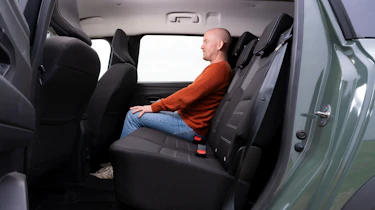
Space in the middle row is great when it comes to knee and headroom, while the middle seat is almost the same width as the two to either side, so it’s even reasonably comfortable three-abreast.
The Jogger’s roofline climbs towards the back, which has allowed for the middle row to sit slightly higher than the front seats and gives a good view out for smaller, younger occupants, although taller passengers get a view of the car’s headlining rather than through the windscreen. Big side windows let in plenty of light. There are two USB sockets available and reasonable-sized door bins, while tray tables can be added as part of the optional Storage Pack that costs around £160. As part of the 2025 facelift, there are now four YouClip mount points in the car to position things such as smartphone holders, storage pouches or cup-holders.
But despite the huge rear doors, and a middle row that tumbles forward with fabric pulls, access to the third row is still a little tight. Fabric pulls unlatch the middle row, which then tumbles forward, but the car’s shape means you still need to squeeze in to get to the back. Once in there, there’s plenty of room – only taller adults will have a reason to grumble about limited kneeroom. Those at the very back each get a cup-holder and pop-out rear windows, plus a 12-volt socket to share.
Boot space
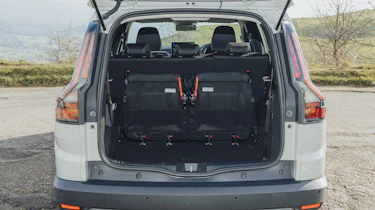
Even with all seven seats in place, the Jogger offers 160 litres of boot space – far more than the nominal 40 litres the seven-seat Citroen C3 Aircross offers in the same layout.
Folding the third row down opens up 565 litres (albeit in an awkward shape) or, after removing the surprisingly light (9.9kg) third-row seat by fiddling with small red catches underneath, boot capacity increases to 820 litres – that’s two and a half times larger than a Sandero’s boot. Fold the middle row down, and there’s a vast 2,085 litres on offer. The large, flat hatchback and low load lip make it easy to lift heavy items inside, although taller users might bang their head on the boot latch when the tailgate is open.
Towing
If you’re going on a family trip with all seven seats occupied you might want to invest in a roofbox to mount on the standard-fit roof rails. Failing that, the Jogger TCe has a towing capacity of 645kg with the Hybrid 155 upping this to 730kg.
“If anyone is really keen on making sure their Dacia Jogger has a spare wheel, you can add one to the petrol version for £200. You can’t add this option to a hybrid version, though.” – Max Adams, online reviews editor
Reliability & safety
Pros |
|
Cons |
|
At first glance, a one-star rating for the Jogger in its Euro NCAP safety test looks extremely disappointing. However, dive into the data, and its score (which is in fact the score of the mechanically similar Dacia Sandero – NCAP hasn’t tested the Jogger specifically, so has duplicated its testing data) falls flat on its safety assist systems.
The autonomous emergency braking system isn’t capable of detecting pedestrians, cyclists or animals – it can only detect other vehicles – which saw it marked down considerably. The lack of a seatbelt warning for the third-row seats saw further marks lost. Its adult and child occupant protection scores were reasonable – not industry leading, but nothing to be that concerned about, either.
Dacia has also updated the safety kit since the test, with traffic-sign recognition, lane-departure warning, lane-keeping assist, and a driver monitor all fitted. Expression cars and above add a blind-spot warning system and an electric handbrake, too.
Also not particularly impressive is the brand’s showing in our 2025 Driver Power customer satisfaction survey. A 29th place finish out of 31 manufacturers puts Dacia down at the lower end of the rankings.
| Euro NCAP safety ratings | |
| Euro NCAP safety rating | One star (2021) |
| Adult occupant protection | 70 per cent |
| Child occupant protection | 69 per cent |
| Vulnerable road user protection | 41 per cent |
| Safety assist | 39 per cent |
Buying and owning
Best buy: Dacia Jogger 1.8 Hybrid Extreme
Given you’ll likely share the Dacia Jogger with a few other people, it’s worth going for the higher-spec Extreme trim for its more generous equipment list to get useful features such as privacy glass, front and rear parking sensors, and a 360-degree camera system.
The Hybrid 155’s real-world efficiency isn’t amazing, but it’s worth it for the extra performance and easier driving experience. It loses none of the Jogger’s practicality, which is very impressive.
Dacia Jogger alternatives
There isn’t really a direct alternative to the Dacia Jogger - no other new car offers a seven-seat layout in a stretched hatch/estate body. The latest Citroen C3 Aircross is the Jogger’s closest competitor to date on price, but is a proper small SUV in shape, while the seven-seat layout is only offered as an option on the petrol model, not the electric one. However, Citroen emphasises that the third row is for occasional use, plus you can carry either people or stuff, not both, because the seats take up the whole boot when in position.
The only other models worth considering are van-based MPVs such as the Ford Tourneo Courier, Ford Tourneo Connect and Volkswagen Caddy (which are mechanically identical), plus the Citroen Berlingo and its Fiat, Peugeot, Vauxhall and Toyota spin-offs. Some of these come with diesel power that will be attractive to long-distance drivers, the Tourneo Connect is also offered with plug-in hybrid technology, and the Citroen et al come in full electric guise, too.
Key updates of the Dacia Jogger review
12 March 2026: Update to include impressions of the revised 1.8 Hybrid
17 February 2026: General updates to residual values
Dacia Jogger pictures
Deals on the Jogger and alternatives
Frequently Asked Questions
All versions of the Jogger come with seven seats, including the entry-level car. The Hybrid model’s electric running gear is integrated into the engine and gearbox under the bonnet, so the seven-seat layout is unaffected. If you need to maximise boot space, the rearmost seats can be removed completely to turn it into a five-seater, or all seats fold flat to make more than 2,000 litres of space.