Renault Master van review
The latest Renault Master is a highly competitive large van in both diesel and EV forms
Our opinion on the Renault Master
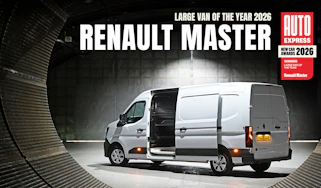
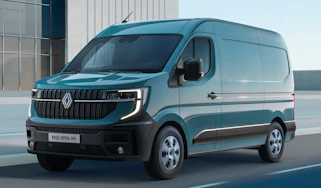
The latest Renault Master is a far more distinctive machine than any van to wear this moniker before it. Thankfully, the French brand’s engineers haven't got too carried away with its aesthetics, though, because this large panel van also offers plenty of practicality.
On the move, a lofty driving position provides a clear view of the road ahead, while the weighting of its controls, noise levels, and ride comfort all help to make the Master an intuitive and comfortable van to drive. It certainly feels its size at times, though.
About the Renault Master
For the fourth-generation Renault Master, the firm has redesigned its large van from the ground up. It looks like an evolution of the last model with a sharper front end, but the dimensions have been changed to maximise cargo space, as well as boost efficiency for both the diesel and electric versions. Renault has seen fit to redesign the Master so that it can maintain sales in the face of strong competition in the market, including the Ford Transit and Mercedes Sprinter.
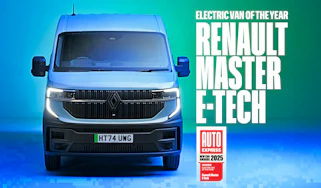
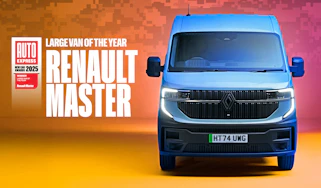
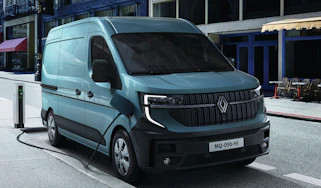
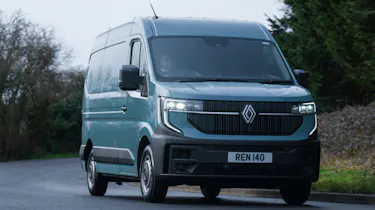
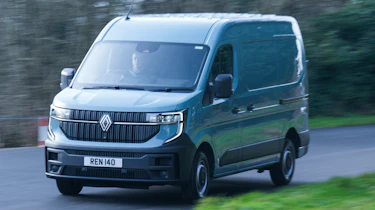
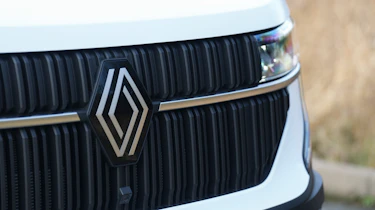
The obvious change to the Mk4 Renault Master is a sharper look up front, with a more upright grille, a prominent Renault badge on the nose and the brand’s signature C-shaped daytime running lights. But what you can’t see is the enhanced aerodynamics of the front end. The bluff front merges into a more upright windscreen, which helps to smooth airflow, while vents cut into either side of the bumper help to reduce drag. At the rear, the roof droops slightly at the trailing edge to help improve aerodynamics, but this doesn’t come at the expense of cargo capacity.
Used - available now

2018 Volkswagen
Polo
37,568 milesManualPetrol1.2L
Cash £9,440
2018 Vauxhall
Corsa
16,220 milesAutomaticPetrol1.4L
Cash £9,995
2023 Audi
e-tron
57,858 milesAutomaticElectric
Cash £22,680
2021 Kia
Sportage
45,237 milesManualPetrol1.6L
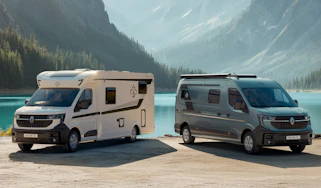
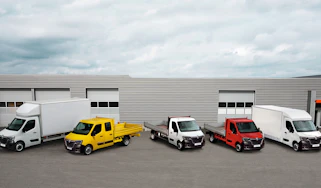
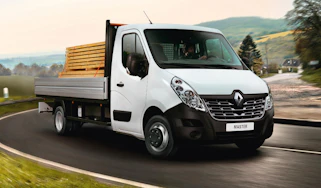
Cash £11,000In the UK there are three lengths and two heights to choose from, plus chassis cab, tipper and conversion options available. Renault claims a total of 40 different configurations are on offer. Power comes from a choice of three diesel engines or a fully electric ‘E-Tech’ set-up.
Prices kick off at around £34,000 (exc. VAT) for the entry-level diesel Master in L2H2 configuration. The electric Master E-Tech is pricier, starting from around £42,500 (exc. VAT), but this drops thanks to the Government’s plug-in van grant, and means that while the Master has a longer range than large electric van rivals, it costs a few thousand pounds less than its Ford and Mercedes competitors.
MPG and running costs
Pros |
|
Cons |
|
Thanks to its redesigned body, the Renault Master has 20 per cent less drag than the old model, and Renault claims that it’s the most aerodynamically efficient van in its class. In the real world, that means improved fuel economy and lower emissions, while the Master E-Tech offers a longer range.
The diesels use the latest Blue dCi 2.0-litre four-cylinder engine with three power outputs. The base 130 engine can achieve up to 33.2mpg on the combined cycle, a figure that’s matched by the most powerful 170 engine. The middle-tier 150 engine is slightly better, achieving up to 34mpg. These figures are for Masters equipped with the manual gearbox – we expect fuel economy to drop marginally if the nine-speed automatic is fitted.
Emissions figures are impressive for the class, with a 39g/km reduction when compared with the outgoing Master. Figures range from 196g/km to 236g/km for all engines, with the exact figure depending on specification. There’s an ‘Eco’ mode for maximising fuel economy, but this simply reduces engine power by 30 per cent, and if you’re carrying a heavy payload, then you’re likely to cancel out any savings it might deliver by using the throttle harder, especially with the dCi 130 motor.
Electric range, battery life and charge time
The electric Master E-Tech is fitted with an 87kWh battery (up from 57kWh in the older version), which provides up to 285 miles of range. This is a smaller pack than some rivals offer, but the aerodynamically efficient bodywork means that range compares favourably, beating the latest E-Transit’s 249-mile maximum, the Citroen e-Relay’s 263-mile range, and the Mercedes eSprinter’s 272-mile range.
During our first test drive of the Master E-Tech, we saw the battery lose 21 per cent of charge over the course of 52 miles with a 400kg payload, suggesting a laden real-world range close to 250 miles. We drove across a mixture of high-speed and urban roads, in 20-degree celsius temperatures with the air-conditioning on. You can expect a shorter range in cold conditions. During another test in an unladen Master E-Tech, the trip computer recorded efficiency of 2.4 miles per kWh, which isn’t bad for such a large and heavy electric van.
The battery can be DC rapid-charged at speeds of up to 130kW, allowing you to add more than 140 miles of range in 30 minutes. AC home charging tops out at 22kW – fast enough for a 10-100 per cent recharge to be completed in around four hours. There’s no heat pump, but Renault has implemented a unique battery thermal management system that it claims is more efficient. The battery consists of 12 separate modules that can be removed, repaired, or replaced individually, theoretically making it easier and cheaper to fix should something go wrong.
Load space and practicality
Pros |
|
Cons |
|
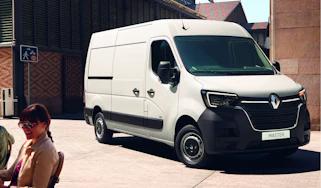
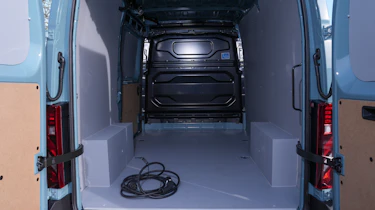
There’s a decent range of Renault Master bodystyles to choose from, including panel vans, crew cabs, chassis cabs and several factory-approved conversions. The panel van can be ordered in L2H2, L3H2, or L3H3 configurations, offering 10.8, 13.0, and 14.8 cubic metres of cargo volume, respectively. That’s slightly more than in the equivalent Ford Transit, but the Master lags behind the Citroen Relay and Iveco Daily, which offer up to 17.0 and 19.6 cubic metres of load volume, respectively.
The diesel Master is offered with a 3.5-tonne maximum gross weight, while the Master E-Tech can also be ordered in a 4.0-tonne configuration. The maximum payload capacity for the L2H2 diesel Master stands at 1,304kg, falling short of the 1,472kg offered by an equivalently-sized Transit.
By using a relatively small 87kWh battery, Renault has managed to keep the weight of the Master E-Tech low. As a result, maximum payload capacities are higher than electric rivals, with the 3.5-tonne Master E-Tech capable of carrying up to 1,125kg, while the 4.0-tonne version manages up to 1,625kg. A 3.5-tonne Mercedes eSprinter can only carry a 774kg payload.
The load area is 100mm longer than before and the sliding door opening is now 40mm wider, increasing those dimensions to 3,225mm (3,855mm for L3 models) and 1,312mm, respectively. There was never an issue fitting a Euro pallet through the door of the old Master, so it certainly won’t be a problem here, while a more upright bulkhead means it’s easier to stack boxes against it.
New for the electric Master is ‘vehicle to load’ (V2L) charging, allowing you to power tools and appliances directly from its battery through power socket outlets in the cabin and load area. There’s ‘vehicle to grid’ (V2G) charging, too, which lets you send power back into the network.
Reliability, safety and security
Pros |
|
Cons |
|
The previous Renault Master had a fairly spotless record, and the new one uses the same engines found in the latest Renault Trafic, which seem to be holding up without issue.
The Master comes with a comprehensive suite of safety and assistance systems across all models. There are 20 features in all, with highlights including autonomous emergency braking, driver attention monitoring, intelligent speed assist, traffic sign recognition and lane-keeping assist. Other helpful tech includes the standard-fit rear parking sensors, the trailer stability assistance and the (optional) digital rear-view mirror. We think the latter is worth paying for; it’s clear, bright and has virtually no delay.
The Master features the same MyPerso system as found on Renault’s passenger cars. This includes a button to the right of the steering wheel that switches between standard and custom modes, with the latter configurable via the touchscreen, allowing you to deactivate the systems that you don’t want. While the Master’s systems default to on every time you start the van, the MyPerso button allows you to quickly configure them with two presses.
Euro NCAP was clearly impressed with the Master’s safety because it awarded this van a maximum five-star rating in 2025.
Driving and performance
Pros |
|
Cons |
|
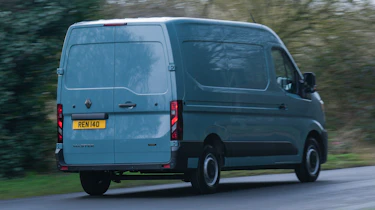
We get three diesel variants of the Renault Master in the UK, along with the Master E-Tech. The diesels offer varying power outputs of 128bhp, 148bhp or 168bhp. The entry-level motor has a six-speed manual gearbox as standard, while the mid-range version can be had with an optional nine-speed automatic gearbox (the same one that comes standard in the most powerful variant). Heavy-duty Masters are only available with the 148bhp engine and a manual gearbox.
On the move, the 148bhp model has plenty of punch down low, despite its peak 360Nm of torque lagging behind an equivalent Transit. We tested it on a variety of roads and had no problem keeping up with traffic, and it had plenty of punch available at lower revs. Only above 3,000rpm does the pulling power begin to drop off, but we think it’s more than enough for most drivers. If you’ll be regularly approaching the Master’s load capacity, the 168bhp has marginally more shove, but it’s only really noticeable when overtaking at higher speeds. Torque stands at 360Nm, so in theory, it should be more comfortable hauling heavy loads.
The six-speed manual gearbox is pleasant to use, with a short throw and a robust action allowing you to concentrate on steering. Similarly, the clutch pedal is intuitive and well weighted for easy driving. General refinement for the diesels is good, too, thanks to the fabric-finished trim for the cabin’s roof and bulkhead that boosts sound deadening. Engine noise only becomes obvious when you floor it and let the revs rise, while there’s some booming at motorway speeds.
The electric Master E-Tech is even more refined than the diesel, thanks to a silent and smooth motor and the absence of gears – simply move the selector (which is the same column-mounted shifter as you’ll find in a Megane or Scenic E-Tech) into Drive, and away you go, although there is a high-pitched whistle from the electric motor. With only 138bhp and 300Nm of torque, it’s no quicker than the diesels and can’t match the 430Nm E-Transit for acceleration or outright performance, but it feels nippy enough off the line and at speeds up to around 50mph. A regenerative braking mode, labelled ‘B’ on the end of the drive selector, allows for near one-pedal driving and slows the van down with quite some force when you lift off the throttle, but there’s no way to adjust its strength, which is frustrating.
The Master’s brakes are unique in that the power assistance adjusts to compensate for any load in the rear, ensuring that the pedal feels the same regardless of the cargo. While we weren’t able to test the Master with different loads, the brakes were strong and predictable at all speeds, with a pedal that felt well matched to the weighting of the accelerator and clutch.
Town driving, visibility and parking
The main issue with the Master is its size. At more than two metres wide, it’s tricky to thread this van down narrow roads, although the tall driving position does help with the view out. Parking sensors also help towards avoiding any unpleasant prangs, as does the optional rear-view camera.
Motorway driving and long-distance comfort
This generation of Renault Master brings a shorter wheelbase than before, resulting in a tighter turning radius. The steering is just as pleasant at higher speeds, with good accuracy that makes it easy to place in its lane along the motorway. Ride quality is a highlight, the Master dealing remarkably well with small and large bumps alike and with a welcome absence of rattles. The standard-fit bulkhead does a good job of isolating the driver from the load area and prevents any knocks or bangs reverberating through to the cabin.
Cab interior and technology
Pros |
|
Cons |
|
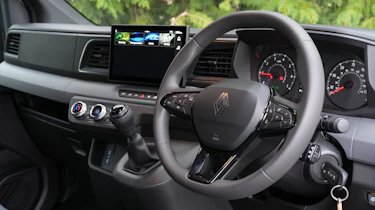
The cab of the latest Renault Master feels like a big step forward from the old model. Renault looked to large trucks for inspiration for the new S-shaped dashboard, which improves legroom and angles some of the key controls towards the driver. It’s a far cry from Renault vans of old, feeling much more like a passenger car than a commercial vehicle. There’s plenty of adjustment for both the seat and steering wheel, and visibility is great thanks to a tall driving position and large mirrors that are placed out of the way of the A-pillars.
The base Advance model gets manual air-conditioning, electric windows, automatic lights and windscreen wipers, plus rear parking sensors, among other features. The Extra trim adds Google Maps and voice control to the infotainment, blue upholstery stitching, LED load area lighting and some additional 12V sockets. There’s no keyless entry or start, and all models have a manual handbrake for now, which seems slightly at odds with the modern electric drivetrain. Van drivers will probably appreciate the old-school approach, however, and there’s no mistaking whether it's on or off. Renault has confirmed that an electronic item is coming in 2025.
You get 135 litres of storage space dotted around the cab, including overhead shelves, some large bins above the dashboard and a big space under the middle seat. The middle seat can be folded down to create a handy desk area with USB-C ports to keep devices topped up. There’s one big cup-holder at each side of the dashboard, but the middle passenger has no choice but to hold their coffee.
Infotainment, sat-nav and stereo
There are two trim levels to choose from – Advance and Extra – and both come with a crisp 10-inch infotainment touchscreen that runs a Google-based software interface with Apple CarPlay and Android Auto connectivity. It’s simple to operate, very responsive, and within easy reach of the driver’s seat. Plus, the dashboard serves as a handy ledge to rest your hand on when using the touchscreen on the move. The climate control dials are big and sturdy, and sit above a large wireless smartphone charging pad. Electric Renault Masters come with a digital driver’s display, while diesel models are fitted with analogue dials (the digital display is available as an option).
Buying and owning
In order to keep the price in check but still have a good amount of performance and kit at your disposal, we recommend opting for the 148bhp diesel-powered Renault Master in Extra trim. Useful touches such as sat-nav, LED load area lighting and extra 12v charging sockets will undoubtedly prove highly useful when out on the road, while that extra power will mean less straining when carrying a heavy load.
Alternatives
As well as taking on the Transit and Sprinter, the Renault Master has a number of other rivals, including the Volkswagen Crafter and MAN TGE, the Iveco Daily, plus the Fiat Ducato, Vauxhall Movano, Peugeot Boxer, Citroen Relay and Toyota Proace Max, which are all closely related, as well as the Nissan Interstar, which is based on the Master.
Frequently Asked Questions
Yes, our expert road testers think that the Renault Master is one of the best large vans you can buy due to factors such as its strong efficiency, large customisation list, carrying capability and stylish looks. Competitive pricing only improves things further.
| Van dimensions | |||
| Body style | Height | Width | Length |
| L2H2 van | 2,502mm | 2,080mm | 5,680mm |
| L3H2 van | 2,502mm | 2,080mm | 6,315mm |
| Load area dimensions | ||||
| Body style | Height | Width | Length | Volume |
| L2H2 van | 1,885mm | 1,537mm | 3,225mm | 10.8m3 |
| L3H2 van | 1,885mm | 1,537mm | 3,855mm | 13.0m3 |