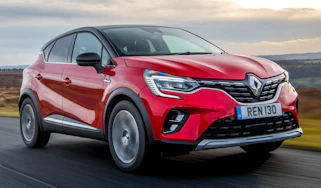
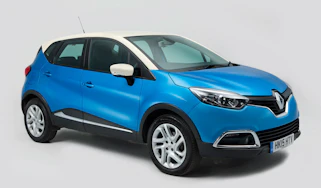
Renault Captur review
Revamped looks keep this small SUV looking fresh, but its age is starting to show in places

Our opinion on the Renault Captur
Despite the Renault Captur competing in a crowded small SUV sector, it can hold its own thanks to attractive pricing, sleek tech, and some efficient powertrains. Although it may not be the newest option in the class, or the sharpest to drive, regular updates across the range have kept it competitive enough for it to remain at the sharp end of the class. Just be careful with higher-spec models, as the value equation starts to falter as prices rise.
About the Renault Captur
The Renault Captur is currently the cheapest model in the company’s SUV line-up, which now spans six models. We also think it’s one of the better-value small SUVs currently on sale. The UK range is simple, with two engine choices and three trim grades.
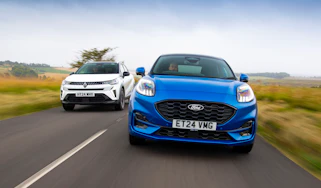
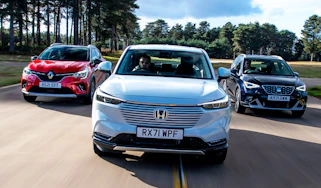
We’ve tested the Captur against the Ford Puma in an in-depth twin test, where the Renault won thanks to its superior space, comfort and running costs. We also ran a pre-facelift example of the Renault Captur E-Tech as part of our long term test fleet.
Performance & driving experience
Pros |
|
Cons |
|
Comfort is the Captur’s calling card, with the French model delivering a smoother ride than most alternatives in this class. However, while the petrol model has received a power boost over the years, we still think it’s a bit lacking.
| Model | Power | 0-62mph | Top speed |
| Captur 1.2 TCe 115 Techno | 114bhp | 12.1 seconds | 111mph |
| Captur 1.2 TCe 115 Esprit Alpine | 114bhp | 12.1 seconds | 111mph |
| Captur 1.8 E-Tech Full Hybrid 160 Techno | 158bhp | 8.9 seconds | 111mph |
Performance, 0-60mph acceleration and top speed
High performance is rarely a top priority in this class, but the entry-level 1.0-litre TCe powertrain in the Renault Captur is, without sugar-coating it, slow. Although it’s been beefed up over the Captur’s lifetime, this engine still only packs a peak power output of 114bhp, and a pretty lean 190Nm of torque. The resulting acceleration is certainly leisurely with a 0-62mph time of 12.1 seconds.
Used - available now

2022 Renault
Captur
25,120 milesAutomaticPetrol1.6L
Cash £14,250
2022 Renault
Captur
30,389 milesAutomaticPetrol1.6L
Cash £14,170
2022 Renault
Captur
24,320 milesAutomaticPetrol1.6L
Cash £13,790
2020 Renault
Captur
10,068 milesManualPetrol1.0L
Cash £10,940Being a little undernourished, the engine has to work quite hard to keep up with traffic at high speeds, which affects refinement and economy. The six-speed manual gearbox shifts well, which is good news because you’ll need to use it frequently to make good progress. The Captur E-Tech largely fixes all these issues, but costs nearly £3,000 extra.
This has also been upsized over the years to a 1.8-litre engine that churns out 158bhp. This setup cycles quite keenly between pure-electric, hybrid and petrol drive modes, so the engine note doesn't always coincide with accelerator input. While this is a bit disconcerting at first, it doesn’t affect power delivery, allowing for a 0-62mph time of 8.9 seconds.
Town driving, visibility and parking
If you opt for hybrid power, the Captur spends most of its time in electric mode at low speeds, making it very smooth and quiet when shuffling through traffic.
However, the base petrol model is hampered by a spongy clutch pedal, which makes the same low-speed journey less pleasant. It’s one of our few criticisms, though, because otherwise, the Captur’s decent visibility, light steering, and soft ride make it a really pleasing place to be during the slowest, most boring parts of urban trips.
Country road driving and handling
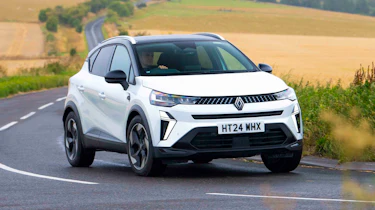
The soft suspension of the Renault Captur can take more than one bounce to settle if you hit a larger bump, but it generally delivers impressive comfort on the move. You’ll also notice a reasonable amount of body lean in the bends – a feeling that is enhanced by what seems like an SUV-like high centre of gravity – compared with the more agile Ford Puma. However, you can still confidently maintain a very satisfying flow along a twisty road in the Captur because there’s plenty of outright grip on offer.
Motorway driving and long-distance comfort
At higher speeds, the Captur Hybrid easily keeps up with traffic. The base petrol model feels much more strained, though, and you really need to use the full travel of that accelerator pedal to make decent progress. When cruising, both variants are impressively comfortable and refined, but we’d like slightly more precise steering to give an added feeling of stability.
“The Ford Puma is great fun on a twisty road, but the Renault Captur soaks up bumps better and has less road noise at higher speeds.” - Alex Ingram, special contributor.
MPG & running costs
Pros |
|
Cons |
|
Officially, the 115 TCe petrol model achieves up to 49.6mpg on the WLTP combined cycle, but fuel efficiency is where the hybrid naturally takes the lead. Renault says this model can return up to 65.7mpg. The older 1.6-litre hybrid also claimed a respectable figure of 60.1mpg, and while we didn’t quite match that figure when we ran a pre-facelift Captur on our long-term test fleet, we did achieve an average of 53.2mpg over the course of six months and 9,000 miles of driving, with plenty of those covered on motorways.
| Model | MPG | CO2 | Insurance group |
| Captur 1.2 TCe 115 Techno | 49.6mpg | 131g/km | 14 |
| Captur 1.2 TCe 115 Esprit Alpine | 48.7mpg | 131g/km | 14 |
| Captur 1.8 E-Tech Full Hybrid 160 Techno | 65.7mpg | 97g/km | 16 |
Insurance groups
Depending on powertrain and trim, the Captur’s insurance groups range from 14 to 16, so it shouldn’t be particularly horrendous when it comes to paying for cover. In comparison, the Ford Puma resides between groups 12 and 21, while the Dacia Duster occupies groups 17 to 24. The SEAT Arona is a small SUV with some of the very lowest premiums, though, starting from group 11.
Tax
You’ll need to pay the standard rate of VED road tax on every Renault Captur, but even a fully-loaded model will avoid the additional costs of the luxury road tax surcharge. There’s no mega savings for company car drivers, so you’ll probably want to look towards fully electric SUVs like the Renault 4 instead.
Depreciation
Our market data indicates that the Renault Captur is a pretty average small SUV in terms of residual values. After three years or 36,000 miles, this model will retain between 43 and 47 per cent of its original value. This is a very similar outcome to the one faced by the Ford Puma, at 43 to 51 per cent. It’s also pretty much the same story for the SEAT Arona, which emerges with 43 to 45 per cent.
To get an accurate valuation for a specific model, check out our free car valuation tool...
Interior, design & technology
Pros |
|
Cons |
|
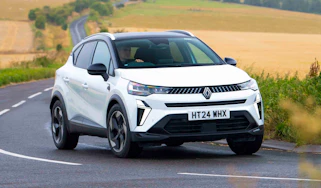
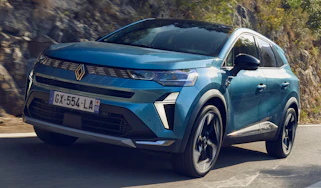
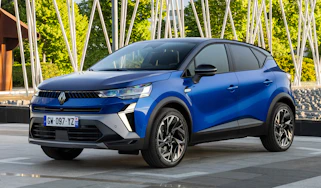
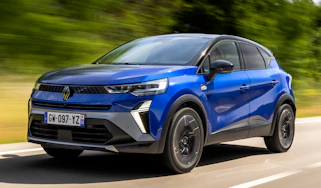
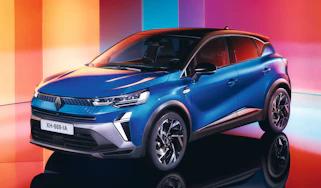
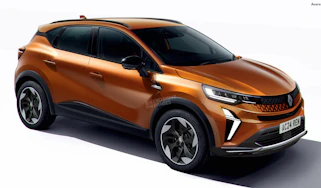
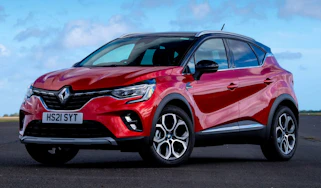
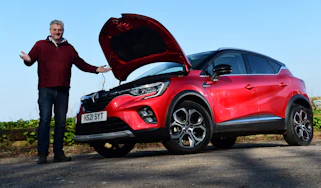
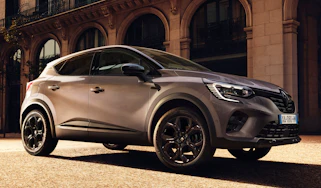
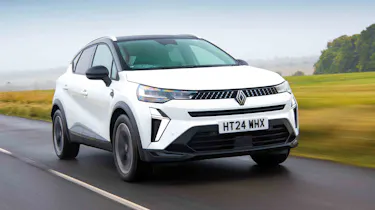
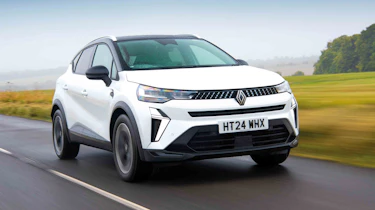
The Renault Captur’s substantial midlife facelift applied the brand’s latest design language to the existing model. The biggest difference is up front, where the complex, curvy headlights have been replaced by more angular LED headlights that create a more distinct brow.
This is matched with a graduated grille pattern and the latest Renault logo, both of which help keep the overall design looking sharp. These big changes are not reflected along the sides or at the rear, which are a little softer and less chiselled.
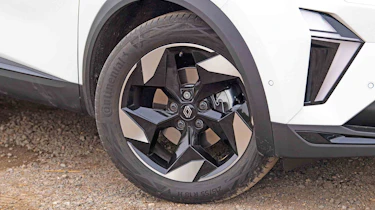
Renault has included generous levels of standard kit: the entry-level Evolution comes with alloy wheels, LED headlights, electrically adjustable, auto-folding mirrors, rear privacy glass, automatic air conditioning, and a host of active safety systems such as lane-keeping assist and traffic sign recognition.
Our preferred version is the Techno trim, which adds:
- 18-inch wheels
- Built-in Google services, including Google Maps for the infotainment system
- A 10.25-inch driver’s display
- Ambient lighting
- A modular boot floor
The range-topping Esprit Alpine adds 19-inch alloys, adaptive cruise control, electrically adjustable and heated front seats, a heated steering wheel, and a unique interior combination of synthetic leather and fabric trim. The Esprit Alpine also features a range of outside styling enhancements, including a dual-tone paint finish, Alpine badging, and dark grey exterior trim elements.
Interior and dashboard design
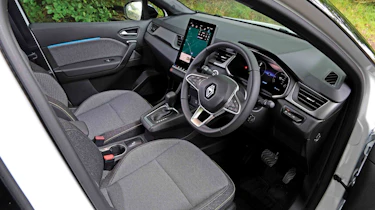
The dashboard has been gently revised for the facelifted model, and the old car’s large rotary climate-control dials have sadly been dropped. However, the good news is that, unlike some rivals, actual buttons remain, though the bank of rocker switches is fiddlier to use than the old layout.
The flip side of this is that an additional storage shelf has been freed up just beneath the main touchscreen. A floating centre console brings both the stubby gear selector and smartphone shelf with its USB ports (and wireless charging on range-topping trims) close to the front seats.
Materials and build quality
Supermini-based SUVs commonly feature lots of hard, scratchy plastics to reduce costs, and while the Captur is no different, most of the cheap-feeling materials tend to be low down on the door trims and centre console.
The elements used higher up have an air of quality that’s above average for the class, while fabric-trimmed panels and coloured plastics on the dashboard help to break up what would otherwise be a fairly grey and monotonous cabin. Other details, such as the razor-sharp resolution of the digital driver’s display, help add to the Renault’s overall feel-good factor.
Infotainment, sat-nav and stereo
Unlike the previous Captur, all trim levels come equipped with the full-size 10.4-inch touchscreen infotainment system. A rear-view camera and cruise control are also fitted as standard. At the same time, the top-spec Esprit Alpine cars add adaptive cruise control, an electrically adjustable driver’s seat, plus heating for the front seats and steering wheel.
Renault’s OpenR Link infotainment system used in the Captur runs Android, first introduced in the Renault Megane E-Tech. Choose Techno trim or above, and it includes built-in Google Maps, which looks fantastic on the screen, responds to inputs and loads menus very quickly, and is easy to use. It’s so good that there’s little reason to connect your phone to use a navigation app to find your way around and avoid traffic jams.
A shortcut bar is integrated into the top of the display, so it’s always easy to navigate the intuitive system.
“The top-spec Esprit Alpine features a leather substitute that feels just like the real thing, while the seats themselves are comfortable and supportive. Overall quality inside is great, especially when you consider the Captur’s competitive pricing.” - Dean Gibson, senior road test editor.
Boot space & practicality
Pros |
|
Cons |
|
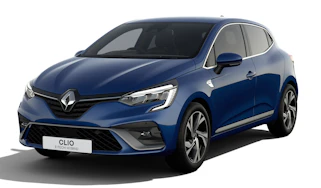
The second-generation Captur sits on the same CMF-B platform as the latest Renault Clio, and it’s 110mm longer, 19mm wider and 17mm taller than the original model. The new platform and bigger dimensions have brought gains in passenger space and practicality, helping the Captur attract customers with growing families. Usefully, each door can take a 1.5-litre water bottle, and there’s good storage for cups and phones – including a wireless charging plate.
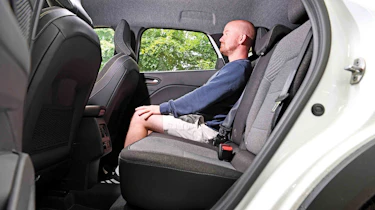
Access for passengers at the rear is good, and noticeably better than the Peugeot 2008, which has a lower roofline. The rear seats in the Captur are also more comfortable than those in the Ford Puma where you have to sit higher up with your legs tucked back.
Dimensions and size
The overall length of the Captur has increased compared to the older model, but it’s still shorter than the Peugeot 2008.
| Dimensions comparison | |||
| Model | Renault Captur | Ford Puma | Peugeot 2008 |
| Length | 4,239mm | 4,186mm | 4,304mm |
| Width | 1,797mm | 1,805mm | 1,770mm |
| Height | 1,576mm | 1,536mm | 1,550mm |
| Wheelbase | 2,640mm | 2,590mm | 2,610mm |
| Boot space | 422 litres | 456 litres | 434 litres |
Seats & passenger space
There’s plenty of adjustment in both the driver’s seat and steering wheel, giving lots of scope for getting comfortable in what is quite a lofty seating position for a small SUV. However, storage is a bit of a mixed bag, with the raised centre console opening up space for a large storage area below, including a pair of cup-holders. However, the glovebox capacity is impacted by the fuse box, and the door bins are fairly slim.
Interior space is excellent for passengers, with lots of headroom backed up by above average kneeroom for the segment. There’s more space to stretch your legs out here than in a Jeep Avenger or a Nissan Juke, if not quite as much as in a Skoda Kamiq or a Dacia Duster. Foot room is also excellent under the front seats.
Unusually in this class, the Captur comes with a sliding rear bench. It offers benefits for boot space, but with it moved all the way forward, it all but completely eliminates rear kneeroom. Isofix points are hidden behind zips, which makes them a bit fiddly to access.
Boot space
The 422 litre luggage area is reasonably sized, but it falls short of the Ford Puma’s 456 litres. The Dacia Duster is even larger at 472 litres. The Captur’s sliding rear bench seat sets it apart from rivals, though. Move it all the way forward, and the total volume grows to a huge 536 litres, but that renders the back seats pretty much useless for anyone but very young children.
That boot space benefits from plenty of under-floor storage, but it’s a slightly uneven shape. The load lip is also quite high, which makes lifting heavier items on board a bit more difficult than in some rivals.
“Cabin storage is decent up front, but given that the Captur’s dimensions are largely unchanged from the outgoing car’s, space in the rear remains a little compromised.” - Dean Gibson, senior test editor.
Reliability & safety
Pros |
|
Cons |
|
The Renault Captur was rated 47th out of 50 in the 2026 Driver Power best car to own rankings. The key areas that held it back, according to owners, were the handling, brakes, ride quality and steering. The Renault brand placed ninth out of 30 in the best manufacturer results. Value for money and running costs were two highlights here.
Euro NCAP awarding the Captur its maximum five-star safety rating when the French model was initially tested in 2019. However, a reassessment in 2024 (alongside the Renault Symbioz which shares parts in common with the Captur) dropped the overall rating to four out of five because it misses out on safety assistance tech that’s now required to get a high score. It’s still better than the three-star result of the Dacia Duster, but behind the highest five-star rating of the admittedly pricier Toyota C-HR.
There’s still a raft of driver assistance systems as standard on the Captur, from a tyre pressure warning light, an Active Emergency Braking System, Traffic Sign Recognition, cruise control with a speed limiter, Hill Start Assist, a distance warning alert, automatic headlights and windscreen wipers, lane departure warning, lane-keeping assist and E-Call: a system that allows the emergency services to be called automatically or manually in the event of a collision.
| Euro NCAP safety ratings | |
| Euro NCAP safety rating | Four stars (2024) |
| Adult occupant protection | 76% |
| Child occupant protection | 80% |
| Vulnerable road user protection | 76% |
| Safety assist | 69% |
Buying, prices and deals
- Best buy: Renault Captur Hybrid E-Tech Techno 180
Pricing for the Renault Captur starts at around £22,500 for the Evolution TCe 115, rising to £24,500 for the same engine in mid-range Techno trim, or £26,500 for the high-end Esprit Alpine. The hybrid starts at just under £25,500 in Evolution trim, rising to around £29,500 in top-of-the-range Esprit Alpine form.
Our preferred version is the E-Tech hybrid in mid-range Techno trim, which costs around £27,500. It has the efficient hybrid system that should help claw back some of your extra outlay in terms of lower fuel costs, while Techno trim gets the impressive Google Maps navigation software we recommend.
If you're considering a Renault Captur of your very own, be sure to use our Buy A Car service. You can configure your ideal Renault Captur and find top deals from our dealer network, discover the very best Captur leasing deals or choose from a huge selection of top-notch used Captur models. Need to sell your car? Be sure to visit our Sell My Car page.
Renault Captur alternatives
Renault is one of a number of manufacturers battling for sales in the small SUV class. There’s the premium and tech-laden Peugeot 2008, the fun-handling Ford Puma, and three VW Group rivals in the shape of the Skoda Kamiq, SEAT Arona and Volkswagen T-Cross.
There’s also the Fiat 600 and the closely related Jeep Avenger, along with a range of Japanese alternatives, including the Nissan Juke (which shares the same platform with the Captur), Toyota Yaris Cross, Honda HR-V. The South Korean Hyundai Kona shouldn't be overlooked, either.
Renault Captur pictures
Key updates of the Renault Captur review
- 24 August 2026: Latest pricing and line-up information.
- 9 December 2025: Update to include impressions from our Renault Captur vs Ford Puma twin test.
- 4 October 2024: Euro NCAP retesting data added.
Frequently Asked Questions
The Captur has a fairly standard three-year/60,000-mile warranty, which is slightly shorter than the 3yr/100,000-mile cover for Renault’s EVs. The mileage limit for the Captur is unlimited in the first two years, though.
Deals on the Captur and alternatives