Best rear-wheel drive cars 2026
Rear-wheel drive is often praised as the drivetrain that delivers the most fun. Here we showcase the 10 best cars that do exactly that

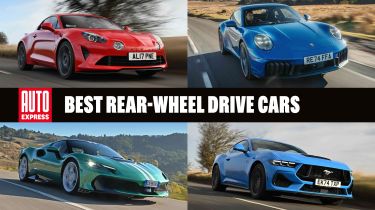
Rear-wheel drive (RWD) used to be the default for most cars, but these days, it’s mostly reserved for those that put driving pleasure first. Whether you’re after a classic roadster, a finally balanced sports car or modern performance saloon, if you want a car that feels alive in your hands, rear-wheel drive is usually the way to go.
Why choose a rear-wheel drive car?
The reason rear-wheel-drive cars are more exciting is simple: they make the front wheels’ job easier.
In a front-wheel-drive car, the front wheels have to do everything: steer, put the power down, and carry most of the car’s weight. That can make the car’s responses feel dull and its balance nose-heavy, with a tendency to wash wide in corners.
Rear-wheel drive fixes this by splitting the workload. The front wheels handle the steering, while the rear wheels send power to the road. The result? Sharper handling, better balance, and the ability to get the rear end moving around if you’re in something quick and you’re feeling brave.
Balance and weight distribution
Overall balance and weight distribution are other reasons why rear-wheel drive is often the layout of choice for performance cars.
Because some of the mechanical components, such as the gearbox or even the engine, can be positioned further back, the car’s weight is spread more evenly between the front and rear wheels. Whether the engine sits up front or in the middle, a rear-driven set-up keeps things planted through corners and makes the car feel more agile.
Our team of experts has driven every rear-driven car on the market, so we know exactly which ones are worth your time and hard-earned money.
Compare the best rear-wheel-drive cars
| Best RWD car ranking/ model | Prices from | Power output (bhp) |
| 1. Mazda MX-5 | £28,585 | From 130bhp |
| 2. Porsche 911 | £104,000 | From 389bhp |
| 3. Ferrari 296 | £250,000 | From 819bhp |
| 4. McLaren Artura | £202,000 | 690bhp |
| 5. Ferrari 12Cilindri | £336,000 | 819bhp |
| 6. BMW 3 Series | £42,800 | From 184bhp |
| 7. Aston Martin Vanquish | £333,000 | 824bhp |
| 8. Alpine A110 | £40,000 | From 249bhp |
| 9. BMW i4 | £51,370 | From 286bhp |
| 10. Ford Mustang | £58,470 | From 440bhp |
Now for the part you’ve been waiting for, see below for our breakdown of the best rear-wheel-drive cars on the market right now. Alternatively, you can also click the links in our table to jump directly to a specific model
1. Mazda MX-5
- Prices from £28,585
| Pros | Cons |
|
|
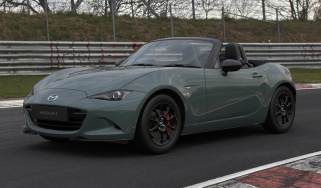
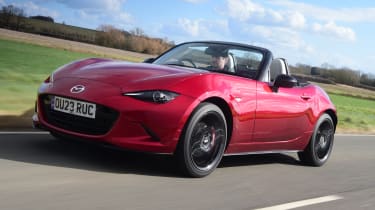
If you’re in the market for a cheap, small and fun rear-drive sports car, the Mazda MX-5 has to be at the top of your list.
There are two engines to choose from, and the most powerful is a 2.0-litre, naturally aspirated petrol unit that pushes out 181bhp and revs up to 7,500rpm. In short, it boasts more than enough power for the MX-5, and with no forced induction it’s happy to rev. Combined with a sweet-shifting six-speed manual gearbox and nicely weighted steering, it’s a difficult car to pick fault with.
Due to the MX-5’s tiny proportions and focus on lightweight design, the ride can feel quite firm on long drives and the boot isn’t the most practical. Despite a number of updates since the Mk4 MX-5 hit the road in 2015, the interior feels quite dated, but these issues are quickly forgotten once you’re on a good road and making the most of the wonderful chassis Mazda has developed over 30 years.
“The Mazda MX-5 has made most of its limited dimensions. Small cubbies between the seats and on the centre console are useful for your phone or small change, while the car's 12v socket is tucked away under the dash in front of the passenger seat.” - Alex Ingram, former chief reviewer
2. Porsche 911
- Prices from £104,000
| Pros | Cons |
|
|
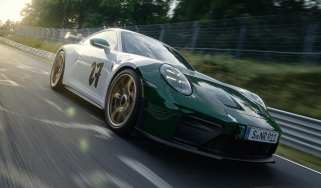
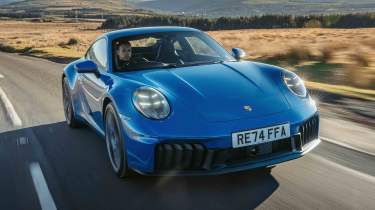
The Porsche 911 might sit at the upper end of the sports car pricing scale, but it’s largely worth it, thanks to a mix of practicality, refinement and supercar-rivalling performance.
The current 992-generation 911 was released in 2019, but thanks to multiple updates over the years, it still remains one of the best drivers cars currently on the market and is available in various guises, ranging from the standard to the hardcore and track-focused GT3, GT2 RS and GT3 RS.
But the standard 911 Carrera offers enough performance for most people. The Carrera’s 3.0-litre, flat-six, twin-turbocharged engine is detuned to 389bhp in this entry-level model, but it’ll still crack 0-62mph in just 3.9 seconds.
In terms of driving engagement, not much comes close to the 911. The electronically-assisted steering is one of the most communicative systems on sale, and the ride quality is excellently balanced between compliance over rough roads and the stiffness needed to be precise when you push on.
"Putting the engine (and therefore much of the weight) over the rear axle means it can feel a little light in the nose at times, but grip is exceptional in dry conditions." - Richard Ingram, deputy editor
3. Ferrari 296
- Prices from £250,000
| Pros | Cons |
|
|
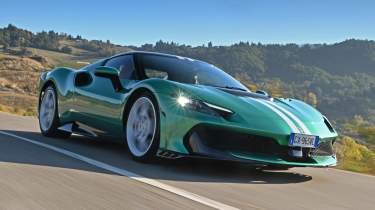
If you ever needed proof that plug-in hybrids don’t have to be sensible and dull, then look no further than the Ferrari 296.
There are a few different versions of the Ferrari 296, including a GTB coupe hard top, the GTS roadster and a hardcore 296 Speciale. Whichever car takes your fancy, the 0-62mph dash is over in under 3 seconds, with power coming from a 3.0-litre twin-turbocharged V6 engine, a 7.45kWh battery and an electric motor. Combined, the powertrain produces a whopping 819bhp and 740Nm of torque in the GTB/GTS or 869bhp and 755Nm in the Speciale.
When roads get twisty, the Ferrari 296 is one of the best handling cars around thanks to a chassis and steering setup that is incredibly poised, agile and precise. You might think you’d have to compromise with a jarring ride, but that’s not the case as it's a comfortable car, even in its firmest setting.
Cabin quality is stupendous and it’s quite a practical car for its class. Our only real gripe is the amount of touch-sensitive panels taking the place of physical buttons and the infotainment system can feel clunky when performing simple tasks.
“The 3.0-litre unit in the 296 doesn’t just sound good by the standards of turbocharged V6 units, but sounds better than any mid-engined Ferrari sports car since the naturally aspirated 458.” - Alex Ingram, former chief reviewer
4. McLaren Artura
- Prices from £202,000
| Pros | Cons |
|
|
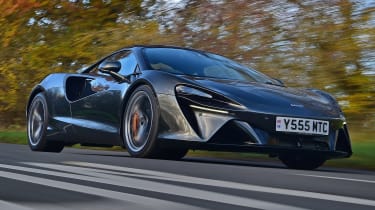
The McLaren Artura is one of the most refined supercars money can buy, so it’s not surprising it scooped up our Performance Car of the Year trophy at the 2025 New Car Awards.
Its steering is beautifully weighted, provides plenty of feedback, while the ride is supple enough to put some luxury cars to shame.
When it comes to performance, the Artura is no slouch. Its 3.0-litre twin-turbo V6, combined with a hybrid system, produces 671bhp and 720Nm of torque, sent to the rear wheels via an eight-speed dual-clutch gearbox. This translates to a blistering 0-62mph time of just 3.0 seconds.
Normally, this level of performance would have you clutching your wallet in fear of the fuel bills, but thanks to its 7.4kWh battery, the Artura, according to McLaren, can drive 19 miles on electric power alone and is capable of more than 60mpg. When we drove the Artura, we saw an average of 30.5mpg, with its main rival, the Ferrari 296 returning less than 30mpg in similar conditions.
“The Artura Spider doesn’t lose anything to the coupe in terms of performance, and the added dimension of the open top means you can hear the V6 engine even better.” - Dean Gibson, senior test editor
5. Ferrari 12Cilindri
- Prices from £336,000
| Pros | Cons |
|
|
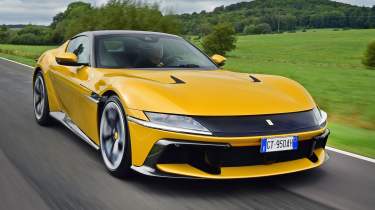
Unlike the futuristic styling of many modern Ferraris, the designers at Maranello decided to take inspiration from the past for the Daytona-inspired Ferrari 12Cilindri.
With a thumping 6.5-litre V12 engine under the bonnet, a cool 9,500rpm rev limit and all 819bhp going to the rear wheels, 0-62mph is dealt with in just 2.9 seconds and the car tops out at 211mph. Simply put, the driving experience is raw and aggressive.
As you’d expect from a Ferrari, the interior quality is fantastic and it’s a genuinely beautiful car to sit in with all focus being on the driver. A 10.25-inch TFT is mounted front and centre, with a 15.6-inch screen for all other functions located in the centre of the dash.
Certain functions and controls might not be where you initially expected at first, but it is something which you get used to over time.
“With any of the more aggressive drive modes selected, it is so fast in its reactions to your inputs, it sometimes feels one step ahead of you. Yet because of the way Ferrari has set up the chassis (and the electronic diff) to be deliberately so playful in such modes, it’s also a car you can have a lot of fun in.” - Steve Sutcliffe, contributor
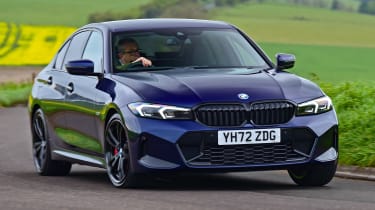
6. BMW 3 Series
- Prices from £42,800
| Pros | Cons |
|
|
It’s no secret that the BMW 3 Series has been one of the best-handling saloon cars ever since its inception, but the current generation car is better than ever.
Now in its seventh iteration, the BMW 3 Series is still a proper driver’s car. It offers a great combination of performance, driving dynamics, low running costs, on-board tech and improved refinement, all of which add to its high badge appeal.
Although the 3 Series is no longer offered with a diesel engine, the range of petrol and plug-in hybrid powertrains are frugal, responsive and refined. Opt for the BMW M3 and the 523bhp 3.0-litre straight-six can achieve 28.0mpg if you have a very light right foot. The interior remains high-quality and more a scaled-down version of the bigger, more expensive 5 Series and 7 Series.
The 3 Series is a more driver-focused proposition than its Audi A4 and Mercedes C-Class rivals, with BMW managing to create a comfortable ride without sacrificing any of the driving entertainment its compact exec is famed for.
“The 3 Series is bigger than it was before, and the main focus for BMW has been on improving accommodation for those in the back. As a result, it’s equally as practical as its A4 and C-Class rivals.” - Max Adams, online reviews editor
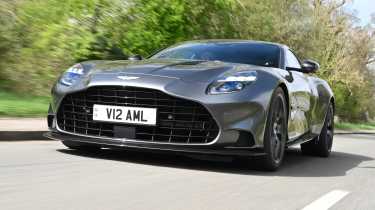
7. Aston Martin Vanquish
- Prices from £333,000
| Pros | Cons |
|
|
The new Aston Martin Vanquish oozes class and cool in ways that its supercar rivals can’t quite match.
In recent history, Aston Martin has built some of the finest rear-wheel-drive cars money can buy, and the latest iteration of the Vanquish continues that legacy thanks to its trick double-wishbone suspension, Bilstein DTX adaptive dampers and quick steering rack.
Unlike Aston engines of the past, the 5.2-litre V12 engine shoehorned into the Vanquish has two turbochargers strapped to it, producing 823bhp and a colossal 1,000Nm of torque. With a 0-62mph time of 3.3 seconds and a top speed of 214mph, the Vanquish is one hell of a car to drive.
The interior is also just as fantastic thanks to the sumptuous build quality and leather upholstery. Aston has kept plenty of physical controls rather than opting for haptic buttons or burying settings deep within touchscreen menus.
“On a twisty road, the Vanquish takes on a remarkably neutral balance, turning in sharply as its bespoke Pirelli P Zero tyres bite into the road gamely. There’s not much effort required to point the nose in, but once settled, that even keel will remain on the condition that you hold a balanced throttle.” - Alex Ingram, former chief reviewer
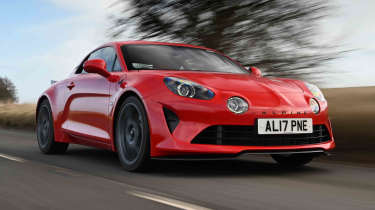
8. Alpine A110
- Prices from £40,000
| Pros | Cons |
|
|
If you’re after a lightweight, fun-to-drive sports car, look no further than the Alpine A110.
Designed as a homage to the original sixties car of the same name, it follows a similarly straightforward formula: two seats, rear-wheel drive, low weight, and a relatively small but energetic engine, in this case a turbocharged 1.8-litre unit.
It doesn’t take a genius to work out that this combination results in a lot of fun. All A110s weigh less than 1,200kg, while double-wishbone suspension, strong brakes and a mid-mounted engine all go even further towards making the Alpine a highly engaging and balanced car to drive – enough to truly worry established rivals such as the Porsche 718 Cayman.
Being a two-seater sports car, the Alpine A110 is far from the most practical machine you’ll come across. That being said, there is enough room for some lightly-packed weekend bags in the 90-litre boot at the rear, while the second boot up front is a little larger at 100 litres and can swallow a small weekly shop.
“In a car where simplicity is one of its key selling points, the A110 isn’t loaded with tech. However, Alpine’s Telemetrics system can help to coach its owner to help them get the most out of the car.” - Alex Ingram, former chief reviewer
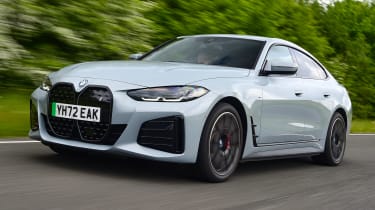
9. BMW i4
- Prices from £51,370
| Pros | Cons |
|
|
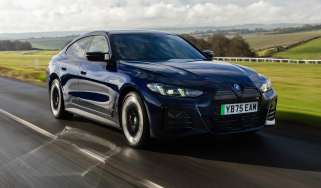
BMW is no stranger to the electric car market. In fact, the i3 was one of the first mainstream electric models to go on sale in the UK. The i4 was another milestone for the brand, too, because it’s the first fully electric car to be closely related to the 3 and 4 Series.
This means the i4 had to make a serious impression from day one, not only to live up to its siblings’ reputations, but also to compete with big-selling rivals such as the Polestar 2 and Tesla Model 3.
The hottest car in the range is the M5 with 536bhp, however, the standard rear-wheel-drive i4 should prove plenty for most people with 282bhp. Whichever car you choose should be user-friendly, refined, have great usable ranges of 300 miles across the range and snappy rapid charging abilities of around 30 minutes for a 10-80 per cent top up.
A high level of build quality, excellent refinement, plenty of on-board tech, a 470-litre boot and a generous amount of space for both front and rear passengers all go towards making the i4 a great choice as a usable but highly-entertaining electric car. The tax savings should be tempting for company car users, too.
“The i4's refinement is excellent. This electric BMW was the quietest car in our company car group test, even against the improved Tesla Model 3, which has had a lot of work done to dampen down unwanted noise.” - Ellis Hyde, news reporter
10. Ford Mustang
- Prices from £58,470
| Pros | Cons |
|
|
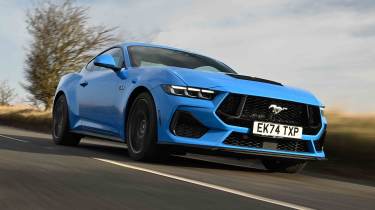
While many of the cars on this list are agile European sports cars, sometimes all you need is a good old-fashioned American brawler. The Ford Mustang has been a staple of the muscle car world for decades, but the latest version is a much more sophisticated machine than its ancestors.
Naturally, there’s still a full-fat V8 engine under the ‘hood’ producing up to 447bhp and 540Nm of torque – depending on your chosen spec – and this drives the rear wheels to create a car that can still pack a serious punch on a drag strip.
It gets better, though, because additions such as a limited-slip differential and adjustable Magneride dampers make this particular Mustang equally capable when you point it towards the corners.
"The Mustang surprises on a twisty road, where there’s a level of precision and delicacy to its chassis that gives some of the best European coupés a run for their money. The nose is keen to dive towards an apex, with steering that is well judged in terms of its response, weight and accuracy." - Alex Ingram, former chief reviewer.
How we choose the best rear-wheel drive cars
A rear-wheel-drive car should do more than just send power to the back wheels - it needs to feel balanced, precise, and engaging. Our team of experts has driven every rear-driven car on the market, putting them through their paces to separate the great from the mediocre. The best ones excel in a few key areas.
Balance
Balance is one of the first things we look for. With power going to the rear wheels, weight should be spread evenly across the car to improve stability, especially in corners.
A well balanced rear-wheel-drive car stays composed when pushed hard, making it predictable and inspiring confidence. Whether the engine is in the front or the middle, the best examples feel planted and agile.
Steering and handling
Steering precision is just as important. Because the front wheels aren’t also handling power delivery, they should offer a sharp response and clear feedback.
We test how naturally a car reacts to inputs, whether it feels accurate when placing it through corners, and if it gives the driver a proper sense of connection to the road. The best rear-wheel-drive cars make this feel effortless.
Power and engagement
Power delivery needs to be smooth and controlled. Torque steer, where the steering wheel tugs under hard acceleration, isn’t an issue in rear-driven cars, but not all of them put their power down effectively.
We assess how well the car manages its traction, especially when accelerating hard or exiting corners. A well sorted rear-wheel-drive set-up should feel composed rather than scrappy.
Finally, driving engagement is what separates the great from the good. The ability to adjust a car’s balance mid-corner, steer with the throttle and even indulge in a bit of controlled oversteer makes all the difference. If a rear-wheel-drive car doesn’t make driving more enjoyable, it doesn’t make the cut.
Once we've tested all these aspects, we narrow the field down to the ten best rear-wheel-drive cars on sale today. Only the models that truly deliver on balance, precision, power delivery and engagement earn a spot on our list.
Controlling a rear-wheel drive car
Although a rear-drive layout can easily deliver driving fun, it can also be more tricky to handle on the limit. While a front-wheel drive car will tend to turn to understeer — the front end of the car pushing forward instead of turning — when it loses grip in a corner, a rear-drive car will get unbalanced at the rear, causing the tail of the car to swing out into oversteer.
Oversteer is controlled by applying lock in the opposite direction of the corner you're taking. Braking can amplify oversteer, which can cause the car to spin out if you're not fast enough to react. If you do catch it in time, you might be tempted to apply more power to turn a potential skid into a drift, although this is a lot trickier than the sideways antics of various TV shows and YouTube videos would lead you to believe.
However, with the advent of smarter electronic driver aids, rear-wheel-drive cars don't necessarily need to be lairy on a trip to the shops. Keep all the assistance systems on, and you're never likely to encounter oversteer in even the most slippery conditions.
Rear-wheel drive options
Do a search for rear-wheel-drive new cars, and you'll discover a wide variety of models on offer. The front-engine/rear-drive Caterham Seven 160 is a great introduction to sports car driving at the bottom end of the scale. It's the classic two-seater roadster, and its small Suzuki engine is easily powerful enough for you to have some serious fun.
The Mazda MX-5 delivers a similar experience in a far more modern package that you could use every day, and it only starts from a couple of grand more.
Elsewhere, BMW and Mercedes are renowned for favouring rear-wheel-drive layouts in their executive cars, and there are plenty of high-end rear-drive sports cars on sale. Whether they're front, mid or rear-engined, they have all been designed with driving thrills at the top of the agenda. Many come with a manual gearbox to maintain a pure driving experience, but the best auto-equipped models don't lose any of their engagement due to the fitting of a self-shifter.
Key updates
- 5 January 2026: Aston Martin Vanquish replaces the Aston Martin Vantage as it is a better and more rounded package, while the Ferrari 12Cilindri replaces the Alfa Romeo Giulia Quadrifoglio. The Ferrari 296 makes its way onto the list in third place.
Did you know you can sell your car through Auto Express? We’ll help you get a great price and find a great deal on a new car...