Used Fiat Coupe (1995-2000) buyer’s guide: stylish, fun and less than £10k
A full used buyer’s guide on the Fiat Coupe that was on sale between 1995 and 2000

Verdict
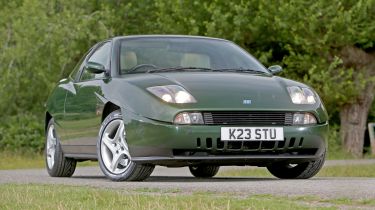
More than 7,000 Fiat Coupés were sold in the UK, of which around 2,400 still survive, most of which are off the road. The scrappage scheme of 2009 was responsible for removing many Coupés from UK roads, especially the 16v models, which were pretty much worthless at the time. As a result, these earlier cars are now especially rare, not helped by a production run that lasted little more than a year. But there are enough good Coupés to go round and whether you’re looking for something to use on an everyday basis or a toy that you take out only occasionally, this stylish Fiat is great at fulfilling either role.
Platform sharing is great. Why have a Volkswagen Golf when you can have an Audi TT? Or a Ford Mondeo, when the Cougar is available? And then there’s the Fiat Coupé (or Coupé Fiat, as it was officially known), based on the platform of the Tipo, Alfa Romeo 145/146 and Lancia Dedra, but with a dose of extra style.
Designed by Chris Bangle, who became design director at BMW, with an interior by Pininfarina, the Coupé looked like nothing before or since. But it wasn’t just a pretty face – it was practical, affordable and a blast to drive, too. Affordable to run and able to be serviced by independent specialists, the Coupé is also easy to upgrade and to live with. So, is it an ideal modern classic?
History
The Fiat Coupé made its debut in Europe in 1993, but it wasn’t until June 1995 that the first cars reached the UK. Initially all Coupés were sold with a twin-cam, 1,995cc, 16-valve, four-cylinder engine in 137bhp naturally aspirated or 195bhp turbocharged forms.
Used - available now

2024 Mercedes
EQA
47,047 milesAutomaticElectric
Cash £19,730
2022 BMW
3 Series Touring
83,647 milesAutomaticPetrol2.0L
Cash £15,370
2015 MINI
Convertible
47,000 milesAutomaticPetrol1.6L
Cash £7,200
2019 BMW
M4 Coupe
52,220 milesAutomaticPetrol3.0L
Cash £31,950From November 1996 a 1,998cc five-cylinder 20-valve unit was standard, again in normally aspirated (147bhp) or turbocharged (220bhp) guises, then in July 1998 the Limited Edition (LE) arrived, based on the 20v Turbo. This had a bodykit, red Brembo brake calipers, alloy exterior details and a start/stop button. There were also Sparco pedals, Recaro seats and a six-speed manual gearbox.
In June 1999 the 147bhp naturally aspirated 20V engine was superseded by a 154bhp 20v VIS (Variable Inlet System) unit with a fly-by-wire throttle, then in August 1999 a six-speed gearbox became standard and the Turbo Plus appeared with a Viscodrive limited-slip differential and many of the LE’s refinements. The final Fiat Coupés were made in 2000.
Which should I buy?
You’re most likely to end up buying a five-cylinder car because there are so few good 16v editions to choose from. There’s quite a difference between the 16v and 20v models, because the two engines have very different characters.
The four-cylinder unit was the last hurrah for Fiat’s legendary Lampredi-designed twin-cam engine, with peaky power delivery, relatively heavy steering and brakes that need more of a shove than in later models to make them bite.
By contrast, the 20v engine has much more low-down torque and is far better suited to long-distance cruising. The steering is lighter, too, along with the rest of the controls, and the brakes are more reassuring, although it’s possible to upgrade these further if you feel you need to.
On the road
The Coupé proved that a sporty front-wheel drive enthusiasts’ car can be huge fun.
The base model is the 139bhp non-turbo 16v, while the naturally aspirated 20v has 147bhp. The 20v Turbo has 220bhp and can crack 155mph, with a 0-60mph time of 6.5 seconds – though it does tend to eat front tyres.
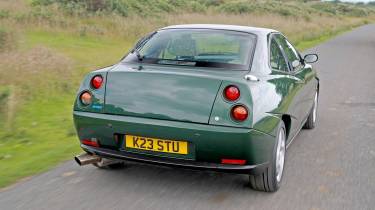
But it’s not all about outright pace. The steering is sharp, the five-cylinder engine sounds superb, especially at high revs, and the brakes are strong (especially the four-pot Brembos on Turbo editions). The ride is fairly compliant, too, with no adverse harshness to it.
Prices
It’s the halo models that most buyers want, and these carry a premium over lesser editions. That means it’s the Limited Edition and Turbo Plus that get most of the attention, with very little difference between the two in terms of desirability and values.
The occasional project comes up for sale at around £2,000-£2,500, and if you find a low-mileage example in superb condition you could pay over £12,000 for it. However, most of the really good turbocharged Coupés fetch more like £7,000-£8,000, with average cars between £4,000 and £5,000. The naturally aspirated and 16v models start at £1,500-£2,000 for a project, and unless you find something jaw-droppingly exceptional, you’re unlikely to pay more than £7,000 for it, with really tidy examples generally worth around £3,500-£5,000.
Check the price of a used Mazda CX-60 with our free car valuation tool...
Alternatives to the Fiat Coupe
Coupes made a comeback in the nineties, but many have largely disappeared. These include the Ford Probe and Cougar, the Mazda MX-6, the Honda Prelude and the Hyundai Coupé, all of which are on the used market if you look hard enough. More readily available are the Alfa Romeo GTV, which uses the same platform, the Volkswagen Corrado, Vauxhall Calibra and Rover 200 Coupé.
You also won’t struggle to find a BMW E36 3-Series Coupé. Other nineties two-door models to check out include the Peugeot 406, Toyota Celica, Mitsubishi FTO and Nissan 200SX, while a posh Audi Coupé, Mercedes CLK or Saab 900/9-3 could also fit the bill.
What to look for
Steel yourself
The five-cylinder Coupé had a galvanised bodyshell but the four-cylinder car didn’t, so the latter is more rust-prone. Check the inner and outer sills, wheel arches, floors and boot. Leaky tailgate seals don’t help.
Pipe down
If the original coolant hoses are fitted they will need replacing, especially the one from the thermostat to the rear of the block. Decent silicon items are best – avoid cheap hoses and budget £200 for a set.
Turbo or not turbo
Most surviving 20v Coupés have a turbocharger, the seals of which are prone to wear; look for blue exhaust smoke at idle. Later Turbos are more durable, so budget around £1,000 to fit one of these.
Other bits
The air-con can fail, and so can the central locking. The radio signal booster unit also packs in, leading to poor reception. All bits are available second-hand, and all are fixable at home.
Interior
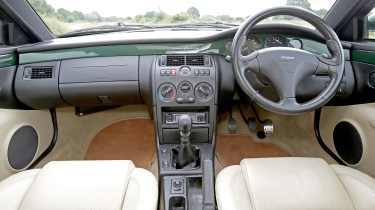
The Coupé’s cabin design isn’t as daring as the exterior, but its simplicity is a huge part of its appeal, with its body-coloured flash across the centre. The build quality is average, but it’s all laid out logically and the instrumentation is clear and controls easy to use.
The seats and driving position are excellent; there’s plenty of front seat adjustment, and they are bolstered to offer decent support. Two adults will fit in the back if they’re not too tall. Boot space is good at 290 litres, but the rear seats don’t fold.
Living with a Coupé
There’s a school of thought that says by the time the Coupé was launched, a mass-produced car had everything you need in terms of usability, and that’s the case here – it may be old, but it doesn’t feel like a massive compromise.
Routine maintenance can be performed at home, with parts availability generally pretty good on a used basis, although some parts (notably interior trim) aren’t available new anymore. Buy a good car and you hopefully won’t need those anyway.
Joining the Fiat Coupé Club UK (fiatcoupeclub.org) as well as the Fiat Motor Club GB
(fiatmotorclubgb.co.uk) is advised, because both can help you to buy a good car, maintain it yourself, or steer you towards a good specialist they can recommend.
Running costs
The Fiat Coupé is an inexpensive car to run, which is part of its appeal. An oil change every 6,000 miles is essential, but for many owners that’s an annual expenditure of £100 or less, especially if done on a DIY basis.
All engines have a cambelt; the 16v items needs to be replaced every three years or 32,000 miles, whereas it’s every five years or 50,000 miles for the 20v engine – although this is a more involved job. Budget £550 to have replacement done properly on the 16v and £1,000 for the 20v, because access is much tighter.
Insurance should be cheap on a classic policy, and because all Coupés were registered before March 2001, when CO2-based road tax came in, you’ll pay £375 per year regardless of derivative. Fuel economy is pretty good; 30-35mpg is attainable with most versions on a run.
Our dealer network has 1,000s of great value new cars in stock and available now right across the UK. Find your new car…