Tesla Model 3 review
Impressive tech and a solid drive keep the Model 3 in the running for EV honours


Our opinion on the Tesla Model 3
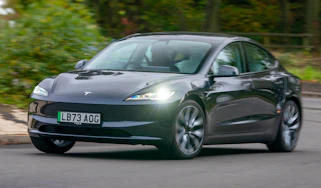
The Tesla Model 3 is one of the best electric cars around. It’s spacious, hi-tech, boasts great performance and range and is competitively priced. A facelift in 2024 enhanced the car’s looks and more importantly improved build quality, while the already excellent range increased to nearly 400 miles in some versions.
This Tesla is spacious enough to work as a family car and is a relaxed place in which to spend time. Access to the Tesla Supercharger network and the car’s excellent navigation system, which will precondition the battery ahead of charging stops, help when tackling long journeys. It’s fast, too, even in its most basic rear-wheel-drive form, while the all-wheel-drive Model 3 Long Range and Performance models will show plenty of sports cars a clean set of heels away from the lights. As long as you’re not intimidated by the cutting-edge technology or the minimalist interior, the Tesla Model 3 is a great option.
About the Tesla Model 3
The Tesla Model 3 four-door saloon arrived in the UK in 2019 to great fanfare and has been a big seller ever since, although in recent years the Tesla Model Y has achieved larger sales volumes for Tesla. But seven years is a long time in the new car market, and while an update in 2024 introduced upgrades and a much needed improvement in quality, Chinese companies are rushing to introduce new EVs on an almost weekly basis. Nevertheless, the Model 3 still delivers in enough areas to retain a position near the front of the electric executive pack.
Used - available now

2021 Tesla
Model 3
43,219 milesAutomaticElectric
Cash £18,699
2021 Tesla
Model 3
32,735 milesAutomaticElectric
Cash £18,338
2023 Tesla
Model 3
58,882 milesAutomaticElectric
Cash £18,251
2021 Tesla
Model 3
17,013 milesAutomaticElectric
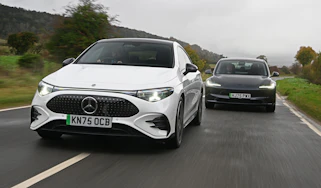
Cash £19,725In recent tests, it’s been overtaken by the Mercedes CLA for range and all-round driving comfort, while the BMW i4 is still the model to choose if you want engaging handling. But the Model 3 still has enough going for it for us to recommend it to anybody looking at the electric executive market.
Equipment is generous on every Model 3, with standard kit including 18-inch alloy wheels, electrically adjustable heated front seats, a heated steering wheel, glass roof, wireless charging pads for two smartphones, ambient lighting, a basic version of Tesla’s Autopilot driver-assistance system, plus that massive central display with the facility to stream videos and music or play games.
Performance & driving experience
Pros |
|
Cons |
|
Overall the Model 3 is a very competent steer – it can’t match the all-electric BMW i4 in terms of outright handling, while the Mercedes CLA is more refined, but the Tesla still manages to deliver better overall manners than most other electric executive cars. The only version that comes close to offering the same driving fun as those rivals is the Performance model. The regular Model 3 could still do with a bit more steering feedback, but it’s a massive improvement on what has gone before.
| Model | Power | 0-62mph | Top speed |
| Model 3 RWD | 279bhp | 6.2 seconds | 110mph |
| Model 3 Long Range RWD | 320bhp | 4.9 seconds | 125mph |
| Model 3 Performance | 453bhp | 2.9 seconds | 163mph |
Electric motors, 0-60mph acceleration and top speed
Tesla has built a reputation for making cars that accelerate faster than just about anything else on the road, and while the RWD isn’t as rapid as the hot-rod Performance version and its sub-three-second 0-62mph time, it still manages the sprint in 6.2 seconds.
Moving to the Long Range RWD model, there’s more weight to contend with, but you get a bump in power to 320bhp, and 0-62mph is dispatched in 4.9 seconds. The Long Range AWD adds a second electric motor to the front axle for four-wheel drive and the system has a combined power output of 346bhp. 0-62mph in the Model 3 Long Range AWD takes 4.2 seconds, while the top speed stands at 125mph for both Long Range cars.
The Model 3 Performance has a dual-motor set-up providing 453bhp, giving it a blistering 0-62mph time of 2.9 seconds and a top speed of 163mph. Even more impressive is the way it goes about delivering this acceleration, with zero fuss and a solid surge of power from a standstill, much like the rest of the Model 3 line-up
All the tweaks to the Performance model mean it’s the best Model 3 we’ve driven. While it’s always been quick, the latest version introduces the chassis tech necessary to make it fun as well as fast. Its numerous improvements haven’t quite made it a ‘BMW M3 killer’, but it is still an astonishingly capable performance car at an astounding price.
It offers the opportunity to alter various parameters in its Track mode, from the power split between the front and rear axles, and the ability to pick from one of three levels for the stability control system, and this offers confidence to exploit the car’s talents in the bends, rather than just utilise it as a straight-line speed machine.
Town driving, visibility and parking
One of the first things to get accustomed to with the Model 3 is the drive system. Owners are expected to pair their smartphones with the car, and when set up, this ‘digital key’ automatically unlocks the car when the phone is detected. It’s automatically ‘on’ as soon as you’re sitting at the wheel, too.
The next Tesla quirk is the drive selector, because there’s no physical control; instead you simply swipe up (or down for reverse) on the right edge of the touchscreen on RHD cars.
Once you’re used to the Model 3’s power delivery, it’s easy enough to modulate. The accelerator pedal is very precise, which allows you to drive with chauffeur-like smoothness at low speeds. There’s a single level of energy recuperation on offer that’s stronger than in many rivals, but it’s easy enough to manage, while the brakes provide good stopping power.
The suspension feels firm with a little bit of patter at low speeds, but it won’t cause discomfort for passengers, and the Model 3 deals well with larger lumps and bumps.
Country road driving and handling
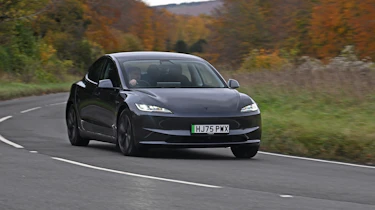
While it’s not quite as engaging as a BMW i4 from behind the wheel, the Model 3 feels composed and agile when tackling bends, even in its most basic RWD form. All Model 3s feature quick steering, plenty of grip and a responsive throttle that’s great for overtaking.
Motorway driving and long-distance comfort
Tesla worked hard to improve refinement in the Model 3 as part of the car’s mid-life facelift, adding acoustic glass all round, improved suspension bushes, seals and various other sound-dampening materials. The brand claims it’s achieved a 30 per cent reduction in wind noise compared with the previous version, and it’s certainly helped to make the Model 3 one of the quietest cars in its class, with only the bassy rumble of tyre noise at motorway speeds holding it back against the likes of the highly refined BMW i4.
"The big win for the Model 3 Performance is the suspension, which is the best we’ve felt in any Model 3, or indeed any Tesla yet. It’s not soft, but it is controlled and resolved, helping the car plough through bumps in the road that would have had any other Model 3 crashing or shuddering." - Jordan Katsianis, news editor.
Range, charging & running costs
Pros |
|
Cons |
|
The Tesla Model 3 has always boasted hugely impressive range figures, especially for the price, but rivals are closing the gap.
Electric range, battery life and charge time
Tesla doesn’t quote battery capacities for its cars, instead offering maximum range estimates and information about how much range can be added over set time periods. The Model 3 RWD has an official range of 332 miles, which is the shortest of the whole line-up, but is still pretty decent when compared with rivals.
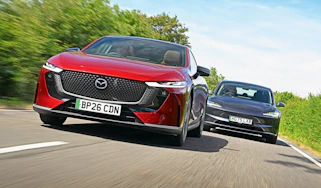
On test, we saw a return of 4.4 miles per kWh for the RWD model on a route that incorporated plenty of rural miles and motorway driving. This was particularly impressive when you consider a Mazda 6e covering similar ground managed 3.9mi/kWh. Achieve the Tesla’s figure, and you’ll cover 275 miles on a full charge.
A big advantage the Model 3 has over rivals is access to Tesla Superchargers in the UK. The rapid-charging network has slowly been opening up to all electric car owners, but Tesla drivers benefit from favourable tariffs.
You don’t have to use Tesla’s rapid chargers, though, because the Model 3 features Type 2 and CCS charging ports, so you can take advantage of other public chargepoints, too. The socket is next to the left-hand rear light and opens with the push of a button in the car, or via the Tesla smartphone app.
The base Model 3 has a maximum charging speed of 175kW, compared with 250kW for the rest of the line-up. However, you can replenish the battery in both versions from 10 to 80 per cent capacity in less than half an hour, or add up to 175 miles of range in just 15 minutes on the right rapid charger. A regular 7.4kW home wallbox charger will take just over nine hours to fully recharge the base Model 3.
| Model | Battery size | Range | Insurance group |
| Model 3 RWD | 62.5kWh (est) | 332 miles | 32 |
| Model 3 Long Range RWD | 84.7kWh (est) | 466 miles | 37 |
| Model 3 Performance | 84.7kWh (est) | 354 miles | 48 |
Insurance groups
Group ratings start at a relatively sensible 32 for the RWD model, rising to 37 for the Long Range RWD, then 40 for the AWD version and soaring to 48 for the Model 3 Performance. However, when we received a sample quote for the base RWD car (£1,320), it was £40 pricier than for the top-spec Mazda 6e, a car that sits in insurance group 44.
Tax
All versions of the Model 3 bar the top-spec Performance model dip below the £50,000 luxury car tax threshold for EVs, although the Premium Long Range will also break that barrier if you add options to it.
Company car drivers searching for their next executive cruiser will be pleased to hear that the Model 3 carries the lowest applicable rate of Benefit-in-Kind company car tax, due to its zero-emission status.
Depreciation
Our market data shows that the Model 3 should retain between 40-47 per cent of its original value after a period of 36,000 miles or three years, with the base RWD model being the best performer.
The Tesla has stronger residuals than the BMW i4, which only clings on to 36-39 per cent of its original value over the same period. The BYD Seal is a slightly stronger investment, though, because it retains 47 per cent.
Interior, design & technology
Pros |
|
Cons |
|
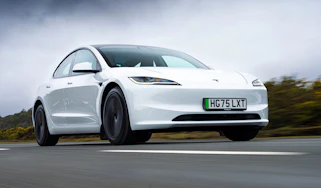
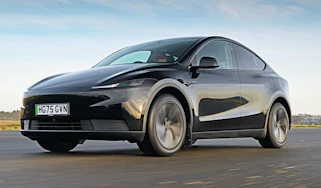
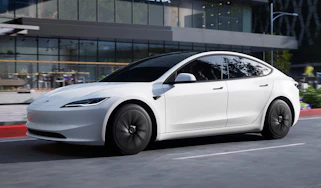
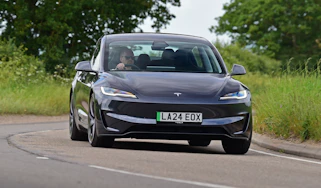
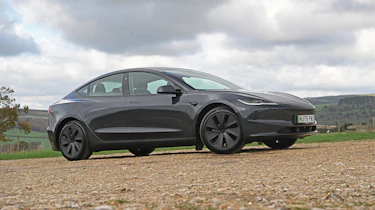
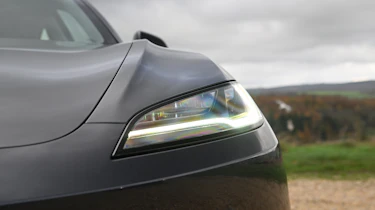
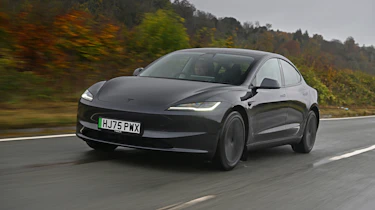
The Model 3 isn’t the most attractive car on the road, but we think it still manages to look upmarket without appearing overly flashy. The facelifted Tesla, with its slightly sharper front end and C-shaped tail-lights, is more attractive than the original model.
Interior and dashboard design
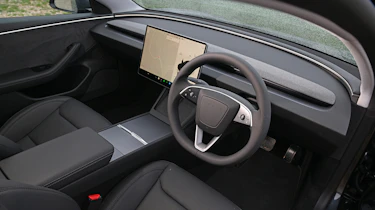
The Model 3’s minimalist interior is in contrast to the relatively conservative exterior. The dashboard is almost entirely dominated by the central 15.4-inch infotainment screen that controls virtually all functions, and displays your speed and other driving data, while the air vents are tucked away neatly behind an otherwise plain dash.
Materials and build quality
Tesla worked on the Model 3’s interior quality as part of the 2024 facelift, and there has been a marked improvement inside. The cabin doesn’t feel quite as solid or expensive as those of the flawless BMW i4 or Mercedes CLA, but it’s still pretty decent.
Infotainment, sat-nav and stereo
Tesla often has the feel of a tech firm first and a car company second, and the Model 3’s super-slick infotainment set-up is at the cutting edge of what you’ll find in contemporary vehicles.
The 15.4-inch touchscreen also has the processing power to match its hi-res graphics. Loading times when plotting a route are rapid, and there’s minimal latency when responding to touches, pinches and swipes. Its precision with those inputs is impressive, too.
Roughly a third of the screen is reserved for driving information. Some will prefer to have a readout in an instrument binnacle, but the numbers are large, so they’re hard to miss.
As well as controlling all of the Model 3’s functions, the car’s vast touchscreen display is also home to a suite of apps and games to keep occupants entertained, either while you’re driving or when parked and charging.
There’s no Apple CarPlay or Android Auto support, with Tesla preferring to use its own method of smartphone integration. We had no problems with Tesla’s on-board system, however, and the sat-nav system is particularly impressive with its ability to plot charging spots en route.
Boot space & practicality
Pros |
|
Cons |
|
The Model 3 is a four-door saloon with a generous cabin and boot, plus a separate storage area under the bonnet.
Dimensions and size
The Tesla Model 3 is slightly shorter and wider than a BMW i4, but the shape of the boot and battery layout means there’s a deep load area that offers a competitive amount of room for your luggage. The saloon opening limits its versatility, though.
| Dimensions comparison | |||
| Model | Tesla Model 3 | BMW i4 | BYD Seal |
| Length | 4,720mm | 4,783mm | 4,800mm |
| Width | 1,933mm | 1,852mm | 1,875mm |
| Height | 1,440mm | 1,448mm | 1,460mm |
| Wheelbase | 2,875mm | 2,860mm | 2,920mm |
| Boot space | 594 litres | 470 litres | 400 litres |
Seats & passenger space
The Model 3 is designed to carry four adults, and it manages that task well: there’s loads of space up front, and its minimalist design adds a sense of airiness. It’s easy to get comfortable in the driving seat, too.
There’s plenty of storage up front, with the centre console featuring wireless charging pads for two phones and two large cubbies: one under the large armrest and the other a little further forward below a sliding cover. The door bins are generously sized, with two front cup-holders. Our biggest issue with the glovebox is the lack of a physical release; you must use the touchscreen or voice commands.
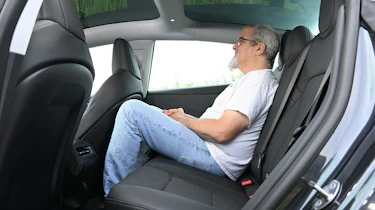
If you have to carry five people, the Model 3 can handle it. A completely flat floor in the rear provides space for everyone’s feet, plus there’s enough headroom and legroom to enjoy longer journeys. But the Model 3 isn’t perfect, because the low-mounted seats push passengers’ legs upward, leaving them with only limited under-thigh support. Two Isofix mounting points for child seats are provided on the outer positions of the rear bench.
Boot space
A 594-litre boot is larger than you’ll find in many rivals, and the Model 3 has a very deep under-floor storage area. But the narrow boot opening makes loading items trickier than in hatchbacks such as the BMW i4 and Mazda 6e. The Model 3 has split-folding rear seats if you need to carry longer items. Under-bonnet storage is accessible either via the car’s touchscreen or the Tesla smartphone app. Its 88-litre capacity is big enough for two small soft bags, but there’s a 50kg weight limit.
"The Model 3 is an absolute doddle to drive around town. Visibility is excellent due to a low scuttle that gives an unobstructed view forward, plus there are parking sensors front and rear." - Dean Gibson, senior road test editor.
Reliability & safety
Pros |
|
Cons |
|
Crash safety experts Euro NCAP put the Model 3 through its paces in 2019 and again in 2025, and on both occasions, it was awarded the maximum five-star rating.
Every Model 3 features a basic version of Autopilot, but buyers can upgrade to Enhanced Autopilot for around £3,500. Provided the driver is paying attention, this allows the car to maintain lane position with automated steering, acceleration and braking, and it can also change lanes. It has several features yet to be activated, such as auto-parking tech and an ‘Actually Smart Summon’ feature, which should allow the car to navigate to you in a car park. For now, it has ‘Dumb Summon’ where you can drive the car via the Tesla App on your phone or the car’s key.
Full Self-Driving builds on this by recognising and reacting to traffic lights and speed limits. But it still needs the driver to pay attention and be ready to take over, and it doesn’t have autosteer for driving on city streets. Until these additional features are available, it isn’t worth spending nearly £7,000 for a suite of assistance systems you can’t use at the moment, especially when these can be added later.
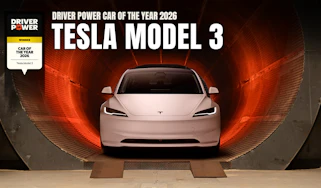
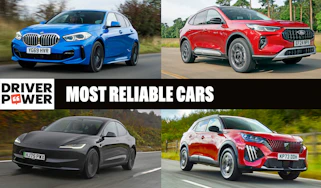
The Model 3 topped the 2026 Driver Power owner survey, finishing first out of the 50 best cars to own with a score of 88.55 per cent. Tesla ranked third out of 30 firms in the best manufacturer standings.
| Euro NCAP safety ratings | |
| Euro NCAP safety rating | Five stars (2025) |
| Adult occupant protection | 90% |
| Child occupant protection | 93% |
| Vulnerable road user protection | 89% |
| Safety assist | 87% |
The Tesla Model 3 topped the 2026 Driver Power survey, finishing first overall with a score of 88.55 per cent – the highest-rated car in the entire 50-car study. It took top three positions in six categories, finishing first for Quality & Reliability, first for Safety Features, and second for Infotainment. Its Powertrain score of 93.82 per cent also placed it first, reflecting owners’ satisfaction with its electric drivetrain. The exterior was its weakest area at 34th place, suggesting some owners feel the styling is underwhelming. Tesla ranked third out of 30 brands in the manufacturer standings, with a score of 86.91 per cent.
| Tesla Model 3 | Position | Score |
| Overall | 1st | 88.55% |
| Powertrain | 1st | 93.82% |
| Exterior | 34th | 86.87% |
| Interior | 10th | 85.97% |
| Practicality & Bootspace | 11th | 86.00% |
| Ride & Handling | 14th | 89.58% |
| Safety Features | 1st | 89.70% |
| Economy & Running Costs | 3rd | 84.04% |
| Quality & Reliability | 1st | 90.54% |
| Infotainment | 2nd | 90.06% |
| Value | 5th | 87.64% |
What owners said
- “Best car I have ever owned. The technology is just on another level. Nothing to dislike.”
- “Range anxiety has never been an issue. Supercharger network is fantastic. Only downside is the build quality could be better in places.”
- “The performance is incredible. Silent, fast, and efficient. I dislike the lack of physical buttons.”
- “Love the over-the-air updates. The interior is minimalist but I miss a few physical controls.”
Buying, prices and deals
Best buy: Tesla Model 3 Premium Long Range RWD
While the entry-level RWD model is cheaper to buy, we’d go for the Long Range rear-wheel drive because its 400-mile range makes it far more useful on longer trips. Its higher peak charging speed also means that mid-journey top-ups don’t take any longer than with the smaller battery. The Model 3 comes very well equipped as standard, so there’s no need to raid the options list.
Pricing for the Tesla Model 3 starts from around £38,000 for the base Rear-Wheel Drive spec, and moving up to the more lavishly-equipped Premium trim pushes this up to £45,000. You’ll need to add another £5,000 if you want the all-wheel-drive powertrain, while the fiery Performance model sits around the £60,000 mark.
If you’d like to save on this electric exec, you can build your perfect Tesla Model 3 via the Auto Express Buy A Car service. We also have a wide selection of Model 3 leasing deals, and you can even find a number of used Tesla Model 3s that are ready to hit the road.
Tesla Model 3 alternatives
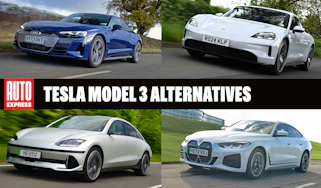
While Tesla was one of the leaders of the electric car revolution, mainstream manufacturers have been quickly catching up, as is clear by the number of talented rivals the Model 3 now has to go head-to-head with. The Mercedes CLA is a better all-rounder for driving as well as range, then there’s the engaging and exceptionally well-finished BMW i4, the space-age Hyundai Ioniq 6 and effortlessly stylish Polestar 2. Chinese newcomers continue to make waves, too, with the BYD Seal quickly becoming a common sight on the UK’s roads, while the Mazda 6e uses Chinese tech to deliver a long range and plenty of features.
If you’re not too bothered about the fully electric aspect, you also have traditional executive cars like the BMW 3 Series and Mercedes C-Class that still demand respect in the compact saloon space, and can be had with plug-in hybrid (PHEV) power, meaning you can take advantage of some of the tax benefits of an electrified vehicle.
Tesla Model 3 pictures
Key updates of the Tesla Model 3 review
27 July 2026: Latest driving impressions.
Frequently Asked Questions
The Tesla Model 3 remains one of the best electric cars on sale today; practical, hi-tech and boasting great performance and range, all for a relatively low price.
Deals on the Model 3 and alternatives