Best electric cars 2026
Thinking about making the switch to an electric car? Here are the best EVs that should be on your shortlist, and why…
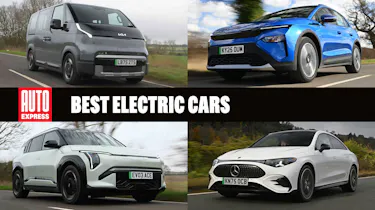
Thinking about buying an electric car in 2026? You’re not alone and you’ve come to the right place.
Our expert road testers have driven and tested every EV available, comparing them all over hundreds of miles on both UK and international roads. We test these cars in all weathers, all kinds of driving conditions and head-to-head against their key rivals. The result is this constantly updated list of the best electric cars on sale. If you’re looking to buy an EV, these cars need to be on your shortlist.
Being ranked as one of our best electric cars has never been tougher. We look at everything from battery range and charging speeds, to price, practicality, driving experience, technology, design and overall value for money – ensuring you get a complete picture before making any buying decisions.
You’ll always get the latest and best expert EV buying advice on this page…
Best electric cars to buy now
- The Nissan Leaf is our 2026 Car of the Year and the best electric car to buy now overall in the view of our expert road testers.
- The BMW iX3 is our 2026 Mid-size Premium SUV of the Year and currently the best premium electric car.
- The Skoda Elroq was our 2025 Car of the Year and still comes highly recommended by our test team, especially for families.
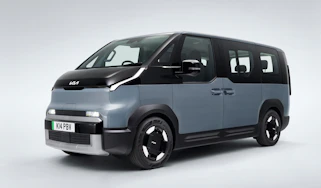
- The Kia PV5 Passenger is the best seven-seat electric car.
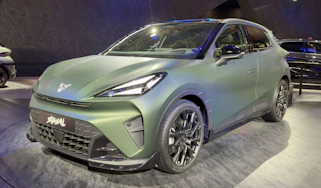
- The Cupra Raval is the best small electric car on sale, and great fun to drive.
| Rank | Car | Prices from | Our star rating |
| 1 | Nissan Leaf | £29,000 | 5.0 |
| 2 | BMW iX3 | £53,000 | 5.0 |
| 3 | Skoda Elroq | £34,000 | 5.0 |
| 4 | Cupra Raval | £24,000 | 4.5 |
| 5 | Mercedes CLA | £39,000 | 4.5 |
| 6 | Kia PV5 | £33,200 | 4.5 |
| 7 | Volvo EX60 | £57,000 | 4.5 |
| 8 | Tesla Model 3 | £38,000 | 4.5 |
| 9 | Renault 4 | £23,500 | 4.5 |
| 10 | Kia EV3 | £31,500 | 4.5 |
Click the links above to jump to our mini-review on each of our top 10 EV models..
1.Nissan Leaf
The Nissan Leaf is the best electric car on sale with its superb mix of efficiency, comfort and practicality, all at a fantastic price.
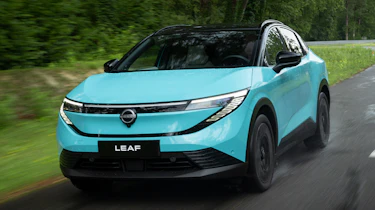
- Prices from £29,000
- Maximum battery range: 375 miles
- Auto Express Car of the Year 2026
| Pros |
|
| Cons |
|
It’s safe to say that Nissan has reinvented the Leaf for the latest generation. The Japanese giant has done a fantastic job of turning the electric hatchback into a stylish crossover that is comfortable, refined, approachable and affordable.
The Nissan Leaf comes with two battery options: either a 52kWh battery with a WLTP range figure of around 280 miles, or a much larger 75kWh pack that brings the range up to 375 miles. On our tests, the car’s efficiency was comparable with that of key rivals such as the Volkswagen ID.3 or Kia EV3. Charging speeds are slightly on the slower side at up to 150kW with the larger battery, but you’ll still be able to charge from 20 to 80 per cent in under 30 minutes.
On the road, the Leaf is calm and confidence-inspiring to drive, which is perfect for Nissan's target market. The suspension and ride quality are very impressive, the Leaf taking large undulations and potholes in its stride without feeling unsettled or jittery. Our extensive testing in Germany and the UK revealed an impressive lack of creaks or rattles, even when driving over really rough cobbles and scabby B-roads.
Space is another plus point for the Nissan Leaf. Its 437-litre boot is larger than in rivals such as the Volkswagen ID.3, which has 385 litres, but can’t quite match the 460 litres in the Kia EV3. Both of these cars have boxier silhouettes without the sloping roofline of the Leaf – this eats into the space when loading bulky items, as well as rear passenger headroom but practicality is still very strong.
Nissan has found a good balance between the use of physical switches and touch-sensitive controls, although the latter do take some time to get used to. The infotainment system graphics look a little dated but it’s simple to use and the underlying Google software is easy to work out. For the price, the Leaf takes some beating.
“There are good levels of sound deadening from road roar and very little wind noise, with the exception of the wing mirrors’ tendency to whip up a bit of a racket.” - Jordan Katsianis, news editor.
- Who will like it? Anyone looking for an outstanding all-round EV at a value price.
- Who won't like it? Families who need more space than the compact Leaf can offer.
Nissan Leaf Review Latest Nissan Leaf deals
2. BMW iX3
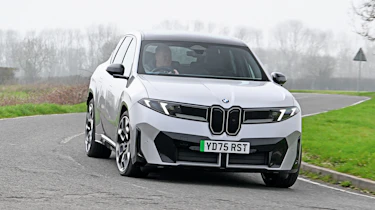
The iX3 isn’t just an outstanding and groundbreaking EV, it’s a crucial model for BMW as it aims to compete in the EV era.
- Prices from £53,000
- Maximum battery range: 500 miles
- Mid-size Premium SUV of the Year 2026
| Pros |
|
| Cons |
|
The iX3 will go down in the history of BMW as the car that launched the ‘Neue Klasse’ architecture - BMW’s advanced new electric car technology. There was a huge amount of hype around the iX3 and all our tests of the car so far suggest it was justified.
This is a mid-size premium SUV and it came out on top of our 2026 premium SUV supertest where our expert road test team put it head-to-head with four key rivals on UK roads.
First, the iX3’s numbers are outstanding. The longest range iX3 versions have official WLTP ranges of close to 500 miles, and the xDrive50 M Sport model achieved the longest range in our supertest with close to 300 miles and 2.7mi/kWh efficiency on our controlled test route. In warmer conditions on the international launch we were able to average around 4 miles per kWh for an estimated range of 450 miles. There’s also 400kW fast charging capability, if you can find a suitable charger, so topping up will be extremely fast.
The performance of the iX3 is certainly potent but BMW has sensibly avoided the livewire responses of some electric SUVs. It all feels very controlled and capable from behind the wheel. We think that the driving position is pretty much perfect for this kind of car, with loads of adjustment to suit different drivers.
In town you get an excellent view for placing the iX3 with confidence while the accurate, if slightly weighty, steering provides more of that reassurance on the open road. The ride might be slightly firm for some tastes, partly due to the standard 20” wheels, and the steering wheel design is certainly quirky but otherwise the iX3 puts in a spotless performance.
As a family car, the BMW iX3 is similarly adept. The ‘Panoramic iDrive’ main screen is an odd eight-sided oblong shape but this actually helps usability, putting key controls close at hand in positions that become familiar. There’s also the remarkable instrument display running the whole width of the dash with key information. There are few physical buttons but it all works well.
Great build quality, generous rear passenger space and a 520-litre boot that’s a match for key rivals complete a BMW iX3 package that sets a high bar for the competition.
“Twisting roads reveal the car’s true potential, because even over aggressive bumps and cambers in the road, the iX3 is totally unflustered.” - Jordan Katsianis, news editor.
- Who will like it? SUV buyers looking for the latest EV tech and top capability in a fine driving package
- Who won't like it? People who favour conservative design could be put off.
BMW iX3 review Latest BMW iX3 deals
3. Skoda Elroq
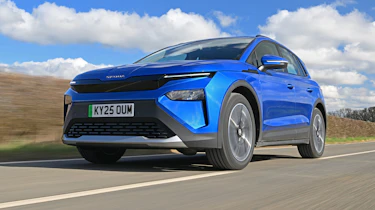
Our favourite family-size electric car of the moment is a consummate electric vehicle with few weak spots.
- Prices from £32,500
- Maximum battery range: 355 miles
- Mid-size SUV of the Year 2026
- Car of the Year 2025
| Pros |
|
| Cons |
|
Skoda doesn’t tend to miss the mark when it launches new cars, and the Skoda Elroq, a small electric SUV, is no different. In fact, the marque has done such a good job with the Elroq, that we named the car as our Car of the Year at the 2025 New Car Awards, where it beat the likes of the Renault 4, Renault 5 and Fiat Grande Panda to the crown.
Skoda has taken a slightly different approach to the Elroq’s styling and it’ll take a little while before the new grille-less front end starts looking like a Skoda to us. But a sophisticated cabin, quick charging speeds (up to 175kW), and competitive pricing (starting from just over £32,000 with the Electric Car Grant) make the Elroq one of our favourite EVs and the top choice for young families.
It’s a sign of how well Skoda understands its buyers that the Elroq drives almost exactly as you’d hope a family car would. It feels substantial but not unwieldy, has a mature ride quality but doesn’t loll around in corners, and it’s very easy to meter out as much or little power as you need at any speed. Even on the maximum setting, the regenerative braking system doesn’t quite offer one-pedal driving, so you’ll need to use the brakes, but it’s a very easy set-up to manage.
The Elroq’s interior is smart and modern. A few too many controls are buried within the touchscreen – a Renault Megane or Scenic is a little easier to interact with on the move – but the screen is otherwise very intuitive. There’s loads of room front and rear too, with large thigh cushions for the rear seat passengers to account for the higher floor, and a decent 470-litre boot.
“The Elroq is so good that we see it creating a bit of a dilemma for Skoda: why would anybody need the larger Enyaq now?” – Ellis Hyde, news reporter.
- Who will like it? Family car buyers prioritising practicality, quality and value in a compact SUV package.
- Who won't like it? There are still those with hang-ups about the Skoda brand.
Skoda Elroq review Latest Skoda Elroq deals
4. Cupra Raval
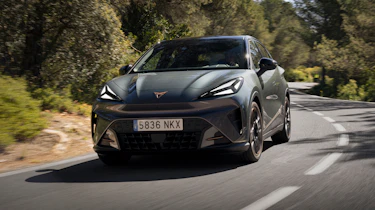
Cupra’s little electric car is a real firecracker with sporty style and a fun drive, but it’s also comfortable and well priced.
- Prices from £24,000
- Maximum battery range: 277 miles
- Supermini of the Year 2026
- Best small electric car
| Pros |
|
| Cons |
|
The Cupra Raval opened the door to a new era of small electric cars from the Volkswagen Group. The underlying tech is also used by the Volkswagen ID.Polo and the Skoda Epiq, and in this feisty Cupra supermini it works a treat.
There’s a sizable £10,000 price gap between the entry-level model and the VZ hot hatch flagship and we would recommend opting for a lower spec model with the larger battery. It gets you a range of 277 miles of range rather than the 186 miles of the base car and managed over 200-miles on our test, driving the car quite quickly. This makes the Raval more than capable of longer trips outside of its urban driving comfort zone.
Charging speeds are not dramatically quick but the relatively small batteries mean you won’t be hanging around for very long at all. Cars with the 37kWh battery can charge at either 50kW or 88kW, the latter meaning only 23mins is needed for a 10 to 80 per cent recharge. 52kWh battery models charge at 105kW matching rivals like the Renault 5 and electric MINI Cooper.
The best bit, as you’d hope from the sporty Cupra brand, is the way the Raval drives. It’s eager and dynamic but also composed with great ride quality for a small car. On our test, it proved adept at ironing out the bumps on UK B-roads, also showing tenacious grip at the front end that really encourages you to enjoy the experience. It’s fast too, particularly in the hot VZ form where there’s 223bhp and 0-62mph takes 6.8s.
Finally, the Raval is deceptively spacious with its roomy 441-litre boot and good back seat space for a small car. There aren’t really many downsides unless you dislike Cupra’s sporty design approach.
“The VZ even comes with a launch control function that pulses vibrations through your seat; not something you’ll use on a regular basis, but a party trick all the same.” - Richard Ingram, deputy editor.
- Who will like it? EV buyers seeking a car that’s small, sporty and fun but also practical.
- Who won't like it? Anyone who finds Cupra’s bold design approach a little too much.
Cupra Raval review Latest Cupra deals
5. Mercedes CLA
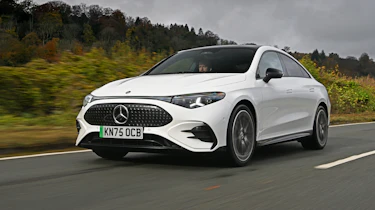
Classy, comfortable, with a long range; the CLA is a great long distance companion
- Prices from £39,000
- Maximum battery range: 461 miles
- Mid-size Company Car of the Year 2026
| Pros |
|
| Cons |
|
Mercedes didn’t get off to the best start in the electric car market but the electric Mercedes CLA came as an impressive return to form. The compact executive saloon and Shooting Brake estate manage to mix the traditional Mercedes-Benz qualities we’re familiar with from the C-Class and E-Class with a cutting-edge EV powertrain.
As a long distance car, the CLA ticks all the boxes with EV range or 461 miles and 800-volt charging now included (it wasn’t at launch) to get the most out of the fastest public chargers. We tested the car head-to-head against the Tesla Model 3 in 2025 and it came out the winner. Then it was part of our tough long-range EV test in February 2026, recording the best real-world range of 303 miles and the top charging speed of 2.9kWh per minute.
The ride quality and refinement in the cabin while on the move in the CLA are the standout features of the driving experience. It’s a very relaxing place to cover miles with the brakes and throttle calibration working beautifully. Mercedes has even managed to ensure that the CLA drives well on twistier roads with great body control for stability and confidence in the bends. There are more exciting cars of this type to drive but none feel more resolutely unflustered than the CLA.
The exterior design of the CLA is fairly lowkey but inside Mercedes has gone bolder. It might be a little in-your-face for some tastes but the latest infotainment tech works extremely well and we are very impressed by the improvements in materials quality compared to Merc’s last generation of EV models.
The rear seats are roomy for what is a relatively compact car with a flat floor to help with foot room. We’d like to have more storage options in the cabin but the front and rear boots provide a good amount of luggage space for the class.
“The rear window is reasonably sized, but its lower edge is quite high, so rear visibility isn’t too generous.” - Alastair Crooks, senior staff writer
- Who will like it? Drivers who do a lot of long trips will love the range, charging and comfort.
- Who won't like it? Families may find the compact saloon body less practical than an SUV.
Mercedes CLA review Mercedes CLA deals
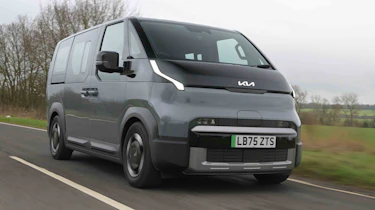
6. Kia PV5
If you need transport for a large family, the Kia PV5 is a great EV option at a great price. It’s pretty stylish, too.
- Prices from £33,200
- Maximum battery range: 256 miles
| Pros |
|
| Cons |
|
MPVs might not be as popular or plentiful on Britain’s roads as they once were, but there’s no denying that the traditional family hauler can still be appealing, especially when they’re as stylish as the Kia PV5 Passenger.
The PV5 Passenger shares its DNA with the Kia PV5 Cargo van, so you might assume it’s somewhat cumbersome, inefficient or lacking in design flair but that’s far from the case.
There are Standard Range and Long Range models of the PV5 available, with the former delivering a WLTP combined range of 183 miles courtesy of its 51.5kWh battery. Long Range variants can go up to 256 miles thanks to a larger 71.2kWh battery pack.
Both versions can charge at up to 150kW meaning a 10 to 80 per cent top-up takes around half an hour. During our test of the Standard Range in colder weather, it returned an efficiency figure of 3.3mi/kWh which equates to 170 miles on a full charge.
On the road, visibility is great thanks to the PV5’s high driving position, large door mirrors, and low side windows which make seeing kerbs much easier when navigating tight roads. The flat rear end and array of sensors also make backing into parking spaces much more straightforward than you’d expect.
Up the speed and the low centre of gravity means the PV5 doesn’t roll around too much in the corners. It’s reasonably refined on the motorway with little wind noise. In short, if you’re used to driving an SUV, it shouldn’t take too long to get the hang of the PV5.
The PV5 Passenger sharing its design with the PV5 Cargo is also great news when it comes to space. Not only is the PV5 available with up to seven seats, there’s acres of space for all passengers. There’s lots of adjustability throughout the cabin and plenty of cubbies for storage, too.
Plus, with 1,320 litres of space in the boot in five-seat mode, very few rivals get close to the PV5 when it comes to capacity.
“I appreciate that Kia has added pieces of fabric trim to the seatbelt buckles so they don’t rattle against the plastic interior when they’re not in use” – Dean Gibson, senior test editor
- Who will like it? Large families looking for low running costs.
- Who won't like it? Those who want an alluring SUV.
Kia PV5 Passenger review Kia PV5 Passenger deals
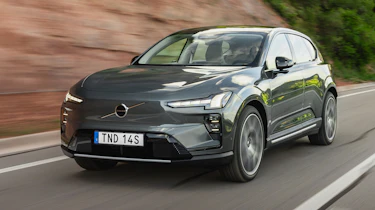
7. Volvo EX60
The EX60 is Volvo’s luxurious take on the premium mid-size SUV. Safe, solid and stylish, it’s a thoroughly desirable thing.
- Prices from £57,000
- Maximum battery range: 501 miles
| Pros |
|
| Cons |
|
You know what you’re going to get from a Volvo SUV. The brand’s classy, comfortable interiors and relaxed driving experiences work a treat with electric power and so it is in the EX60. While the BMW iX3 mirrors that brand’s more dynamic approach, the EX60 is a very viable alternative for those who prefer to take things easier.
The specs are pretty good too. Even the base rear-wheel drive P6 cars have 369bhp and 5.9 second 0-62mph potential - the 83kWh battery gives a 380-mile WLTP range. The Flagship P12 version has a massive 117kWh battery and breaks the 500-mile barrier on the WLTP tests, while 671bhp means 3.9s for the sprint.
Charging is also a strong suit, the 800-volt architecture means all models can suck in power at over 320kW - the higher spec cars charge at 370kW and can go from 10 to 80 percent charge in under 20 minutes. We returned 3.2 miles per kWh on our test of the base car which is good for a 300-mile real world range.
The EX60 doesn’t make its performance obvious in the way it drives. It glides about, the suspension ironing out the surface. Noise in the cabin is minimal and it’s super relaxing to cruise around in Volvo’s soft yet supportive seats. The small steering wheel and good visibility make it feel nimble enough around town and responsive on the open road - an iX3 is just a touch sharper.
The minimalist interior is of good quality, the Google-based infotainment works well and even tall adults will be comfortable in the back. You can get Volvo’s built-in booster seats to raise smaller kids up to a safe level. A 523-litre boot is competitive and the 58-litre frunk is perfect for cables.
“We love how some of the shortcut buttons alter depending on whether you’re stationary or moving. The one-pedal drive setting, for example, switches to the door-mirror control when you’re parked up.” - Richard Ingram, Deputy Editor
- Who will like it? Those who want a luxury car feel from their mid-size SUV.
- Who won't like it? Anyone who isn’t a fan of minimalist design and wants a sharper drive.
Volvo EX60 review Latest Volvo EX60 deals
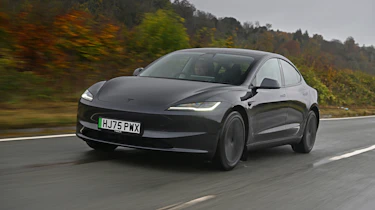
8. Tesla Model 3
Elon Musk might be divisive, but we all can agree that the Tesla Model 3 is one of the best electric cars going.
- Prices from £38,000
- Maximum battery range: 466 miles
| Pros |
|
| Cons |
|
With its long range, mind-boggling performance and minimalist, hi-tech cabin, it’s not hard to understand why the Tesla Model 3 has been such a hit since it landed in 2019. In fact, you’ll almost certainly stumble across a Model 3 or two wherever you go in Britain these days.
The Model 3’s midlife facelift only added to its appeal by increasing the official battery range: up to 332 miles for the entry-level rear-drive model – while new acoustic glass, quieter tyres and sound-deadening materials boosted the level of refinement.
High performance has always been a Tesla hallmark and the Model 3 delivers here, too. Even the base 279bhp Model 3 RWD model is brisk with a 6.2-second 0-62mph time, while the Model 3 Performance makes 453bhp and gets from 0-62mph in 2.9 seconds. It’s got good cross-country pace and a firm but controlled ride, though we’d resist calling it a driver’s car.
The centrepiece of the Model 3’s cabin is a large 15.4-inch infotainment touchscreen that controls virtually all the cars functions while also displaying speed and other driving data. One controversial element is the lack of indicator stalks, which have been replaced by steering-wheel buttons that we found awkward to use.
Alternatives to the Tesla Model 3, like the Volkswagen ID.7 or BMW’s i4, still struggle to match its charging speeds and technology. It’s up with the fastest charging electric cars you can buy and the Supercharger network gives it a further edge.
“As long as you’re not intimidated by the cutting-edge technology or the minimalist interior, the Tesla Model 3 is a great option” – Ellis Hyde, news reporter.
- Who will like it? Those who want an electric car with cutting-edge tech.
- Who won't like it? Tesla’s brand image can be divisive thanks to Elon Musk.
Tesla Model 3 reviewTesla Model 3 deals
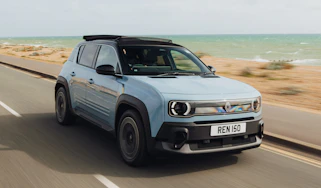
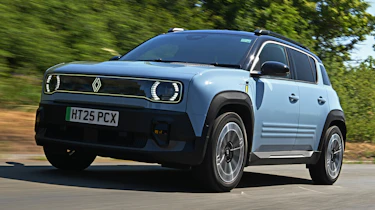
9. Renault 4
The more practical small SUV cousin to Renault's 5 supermini, the 4 has a lot of the same qualities but is a better fit for family buyers.
- Prices from £23,500
- Maximum battery range: 247 miles
- Auto Express Small SUV of the Year 2025
| Pros |
|
| Cons |
|
Renault is clearly on a roll at the moment, and if you thought the Renault 5 was the best retro-inspired car the manufacturer could create, the Renault 4 asks you to think again.
Starting from around £23,500, the Renault 4 is one of the best-value small SUVs currently on sale. There’s just one powertrain – the same 148bhp motor and 52kWh battery that you’ll find in the Renault 5 supermini.
While the battery might be the same as in the R5, the extra space offered by the R4’s small SUV-style body doesn’t have a negative impact on efficiency. The maximum claimed WLTP range is 247 miles, which is just five miles less than the smaller Renault 5. When we drove the Renault 4 over a mixture of roads, we saw an average of 3.8mi/kWh and a real-world range of just shy of 200 miles. We reckon a more considered driving style would see you get much closer to the claimed range.
On the road, the Renault 4 is smooth and comfortable, with Renault opting for a slightly softer set-up for the R4 than its R5 sibling. This doesn’t mean the R4 isn’t fun to drive; on the contrary, there's a willingness to change direction that’s missing in plenty of its rivals. The suspension does a good job of smoothing out rough roads, especially at higher speeds. Things can feel a little harsh at slower speeds, however.
Space is another plus point for the Renault 4. It has a 420-litre boot, which is much larger than rivals like the Fiat 600e, which has 360 litres of space, but the R4 can’t quite match the 556 litres in the Ford Puma Gen-E. The rear door openings are nice and wide, and the boxier shape helps give a little more head and legroom for passengers than they get in the Puma Gen-E.
Renault hit on a winning formula when it came to the interior of the R5 and sensibly reused it in the R4. Inside, the 4 strikes a balance of being modern and tech-filled while retaining a touch of retro nostalgia. The Google-based infotainment system is intuitive, and comes with loads of useful features. It’s one of the best infotainment systems you can currently find in any car.
“The Renault 4 draws inspiration from the company’s back catalogue, but the E-Tech model is light years ahead in terms of quality. While the dashboard layout is identical to the R5’s, the separate climate controls and stubby infotainment control stalk on the steering column will also be familiar to anyone who’s driven a modern Renault.” – Alex Ingram, contributor.
- Who will like it? Anyone seeking a family-friendly small car with a bit of style.
- Who won't like it? Limited rear leg-room may preclude those with older children.
Renault 4 review Renault 4 deals
10. Kia EV3
Excellent range and fast charging are the highlights but the EV3 has few real weaknesses.
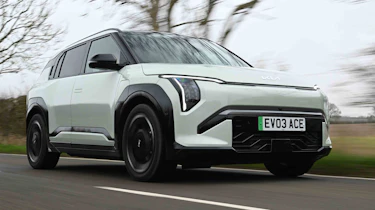
- Prices from £31,500
- Best for company car drivers
| Pros |
|
| Cons |
|
Kia really understands the assignment with electric cars. The Kia Niro offers plenty of range at a good price, the Kia EV6 looks great and really stepped up the brand’s performance game, the EV9 is hugely impressive (and hugely huge), and the new EV3 is like a scaled-down EV9, yet offers up to 375 miles of range despite its compact size. It’s more of the same from the Korean brand and we really like it.
The Kia EV3 doesn’t offer the slightly mad performance you’ll get from the similarly-sized Volvo EX30, but 0-62mph times in the seven-second range are plenty for a family hatch, and different driving modes let you tailor the electric motor’s response to your tastes.
What the modes don’t do is make the EV3 fun to drive, and the soft suspension can sometimes struggle with the Kia’s weight – but the rest of the time, most drivers will appreciate the fairly relaxed ride quality (on the motorway especially), impressive refinement, and several levels of braking regeneration, from coasting to one-pedal driving.
The boxy looks suggest huge cabin space but the Kia isn’t quite as commodious as you’d expect, partly thanks to a high floor that pushes rear passengers’ legs upwards and leaves them short of thigh support. Those in the front are unlikely to complain with the logical and uncluttered dash. The 460-litre boot is a pretty good size for the class, too.
“Kia’s new compact electric SUV offers a long range, a practical boot, and good passenger comfort in a stylish package” – Alex Ingram, contributor.
Kia EV3 reviewLatest Kia EV3 deals
Compare the best electric cars
Check out the specs of our top electric car recommendations below and click the links to jump back up to the mini-reviews.
| Car | Prices from | Max EV range (WLTP) | Max charging speed | Best 0-62mph | Boot space |
| Nissan Leaf | £29,000 | 375 miles | 150kW | 7.6s | 437 litres |
| BMW iX3 | £53,000 | 500 miles | 400kW | 4.9s | 520 litres |
| Skoda Elroq | £32,500 | 355 miles | 175kW | 5.4s | 470 litres |
| Cupra Raval | £24,000 | 277 miles | 105kW | 6.8s | 441-litres |
| Mercedes CLA | £45,000 | 461miles | 320kW | 6.7s | 405 litres |
| Kia PV5 | £33,200 | 256 miles | 150kW | 10.7s | 1,310 litres |
| Volvo EX60 | £57,000 | 501 miles | 370kW | 3.9s | 523 litres |
| Tesla Model 3 | £38,000 | 466 miles | 250kW | 2.9s | 549 litres |
| Renault 4 | £23,500 | 249 miles | 100kW | 8.2s | 339 litres |
| Kia EV3 | £31,500 | 375 miles | 127.5kW | 7.5s | 460 litres |
Key updates
October 2026: Prices updated
July 2026: Major update with Nissan Leaf, 2026 Car of the Year, moved to first place. Volvo EX60 and Cupra Raval added.
April 2026: BMW iX3 added in 2nd place after 5-star review and Supertest win. Mercedes CLA replaced VW ID.7 as best long-distance EV.
January 2026: Format change to list the best EV of each type and be more useful to buyers with different requirements. VW ID. Buzz added as the best seven-seat electric car after long-term test result and VW ID. 7 added as best long-distance electric car.
How we choose the best electric cars

Our extensive testing programme examines every new car on sale in detail.
We test every aspect of the vehicle’s make-up. But with pure-electric models we pay particular attention to the following areas – and so should you when taking your test drive:
- Long real-world driving range in warm and cold weather
- Fast charging speeds
- Good regenerative braking system with natural responses
- Infotainment includes features that find and manage charging
- Good charging cable storage
Beyond that, we test the same things we look for on any car, from the driving experience to the infotainment system and the practicality of the interior. All are carefully evaluated by our experts to determine exactly where the car sits in relation to similar models that you might be considering.
We also know that price is a huge factor for EV buyers, with 52% of our readers telling us that finding the best deal is the most important part of the car-buying process for them, so our experts also analyse the market to carefully compare the prices, plus the leasing and finance deals, of each model. All-in-all, our extensive testing process is designed to bring you the definitive verdict on the best electric cars to buy.
If you'd like more recommendations around your specific electric car requirements, check out these guides:
- Longest range electric cars
- Fastest charging electric cars
- Best luxury electric cars
- Best electric SUVs
- Best 7-seater electric cars
- Best small electric cars
- Cheapest electric cars
- Fastest electric cars
Not sure if electric cars are right for you? Take a look at the best hybrid cars or best plug-in hybrid cars available according to our road test team.
Frequently Asked Questions
Electric cars still work best for drivers who can charge at home or work, but growing public charging networks do make them a viable option for those who can’t. If you mostly drive short distances and can access cheap and convenient charging, an EV could be ideal.
Long-distance drivers should check charging station availability along their usual routes and be conscious of the added cost associated with charging away from home.
There's more information to help you make your electric car choices in our full guide on if you should buy an electric car