New Chery QQ3 2026 review: trails European rivals in almost every way
The Chery QQ3 is intended to take on the Ford Puma, but it needs a lot of improvement before it comes to the UK


Verdict
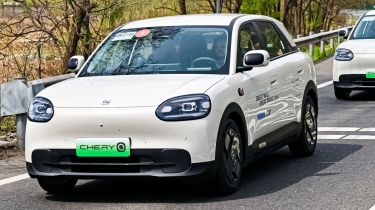
Chery’s QQ3 is ideally placed to be a high seller due to its spacious cabin, good levels of standard kit and reasonable range. However, it will need to be priced well below similarly sized rivals such as the Renault 4 and Ford Puma Gen-E to appeal to UK buyers, as it’s nowhere near as polished as its European competition in almost all areas. Let’s see if any changes are made before it arrives in showrooms here.
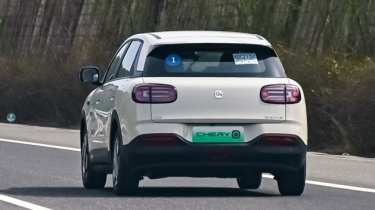
If the desired effect is to dispel the notion that ‘Chinese cars don’t have to be cheap’, the Chery QQ3 didn’t get the message. The QQ3 is a B-segment SUV-sized electric model that could rival the Renault 4 and Ford Puma Gen-E. However, where you’ll need to spend close to £24,000 for either of those (even with the UK Government’s generous Electric Car Grant), the Chery is priced from just £7,500!
There is a caveat or two to this figure, of course, because that’s how much it costs in its home market for the entry-level variant. Even in China, it is a simple, low-cost car, but upgrade the battery size to something more akin to what you will find in European rivals, and it’s more like £9,000 – still a relative bargain. This is not a pointer as to how much it might cost when it reaches the UK next year, though. That figure we’ll have to wait for.
Used - available now

2023 Audi
Q4 e-tron
25,211 milesAutomaticElectric
Cash £20,050
2024 Volkswagen
T-Roc
28,907 milesManualPetrol1.0L
Cash £15,699
2019 Ford
Fiesta
37,858 milesManualPetrol1.0L
Cash £9,949
2026 Audi
Q2
51,676 milesAutomaticPetrol1.5L
Cash £15,849We drove a higher-specification model, having been told that under the skin is a 41kWh battery pack powering a front-mounted e-motor with around 120bhp. These figures are bang-on that of the smaller-batteried Renault 4, and the two aren’t miles apart in terms of range, either.
Chery quotes around 250 miles on the old-school NEDC cycle, so accounting for the variations of the WLTP regulations, we should see this figure hit around 210-220 miles – comparable once again to the R4 and Puma. DC charging isn’t a strong suit at 85kW, and Chery quotes a 30-80 per cent top-up taking 16.5 minutes.
Step inside the cabin and initial impressions are positive. There’s plenty of visibility thanks to a large windscreen and front windows, and the technology suite is typically strong. The main touchscreen is both responsive and has a decent user interface.
Switchgear is at a premium, but there are a few physical controls both on the centre console and steering wheel which make essential tasks easy enough to execute. The small driver’s display is a bonus, but its low-resolution graphics aren’t that much to get excited about.
Look past the padded section of contrasting material on the dashboard, and the rest of the cabin is pretty uninspiring. The plastics across the main dash, console and doors are all quite thin and don’t feel especially robust. This is an inexpensive car, but many of the cheapest new models no longer feel it. It’s a trick that some other low-cost brands, such as Dacia, have figured out.
Rear space, on the other hand, is outstanding. The flat floor and wide bench will easily swallow three adults, and the boxy exterior unlocks plenty of headroom, too. The boot is also pretty big, although it’s not dramatically larger than the competition at 375 litres. There is also a very well packaged under-bonnet frunk with an additional 70 litres of space. Compared to the Renault 4, this is a much more versatile car, although the Puma’s clever variable boot floor does have its own merits.
It would be generous to call it inoffensive to drive, though, as it’s very clear the money’s been spent elsewhere. Almost all of the key controls – the steering, throttle and brakes – feel like they need work in their calibration.

Despite being a relatively light EV, the gloopy steering and stodgy suspension make the car feel about a tonne heavier than it actually is. The throttle pedal also needs work. In anything other than the QQ3’s ‘low’ regenerative braking mode, it can be tricky to drive the car smoothly. This means you’ll need to rely on the brake pedal more than you do in other BEVs, and this is little better as it’s also spongey and lacks feel.
Ride comfort and general refinement are underwhelming. Wind noise is pretty noticeable, and even on relatively small 17-inch wheels, there’s rudimentary feel to the damping that creates the impression the QQ3 is working extremely hard just to keep all four wheels on the ground. A Renault 4 is no Clio RS, but it feels far more resolved and refined than the Chery.
Our drive on Chinese roads did little to inspire confidence that the car will fare any better in the UK. The smooth highways we drove on were not generally representative of the type we get across the UK, and how it deals with fast A or B-roads will be a much bigger challenge.
Chery will need to put some time and money into improving the drive, plus the interior plastics, before it could be considered a serious rival against European and forthcoming Korean alternatives. Unless, of course, it is seriously discounted. At under £18,000, we’d consider it to be a potential, if not especially compelling, option for the money. Anything above that and it becomes less tenable in its current form.
| Model: | Chery QQ 3 |
| Price: | £9,000 (in China)/TBC (UK) |
| On sale: | 2027 (UK) |
| Powertrain: | 42.7kWh battery, 1x e-motor |
| Power/torque: | 121bhp/N/A |
| 0-62mph/top-speed | N/A |
| Range: | 249 miles (NEDC) |
| Max. charging: | 85kW DC charging, 30-80 per cent in 16.5 mins |
| Size (L/W/H): | 4,195/1,811/1,569mm |