Best first cars for new drivers 2026
These are the best cars for first time drivers, all of which are cheap, easy to drive and safe
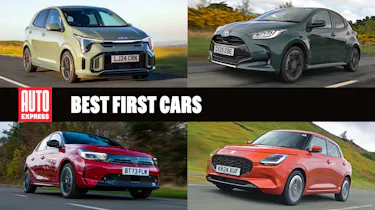
Once you've passed your practical driving test and got your driving licence, the next barrier between you and a whole new level of freedom is finding your first car.
The best first cars for new drivers offer a combination of low running costs, cheap insurance, decent equipment levels, practicality, safety and an easy driving experience. To help make your search as easy as possible, our road test experts have rounded up the best first cars for new drivers right here.
We know the cost of buying and running a car can be steep, especially for new drivers, so we’ve chosen these cars with their value for money, reliability and fuel economy at the forefront of our minds. We’ve thoroughly tested every model you can buy in the UK, many of them in head-to-head group tests against rivals, and rounded up the best first cars below.
All of these models are brand new, but many great examples can also be found on the used market for lower prices. If you need more help narrowing down your search, these pages should do the trick…
- Cheapest cars to run
- Cheapest cars to insure
- Cheapest cars on sale
- Best cars for students
- Best small cars
- Best city cars
Compare the best first cars for new drivers
We think the best first car for new drivers is the Skoda Fabia, thanks to its range of frugal engines, low insurance group, generous equipment list and big levels of practicality.
If you want an electric car as your first car, the Renault 5 is currently the best of the bunch. It’s very easy to drive, has bucket-loads of retro charm and has a range of up to 267 miles on a single charge.
| Rank | Make and model | Prices from |
| 1. | Skoda Fabia | £21,000 |
| 2. | Kia Picanto | £17,000 |
| 3. | Toyota Yaris | £24,000 |
| 4. | Renault 5 | £21,500 |
| 5. | Volkswagen Polo | £22,000 |
| 6. | Dacia Sandero | £14,765 |
| 7. | Suzuki Swift | £20,000 |
| 8. | Renault Clio | £21,000 |
| 9. | Vauxhall Corsa | £20,000 |
| 10. | Toyota Aygo X | £21,600 |
Keep reading to learn more about the very best first cars on sale in the UK. Alternatively, you can also click the links in our table above to jump directly to a specific make and model...
1. Skoda Fabia
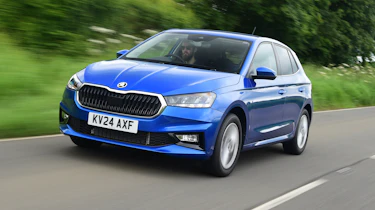
The Skoda Fabia offers big-car levels of practicality and equipment in a compact package.
- Prices from £21,000
- Best first car for new drivers overall
- Insurance group: 4
Pros |
|
Cons |
|
First-time drivers need a car that’s easy to drive, cheap to insure and affordable to buy, and the car that manages to blend all of these things together best of all is the Skoda Fabia.
The Fabia doesn't come with the option of hybrid or electric power just yet, but all three of the petrol engines on offer can easily surpass 45mpg, so you won’t be spending a fortune at the pumps. Plus, there’s also the option of a slick DSG automatic gearbox for those with an auto-only driving licence.
New drivers will be best served by the entry-level 1.0 MPI engine as this whittles the Skoda Fabia down to insurance group four, making it one of the cheapest cars to insure in the UK.
This entry-level engine produces a modest 79bhp, so you do need to work it quite hard when merging onto faster roads or reaching motorway cruising speeds, but what it lacks in performance is more than made up for in efficiency.
The soft suspension setup means longer journeys will be comfortable, too, although we didn’t find the Fabia as much fun to drive as rivals like the MINI Cooper or Renault Clio on our tests.
If you’re not fussed about the fun factor, the Fabia gets the sensible stuff more or less spot on. As well as its low insurance group and affordable running costs, the latest Fabia manages to feel like a bigger car than it actually is. The 380-litre boot is the same size as you’ll find in the larger Volkswagen Golf in the class above, so family car duties won’t be out of the question. The cabin also feels very well screwed together, and the Czech brand hasn’t been too stingy with its standard kit.
“If you’re doing a lot of stop-start driving, we’d recommend opting for a manual gearbox rather than the DSG automatic. The latter can be frustratingly jerky at slower speeds, which is quite jarring when performing manoeuvres, such as trying to park.” - Shane Wilkinson, senior content editor.
- Who will like it: Buyers looking for big-car levels of space without the bulk or running costs.
- Who won’t like it: Those after a car which is fun and entertaining to drive.
2. Kia Picanto
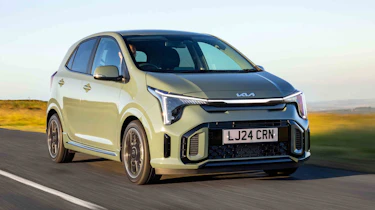
Small cars can be cheap to buy without feeling Spartan inside. The Kia Picanto is proof of that.
- Prices from £17,000
- Insurance group: 3
Pros |
|
Cons |
|
The Kia Picanto has grown into an attractive little city car over the years, but it hasn’t lost sight of its low-cost roots. The Picanto is one of the smallest brand-new cars you can currently buy, and it comes with some equally compact costs.
The entire line-up sits between groups three and seven, so you shouldn’t be forking out any more than is absolutely necessary on those dreaded insurance premiums. Every variant can also return around 50mpg, and with a tank capacity of 35 litres, it shouldn’t cost as much as other cars on this list, even with sky-high fuel prices.
When it comes to powering the Picanto, none of the petrol engines are particularly punchy, but we didn’t struggle to keep up with traffic during our time testing the car.
As you’d expect from a car of this size, driving and parking is a breeze for even the most novice of drivers, and the little Kia’s modest kerb weight and quick steering means there’s some fun to be had, albeit at sensible speeds. Reliability shouldn’t be too much of a concern, either, as Kia’s renowned seven-year/100,000-miles warranty is thrown in as standard.
Thanks to some clever engineering, the latest Kia Picanto makes the most of the limited interior space that it’s able to offer. You’ll be able to seat four adults within the Picanto, but you may all wish to take a few breaks on longer journeys as the seats don’t feel all that supportive.
If you need to carry smaller passengers, there’s also a pair of ISOFIX points in the back. Even the base ‘Pure’ model is fitted with its fair share of useful kit, too, such as an 8-inch touchscreen infotainment system, air-conditioning, all-round electric windows and 14-inch alloy wheels.
“The latest Kia Picanto has gone through a significant glow-up, transformed from the drab and sparse first-generation car.” - Ellis Hyde, news reporter.
- Who will like it: Those looking for ultra-low insurance costs will like the Picanto.
- Who won’t like it: It can feel out of its depth on long motorway journeys.
3. Toyota Yaris
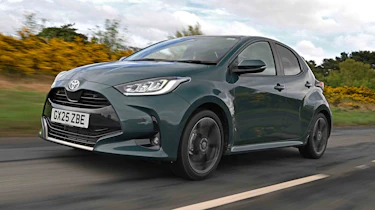
Toyota has long been a pioneer when it comes to hybrid powertrains, the current-generation Yaris is one of the very best.
- Prices from £24,000
- Best hybrid car for new drivers
- Insurance group: 13
Pros |
|
Cons |
|
If you’re after a hybrid supermini as your first car, the current-gen Toyota Yaris is a fine choice in our view. It’s frugal, has plenty of kit and is incredibly easy to drive around town.
While the Toyota Yaris attracts a higher starting price compared to other cars on this list, we think at almost £24,000, it’s well worth the money. No matter which trim level you opt for, the Yaris will officially return almost 70mpg, and during our own testing we saw an average of 65mpg which is very respectable.
You shouldn’t incur expensive insurance premiums either with all cars sitting between group 13 and 16. Plus when it’s time to sell, the solid residual values make it a great long-term prospect.
On the road, the Toyota Yaris feels suitably grown-up. The handling is nice and predictable, although it’s not the most engaging, its sub-10 second 0-62mph time means high speed driving and merging onto motorways is far from a chore and the cabin is quite hushed for a car of its size. Our only gripe is the groan from the engine and CVT gearbox, which can be a bit intrusive while accelerating - although it settles down once you get up to speed.
The cabin design might not be the most inspiring, but it is functional and well-laid out. Unlike some rivals like the Peugeot 208, the Yaris has simple-to-use climate controls, and the infotainment screen is crisp, although the menu system isn’t quite as clear or intuitive to use as we’d like.
The Yaris is a little on the tight side when it comes to interior space, so taller passengers will feel a bit squeezed in the back on anything more than a short journey. We think those rear seats are probably best reserved for children. The 286-litre boot is a little on the snug side, too.
“The Toyota Yaris is a competent all-rounder, offering a reasonable drive on a variety of roads. Its hybrid set-up is better suited to more measured inputs, and if you take that on board, you’ll be rewarded with a relaxing and smooth drive.” - Max Adams, online reviews editor.
- Who will like it: If you’re looking for a car with a strong warranty, the Toyota Yaris excels.
- Who won’t like it: If you regularly carry passengers in the rear or large items in the boot, you might want to look elsewhere.
4. Renault 5
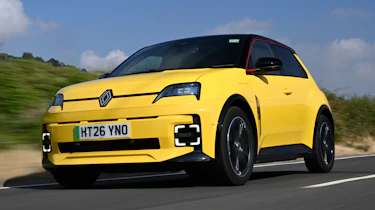
If you want your first car to be cool, stylish and…electric, the Renault 5 should fit the bill.
- Prices from £21,500
- Best electric first car
- Insurance group: 18
Pros |
|
Cons |
|
The reinvented Renault 5 has been a smash hit for the French brand, thanks to its combination of retro charm, a spacious interior, decent electric range and competitive pricing. It really is one of the best electric cars you can currently buy.
The electric car market is growing at a rapid pace and prices of EVs are now reaching a parity with similarly sized petrol and hybrid small cars. Starting prices for the Renault 5 begin from just under £21,500, which is less than other supermini stalwarts like the Toyota Yaris and Volkswagen Polo. Another big advantage the 5 has going for it is its reduced running costs compared to a petrol or diesel car.
The Renault 5 has a range of up to 196 miles for the 40kWh battery pack, or 267 miles when specced with the 52kWh pack. During our time driving Renault 5, which includes UK and international drives, twin tests against the Fiat 500e as well as Cupra's Raval, an EV range test and a long-term test over six months, we’ve regularly seen efficiency figures of well over 4.0 mi/kWh across mixed driving conditions.
On the road, the 5 has been well-engineered and feels very composed, grown-up and predictable, while overall visibility is very good from behind the wheel. This makes the 5 very confidence-inspiring and is a great option for new drivers. It feels most at home around town and city streets, but it's not out of its depth on longer motorway jaunts.
In the practicality department, the Renault manages to find a good balance between rear passenger and boot space, meaning it’s more spacious than its MINI Cooper Electric chief rival. In the back, the flat floor and rear doors help boost rear cabin accessibility, and the boot is rated at 277 litres.
“The steering is light and darty and the turning circle is impressively tight, so low-speed manoeuvres feel like they come naturally to the 5.” - Jordan Katsianis, news editor.
- Who will like it: Those who want a cool EV as their first car.
- Who won’t like it: If you don’t have access to cheap charging or a home wallbox charger, the 5 might not be for you.
5. Volkswagen Polo
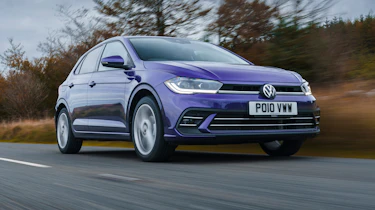
If you’re after a supermini with a premium feel, look no further than the Volkswagen Polo.
- Prices from £22,000
- Insurance group: 3
Pros |
|
Cons |
|
If what you desire is a ‘grown-up’ supermini, the Volkswagen Polo is very hard to beat.
Being closely related to the Skoda Fabia mentioned higher up this list, the Polo is another supermini with a sense of distinction about it. Provided you steer clear of the hot Polo GTI (tempting as it may be) you won’t have to fork out loads on running VW’s baby hatch, either. Opt for the base ‘Life’ model and you’ll be looking at a car that sits in insurance group three.
Comfort and refinement are the Polo’s best qualities on the move, rather than sportiness. We recommend avoiding the optional sports suspension or larger alloy wheels as these take away from the Polo’s soft nature without really adding anything apart from cosmetic tweaks.
The Polo GTI is the one for the sporting enthusiast (and the variant with the highest costs), but the standard models are a great choice for new drivers who simply want a sturdy, sensible and practical car that’s unimposing to drive. That being said, there is always the option of the Driver Assistance Package which includes parking assist.
The current Polo is notably larger than previous generations, and there’s genuinely plenty of space for four adults. The 351-litre boot is slightly smaller than the Fabia’s, but it's just as big as the boot in the Vauxhall Astra in the class above so will be more than enough for the weekly shop and occasional tip run.
There are a few trim levels to choose from, but the base ‘Life’ trim would be our choice as it offers plenty of features including alloy wheels, automatic headlights, a DAB radio, electronic stability control, and rain-sensing automatic wipers.
“Buy a Polo, and you’ll be getting into a small car that rides with a similar level of composure to a VW Golf, while the interior quality is impressive” - Ellis Hyde, news reporter.
- Who will like it: Those wanting a small car with big car refinement.
- Who won’t like it: Things can get quite expensive if you start moving up the trim levels or adding optional extras which will put some buyers off.
6. Dacia Sandero
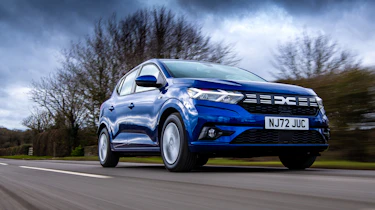
Dependable, cheap to buy and cheap to run, the Sandero is a great first-car choice.
- Prices from £14,765
- Best value for money
- Insurance group: 12
Pros |
|
Cons |
|
The Dacia Sandero is one of the cheapest new cars to buy in the UK, and the latest-generation model is based on the current Renault Clio, which itself is a great supermini.
As a new driver, you may wish to focus on the basics as you get used to driving without an instructor sitting next to you. The Sandero is a great choice for no-nonsense motoring as it simply offers the features that drivers need for a price they can genuinely afford. A brand-new Sandero can be yours for under £15,000, and you can find plenty of bargains on the used car market, too.
Being based on the Renault Clio means the latest Sandero is far more engaging to drive than its humble appearance might suggest. While our expert road testers weren’t exactly grinning from ear-to-ear due to white-knuckle thrills, the Sandero does a respectable job of remaining composed when cornering at reasonably higher speeds. The 10.5-metre turning circle also makes manoeuvring a breeze, and this all but eliminates the need for awkward three-point turns.
The Dacia Sandero should also prove practical for everyday use, with five seats, five doors and a 320-litre boot. Admittedly, equipment is fairly sparse compared to some of the other cars on this list, but the essentials are still there, including air-conditioning, cruise control and LED headlights as standard. Build quality has also taken a huge step forward compared to the previous model.
“Aside from some tyre and wind noise, the Sandero is pleasant enough when cruising on the motorway. The suspension copes well with bigger bumps and imperfections in the tarmac, and the steering doesn’t require constant corrections.” - Ellis Hyde, news reporter.
- Who will like it: If you want a brand-new car which is both cheap to buy and run, you’ll like the Sandero.
- Who won’t like it: Some people still aren’t convinced by Dacia as a brand.
7. Suzuki Swift
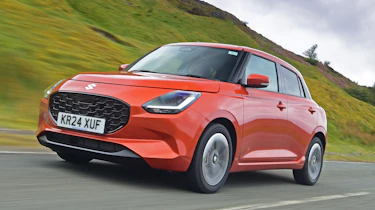
If you want your first car to be nippy and fun to drive, the Suzuki Swift has you covered.
- Prices from £20,000
- Best for driving engagement
- Insurance group: 20
Pros |
|
Cons |
|
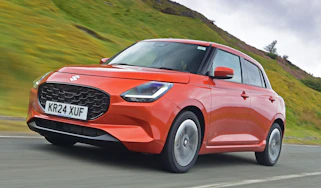
On paper, the Suzuki Swift has the costs and efficiency of a dinky city car, but it’s actually a pretty accomplished and much larger supermini.
While the Suzuki Swift has an attractive starting price of under £20,000, this isn’t exactly small change for a new driver. However, thanks to Suzuki’s fuel-sipping mild-hybrid tech, running costs should be kept to a minimum as fuel efficiency is well over 60mpg.
On the road, the Swift is pretty fun to chuck around when things get twisty. The 82bhp engine under the bonnet certainly isn’t the last word in performance and had to be worked hard at times on our tests. The Swift’s low kerb weight makes it feel nippy and agile, however.
Inside, you can easily see Suzuki’s low-budget ethos on display. While you wouldn’t exactly call the Swift's interior ‘plush’, it’s functional and should be quite hard-wearing.
Counterbalancing the low-cost feel, the Swift comes with a good amount of kit as standard, including adaptive cruise control, a reversing camera, wireless Apple CarPlay and Android Auto and keyless entry.
The Suzuki Swift has some pretty compact dimensions, but most passengers should be able to sit in reasonable comfort as there’s a good amount of head and leg room. Although we found the seat bases did feel like they were lacking thigh support, just keep this in mind if you plan on doing some long-distance driving. The boot is rated at 265 litres.
“The Swift’s small stature, light controls and decent all-around visibility make it a breeze to zip around town in.” - Shane Wilkinson, senior content editor.
- Who will like it: Buyers looking for a small car which is fun to drive.
- Who won’t like it: If you want your car to feel up-market, the Swift won’t be for you.
8. Renault Clio
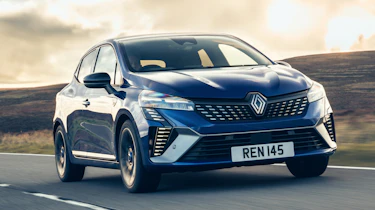
The Renault Clio is a pretty common sight on UK roads, and there’s a good reason for this.
- Prices from £21,000
- Insurance group: 11
Pros |
|
Cons |
|
If you’re something of a fashionista, the latest Renault Clio should suit you as we think it’s one of the best-looking superminis that you can currently buy.
Of course, beauty is only skin deep, but we’re pleased to report that the Clio has plenty of substance to go with its style. Buyers have the choice of petrol or hybrid power, but both offer pleasingly high fuel efficiency on the WLTP combined cycle — up to 54.3mpg for the petrol and rising to 67.3mpg for the hybrid. Insurance, meanwhile, starts from group 10.
With its pleasant steering and composed suspension, the Renault Clio is one of the more enjoyable superminis to drive (especially since the demise of the Ford Fiesta), although neither the petrol nor hybrid models are particularly quick. Those who do opt for the hybrid will enjoy the instant acceleration of electric motors before the petrol engine kicks in at around 20mph.
The Clio’s cabin is perhaps a bit more straightforward than its exterior appearance might suggest, but it’s still a pleasant enough place to sit. The controls all fall to hand nicely and we found the infotainment system pretty easy to fathom and operate, even if it isn’t Renault’s latest tech.
If you’re someone who enjoys their space, you’ll be better served by the petrol-powered Clio, as this boasts a 391-litre boot, which is by far one of the biggest in the supermini class. The hybrid still offers a respectable 301 litres, but this falls short of some rivals including the Skoda Fabia, Volkswagen Polo and SEAT Ibiza.
“The Renault Clio refuses to relinquish its position as one of the best superminis on the market.” - Ellis Hyde, news reporter.
- Who will like it: If you’re after a no-nonsense first car, the Clio is a great choice.
- Who won’t like it: Rivals are bigger if you need a larger boot.
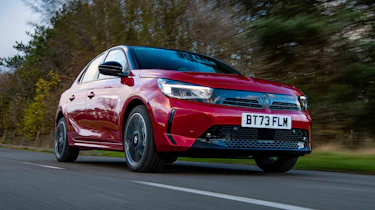
9. Vauxhall Corsa
Often chosen by driving schools, the Vauxhall Corsa is a great first car that’s easy to drive and live with.
- Prices from £20,000
- Insurance group: 19
Pros |
|
Cons |
|
The Vauxhall Corsa is one of the best-selling cars on sale in the UK. Thanks to its wide range of petrol, mild-hybrid or fully-electric powertrains, there should be a powertrain to suit your needs.
Naturally, if you’re prepared to make the switch, the Vauxhall Corsa Electric offers the lowest running costs and emissions. However, the petrol and mild-hybrid cars will return between 50 to 63 mpg on paper, so they’re not exactly thirsty, either. Regardless of fuel type, if you want the lowest purchase price then you’ll need to look at the petrol-powered model which starts from just under £20,000.
The driving experience is pretty much the same across the Corsa line-up. All models felt reasonably spritely when we put our right foot to the floor and overall visibility is pretty good. This supermini’s light weight also means it feels agile in corners and doesn’t need to be thrashed in order to reach motorway speeds. The steering is noticeably light, but this does make for easy parking.
One area where the Vauxhall falls some way short of the competition, though, is when it comes to interior space. Before we even set foot inside our test car, we found the door opening to be surprisingly narrow, making the Corsa a bit tricky to get in and out of.
Once eventually inside, the cabin feels generally cramped, and the 309-litre boot seems comparatively tiny compared to the petrol-powered Renault Clio. The Corsa Electric’s boot is even smaller at just 267 litres.
In terms of standard kit, every trim level gets a reasonable amount including alloy wheels, LED lighting and a 10-inch touchscreen with Apple CarPlay and Android Auto. The infotainment software is also a big upgrade over the systems found in Corsas of the past.
“The Corsa is more convincing than ever thanks to its impressive blend of performance, high fuel economy, decent comfort, and easy-to-drive manners.” - Max Adams, online reviews editor.
- Who will like it: If you learned to drive in a Corsa, as many do, you might like the familiarity factor.
- Who won’t like it: The Corsa being a big-seller, you’re unlikely to stand out in a car park.
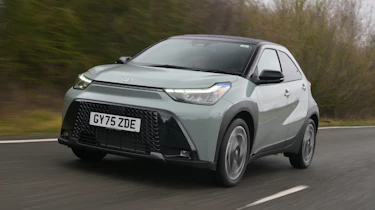
10. Toyota Aygo X
Want a car with a higher driving position but without the bulk of an SUV? The Toyota Aygo X has you covered.
- Prices from £21,600
- Insurance group: 16
Pros |
|
Cons |
|
The Toyota Aygo X is a funky, pseudo-SUV with city car costs, although it is still more expensive to buy than a number of rivals.
If you’re wondering how and why the Aygo X warrants a price tag from £21,600 that’s because Toyota has shoehorned the same 1.5-litre hybrid powertrain you’ll find in the base-spec Yaris under the bonnet.
Power output is modest at 114bhp which is more than enough for nipping around town, as well as the occasional motorway jaunt. It’s also one of the most efficient non-plug-in hybrid cars on sale right now with Toyota officially claiming the Aygo X can achieve over 74mpg. If that wasn’t good enough, we managed to achieve more than 80mpg during our time with the car over a mixture of roads.
On the outside, Toyota has given the Aygo X a fresh face and chunky plastic cladding on the wheel-arches, adding to the upright, bold stance. The 3.7-metre length and equally small 4.7-metre turning circle still enable it to squeeze into the tightest of parking spots. The standard-fit reversing camera means that there’s less chance of unintended bumps, too.
Take a step inside and some body-coloured splashes on the insides of the doors add a bit of charm to the cabin, while the central touchscreen features Apple CarPlay and Android Auto. It isn’t quite as refined or as spacious as the Kia Picanto, but there’s still plenty to like.
"There’s no real danger because you can’t go fast enough to get into trouble. The nimble chassis and relatively relaxed stability control systems mean the Aygo X is quite enjoyable to drive quickly around town." - Dean Gibson, senior test editor.
- Who will like it: Cost-conscious buyers will like how frugal and fuel efficient the Aygo X is.
- Who won’t like it: It’s a strict four-seater car, which will be limiting for some.
What to look for in a first car as a new driver
When looking for your first car, chances are you’ll have lots of questions but won’t know where to start. Below, we’ve covered some of the key questions to ask when shopping for a first car…
Is it cheap to insure?
One of the biggest obstacles for new drivers to overcome is sky-high insurance costs. As a new driver, your shortage of experience will count against you in the eyes of an insurer.
Before you sign on the dotted line or hand over any of your hard-earned cash on your first car, you should get some car insurance quotes using a comparison site, to get an idea of how much you’re likely to pay for your first year's insurance.
It’s important to note that if you can keep out of trouble for 12 months, you will accrue a no-claims bonus discount which will give you a percentage reduction on your premium.
If you continue to not make any insurance claims, then this discount will only grow over the years. There are even some finance deals which include free insurance, although this usually raises the monthly payments drastically.
One way of boosting a no-claims discount is to fit your car with an insurer-approved 'black box'. This electronic device plugs into your car's electronics and monitors your driving, and you and your insurer can review your performance to see how and where you can improve. Return a good score, and the insurer can further reduce your payments.
Is it safe?
Some parents will be in a position to buy their children their first car, and if you're in that enviable situation, then you'll likely want to buy the safest car possible. You need to find the cars that come with the highest Euro NCAP safety rating: the higher the score for a car, the safer it is.
Still, buying a new car rather than an old second-hand one will mean it's inherently safer, because it will feature the most up-to-date safety equipment. This could include more advanced systems such as autonomous emergency braking or lane-keeping assist, which allow the car’s systems to intervene in an emergency and try to avoid a collision.
Is it easy to drive?
Other important things to look out for when buying a car for a new driver include light steering, good visibility, a responsive engine and brakes, user-friendly controls and a positive gear shift; all of these will help a new driver build confidence during their time behind the wheel. You’ll want to take a few test drives in the models on your first car shortlist to decide which one suits you best.
Key updates to best first cars for new drivers
29 September 2026: Renault 5 enters the list in fourth position, while the Leapmotor T03 leaves the list.
25 March 2026: Suzuki Swift and Toyota Yaris enter the list in while both the Hyundai i10 and Fiat 500e leave the list.
Helpful guides for new drivers
- How to get your driving licence
- What is the highway code?
- Best intensive driving courses
- Driving theory test: everything you need to know
- Hazard perception test: what to expect and how to pass
- Driving test 'show me, tell me' questions: hints and tips
- Practical driving test: how to pass
- Driving test pass rates explained
- Driving test aids product test
- History of the UK driving test
- Cheaper car insurance for young drivers: our top tips