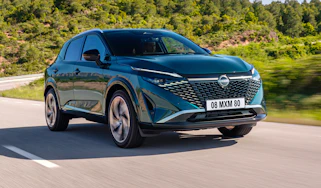
Nissan Qashqai review
The Nissan Qashqai is a big seller, and the revised e-Power variant only improves things further

Our opinion on the Nissan Qashqai
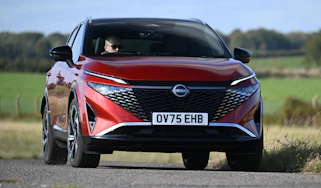
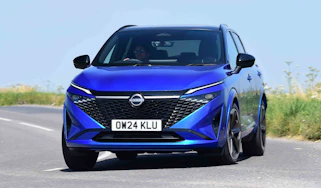
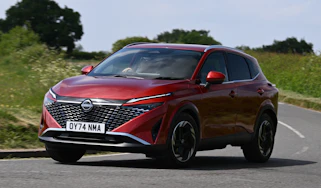
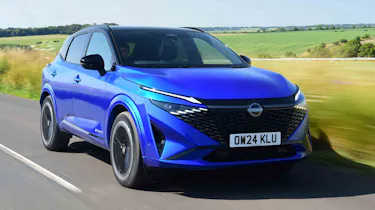
The Nissan Qashqai mid-size SUV now has sharper looks, better tech and a higher-quality feel in the cabin following its mid-life facelift, and there wasn’t a whole lot wrong with the rest of the package to start with.
Nissan’s effort stands out in this highly competitive market sector by offering consistency across the board. It’s fine to drive, efficient, practical, well equipped and tightly priced, so despite not being a class leader, the lack of weaknesses gives it an edge.
About the Nissan Qashqai
The Nissan Qashqai is a mid-size SUV that offers five doors, five seats and a decent-sized boot, plus a range of in-vogue mild-hybrid and hybrid powertrains. While it’s not cheap, it’s also not priced like a premium vehicle, putting it within the reach of plenty of customers.
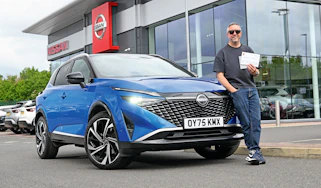
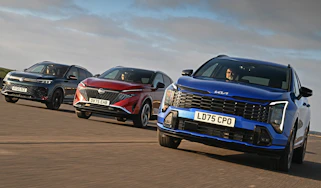
We’ve group tested the latest Qashqai extensively in the UK and Europe a number of times, with our most recent test putting the Qashqai against the Kia Sportage and Volkswagen Tiguan in 2025. The e-Power hybrid system in the Nissan impressed, as did its value for money. Our web producer, Pete Baiden, spent six months living with a Qashqai in Tekna+ trim, while our senior photographer, Pete Gibson, also spent six months running an e-Power hybrid Qashqai. Both of their impressions have informed this review.
Performance & driving experience
Pros |
|
Cons |
|
At its launch in 2021, the third-generation Nissan Qashqai was an impressive 60kg lighter than its predecessor, despite being stiffer and safer. While it’s a little more dynamic than its predecessor, it’s not one of the more entertaining or involving SUVs in this class to drive – but for most customers, the Qashqai’s comfort and refinement will be of greater importance.
Used - available now

2017 Nissan
Qashqai
53,171 milesManualPetrol1.6L
Cash £9,991
2022 Nissan
Qashqai
18,108 milesAutomaticPetrol1.3L
Cash £19,290
2022 Nissan
Qashqai
46,914 milesAutomaticPetrol1.3L
Cash £16,869
2022 Nissan
Qashqai
2,964 milesAutomaticPetrol1.5L
Cash £21,169Most cars in the Qashqai line-up use a torsion-beam rear suspension layout, although a more sophisticated multi-link set-up is fitted to top-spec models equipped with 20-inch alloy wheels. The standard suspension fidgets a little over smaller bumps, but generally, the Qashqai rides very well.
The more sophisticated suspension on top-spec cars offsets the potential downsides of larger wheels nicely, but the difference is not huge. In general, Nissan’s creation is better at dealing with bumps and potholes than many rivals and feels more responsive than a Skoda Karoq.
Performance, 0-60mph acceleration and top speed
The Mk3 Qashqai range starts with a 1.3-litre turbocharged mild-hybrid petrol making 156bhp, which is enough in six-speed manual form to get from 0-62mph in 9.5 seconds. This engine is quite flexible in everyday driving between 1,600 to 4,000rpm, but below that, it can feel lethargic, which can be noticeable when pulling out of a junction.
The manual variant is a touch slower than the optional Xtronic CVT, which needs 9.2 seconds to get to 62mph. Neither version makes the Qashqai feel particularly fast, but they deliver good refinement and don’t sound bad when revved hard.
Qashqais with the e-Power moniker use an unusual full-hybrid system. Here, a 1.5-litre petrol engine acts like a generator for the electric motor, which drives the front wheels. This setup means the e-Power’s acceleration is almost as instantaneous as a fully-fledged EV’s. The 201bhp maximum power is only available in Sport mode – Standard and Eco offer 188bhp. Maximum torque is boosted to 330Nm in Sport mode, while Standard and ECO modes produce 311Nm.
The e-Power behaves more like an EV than a petrol car, with smooth, responsive and lively acceleration making it very easy to drive in all conditions. What is more impressive is the boost in refinement – a previous downside of the tech. The latest e-Power set-up is quieter throughout almost the entire rev range than it was before. In many situations, you can barely notice the engine switching on and off at all. It’s significantly more refined and more responsive than the hybrid rivals from Renault, Kia, Hyundai and the Stellantis group brands, and is even more than a match for Toyota’s best hybrid tech.
| Model | Power | 0-62mph | Top speed |
| Qashqai 1.3-litre DiG-T 2WD manual | 154bhp | 9.5 seconds | 128mph |
| Qashqai 1.3-litre DiG-T 2WD Xtronic automatic | 154bhp | 9.2 seconds | 123mph |
| Qashqai 1.5-litre e-Power 2WD | 188bhp (201bhp Sport mode) | 7.9 seconds (7.6 seconds Sport mode) | 105mph |
Town driving, visibility and parking
Light steering and a fairly tight turning circle make Nissan’s biggest seller an easy car to shuffle around while parking or manoeuvring out of tight spots. Once on the move, its noise isolation is great, although higher-spec models, riding on larger wheels, can add a little low-speed fidget to what is otherwise a fairly smooth ride.
The overall ride is less unsettled than in rivals such as the Dacia Bigster or Peugeot 3008. At low speeds, a tight turning circle and light steering make the Nissan easy to manoeuvre, too.
The manual version is easy enough to drive in town, and is preferable to models equipped with the Xtronic CVT automatic transmission. The autos can dither when moving away from a stop – not ideal when entering a busy roundabout.
Country road driving and handling
For most buyers, the Qashqai is merely a car for getting from A to B in a relaxing and safe manner, and in that respect, it’s very hard to fault. The suspension is well judged, delivering enough comfort on bumpy roads, while managing to keep body roll fairly well in check when pushing on.
There’s not much feel to the steering, but the Qashqai seems a little lighter over the nose than some rivals, which means that it’s quite responsive when making quick direction changes or swerving to avoid hazards. The steering doesn’t offer much feedback either, although drivers can opt for Sport mode if they prefer the reassurance of a little more weight through the wheel when turning.
The top-spec Tekna+ model gets a more advanced multi-link suspension layout, but for the most part, the difference between it and the base set-up isn’t that obvious when it comes to ride and handling.
Motorway driving and long-distance comfort
The Qashqai driving experience remains as solid on motorways as it does on slower roads. High-speed comfort and refinement are both great, with a little less road noise reaching the cabin of the Qashqai when compared with rivals such as the Kia Sportage.
There’s some engine noise to be heard when accelerating hard in all versions, but it isn’t intrusive and settles into the background once you’re up to cruising speed.
“The Qashqai’s steering remains fairly relaxed on the move, so it’s a car that doesn’t need too many corrections to the wheel to keep things on the right track.” – Alex Ingram, Auto Express special contributor.
MPG & running costs
Pros |
|
Cons |
|
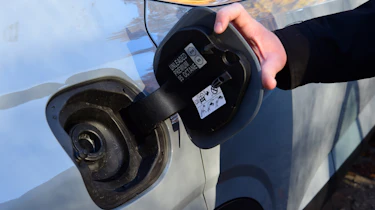
The Nissan Qashqai 1.3-litre mild-hybrid petrol engine provides either 44.8mpg on the WLTP combined cycle and CO2 emissions of 143g/km in Xtronic automatic form, or 44.1mpg and emissions of 145g/km in manual form. All models come with stop/start tech, along with an Eco drive mode to help eke out extra miles from a tank of fuel.
The Qashqai isn't offered with plug-in hybrid power like the Hyundai Tucson. Instead, the brand sees e-Power as the stepping stone from mild-hybrid to a full EV. Nissan claims an official WLTP figure of 64.2mpg and CO2 emissions of 100g/km. We found these claims to stand up very well in the real world; during our time behind the wheel of the latest e-Power hybrid, we achieved 52.5mpg, which put it 8.7mpg clear of a Kia Sportage hybrid we tested in the same conditions.
| Model | MPG | CO2 | Insurance group |
| Qashqai 1.3-litre DiG-T Xtronic automatic | 44.8mpg | 143g/km | 21 |
| Qashqai 1.3-litre DiG-T manual | 44.1mpg | 145g/km | 22 |
| Qashqai 1.5-litre hybrid e-Power | 64.2mpg | 100g/km | 26 |
Insurance groups
Buying an entry-level Qashqai Acenta Premium means that you won’t be forking out too much cash to insure your new wheels, but prices rise as you climb the range. The cheapest version in manual form sits in group 21, while the Xtronic CVT car is in group 22.
In comparison, the Hyundai Tucson range starts from group 18 and climbs to group 24 for the plug-in hybrid in the posh Ultimate specification. The Qashqai e-Power hybrid models will be more expensive to insure, starting in group 26.
Tax
Business users won’t be hugely motivated by the Qashqai’s numbers. With the basic Acenta Premium car, they’ll be paying a 34 per cent Benefit-in-Kind (BiK) company car tax rate, while a top-spec mild-hybrid model is in the 37 per cent bracket. The revised e-Power’s reduced emissions cut the BiK rate down to 26 per cent, but it can’t match a plug-in hybrid or electric car for company car tax efficiency.
The bulk of the range sits below the £40,000 luxury car tax threshold, but it is possible to breach that limit if you add too many options to certain Tekna models or opt for the top-spec Tekna+ trim.
Depreciation
Buy a brand-new Qashqai today, and our market data shows that it’ll hold on to 47 to 50 per cent of its original value after three years or 36,000 miles.
For comparison purposes, the Ford Kuga is only expected to hold on to between 40 and 42 per cent of its value over the same period, while the Kia Sportage should retain between 46 and 54 per cent. However, the Dacia Bigster is predicted to maintain more of its value than any of the cars mentioned here, hanging on to between 53 and 60 per cent of its value over the same period.
To get an accurate valuation for a specific model, check out our free car valuation tool...
Interior, design & technology
Pros |
|
Cons |
|
Through each generation of the Qashqai, its cabin has become gradually more loaded with tech, but Nissan hasn’t compromised on the sound ergonomics that make it so easy to live with.
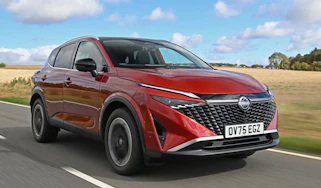
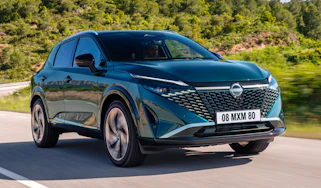
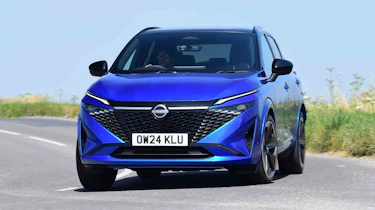
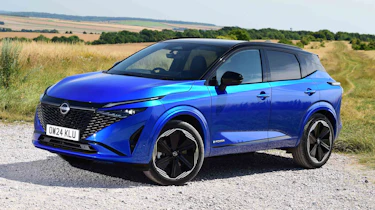
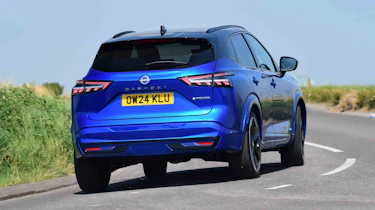
When the Mk3 Nissan Qashqai was launched, its exterior design wasn’t that far removed from the previous model. The 2024 facelift added a more distinctive front end, similar to the Ariya electric car, that helps Nissan’s offering stand out next to more adventurously styled rivals like the Peugeot 3008 and the Toyota C-HR.
The technology highlight is probably Nissan’s Around View Monitor system. It's available from N-Connecta trim and above, and it generates a 360-degree view of the car when manoeuvring to help avoid shunts. There’s now a 3D function that renders an external image of the car and its surroundings from eight different angles, and an ‘invisible hood view’ – as seen on Land Rover models – which generates an on-screen image of what the wheels are doing ahead of you. Nissan says it’s good for avoiding kerbs and positioning the car in car washes, which seems like a more probable use case than hardcore off-roading. Also potentially useful is a T-junction view, which uses a camera on the Qashqai’s nose to help you check for oncoming traffic when pulling out of blind junctions.
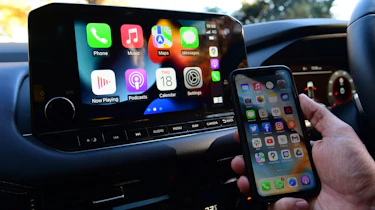
Base Acenta Premium models get a sizable 12.3-inch touchscreen, but don’t have the Google-powered infotainment features, and make do with wired Apple CarPlay and Android Auto, while higher spec models offer wireless connections. They also miss out on all the body-coloured exterior trim, which spoils the look of the Qashqai to an extent.
With this in mind, the £2,500 premium needed for upgrading to our preferred N-Connecta trim feels worthwhile. It includes:
- A 3D surround view monitoring system
- A wireless charging pad
- Heated front seats and steering wheel
- 18in alloys
- A 12.3in infotainment system with Google built-in
You’ll have to find another £2,000 for an N-Design if you want full body-colouring on the lower bumpers, rear LED lights with sequential indicators, and 20-inch wheels. For the same price as the N-Design, Tekna models forgo some styling add-ons in favour of additional luxury features, such as an electric tailgate, heated windscreen, multi-colour ambient interior lighting, and an 8-way electric driver's seat with memory settings.
Tekna+ is the height of mid-size SUV luxury with quilted, massaging leather seats and a Bose stereo. Unfortunately, it’s over £4k more than a Tekna, which feels a bit rich, in our opinion.
Interior and dashboard design
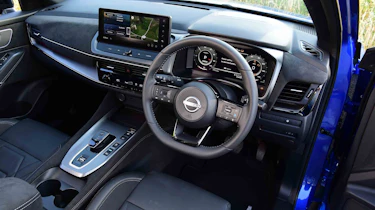
There are more glamorous cabins in this segment, but the Qashqai keeps things very simple, with a sensible dash layout that places the touchscreen infotainment system at the top (with a couple of physical shortcut keys at its base), air vents in the middle, and physical dials for the climate control system just below them. The layout is logical, and we approve that all the easy-to-use physical buttons and dials remain, which is a big plus point in our book over rivals like the Ford Kuga, which has gone all in on touchscreens.
Opting for the N-Design trim gets you a large panoramic glass sunroof, letting a huge amount of light into the interior to help brighten things up, which might be useful if you plan on tackling a number of long trips in your Qashqai.
Materials and build quality
The changes inside the Qashqai included some nicer materials on higher-spec cars and many new or enhanced tech features. The posher models get a very large helping of Alcantara fabric (on N-Design cars) or soft leather (on Tekna models). These upmarket materials coat the dash, door inserts, and armrests, and they really add an air of quality – we’re just unsure how well the Alcantara will stand up to regular encounters with sticky-fingered kids. There’s also some very fetching metallic-effect plastic trim around the gear selector.
Overall fit and finish are right on the money for a car in this segment. It’s not quite as plush as the more pricey Peugeot 3008, but it feels more than competitive with the Vauxhall Grandland, Kia Sportage and Hyundai Tucson. The main dash feels fairly substantial and well screwed together, but some of the plastics closer to the back-seat passengers are a little hard and scratchy. This isn’t unusual to find among the Qashqai’s competition, though.
Infotainment, sat-nav and stereo
Nissan felt a step or two behind its rivals on infotainment tech for a long time, but the Qashqai’s latest system has a much sharper display and quicker loading times. While the infotainment system has improved, the digital driver’s display hasn’t, and it looks low-res next to the sharp touchscreen. Chunky steering wheel controls make it easy for the driver to access the intuitive system on the move.
The Google Maps navigation functionality from N-Connecta and above is first class (especially if you’re an Android user familiar with the interface), and all bar the base models get it along with the ability to sign-in to your car with your Google account – transferring favourite locations and other information in the process. There’s ‘Hey Google’ voice assistant control, too, significantly reducing the need to connect your phone to the car.
“The speed-limit alert is quite loud and relentless – not ideal when so many of these systems can inadvertently read the wrong speed limits – or miss limit changes altogether. Fortunately, it’s very easy to turn these off.” – Alex Ingram, Auto Express special contributor.
Boot space & practicality
Pros |
|
Cons |
|
Overall, the Qashqai is well-suited for families. Several alternatives in this class offer a touch more room – especially in the boot – but that is in part because the Nissan is slightly more compact on the outside than some of its closest rivals. This is worth bearing in mind if you have a tight garage or frequently need to parallel park.
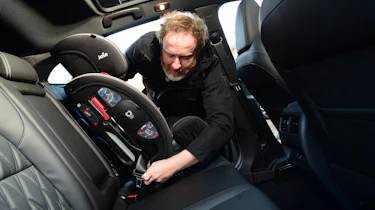
Family buyers will be impressed by the practical touches of the Nissan Qashqai. The rear doors open to 85 degrees, which means – provided that there isn’t a car parked close next to you – that fitting a child seat (and even putting a child into their child seat) is a lot easier. A reversible boot floor with a wipe-clean surface is another thoughtful addition.
The front seats are comfortable and supportive, with all Qashqai models featuring a steering wheel with reach and rake adjustment. Storage in the cabin is quite limited, with the main options being the small glovebox, slim door pockets, a deep cubby under the armrest, and a pair of cup-holders in the centre console. There’s also a shelf for your phone that becomes a wireless charging pad in higher-spec models.
Dimensions and size
The latest Qashqai is a bigger car than the second-generation model it replaced, at 4,425mm in length, 1,625mm in height, and 1,835mm (2,084mm including mirrors) in width. A 35mm increase in length, and 32mm of extra width mean it’s still a little smaller than a Ford Kuga, but pretty much the same size as a Peugeot 3008.
| Dimensions comparison | |||
| Model | Nissan Qashqai | Ford Kuga | Kia Sportage |
| Length | 4,425mm | 4,626mm | 4,540mm |
| Width | 1,835mm | 1,882mm | 1,865mm |
| Height | 1,625mm | 1,690mm | 1,645mm |
| Wheelbase | 2,665mm | 2,710mm | 2,680mm |
| Boot space | 479-1,415 litres | 412-1,534litres | 591-1,780 litres |
Seats & passenger space
There’s little to fault with the Qashqai’s driving position. The driver’s seat lines up nicely with the pedals and the wheel, and the wide range of adjustment in both the seat and wheel allows drivers of many shapes and sizes to find an ideal set-up. Two cup-holders, an enclosed central bin, plus deep and wide door pockets mean that there’s plenty of storage space up front, too.
The front seats are comfortable, offering good support, but there’s no question that rivals such as the Dacia Bigster are roomier inside. Buyers considering the panoramic sunroof option (standard on Tekna and above) should be aware that this eats into the available headroom.
Once you’re inside, the Qashqai has just about enough space. It’s not class leading – the Kia Sportage offers more headroom, and the Dacia Bigster is far more spacious for less money – but it’s still more than good enough. The back seats are fairly firm and a little short of under-thigh support, though, and while the centre seat is wide, you feel slightly perched when sat in it.
During our own tests, we found the Qashqai to have less headroom when compared with the Peugeot 3008 and Hyundai Tucson. It’s also not as roomy inside as a Vauxhall Grandland or Skoda Karoq. There's still plenty of space for passengers under six feet, and overall, it’s roomy enough for daily use.
Boot space
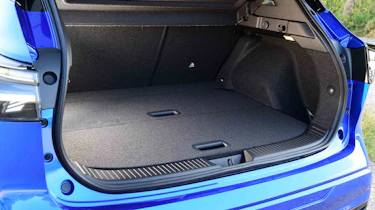
The Qashqai’s boot has a 504-litre maximum capacity with the rear seats in place. That’s a generous volume, if not quite on the level of the Dacia Bigster, Hyundai Tucson or Kia Sportage. In fact, Qashqai models equipped with the boot floor divider see that capacity reduced to 479 litres. Whether you choose the mild-hybrid or full-hybrid e-Power models, the boot volume remains the same.
We have measured the Qashqai’s boot lip height at 765mm – slightly higher than the Kia Sportage’s and the fully electric Skoda Elroq’s, but largely similar to other alternatives.
Nissan has missed a trick by not fitting levers in the boot to let you release the rear seats quickly, but once down the seats do fold flat. Overall volume with the seats folded falls behind its rivals; there’s just 1,447 litres available compared with the roughly 1,800 litres you get in a Sportage, Tucson or Skoda Karoq.
Towing
The towing capacity of the Nissan Qashqai depends on which engine you choose, but all petrol versions should provide enough capability for most buyers’ needs. The maximum braked trailer towing capacity ranges from 1,680kg for the manual to 1,800kg for Xtronic automatic. Don’t pick the e-Power model if you plan to pull a caravan, because it only has a towing capacity of 770kg.
“A six-foot-tall passenger can sit behind a driver of similar dimensions if they don’t mind pushing their knees into the padded seat back a little.” – Alex Ingram, Auto Express special contributor.
Reliability & safety
Pros |
|
Cons |
|
The Nissan Qashqai finished in a middling 29th place out of the 50-car list of the 2026 Driver Power best cars to own scoreboard. Respondents liked the comfortable ride of the Qashqai, its stable handling, and the smoothness of its drivetrain. They weren't so pleased with the fuel economy and the expensive servicing.
There's good news for the Nissan brand, because it places higher in our latest 2026 best car manufacturer rankings compared with last year. It climbs three places to 12th out of 30 brands, with owners liking their car's comfortable ride, stable handling, and the smoothness of the powertrains. Owners weren't so bowled over by the fuel economy or the higher than expected servicing costs.
While the Qashqai originally scored a full five-star safety rating from industry body Euro NCAP in 2021, it has since been downgraded to four stars following a much more stringent retest in 2025. Alternatives like the Peugeot 3008 and Vauxhall Grandland also get four stars under this tougher testing criteria, but there are plenty of alternatives, such as the Cupra Formentor, MG HS, MINI Countryman, Toyota C-HR and Volkswagen Tiguan, all of which boast five stars.
The standard kit is comprehensive, with Nissan’s Intelligent Mobility tech including a blind spot warning to alert you to cars approaching beside you on the motorway, a rear cross-traffic system to alert you to cars crossing from behind when reversing, traffic-sign recognition to let you know of the speed limit, and an Autonomous Emergency Braking system with pedestrian and cyclist recognition to prevent collisions with vulnerable road users.
There’s also a forward-collision warning to alert you if it thinks you’re about to collide with something, Intelligent cruise control to keep you a safe distance from the car in front, and a high beam assist function to automatically put the main beam on when there’s no oncoming traffic.
Many drivers will be disappointed to learn that, to meet EU rules and appease the Euro NCAP crash testing body, safety-assist features like the speed limit and lane departure warning systems now automatically reactivate every time you start the Qashqai. As with Renault’s approach, you can program your preferred driver-assist arrangement in the infotainment menu and access it via two button presses on the steering wheel after starting the car. This is much easier than the approach taken by rivals from Kia and Volkswagen.
| Euro NCAP safety ratings | |
| Euro NCAP safety rating | Four stars (2025) |
| Adult occupant protection | 91% |
| Child occupant protection | 91% |
| Vulnerable road user protection | 70% |
| Safety assist | 95% |
Buying and owning
Best buy: Nissan Qashqai e-Power (FHEV) N-Connecta
How much does the Nissan Qashqai cost? Well, official ‘on the road’ prices range from £30,635 to £43,225, but you can currently save an average of £5,987 through the Auto Express Buy A Car service, where prices start at £25,333. You can lease a Nissan Qashqai from £277 per month or buy a used model at prices starting from £8,995.
Thanks to recent revisions to the powertrain, the Qashqai e-Power has been noticeably improved and is our pick of the engine line-up. While you do have to spend a bit more to get into an e-Power model, its additional refinement, efficiency, and performance over its mild-hybrid siblings is worth forking out for in our view.
We recommend avoiding the higher-spec models because they exceed the £40,000 threshold and incur the luxury car tax burden. The mid-range N-Connecta trim is our choice because it provides all the equipment you'll need while keeping the price well below this tax surcharge limit.
Check out our latest new car deals, leasing deals and used car deals for the top offers available now on Auto Express. And don't forget we can help you sell your car, too.
Nissan Qashqai alternatives
If you’re in the market for a mid-size SUV, there’s no shortage of options to choose from. Some of our current favourites include the impressive Hyundai Tucson, its Kia Sportage sister car and the Dacia Bigster, which offers more space and a generous kit list for prices that undercut the Qashqai across the range. The revitalised Ford Kuga and the stylish Peugeot 3008 are also worth seeking out, as are the VW Group trio of the SEAT Ateca, Skoda Karoq, and Volkswagen Tiguan.
If you’re sold on the Qashqai, you certainly won’t be alone. Hundreds of thousands of UK buyers have seen it as a good idea since 2007. The appeal of the current car revolves around its comfort, quality and impressive Google-based infotainment tech. Keen drivers may want to look elsewhere, though, because neither the driving experience nor the level of performance from the engines is terribly exciting.
Nissan has tailored its mid-size SUV to deliver the goods for family buyers in this competitive market and succeeded in ticking most of the boxes that matter. The most recent changes give it a more distinctive appearance to help it stand out in a crowded marketplace, but it is still the Qashqai’s more prosaic qualities that give it an edge.
Nissan Qashqai owner reviews
Here’s what owners in the most recent Driver Power survey thought of the Nissan Qashqai.
| What they like | What they don't like |
| “My Qashqai feels reassuring even when the going is slippery, and the suspension gives a comfortable ride.” | My Qashqai is crammed with tech, most of which works well and has been reliable, but Apple CarPlay has a habit of disconnecting.” |
| “The 360-degree camera is brilliant; it makes parking so much easier." | "More lumbar support wouldn’t go amiss; at the end of a longer drive, I sometimes get out with my lower back a little bit achy.” |
| “The amount of cabin space is superb, in the front as well as the back. But this doesn’t come at the expense of boot space because there’s also enough of that for holidays.” | |
| “My Qashqai e-Power drives like an EV but there’s no range anxiety. I love the safety features, driving position and economy.” | |
| “This is my fourth Qashqai and probably the best yet. They are the best SUVs: reliable, comfortable, spacious and good value.” | |
| “Easy to drive, smooth and with ample acceleration, my Qashqai is great for long journeys. It’s impressively frugal and very spacious.” | |
| “It’s a brilliant family car with comfy seats, pleasant handling and enough boot space for a family’s belongings on getaways.” |
Nissan Qashqai pictures
Key updates of the Nissan Qashqai review
13 July 2026: Added the latest Driver Power survey results.
9 December 2025: Included information about the updated 2025 Euro NCAP safety rating for the Nissan Qashqai.
13 October 2025: Impressions added after first test drive of a Qashqai with e-Power powertrain.
Frequently Asked Questions
The Qashqai isn’t a class-leader but it still makes a strong case for itself as a practical mid-size SUV. It’s spacious, fitted with decent on-board tech, and pricing is pretty sensible.
Deals on the Qashqai and alternatives