Best small SUVs to buy 2026
Small SUVs are among the most popular bodystyles on UK roads, so we’ve picked out the very best
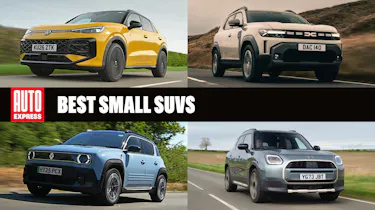
Small SUVs are some of the most common cars on Britain’s roads thanks to their compact stature, low running costs and rugged styling. With nearly every mainstream car manufacturer now offering a small SUV of some kind in their line-up, we’ve rounded up the very best currently on sale.
From urban runarounds to capable family cars, there should be a small SUV model out there to suit your needs. There’s a variety of fuel types to choose from too, ranging from traditional petrol to hybrid, plug-in hybrid and full electric power. The latter will be particularly tempting for company car users, thanks to low Benefit-in-Kind tax rates, as well as those who can charge at home.
Every small SUV on this list has been carefully examined and rated by our expert road test team to see whether it’s worth your time and money. Our testing regime is based around the essential criteria for cars in this class like value for money, efficiency, equipment and urban driving performance.
If you’re still undecided as to which small SUV model you’d prefer after reading our list below, we also have a dedicated page that covers the best crossovers - conventional cars with a mild SUV flavour and a list of the best mid-size SUVs from the class above. Now let’s get started on the best small SUVs to buy in the UK right now…
Compare the best small SUVs
The Renault 4 E-Tech is the best small SUV on sale, with styling that references the classic original and good value for its range and performance. The Citroen C3 Aircross is the most comfortable small SUV and the Dacia Duster is the best value option.
| Rank | Car | Prices from | Overall rating (out of 5) | Boot space |
| 1 | Renault 4 | £23,400 | 4.5 | 339 litres |
| 2 | Citroen C3 Aircross | £22,000 | 4 | 330 litres |
| 3 | Dacia Duster | £21,800 | 4.5 | 472 litres |
| 4 | Audi Q3 | £38,200 | 4 | 488 litres |
| 5 | Volkswagen T-Roc | £31,600 | 4.5 | 475 litres |
| 6 | MINI Countryman | £29,300 | 4 | 450 litres |
| 7 | Volvo EX30 | £33,000 | 4.5 | 318 litres |
| 8 | MG ZS | £20,500 | 4 | 443 litres |
| 9 | Hyundai Kona | £27,300 | 4.5 | 466 litres |
| 10 | Ford Puma | £27,100 | 4 | 456 litres |
Scroll down for more information on each of the best small SUVs, or simply click the links in the table above..
1. Renault 4
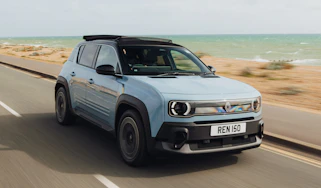
The new Renault 4 is currently the best small SUV you can buy in our opinion, thanks to its efficient powertrain, family-friendly levels of practicality and chic, retro charm.
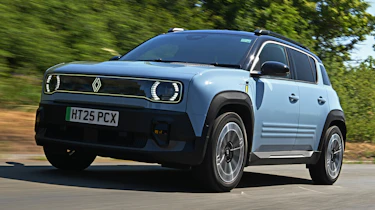
- Prices from £23,400
- Auto Express Small SUV of the Year
Pros |
Cons |
|
|
The Renault 4 might share its platform with the hugely-popular Renault 5 supermini, but thanks to its longer wheelbase it’s more practical and there’s a bit more room for everyone to stretch out.
The 422-litre boot is more or less the same size as you’ll find in the Renault Captur, but Renault has made the opening very low as something of a homage to the original 4. This makes loading heavy or bulky items nice and easy, and thanks to some clever storage under the boot floor, you can stow the charging cables out of the way.
Anyone who’s taken a peek inside the new Renault 5 will be very familiar with the 4’s cabin, as the two cars share the vast majority of their tech and materials. Renault’s Google-based infotainment software is some of the best tech we’ve tested in recent times; it looks good, is easy to fathom and quick to respond.
Just like the 5, the 4 is also adorned with a whopping four stalks behind the steering wheel, so we found ourselves having to be extra careful when changing gear or using the indicators during testing, as we found it quite easy to accidentally knock the other stalks. Aside from this, though, everything is logically laid out, and there are plenty of proper switches for key functions.
An exclusive Auto Express survey revealed that over 55 per cent of EV owners have battery range at the very top of their priorities list, and we’re pleased to report that every variant of the Renault 4’s sole 52kWh battery can return up to 247 miles on the WLTP Combined cycle.
When we tested the Renault 4 against the Ford Puma Gen-E we saw an average real-world efficiency of 3.8miles per kWh while driving on a variety of roads. This equates to just under 200 miles of real-world range. This is a better performance than the similarly retro Fiat 600e when we tested it.
“On the road, the R4 feels neatly tied down, despite Renault claiming it has a slightly softer set-up than the 5, with a willingness to change direction that’s missing in plenty of its rivals. The Renault 4 is still quite stiffly sprung, with a hard-ish edge to the ride around town, but things are much smoother at higher speeds.” - Richard Ingram, deputy editor
2. Citroen C3 Aircross
The C3 Aircross might not have the character of the Renault 4 but the seven-seat layout and comfortable ride are very compelling for such a low price.
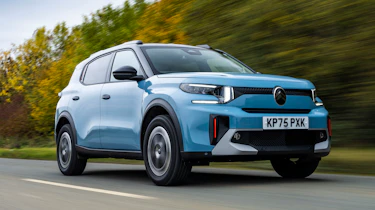
- Prices from £22,000
Pros |
Cons |
|
|
Along with the Dacia Duster the C3 Aircross is the most affordable small SUV you’ll find on this list, starting just under £22,000, or alternatively, a scant £150 more than the Dacia. It’s a slightly different proposition though. For a start, it’s less rugged and notably outdoorsy than the Dacia, prioritising on-road comfort over the possibility of venturing off the beaten track. Secondly, this latest Aircross has seven seats, something you rarely find at this price (though another Dacia, the more estate-like Jogger, also has room for seven).
The rearmost row is definitely an occasional/young children's space and it involves a bit of a clamber, though young kids will relish the challenge. They can be flipped down though (the seats, not the kids) if you don’t need them, for a more useful 330-litre boot in five-seat mode (it’s just 40 litres with all pews in place). Flipping the second and third rows both forward opens up 1,470 litres.
There’s interest in the first row too thanks to the unusual stepped dash, which puts the small steering wheel lower down and displays the instruments above - though they’re easier to see than in a lot of Peugeots that use a similar setup. It’s not devoid of hard plastics but there are enough tactile materials to give the cabin a quality feel, which again isn’t bad for the price.
Citroen offers an electric version with a £25,800 starting price, but the most affordable version is the PureTech petrol (there’s a hybrid too, though it’s actually more expensive than the EV). The petrol feels a little under-nourished when the car’s fully loaded
“There’s virtual price parity between the petrol and electric variants, and what you get for your money is a roomy family SUV that has more compact overall dimensions than most rivals.” - Alex Ingram, contributor
Latest Citroen C3 Aircross deals
3. Dacia Duster
The Dacia Duster is an incredibly capable small SUV which prioritises simplicity and affordability.
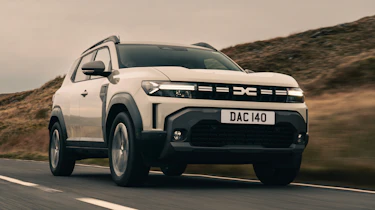
- Prices from £21,800
Pros |
Cons |
|
|
Dacia is well-known for building cars which are great value for money, and the new Duster is no different. Starting from just under £22,000, the Duster really is as capable as its predecessor, while being larger and better equipped.
The result is increased passenger space throughout and a substantial 517-litre boot. Head- and legroom isn’t far off some mid-size SUVs from the class above, so there’s plenty of room to stretch out in the front and rear. If we really want to be fussy, some of the storage bins are a bit small and the ISOFIX points are located behind fiddly zips, but these minor drawbacks are forgivable at this sort of price.
In order to keep costs down, simplicity and durability are the themes here rather than plushness. That being said, the cabin is still a bit fancier than the previous model’s, thanks to some angular designs and contrasting colours.
Every Duster now features a digital driver’s display which is very simply laid out and easy to read, and all trim levels feature a 10.1-inch touchscreen infotainment display. While this isn’t exactly a groundbreaking system, we did find it easy to operate during our testing.
For those who enjoy venturing off-road, the Duster still comes with the option of four-wheel drive to back-up its chunky styling. Despite its off-roading capability, everything remains perfectly pleasant on tarmac, although we had hoped for just a little bit more in the driving fun department. As an affordable all-rounder, though, this really is a tough car to beat.
“The Duster’s chunky styling is great but it can make judging where the car’s extremities are quite difficult. Thankfully there’s some hi-tech help from the on-board cameras which makes parking easier.”- Andy Pringle, chief sub-editor
4. Audi Q3
It’s evolution rather than revolution for the latest Audi Q3 but the German SUV gets all the basics right, and the Audi badge remains appealing.
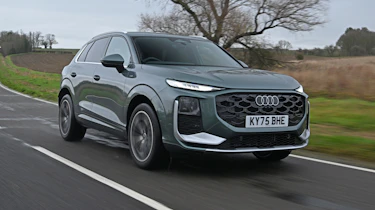
- Prices from £38,200
Pros |
Cons |
|
|
The Audi Q3’s popularity over its first two generations should come as no great surprise: it had one of the most desirable badges, was a relatively affordable way into the brand, and had a body style that buyers still can’t get enough of. So Audi hasn’t messed with the formula for the third generation, and existing Q3 owners should feel right at home as a result.
Well, to an extent. Like other recent Audis the latest Q3 has a touchscreen dominating the dashboard, a slightly excessive use of piano black plastic, and slightly patchy quality that suggests Audi has had to economise on its previous standards of build to offset the investment in high-tech features and hybrid drivetrains.
That engine range covers everything from a 1.5 TSI petrol to some more powerful 2.0-litre, Quattro-assisted petrol versions, and the obligatory plug-in e-Hybrid, which can cover 72 miles before the 1.5-litre engine kicks in. Audi still offers diesel too, with economy figures of up to 53.3mpg - a lot more than the petrols can manage.
We haven’t got many complaints about the way the Q3 drives, as Audi has struck a good balance between ride quality and handling ability. Accurate steering means it’s as easy to thread along a country road as it is to guide around town, while the ride and refinement are both at their best on motorways, where the engines settle down nicely (save the e-Hybrid that revs too high when it needs a boost for overtaking). The Q3’s no game-changer, but it’s accomplished all the same.
“The plug-in hybrid is a very worthy choice for company car drivers, thanks to its long EV range.” - Jordan Katsianis, news editor
5. Volkswagen T-Roc
VW’s latest T-Roc is meaningfully improved in almost every area, especially when it comes to interior quality.
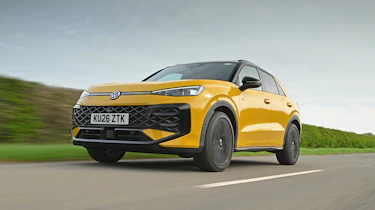
- Prices from £31,600
Pros |
Cons |
|
|
After a good eight-year run with the original T-Roc, a new model arrived in 2025 and picks up where the previous model left off - in other words, as a solid all-rounder in the Golf-sized crossover segment, with a badge that’s still got the brand equity to draw people away from their Nissan Qashqais and Peugeot 3008s.
The styling isn’t a huge leap on from before, but don’t let that fool you into thinking VW’s not made any progress, as the T-Roc is also improved in every area from its predecessor. There’s a little more passenger space than before (though the rear seats still aren’t the largest in this class) and the interior has taken a step up too, with a Golf-like feel and quality that the previous car never quite reached. The new infotainment works well, though much like the related Golf, you’ll have to get used to changing the air conditioning with some slightly awkward touch-sensitive sliders.
Along with the new look and feel is an updated engine range. There are some familiar faces, such as a 1.5-litre mild-hybrid eTSI, and there’s a more powerful 2.0 eTSI too, and real-world efficiency is pretty decent from all - the 1.5s promise over 50mpg. As yet there’s no full hybrid, plug-in, or EV, but that does at least keep the purchase price down at the lower end of the range, even if there still are cheaper options in the class.
The T-Roc drives well. VW has once again struck a good balance between the need to ride fluidly and handle with a bit of verve. It’s at its best with adaptive dampers (an option on certain models) but even regular cars aren’t unduly caught out by bumps. Its Golf-like composure on the road is something most rivals can’t match, either.
“Thanks to its size and shape, the Volkswagen T-Roc has very much fitted its brief of being a Golf-sized SUV, and this second-generation model makes more sense than the original, having been improved in every area.” - Jordan Katsianis, news editor
6. MINI Countryman
Distinctive styling inside and out gives the Countryman a USP against other premium small SUVs.
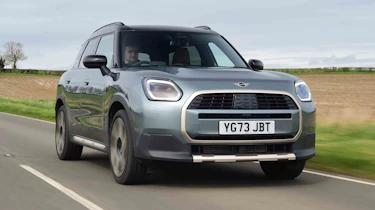
- Prices from £29,300
Pros |
Cons |
|
|
MINIs just keep getting bigger, and the current Countryman is the largest yet. It’s also slowly moving away from the pseudo-retro look of the first Countryman models. While it’s still recognisably a MINI - with the solid buyer appeal that comes with that - the larger size and more modern detailing have boosted its appeal.
Petrol and electric versions are available, with a real spread of performance figures. Interestingly, the entry-level and the range-topping versions of each power source are pretty closely matched: a 1.5-litre petrol and the electric Countryman E both drag themselves from 0-62mph in the mid-8-second range, while the petrol 296bhp John Cooper Works and the 309bhp electric SE cover the same sprint in 5.4 and 5.6 seconds respectively.
This performance isn’t quite matched by the handling. The Countryman’s not bad, but MINI’s typically quick steering feels at odds with the car’s size. You can certainly hustle it down a country road, but the firm ride settles down best on motorways, while the brisk acceleration makes the most sense in town.
The Countryman’s size means passenger space and boot volume aren’t an issue - 450 litres for the latter beats a Volvo XC40. The actual design of the interior is great too, one of the car's highlights, with a fabric-trimmed dash and that big OLED touchscreen right in the centre. It’s from here that you’ll be able to control the Countryman’s many, many themes and driving modes too. It’s just a shame that the screen can be a little busy and confusing, as it looks fab in isolation.
“The classy interior and high-end technology of the MINI Countryman really help it to stand out from its rivals, and it has a cheeky fun character about it that can so often be missing from a family car.” - Dean Gibson, senior test editor
7. Volvo EX30
The Volvo EX30 is proof that small electric SUVs can have a premium feel, a long real-world range and a price point which won’t break the bank.
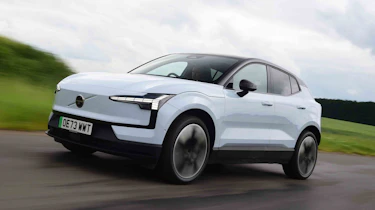
- Prices from £33,000
Pros |
Cons |
|
|
The cheapest electric cars are mostly the smallest, but the Volvo EX30 is a major exception to this rule as it offers a decent helping of both space and luxuriousness for a very tempting price.
While a minimalist interior means there’s no clutter to get in the way, the EX30’s compact stature does mean that passenger legroom is a bit restricted compared to some of the competition. It’s the rear occupants that’ll notice this the most, but if you keep these seats reserved for the young ones, it shouldn’t be too much of a problem.
Although the floor is a little high, causing passengers to bunch their knees up, headroom is very good throughout. The boot isn’t exactly class-leading at 318 litres, but the shape means you easily make use of all of the available space. There’s also an additional 15 litres under the bonnet for the charging cables which we found very handy.
While the general concept of minimalism is a matter of personal taste, we found the EX30’s over-reliance on its touchscreen to be rather frustrating. The vast majority of functions (even adjusting the door mirrors) are controlled via the centre 12.3-inch screen, and many of these are buried in sub-menus. If you’re particularly patient and love your technology, though, the upside is that it’s a pleasant and comfortable interior to sit in, not to mention one that does very well at hiding Volvo’s cost-cutting measures in its small SUV.
Performance fans will be particularly happy as every version of the EX30 will accelerate from 0-62mph in under six seconds. In fact, the Performance model will complete the sprint in a mere 3.6 seconds.
The EX30 can cover plenty of miles between charges, too, as even the entry level Single Motor model has a claimed maximum range of 214 miles. Opt for the Long Range variant and this number increases to 296 miles, although we saw a real-world range of 224 miles when we tested the car. This is over 50 miles less than the Kia EV3.
“The EX30 makes a good case for itself with a high list of standard safety features and equipment, plus a premium feel inside beyond its reasonable asking price. It’s also remarkably quick in Twin Motor Performance form.” - Alex Ingram, contributor
8. MG ZS
The MG ZS is a value-packed small SUV which combines decent levels of tech and a generous amount of space without making too many compromises.
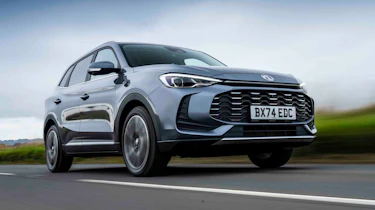
- Prices from £20,500
Pros |
Cons |
|
|
Starting from just over £20,000, the ZS’s most direct rival is the Dacia Duster, but the MG is a bit less distinctive to look at than the chunky Romanian rival. If you’re not too fussed about standing out, though, MG’s compact SUV holds up well as a family car.
Taller passengers can get nice and comfortable in the back seats, largely thanks to a plentiful kneeroom, and the 443-litre boot has a reasonably low load lip which helps to reduce the need for any awkward stretching. If you have a child car seat, there are ISOFIX points in the back, but we found these are a bit awkwardly placed between the cushions.
Step inside and the ZS generally keeps up with its far more expensive competitors when it comes to perceived quality, not to mention on-board kit. A few smaller details, such as a lack of steering wheel adjustment, do indicate the MG’s more humble market positioning, but it’d be a bit unfair to expect absolute perfection at this price point. Opt for the range-topping Trophy trim (a £2,500 option) and this adds in faux-leather seats, a heated steering wheel and rear privacy glass to help things feel a bit posher.
While there’s no electric variant available at the moment, the MG ZS Hybrid+ can officially return more than 55mpg, so running costs will remain very sensible. Despite the brand’s sports car heritage, the ZS’s hybrid powertrain can become a bit unsettled at higher speeds.
Whenever merging at motorway speeds during our testing, there was a notably long wait for the petrol engine to deliver its best performance, the car slightly hampered by its unusual three-speed gearbox. Apart from this, though, this small SUVs does feel deceptively spritely for its size.
“With so much power from its electric motor compared with other hybrids, the MG ZS feels more like an EV around town. From 0-30mph, performance is genuinely excellent, and smooth power delivery makes it a great car for nipping through city traffic.” - Alex Ingram, contributor
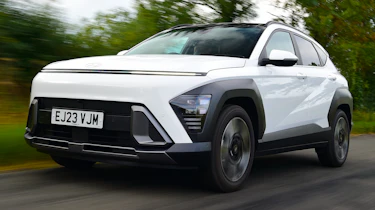
9. Hyundai Kona
The first-gen Hyundai Kona was a great car, but with its futuristic new look and cutting edge powertrains, Hyundai has taken this Kona to another level.
- Prices from £27,300
Pros |
Cons |
|
|
Hyundai has really listened to its customers when designing this new car. Along with a massively revamped design that appears to draw inspiration from the brand’s electric Ioniq models, the current Kona also offers much more cabin space — a particularly welcome improvement over the old model.
The result is a similar amount of head- and kneeroom to the much larger Hyundai Tucson. The boot is impressive, too, as a 466-litre capacity makes it one of the very biggest in the small SUV class.
As well as being spacious, the interior’s quality has also been improved leaps and bounds. There are top-shelf materials aplenty, while the twin digital displays look bang up-to-date.
We generally like Hyundai’s infotainment setup in the Kona, as it is sensibly laid out, quick to respond and there are physical shortcut buttons under the screen. Apple CarPlay and Android Auto are thrown in, but you’ll need to bring a cable.
Just like before, the Kona still comes with the choice of petrol, hybrid or fully-electric power. Naturally, the Kona Electric offers the lowest running costs and is the best bet for company car drivers, but no variant should really cause much of a drain on your bank account as even the thirstiest petrol Konas can still achieve over 45mpg.
From behind the wheel, all three variants prioritise comfort over performance, although rough surfaces and speed bumps did cause some disturbance during our testing. Things remain composed for the most part, though, particularly at lower speeds. Wind and road noise were minimal.
“Admittedly, the daring, sci-fi-inspired styling might not be for everyone, and there are cheaper compact SUVs out there, but right now the Kona looks like extremely good value for such a mature, well equipped and well-rounded car.” - Ellis Hyde, news reporter
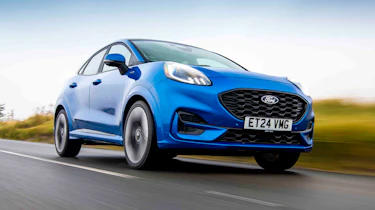
10. Ford Puma
The Ford Puma is one of the best-selling cars in the UK, and with its efficient powertrains, generous tech list and decent practicality, it’s easy to see why.
- Prices from £27,100
Pros |
Cons |
|
|
Since the departure of the Fiesta, the Ford Puma has taken the role of being the brand’s small, affordable car. But in true Ford fashion, it’s practical and genuinely fun to drive.
Whether you opt for the petrol or all-electric Puma Gen-E the interior is relatively roomy and well equipped. The 456-litre boot is very generous, if not quite class-leading, but lurking under the boot floor is Ford’s surprisingly useful 80-litre ‘Megabox’.
Although the Puma’s cabin doesn’t feel as upmarket as those of some rivals’, a mid-life facelift has seen things take a step in the right direction. General fit-and-finish feels a lot more polished, and there’s no missing the new 12-inch SYNC infotainment system, which takes up a significant portion of the dashboard. We just wish the overall system was quicker to use and with a better menu layout, something which was highlighted during our infotainment group test.
On the road, fast steering and impressive agility make Ford’s baby SUV a real treat to drive. No version of the Puma (not even the revised ST performance model) feels massively quick, but its compact size and Fiesta-based underpinnings mean you can throw it around on B-roads in a very enjoyable manner.
Whichever variant of the Puma you choose, it shouldn’t cost the earth to run. When we had the 153bhp mHEV Puma on our test fleet, we averaged 44.3mpg which was reasonable for a car of this size. The Puma Gen-E with its sole 43kWh battery managed to return 4.7mi/kWh during warmer weather and a range of over 200 miles, which is similar to rivals with larger batteries like the Renault 4.
“The climate controls are on permanent display across the bottom of the touchscreen, so they’re relatively easy to use when you’re moving, but the temperature selection is a bit too fiddly for our liking.” - Dean Gibson, senior test editor.
How we choose the best small SUVs
Small SUVs appeal to a wide range of British car buyers, thanks to qualities such as their stylish looks, family-friendly practicality and affordable running costs. It’s because of this appeal, and the accompanying high sales levels, that this is one of the most fiercely fought sectors of the market. The best small SUVs really do need to go that extra mile.
In order to determine the top performers, our expert road testers have driven every small SUV you can buy over thousands of miles on the UK’s highly varied road network.
During our in-depth testing, we pay very close attention to the things that matter most to buyers. In fact, our exclusive research has shown that more than 52 per cent of SUV buyers prioritise value for money, so this is a crucial deciding factor as to whether a car has a chance of appearing on this list.
Other areas that matter most to SUV buyers are reliability, comfort and cabin space, so these too are rigorously put to the test. As well as our own expert verdicts, we use our annual Driver Power customer satisfaction survey data to determine exactly what each car is like to live with on a longer-term basis.
How to choose the best small SUV
If you’re in the market for a small SUV you are not short of choice but there are some important things to consider when doing your research and taking your test drives to help assemble that shortlist.
Size
While all of these cars are officially described as small SUVs, there can still be some size differences between models. If you’re looking for a family car, you’ll want to pay close attention to figures such as the boot and cabin space. Clever interior storage cubbies can also prove highly useful.
Fuel
We live in a time where there’s plenty of choice when it comes to powering your new small SUV. Whether you want to stick with traditional petrol or switch over to a hybrid (plug-in or otherwise), there are plenty of options available. Of course, you could take this opportunity to switch over to a fully electric car, with more and more zero-emission small SUVs making their debut.
Price
Everybody loves a bargain, and several small SUVs boast very tempting starting prices thanks to their supermini origins. As with any car, it’s important to know who you’d like to pay for your new SUV well in advance. There are plenty of Personal Contract Purchase (PCP) deals up for grabs, or perhaps a Personal Contract Hire (PCH) leasing deal would be better suited to your needs. Whatever the case, be sure to shop around once you’ve chosen your ideal financing method.
More SUVs to choose from
We’ve rounded up the best small SUVs, but perhaps you’d care for something a bit bigger? If so, our best mid-size SUVs page takes a look at cars from the class above. Alternatively, you could go for a full-sized option by taking a look at the best large SUVs.
Key updates to best small SUVs
10 December 2025: Ford Puma added in 7th place thanks to some very competitive pricing and the Puma Gen-E receiving the full £3,750 Electric Car Grant discount. The BMW X1 dropped down from 7th to 8th place and the Jeep Avenger was removed.
21 July 2026: The latest Audi Q3, Volkswagen T-Roc, and MINI Countryman are new arrivals in 4th, 5th and 6th places.
Say goodbye to those emissions! These are the best electric SUVs…