Best SUVs to buy 2026
There are plenty of great SUVs to choose from, so we’ve picked out the very best
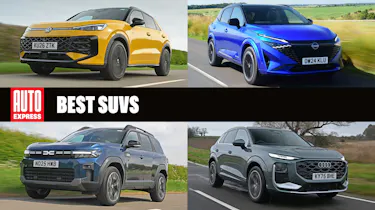
Choosing the best SUV to buy in 2026 can seem like a daunting task. Not only are there so many different makes and models to choose from on today's market, but SUVs now come in a vast array for shapes and sizes driven by petrol, diesel, electric and hybrid power. The choice can be baffling.
Of course, this means there is an SUV out there to suit most buyers’ needs. For some, the best SUV will be the model with the most space inside, yet for others it might be the one that looks the best, is fastest, cheapest or has the most technology. As a buyer, you will have your own special blend of qualities in mind.
That’s why we’ve selected a wide range of SUVs from various sectors for our pick of the best SUVs on sale. If you have more specific requirements in mind, then take a look at the following pages:
Whatever you’re looking for in a car, you’re in safe hands with Auto Express. Our experts have thoroughly tested every SUV you can buy in the UK. We’ve rounded up the top 10 best SUVs below, based on our extensive testing criteria and focussing on what’s most important to buyers in this sector of the market.
Top 10 best SUVs in the UK
All things considered, the Skoda Elroq (a former Auto Express Car of the Year) is the best SUV you can buy today. For those seeking a more premium option, the BMW iX3 offers phenomenal tech and a huge battery range. Meanwhile, the Nissan Qashqai remains a stylish and practical option for those who wish to stick with combustion power.
| Rank | Car | Prices from |
| 1 | Skoda Elroq | £34,000 |
| 2 | BMW iX3 | £53,300 |
| 3 | Nissan Qashqai | £30,600 |
| 4 | Skoda Kodiaq | £39,000 |
| 5 | Renault 4 | £23,500 |
| 6 | Volvo EX60 | £56,900 |
| 7 | Audi Q3 | £38,400 |
| 8 | Dacia Bigster | £25,200 |
| 9 | Volkswagen T-Roc | £31,600 |
| 10 | Citroen C5 Aircross | £31,000 |
Click the links above to jump to our mini-review each of the best SUV models
1. Skoda Elroq
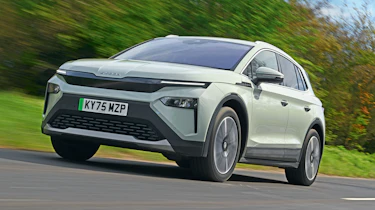
If you’re after a car to be a jack-of-all-trades, the Skoda Elroq is just about the best there is.
- Prices from £34,000
- Former Auto Express Car of the Year
Pros |
|
Cons |
|
You’ll be forgiven if you’re not familiar with the Skoda Elroq as it’s a relative newcomer in the Czech brand’s line-up. Think of it as a Skoda Enyaq which is slightly cheaper and with a slightly smaller boot - but it’s a whole lot better than that sounds.
While it’s a little more compact than the Enyaq, the Skoda Elroq still feels hugely spacious inside. Passengers in both the front and rear seats have plenty of room to stretch out, while some ‘Simply Clever’ storage solutions help to keep things tidy.
There’s a total of 470-litres worth of boot space and when testing we found the opening to be nice and wide which was really useful when it comes to loading large, bulky items. There’s also some handy underfloor storage spaces for the car’s charging cable, as well as Skoda’s trademark ice scraper and tyre tread-depth gauge.
Often the case with electric models that house their batteries under the car, the Elroq’s floor is a little bit high. This is most noticeable when sitting in the back, but the seat bases have been designed to increase thigh support and keep things comfortable.
Not only is it a good all-rounder in terms of practicality, but the Elroq is also a very pleasant experience from behind the wheel. The powertrains are smooth, responsive and silent, and stepping up to the hot vRS model will get you the fastest accelerating Skoda ever produced (0-62mph in 5.4 seconds).
This being an electric car, there are plenty of potential savings to be had over a similarly-sized combustion-powered SUV. Company car drivers can enjoy a low Benefit-in-Kind tax rating, and if you can regularly charge your car at home then you can save plenty when ‘filling up’.
“The Elroq is so good that we see it creating a bit of a dilemma for Skoda: why would anybody need the larger Enyaq now”. - Ellis Hyde, news reporter
- Who will like it: Those looking for a great value family car.
- Who won’t like it: Those who prefer a premium badge.
2. BMW iX3
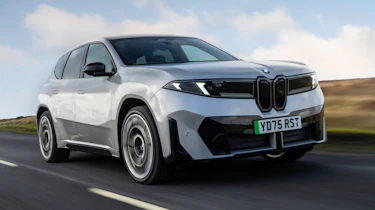
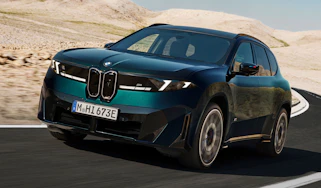
The Neue Klasse BMW iX3 marks the beginning of a new EV chapter, and it’s a very welcome one.
- Prices from £53,300
- Premium Electric Car of the Year 2026
Pros |
|
Cons |
|
The term ‘groundbreaking’ gets thrown around left, right and centre in the electric car world. However, it’s definitely the most suitable term to describe the BMW iX3.
While there’s plenty of high-tech bits to get excited about, this mid-size SUV hasn’t lost its practicality and functionality in the quest for fanciness. There’s room for five adults to get comfortable, while the 520 litre boot is typical of this class.
School runs, family holidays and the daily commute will be drama-free, too, as the iX3 claims up to 500 miles on a single charge. That makes this one of the longest range electric cars on sale right now.
The best news for some drivers, though, will be that this family-friendly car still feels like a proper BMW from behind the wheel. Despite its weight, it’s agile in the corners, and excellent visibility means in-town driving is a doddle.
“As a high-end, family-friendly electric car with brilliant tech, performance and design, this is now the pinnacle – and the fact it doesn’t cost the earth just makes the package even more impressive.” - Alastair Crooks, senior news reporter.
- Who will like it: Those who want a posh yet efficient SUV that’s good to drive.
- Who won’t like it: Buyers on a somewhat modest budget.
3. Nissan Qashqai
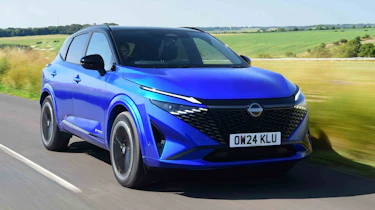
Arguably one of the first cars to kickstart the SUV craze, the Nissan Qashqai is still one of the best.
- Prices from £30,600
Pros |
|
Cons |
|
The Nissan Qashqai is a stalwart of the mid-size SUV class and has been an undeniable sales hit for the Japanese brand.
While previous versions of the Nissan Qashqai were a tad bland and might have lagged behind rivals on certain criteria, the latest Qashqai is a great all-round car. It has sharp looks, a pleasant cabin full of intuitive on-board tech and feels incredibly well put together.
The boot is a family-friendly size at 479-litres, and while this isn’t as large as rivals like the Dacia Bigster or Kia Sportage, it’s a usable space and can accommodate the weekly shop or pushchairs with ease.
The Qashqai won’t be winning any awards in the driver engagement department, but for most buyers a blast down twisty country roads won’t be high up on their priority lists. Where this SUV excels is when it comes to being comfortable and quiet. Most larger bumps can be shrugged off, although the ride can feel a bit fidgety over rough surfaces, so we recommend avoiding the larger 20-inch wheels if possible.
The e-Power hybrid powertrain really is the best engine for this car. The 1.5-litre unit acts like a generator for the electric motor, giving the car an EV-like driving experience when pulling away. Performance is sprightly so making progress on faster roads shouldn’t be a problem and an official WLTP fuel efficiency figure of 62.8mpg means the Qashqai shouldn’t break the bank to run, either.
“Even before you get in the back, it’s clear that Nissan has designed the Qashqai with family life in mind. The back doors open to 85 degrees, giving excellent access to the rear seats. That makes loading a child seat – and then youngsters after that – a much easier job.” - Shane Wilkinson, senior content editor.
- Who will like it: Families with small children who want low costs and high comfort.
- Who won’t like it: Those looking for a car which is fast and fun to drive.
4. Skoda Kodiaq
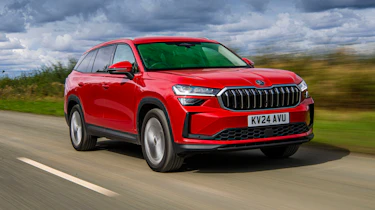
If you’re after a large SUV with up to seven seats, the Skoda Kodiaq should be on your shortlist .
- Prices from £39,000
- Large SUV of the Year 2026
Pros |
|
Cons |
|
For many drivers, the Skoda Kodiaq has become the de-facto large family SUV, and it isn’t hard to see why.
Unlike some cars on this list, the Kodiaq has the advantage of being offered in either five or seven seats. You can either have room for a large family or a smaller family with a huge amount of luggage. The seven-seater still has 340 litres of boot space but the five-seater offers the most at 910 litres. Simply put, it blows other seven-seat rivals like the Hyundai Santa Fe out of the water when it comes to space.
You’ll also find plenty of the brand’s ‘Simply Clever’ touches, including an ice scraper, a display screen cleaner and even a door-mounted umbrella. Our road testers are also fans of the ‘Smart dials’ - customisable physical dials that provide quick and ergonomic access to frequently used features on the control system.
The Kodiaq is a large SUV, but it does a respectable job of maintaining its composure in corners. There is some body roll, but nowhere near enough to reintroduce you to your last meal.
Buyers have a selection of strong petrol and diesel engines to choose from. We’d go for the latter here; the 2.0 TDI’s (Turbocharged Direct Injection) torquey power delivery suits a car like this well, yet it still returns over 53mpg in official tests.
There’s also a plug-in hybrid powertrain, capable of 75 miles of pure-electric driving thanks to its 25.7kWh battery, although this is only available in the five-seat model.
“The Kodiaq is spacious, efficient and features plenty of clever touches, while the cabin has taken a step upmarket when compared with the first model.” - Dean Gibson, senior test editor.
- Who will like it: Families who need a big, practical seven-seater with diesel power.
- Who won’t like it: People who want a seven-seat plug-in hybrid (there isn’t one).
5. Renault 4
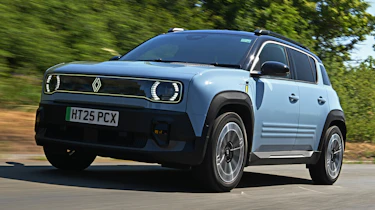
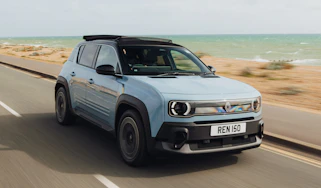
Affordable, practical and brimming with retro-coolness. The Renault 4 is a seriously good family car.
- Prices from £23,500
- Small SUV of the Year 2026
Pros |
|
Cons |
|
The Renault 5 E-Tech is a fantastic electric supermini, but it has one small flaw: rear seat space can feel a little tight. But fear not, a solution comes in the shape of the Renault 4.
The original Renault 4 was loved by so many due to its rugged simplicity and practicality. The modern-day model feels classier but the practicality ethos still remains.
Riding on a stretched 5 platform has given the 4 all of the things we love about its supermini relative, but with more cabin space. The official range is pretty much on par with 5 at up to 247 miles, which is plenty for typical everyday use. In the real world, we got closer to 200 miles when we tested the Renault 4 against the Ford Puma Gen-E.
Adults can now easily get comfortable in the back, and the 420-litre boot is generous for the class. Much like it did on the original car, Renault has endeavoured to make the boot opening as low as possible, too.
Being a slightly larger car than the R5, the Renault 4 offers a smoother ride than its sibling and thanks to its boxy shape, it’s quite easy to place the car when navigating tight car parks.
The infotainment system is one of our road testers’ favourites thanks to plenty of physical switches, and aside from an overabundance of stalks behind the steering wheel, this is a refreshingly simple car to get on with.
Perhaps the best bit of news is that the Renault 4 starts from just under £24,000, which makes it something of a bargain.
“On the road, the R4 continues to impress. It feels neatly tied down, despite Renault claiming it has a slightly softer set-up than the 5, with a willingness to change direction that’s missing in plenty of its rivals.” - Richard Ingram, deputy editor
- Who will like it: Anyone looking for a practical family car with a little retro style.
- Who won’t like it: Adults or older children who have to sit in the rear might feel slightly cramped.
6. Volvo EX60
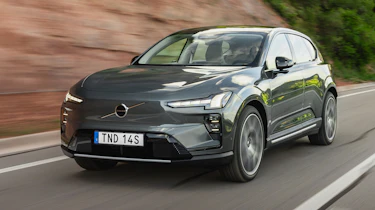
Volvo’s EX60 is a serious threat to the German executive brands
- Prices from £56,900
Pros |
|
Cons |
|
Volvo is no stranger to competing with brands like BMW, but right as the innovative iX3 arrived on the market, the Volvo EX60 turned up as a major thorn in its side.
While it’s nowhere near as sporty as the iX3, the Volvo EX60 does boast some serious technology. One of its party pieces is a set of multi-adaptive seatbelts, which use sensors to adapt to each user’s body and provide the highest possible level of safety.
Talking of shapes and sizes, adults shouldn't have any qualms with climbing into the rear seats. There’s as much room in the back as there is in the front, a lot. The 523-litre boot is also ever-so-slightly bigger than you'll find in the BMW. One slight oddity, though, is the lack of a traditional glovebox.
In the battle for massive battery range, the EX60 just edges ahead of its BMW rival with a maximum WLTP range of 503 miles compared to 500 in the iX3. Even the cheapest model manages 380 miles on the WLTP combined cycle, though, so range anxiety will be virtually non-existent.
“Safe and predictable, but carefully considered and dripping with style and cool details, there really is lots to like.” - Richard Ingram, deputy editor
- Who will like it: Those who want a laid-back and slightly left-field car.
- Who won’t like it: Drivers who crave fun behind the wheel.
7. Audi Q3
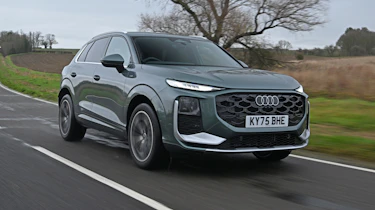
The latest Audi Q3 takes an “if it ain’t broke, don’t fix it approach”, and it makes a lot of sense.
- Prices from £38,400
- Small Premium SUV of the Year 2026
Pros |
|
Cons |
|
Plenty of the cars on this list have been designed to shake things up, but the Audi Q3 is simply built upon a platform that has been proven to work well.
The Q3 is a big seller for Audi, as it offers attractive qualities like an enjoyable driving experience, versatility and badge appeal. For buyers who like to stick with tradition, this is also one of a declining number of cars to come with the option of diesel power.
Despite its more compact size, there’s still enough room for a family of five within the Q3. At first glance, the 488-litre boot is a little small compared to the BMW X1’s 540 litres, but the Audi’s rear seats can slide forward to open up 575 litres in total.
Whichever powertrain you go for, the Audi Q3 strikes up a good balance between refinement and handling. The steering is direct and well weighted, making this an easy car to dart about in. If we have one criticism here, it’s that the entry-level 1.5-litre petrol is a bit sluggish compared to the rest of the line-up.
“It isn’t a game-changer, but the Q3 has all the qualities buyers after a premium compact SUV would want, such as a feature-packed infotainment system, safe handling, and plenty of performance - especially from the quattro models.” - Dean Gibson, senior test editor
- Who will like it: Those who want a familiar car that’s easy to live with.
- Who won’t like it: Buyers searching for something truly next-gen.
8. Dacia Bigster
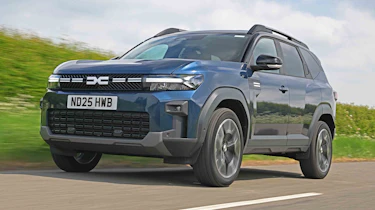
The Dacia Bigster is a great SUV if value-for-money is your main priority.
- Prices from £25,200
Pros |
|
Cons |
|
Dacia has become synonymous with the phrases ‘no-nonsense’ and ‘value-for-money’, but that’s exactly what the Dacia Bigster is.
Brimming with rugged charm and value; this Hyundai Tucson-sized SUV starts from just over £25,000. While the cabin doesn’t feel as plush as some of its pricier rivals’, the Bigster has a huge amount of space, Those seeking a new family car will also be well catered for by the vast 612-litre boot and sensible passenger space.
Plant your right foot in any variant of the Bigster and the effects are pretty minimal (the quickest model will cover the 0-62mph sprint in a leisurely 9.7 seconds). However, we’re willing to bet that very few buyers are eyeing up this rugged, budget-based SUV for its performance. What the Bigster does surprisingly well, is provide a comfortable and refined ride, even on motorway runs.
The thirstiest petrol variant returns 46mpg on the WLTP combined cycle, those who want the lowest running costs will want to look towards the two-wheel drive TCe 140 mild-hybrid petrol or the full hybrid-powered model. Both of these can surpass the 50mpg mark, a figure we easily achieved when testing the car, even in colder conditions.
“The Bigster is a decent cruiser at motorway speeds, with a floating sensation to the ride that boosts comfort. The hybrid model switches between petrol and EV drive even at 70mph, with no hesitation in the powertrain as you accelerate.” - Dean Gibson, senior road test editor.
- Who will like it: Budget-conscious buyers who want the best value-for-money.
- Who won’t like it: Some might think the Bigster is a little lacking in quality and prestige.
9. Volkswagen T-Roc
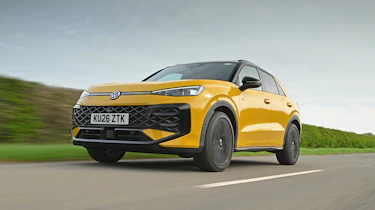
The T-Roc takes the familiarity and class of the Golf and combines it with an SUV body.
- Prices from £31,600
Pros |
|
Cons |
|
Plenty of British drivers adore the Volkswagen Golf and plenty more love their SUVs, so the Volkswagen T-Roc is essentially the best of both worlds.
Sadly, an inevitable consequence of this car’s hatchback DNA is limited space within the cabin. If you want to use this as a family car, the rear seats will be best reserved for the little ones. There aren’t any issues with on-board storage, though, as VW has adorned this SUV with plenty of useful cubby holes and a sizable glovebox. The 475-litre boot is also a bit larger than the one you’ll find in a Toyota C-HR.
The upside of the Golf underpinnings is that the T-Roc handles well and is very easy to drive. VW’s DSG automatics can be a little bit jerky in stop-start traffic, and the T-Roc is no exception, but navigating through city streets and parking is a breeze aside from this. Mild-hybrid tech also means that the base petrol model comes with a claimed 51.3mpg.
“The T-Roc is designed to be one of VW’s more eccentric models, defined by one or two key design elements, such as the ‘hockey stick’ trims above the windows.” - Dean Gibson, senior test editor.
- Who will like it: Those after a compact SUV with a touch of character.
- Who won’t like it: Families who require maximum space.
10. Citroen C5 Aircross
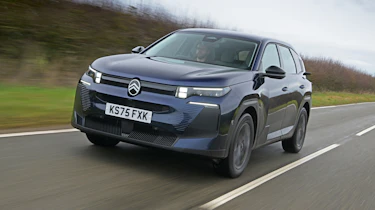
The Citroen C5 Aircross is the largest car from the French manufacturer, and it offers supreme comfort at an affordable price.
- Prices from £31,000
Pros |
|
Cons |
|
Citroen is well-known for creating comfortable and quirky cars, and the Citroen C5 Aircross is no different.
The C5 Aircross closely follows the same recipe as the previous generation model: acres of space and a focus on comfort. The suspension is supple, the cabin is incredibly quiet and when you throw the supportive Advanced Comfort seats into the mix, you have a car which can iron out some of the worst potholed roads the UK has to offer.
Of course, with such a focus on comfort there is a distinct trade-off when it comes to driving engagement and the C5 Aircross suffers from a noticeable amount of body roll through sharp corners.
For a five-seat SUV, the Citroen C5 Aircross is generously sized. The styling is quite quirky, but the boxy shape makes it incredibly capable when it comes to carrying passengers and their accompanying luggage.
Up front, the seats are nice and wide, and the large centre console has plenty of cubby storage. Space in the rear is good for the class, although the floor is raised slightly and taller members of our testing team noted that it initially feels like your thighs and knees lack seat base support - although it’s something which you get used to. The floor is flat, so it’s quite easy to stretch your legs out and the boot is rated at a generous 565 litres.
Although it's quite a chunky family car, the C5 Aircross fares pretty well in the economy stakes. There’s a wide range of engine choices, too, with hybrid, plug-in hybrid and electric powertrains to pick from.
“While the boot is slightly smaller than in rivals, the tailgate opens wide and leaves a low load lip that is level with the false boot floor. On either side of the boot floor are small pockets for odds and ends, plus there’s a light and a solid parcel shelf, rather than a roller cover.” - Dean Gibson, senior test editor.
- Who will like it: Families who want to prioritise both comfort and space.
- Who won’t like it: People looking for a car which is fun to drive.
Latest Citroen C5 Aircross deals
How we find the best SUVs
Exclusive research by Auto Express has underlined just what a demanding bunch SUV buyers are. We asked SUV owners what their top priorities were when looking for a new car and the results confirmed what we already thought, that buyers in this sector want cars that can do it all.
- Value for money was the key priority for SUV buyers with 52.6%.
- Reliability was chosen by 50% of respondents.
- Comfort was the third biggest priority with 48.7% of people choosing it.
- Cabin and boot space tied with running costs as the fourth biggest priorities on 37.8%.
We want you to find the best SUV for your needs and so these buyer priorities are baked into our testing processes for cars in this class. We’ve tested every new SUV currently on sale in the UK, most of them on multiple occasions.
Our expert road testers typically get behind the wheel on the international launch events and then again on UK roads where we carry out intensive group tests to compare top models head-to-head against their rivals. Some SUV models even come in for a six-month long-term test where we really get under the skin of what it’s like to live with day-in and day-out.
Over the course of the evaluation process we try the full range of engine options and specifications, taking our own precise measurements of important areas like the rear seats and the boot. This helps bring you a complete picture of the best SUV models on sale, and the ones that aren’t up to scratch.
It’s a continually evolving picture with more and more SUV models being launched all the time, so we’re constantly updating and revising our reviews to keep you informed. You can discover more about how the Auto Express expert team review cars here...
Find the SUV of your dreams! Our nationwide dealer network has some fantastic cars on offer right now with new, used and leasing deals to choose from...