Cheapest electric cars on sale 2026
The days of EVs all being expensive are over – there are now some excellent options that are easier on the wallet
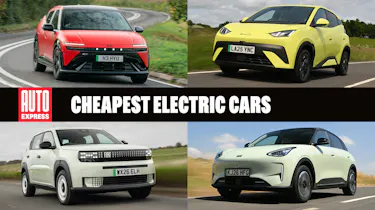
As electric cars started to hit the mainstream, they were generally expensive to buy up front. Things have changed dramatically in the last few years, though, thanks to a combination of existing models crashing in price and the arrival of numerous brilliant budget EV options.
The cheapest electric cars on sale are well within reach for more drivers than ever before, and a lot of the models listed on this page are among the cheapest of any fuel type. These budget-friendly EV models offer genuine appeal, along with a generous helping of battery range.
You might think the cheapest electric cars on sale are just stripped-back city cars and superminis, but that’s far from the case. Today, there are a wide variety of different sizes of car to be found on this list from those dinky city cars to family SUVs. This means there’s a real chance that you’ll be able to find an affordable EV that will suit your needs.
Electric car grant
Electric cars at the lower end of the market are now even more affordable thanks to the UK government introducing the Electric Car Grant.
The Electric Car Grant can help cut the price of a new electric car by up to £3,750 and is available on qualifying models costing under £37,000 that have been accepted into the scheme.
The prices for the cars listed below are before any discounts or grants being subtracted, so if you decide to buy you could end up paying even less if the vehicle is ECG eligible.
Compare the cheapest electric cars
The cheapest car isn’t always the best value car so our expert road testers have driven every one of the cheapest EVs on sale in the UK to examine its strengths and weaknesses first hand.
Keep reading to find our expert insights on each of the market’s lowest-priced models and learn which will make the best buy...
| Cheapest electric cars ranking | Make and model | Prices from | Max. WLTP combined range |
| 1. | Dacia Spring | £11,990 | 140 miles |
| 2. | Renault Twingo | £14,745 | 163 |
| 3 | Leapmotor T03 | £16,295 | 165 miles |
| =4 | Hyundai Ioniq 3 | £18,495 | 308 miles |
| =4 | Citroen e-C3 | £18,495 | 201 miles |
| 6 | BYD Dolphin Surf | £18,675 | 200 miles |
| 7 | Honda Super-N | £18,995 | 128 miles |
| 8 | Geely EX2 | £20,990 | 214 miles |
| =9 | Fiat 500e | £20,995 | 199 miles |
| =9 | Fiat Grande Panda | £20,995 | 199 miles |
Now scroll down or use the jump links in the table above to read our verdict on every car..
1. Dacia Spring
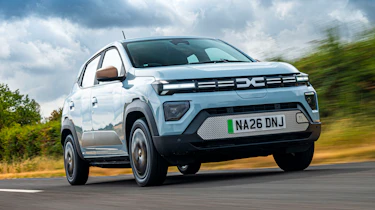
The Dacia Sandero has long been the cheapest car on the UK market, so it’s unsurprising that the Dacia Spring is the cheapest electric car.
- Prices from £11,990
- WLTP combined battery range: up to 140 miles
Pros |
Cons |
|
|
The Dacia Sandero sat at the top of the UK’s cheapest new car list for a very long time and now, in the age of the EV, it’s the turn of the Dacia Spring. At £11,990, it’s actually the cheapest car of any kind currently on sale.
In order to keep the price small, pretty much everything else about the Dacia Spring is on the small side, too. This is a compact city car with a 24.3kWh battery and 69bhp on tap if you opt for the cheapest version.
The claimed 140-mile range isn’t exactly massive but the Spring is very efficient, returning 5.0 miles per kWh during our tests, and that should prove more than enough for most day-to-day needs, especially if you stick to slower-speed urban roads.
One thing that isn’t small is the equipment list, with a seven-inch touchscreen display, parking sensors and air conditioning all thrown in as standard.
“This isn’t the sort of car any of us will see pounding up and down the M1 on a daily basis, but the Spring will sit at 70mph quite happily if it needs to.” - Alex Ingram, Auto Express contributor
2. Renault Twingo
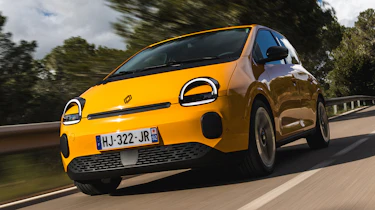
We loved the Twingo enough when we were expecting it to be around £19,000, but less than £15k? You’d be silly not to...
- Prices from £14,745
- WLTP combined battery range: up to 163 miles
Pros |
Cons |
|
|
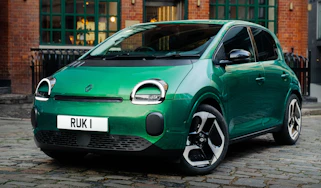
We really rated the Renault Twingo when we first reviewed it. The little EV is appealing in a way a lot of cheap cars simply aren’t, with cute styling and a general sense of joy. It even packs quite a lot of practicality into its small frame.
The thing is, we were basing our opinion of the Twingo on an expectation of it costing somewhere around £18,000 to £19,000. It costs nowhere near that. The recent announcement that it’s eligible for the full £3,750 Band 1 government Electric Car Grant (ECG) means that it costs under £15,000. That’s astonishing value for money, being both well worth the additional outlay over the cheapest EV, the Dacia Spring, and a sizeable chunk cheaper than the Leapmotor T03, which is nowhere near as good, frankly.
A car this cheap has some compromises, of course. The range is fairly modest at 163 miles, and with just 80bhp, it’s not what you’d call fast. The rapid charging ability is quite limited, too. But at this price, none of that matters.
“Renault has built a fun, cleverly packaged and deeply desirable little car that appeals on many levels. A touch more high-speed refinement might broaden its abilities, but compared with its direct competitors, there are none that outperform the Twingo in terms of driving pleasure or value for money.” - Jordan Katsianis, Auto Express news editor.
3. Leapmotor T03
The T03 is better than the cheaper Spring, but it doesn’t make as much sense now the Renault Twingo is here
- Prices from £16,295
- WLTP combined battery range: up to 165 miles
Pros |
Cons |
|
|
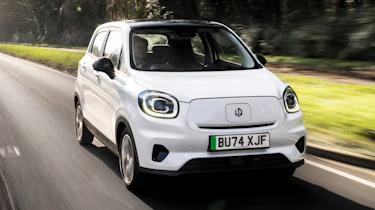
You might not have heard of Leapmotor as it is a relatively new arrival to the UK, but you’re in safe hands as this brand is yet another piece of the Stellantis puzzle, with the global giant owing 51 per cent. The Leapmotor T03 follows a very similar formula to the Dacia Spring; it’s small, simplistic and sensibly priced.
Inside, the T03 is surprisingly spacious considering its dinky proportions, and there’s a healthy amount of kit thrown in as standard.
The sole 37.3kWh battery pack is good for an official WLTP combined range of 165 miles, which should prove plenty for typical city car duties. We were very impressed with the T03’s efficiency, returning 4.6mi/kWh and a real-world range of 166 miles.
We were impressed with the T03 when we first drove it, despite its foibles (the driver-assistance systems aren’t great, for instance), but the market has changed significantly since then. There are much more rounded new arrivals that are very close on price - including the Hyundai Ioniq 3, and of course, the Renault Twingo, which is cheaper.
“For such a small car, the T03 feels surprisingly grown-up and refined to drive, but the overly intrusive driver-assist systems can get a little infuriating.” - Dean Gibson, senior test editor
4=. Hyundai Ioniq 3
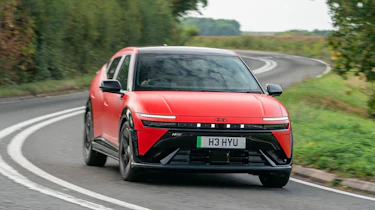
The Ioniq 3 is a surefire hit with its premium feel, respectable range figures and amazing starting price.
- Prices from £18,495
- WLTP combined battery range: up to 213 miles
Pros |
Cons |
|
|
There’s been a stark contrast between Hyundai’s electric story in recent years and the massive EV expansion that’s been going on for its Kia subsidiary, so the Ioniq 3 feels somewhat overdue. It was worth the wait, though – here’s a premium-feeling, tech-packed EV with an incredible starting price that’s undercut only by the compromised Dacia Spring and Leapmotor T03.
It’s given a big helping hand, of course, by the entry-level version’s eligibility for the full Band 1 government electric car grant of £3,750, but it’d still be very affordable without that. It certainly doesn’t feel cheap inside, though, in the way that other budget EVs like the Citroen e-C3 tend to in places. It also makes Hyundai’s own Inster city car look pricey.
The cheapest version of the Ioniq 3 comes with the ‘Standard Range’ 42.2kWh battery, which gives a driving range of up to 213 miles that makes rivals look meagre by comparison. You’ll need to spend more to get the cheapest Citroen e-C3, for example, but the entry-level battery in that car only returns 132 miles.
Should you have a bit more to spend, the Extended Range model has a larger battery to give a range of up to 308 miles. Curiously, it gets less power than the Standard Range car, which isn’t exactly pokey as it is. Neither version is especially quick, but that and limited rear visibility thanks to the position of the rear spoiler are pretty much the only complaints.
“It might be up against tough competition, but the Hyundai Ioniq 3 is nothing short of a home run from the Korean brand. It's good to drive, full of tech, well priced and boasts a fantastic interior and real-world range considering the price” - Tom Jervis, Auto Express consumer reporter.
=4. Citroen e-C3
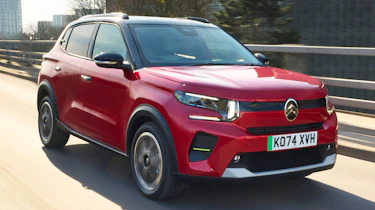
Citroen is known for making quirky-looking and comfortable cars, what makes the e-C3 even more appealing is its low price.
- Prices from £18,495
- WLTP combined battery range: up to 201 miles
Pros |
Cons |
|
|
If you thought the cheapest electric cars would be full of stripped-back cars with limited appeal, the Citroen e-C3 is ready to prove you wrong. It has a range of up to 201 miles, enough space for four passengers, useful standard kit and distinctive styling.
The clincher, though, is that this former Auto Express Car of the Year winner can be bought brand-new for under £19,000.
Although it looks like a beefy little SUV at first appearance, the Citroën e-C3 is actually more similar in size to the Vauxhall Corsa Electric. To keep costs down, the brand has taken a back-to-basics approach with its electric supermini, with use of more hard-wearing materials.
Being a Citroen, the e-C3 is very compliant over rough surfaces which makes it well-suited to UK roads, plus, the Advanced Comfort seats mean any longer journeys are quite pleasant.
The brand has still included plenty of modern essentials inside, too, including LED headlights, an intuitive 10-inch touchscreen infotainment unit and a suite of safety and driver assistance systems.
“Citroen has produced a supermini with class-leading comfort and plenty of space, all while creating a car that doesn’t feel like it’s unduly compromised by its low price point. The e-C3 really is a benchmark for the rest to aim for.” - Alex Ingram, Auto Express contributor
6. BYD Dolphin Surf
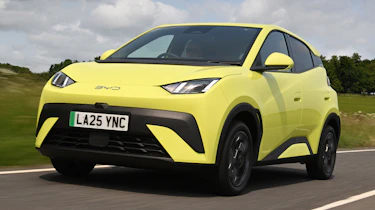
The BYD Dolphin Surf is the smallest car the Chinese manufacturer makes, but it has all the right ingredients to be a big-seller.
- Prices from £18,675
- WLTP combined range: up to 200 miles
Pros |
Cons |
|
|
BYD still might be a Chinese car newcomer in the UK, but the BYD Dolphin Surf has all the right ingredients to make it a hit with UK car buyers as this little EV feels grown-up, has plenty of range, enough room for four adults plus luggage and lots of in-car kit as standard.
With a starting price of £18,675, BYD has clearly targeted the value end of the market, but with the space, style and sophistication of cars significantly larger. There are two battery variants with a range of up to 137 miles in the 30kWh pack or up to 200 miles WLTP with the larger 43.2kWh battery.
If you can, we’d suggest you opt for the larger battery which costs a few thousand pounds more as it makes the car much more usable when it comes to longer journeys. Whichever version you opt for, these are strong figures in the city-car class and should be more than plenty when it comes to commuting or zipping through traffic.
The car remains quiet and composed while on the move, and the controls are nice and light. The Dolphin Surf has plenty of power to keep up with faster-moving traffic and should be more than capable of longer journeys.
Inside, build quality feels decent and much better than rivals such as the Dacia Spring, and you get Apple CarPlay and Android Auto as standard.
“It’s a small car but the BYD Dolphin Surf feels very grown-up when you drive it, more like a larger supermini than a city car.” - Steve Walker, head of digital content
7. Honda Super-N
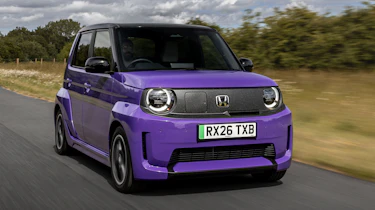
The Super-N isn’t just a funky-looking thing – it also makes a surprising amount of sense.
- Prices from £18,995
- WLTP combined battery range: up to 128 miles
Pros |
Cons |
|
|
Following up the expensive flop that was the Honda e is… a slightly upsized kei car with a range of just 128 miles. You’d be forgiven for thinking Honda has cooked up another miss for the small EV market, but no – the Super-N is brilliant.
For many, that kind of range will be plenty, especially if the Super-N is run as a second car. The compact dimensions and smaller battery also make it very light, which means better efficiency and more fun behind the wheel.
While the boot space is inevitably tiny, the Super-N is more practical than you might think, with a version of the larger Jazz’s clever flip-up rear seats that allow for taller items to stand up in the footwells. Rear-seat legroom is generous, too, and the Super-N’s lofty ceiling makes for great headroom.
It looks brilliant in the standard paint finish of Boost Violet Pearl, and we even like the fake engine and ‘gear changes’. This is the kind of car that’ll put a smile on your face, and for under £20,000, it won’t run away with your wallet at the same time.
“On paper, a slightly enlarged Japanese market kei car doesn’t sound like a recipe for a great EV in the UK, but funky looks, keen pricing and a surprising amount of practicality make the little Honda a superb city runabout.” - Richard Ingram, Auto Express deputy editor.
8. Geely EX2
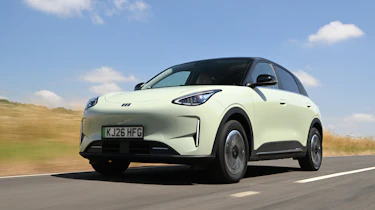
The EX2 might be cheap enough to make this list, but it’s a hard sell considering the talented competition.
- Prices from £20,990
- WLTP combined battery range: up to 201 miles
Pros |
Cons |
|
|
Being one of the cheapest EVs on sale isn’t enough to make the Geely EX2 a great buy. It’s not without its merits, of course. The boot is a decent size, you get a frunk (a lot of small EVs don’t), it’s well equipped, and there’s plenty of space in the cabin.
So far, so good, but the EX2 is bland inside and out, and the handling isn’t brilliant. That’s a problem when there are all sorts of alternatives that have far more character, more of a sense of fun and better driving dynamics that are either slightly more expensive or, in some cases, actually a bit cheaper. Also, if you are to go for the most affordable EX2, the range is nothing special at 156 miles.
If you can score a particularly good deal on the EX2, whether buying outright or financing, it might just about make some sort of sense. Otherwise, you’ll be better served by one of the other cars on this page.
"There is some good news – standard tech and kit are good, there’s plenty of space to play with, plus it’s fine to drive. But the range and performance lag behind key rivals, the interior is bland, and there’s none of the charm or character that its similarly priced competitors have in spades.” - Ellis Hyde, news reporter.
=9. Fiat 500e
If you want your small EV to also be something of a fashion statement, look no further than the Fiat 500e.
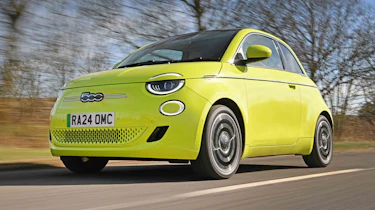
- Prices from £20,995
- WLTP combined battery range: up to 199 miles
Pros |
Cons |
|
|
The Fiat 500 has been an undeniable sales-hit for the Italian brand since the return of its small city car in 2007. Now it’s been reimagined for the EV age.
Keenly priced from under £21,000, the Fiat 500e line-up starts with the Icon variant which is officially capable of driving up to 118 miles on a single charge. Step up to the La Prima version and range jumps considerably to 201 miles while still coming in under £24,000. La Prima would be our pick of the range.
While the Fiat 500e isn't as exciting to drive as the MINI Cooper Electric, it is much more fun than you might think. Its relatively low kerb weight (compared to other EVs) means it's quite nippy and agile on a twisty road, while also remaining quietly composed and efficient.
This being a small car and a strict four-seater, you do have to make a few compromises. While taller adults shouldn’t feel too squeezed up front, and the overall visibility is excellent, things get very tight when it comes to rear seat space.
It is possible to fit two six-foot adults in the rear at a push, there’s very little in the way of head or knee room. We think the rear seats are best suited for children or carrying bulky items. The boot is rated at 185-litres.
“The Fiat 500e is a car that’s very clearly been designed with the city in mind, and that’s without doubt where it does its best work.” - Ellis Hyde, news reporter
10. Fiat Grande Panda
If you’re after a car which is simple, durable and affordable, the Fiat Grande Panda should suit you down to the ground.
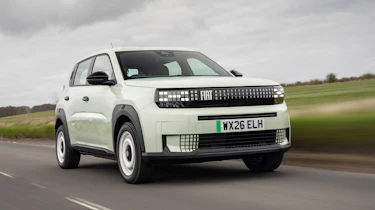
- Prices from £20,995
- WLTP combined battery range: up to 199 miles
Pros |
Cons |
|
|
For generations the Fiat Panda has been a firm favourite of buyers who desired a simple yet dependable city car that cost peanuts to buy and run.
Today, the Panda has evolved into the Fiat Grande Panda and carries on where the old Panda left off. The Fiat Grande Panda is available with hybrid or fully electric power.
The latter model costs slightly more than its combustion-engined cousin, but it’s still one of the cheapest brand-new EVs on the UK market. It's a spectacular package overall, impressing us so much that it won Supermini of the Year at our 2025 New Car Awards.
Sharing its underpinnings with the Citroen e-C3, as well as the same 44kWh battery, means the Grande Panda can cover up to 199 miles on the WLTP combined cycle. Not only is it bigger than its predecessors, but this particular Panda is by far the most distinctive iteration when it comes to looks, too.
Thankfully, the simplistic, low-cost ethos remains, although the tradeoff is a lack of outright power and a rather unrefined experience at motorway speeds. Stick to the city streets, though, and the Fiat should prove a doddle to live with.
“The Grande Panda rides remarkably well considering its short wheelbase. Even over the cruddy roads of central Turin that we experienced, the Panda never crashed into potholes or speed humps, feeling polished and even quite plush on occasion.” - Jordan Katsianis, news editor
Top 20 cheapest EVs in the UK
Below are the UK's cheapest electric cars. To make the list comparable, all prices exclude any manufacturer discounts, although we have included the government’s electric car grant (ECG).
| No. | Car name | Price from |
| 1 | Dacia Spring | £11,990 |
| 2 | Renault Twingo | £14,475 |
| 3 | Leapmotor T03 | £16,295 |
| 4≠ | Hyundai Ioniq 3 | £18,495 |
| 4≠ | Citroen e-C3 | £18,495 |
| 6 | BYD Dolphin Surf | £18,675 |
| 7 | Honda Super-N | £18,995 |
| 8 | Geely EX2 | £20,990 |
| 9 | Fiat 500e | £20,995 |
| 10 | Fiat Grande Panda | £21,495 |
| 11≠ | Renault 5 | £21,495 |
| 11≠ | Nissan Micra | £21,495 |
| 13 | Hyundai Inster | £22,995 |
| 14 | MG4 EV Urban | £23,495 |
| 15 | Renault 4 | £23,645 |
| 16 | Kia EV2 | £24,245 |
| 17 | Citroen e-C3 Aircross | £23,315 |
| 18 | Vauxhall Frontera Electric | £24,795 |
| 19 | Suzuki e-Vitara | £24,999 |
| 20 | Peugeot E-208 | £25,115 |
Should I buy an even cheaper quadricycle instead?
They aren’t technically classed as cars but quadricycles are an even cheaper way into fully-electric four-wheeled motoring. The difference between electric cars and quadricycles is the amount of power on offer, a legally-required limited top speed of 28mph plus their extremely compact size and low weight.
A well-known example of a quadricycle that can currently be bought in the UK is the Citroen Ami. While its starting price of less than £8,000 is certainly eye-catching, the official 46-mile battery range is much less likely to suit driver requirements.
Quadricycles are primarily designed with short-distance urban journeys in mind, and in order to keep costs to a minimum, there’s very little in the way of comfort, technology or safety equipment to be found. Because of this, most buyers will be far better suited to a fully-sized electric car.
Electric car deals
Want to reduce your family’s carbon footprint? These are the best electric SUVs...