Best new cars coming soon: all the big new car launches due in 2026, 2027 and beyond
Here are the most important new cars from Audi, BMW, Dacia, Ferrari, Ford, Skoda and more that you need to know about

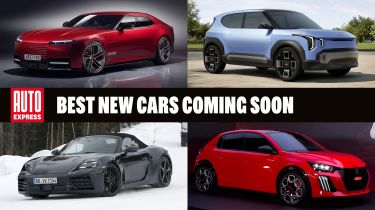
As we embark on the new year, it’s time to start marking up the Auto Express calendar and get ready for the most exciting, potentially game-changing new cars that will be unveiled or we’ll drive for the first time over the next 12 months or so. And petrolheads should rejoice, because they’re not all EVs!
Better still, we’re not just talking about frugal four-cylinder motors, such as the one that’ll go in the new Dacia C-Neo family wagon. Mighty V8s will be providing the brute force for the bonkers Bentley Continental GT Supersports and the show-stopping Toyota GR GT.
Some incredibly important electric cars will also finally be arriving this year, from the adorable Renault Twingo to Ferrari’s first-ever EV. We’re also going to find out if the idea of electric sports cars has legs, with the next-generation Alpine A110 and Porsche Boxster/Cayman hopefully delivering serious thrills with zero tailpipe emissions.

One of the most important new cars we all want to see is Jaguar's long-awaited four-door GT, and it’s set to be the blockbuster reveal of the summer. Whatever kind of new car you’re looking for, there’s going to be something for everyone!
If you can’t wait to buy a new car and want one right now, check out our Buy a Car service. You can get offers from local dealers on a car of your choice, buy new from stock, check out leasing deals or choose from thousands of used cars. You can even sell your old car!
Below are all the key new model launches we know are taking place in 2026, 2027 or in the near future, listed in alphabetical order…
Alfa Romeo Giulia
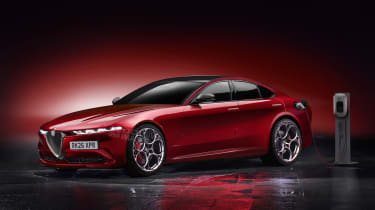
The next Alfa Romeo Giulia has some big shoes to fill, because the current car is one of the most desirable compact execs available. It’s unclear when the BMW 3 Series rival will be arriving, but we do know it will be available with a choice of combustion or pure-electric power. The cherry on top is that there will be a Quadrofoglio version with a petrol engine, most likely the brand’s famous V6.
Alfa Romeo Stelvio
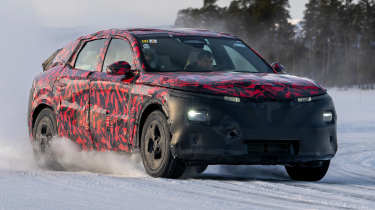
The next-generation Alfa Romeo Stelvio SUV was due to be revealed in the second half of 2025, however it’s reportedly now not arriving until sometime in 2027. It’ll also be based on the STLA Large architecture, and will be offered with the choice of hybridised petrol engines and electric powertrains. As with the low-slung Giulia saloon, the new Stelvio Quadrofoglio will be packing “something with a roar”, as the brand’s marketing boss put it to us, meaning petrol power.
Alpine A110
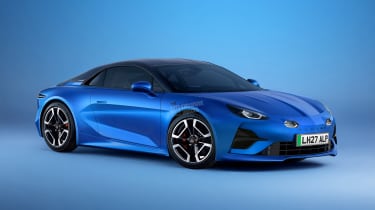
2026 will be the year we say goodbye to the Alpine A110 we’ve known and loved for nearly a decade, and say hello to its all-new successor which, as we’ve known for sometime, will be electric.
However the new A110 promises to have something that almost every EV is lacking: soul. We’ve been told it’s also going to be lighter than a Porsche Cayman GT4 RS and use cutting-edge in-wheel motors to generate a lot of power – but not too much – plus torque vectoring to help carve up corners.
The new A110 will sit on a bespoke bonded-aluminium platform, which can also accommodate hybrid powertrains should customers demand them. Details about the new A110 are apparently going to be drip-fed to us over the coming months, hopefully in the build-up to its world debut at the Paris Motor Show in October.
Alpine A390
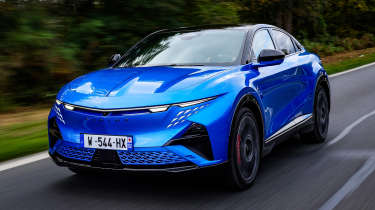
Alpine is stepping into uncharted territory, going beyond making sports cars and hot hatches, with an electric coupe-SUV – or ‘Sport Fastback’ as the brand calls it. The staggering Alpine A390 is designed to look like a “racing car in a suit”, with a similarly athletic silhouette to its main rival, the Porsche Macan Electric. It may be based on the same platform as the Renault Scenic, but is available with a bespoke tri-motor powertrain that delivers 464bhp and torque vectoring for more agile handling. The 0-62mph sprint can be dispatched in as little as 3.9 seconds, and prices are expected to start from around £60,000.
Aston Martin Valhalla
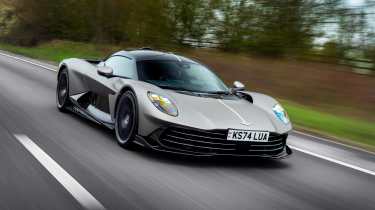
The Aston Martin Valhalla will be the first series-production mid-engined road car in the British brand’s 112-year history. Just 999 examples will be made, powered by a bespoke 4.0-litre twin-turbo, flat-plane V8 engine and a pair of electric motors. Total power output is rated at 1,069bhp and 1,100Nm of torque – enough to propel the car from 0-62mph in 2.5 seconds – while the active aerodynamics are inspired by the company’s Valkyrie hypercar, and utilise F1 know-how and technology.
Bentley Continental GT Supersports
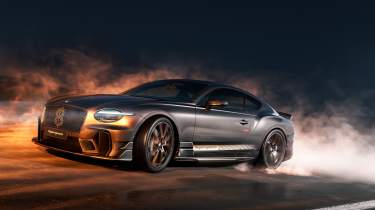
The Bentley Continental GT Supersports is basically a muscle car for the gentry. It ditches the latest Continental GT’s hybrid tech, and uses pure twin-turbo V8 muscle, with all 657bhp it produces sent exclusively to the rear wheels. This is the first Continental GT to ever do so, and by shedding nearly half a tonne of heft it’s also the lightest version of the legendarily luxurious coupe to date.
The bellow of the V8 echoes through a bespoke titanium exhaust system designed with Akrapovic, emitting a “deep, characterful and completely authentic” soundtrack. Stopping power is provided by the largest brake system on any road car, while torque vectoring and rear-wheel steering make the Supersports turn in as sharply as possible. The styling is subtly outrageous of course, for generating extra downforce and scaring Aston Martins.
BMW i3
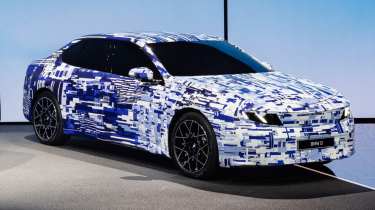
Of the scarcely believable 40 new and updated models BMW plans to launch by 2027 as part of its new ‘Neue Klasse’ era, arguably the most important of them all will be the next evolution of the genre-defining BMW 3 Series saloon due soon.
There will still be combustion-powered versions and a seriously mean new M3 performance edition, but the big focus is on the fully electric model called the i3 – which, as you may remember, was the name previously worn by the brand’s trailblazing zero-emission city car.
The new i3 will use the same cutting-edge EV platform and technology as the iX3, so should deliver more than 500 miles of range and the same agile, balanced and engaging handling we expect from a BMW.
The ultra-futuristic saloon will sport the same bold design language we saw on the new iX3 and a fresh interpretation of BMW’s iconic kidney grilles, while the interior will feature the brand’s radical Panoramic iDrive set-up.
BMW iX3
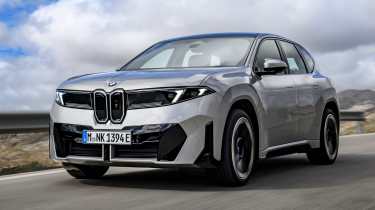
The all-new, second-generation BMW iX3 represents the beginning of a bold new era and quantum leap forward for the Bavarian brand. It introduced the world to its more restrained yet still futuristic design language, a brand-new platform and cutting-edge technology, from the battery cells that will provide a world-leading 500-mile range to a radical new Panoramic iDrive cockpit design.
But the iX3 isn’t just impressive on paper. We gave it our highest possible five-star rating after driving the landmark SUV for the first time recently and it’s available to order now starting from less than £60,000.
BMW M3
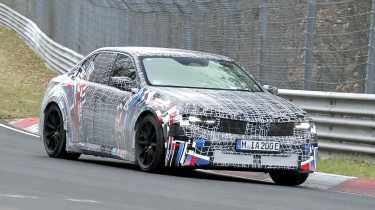
The new BMW M3 is likely to arrive in 2027, just a year after the regular 3 Series. It will be the first to feature pure-electric power, which may sound like blasphemy to some fans of the iconic sports saloon, but its quad-motor powertrain can deliver up to 1,341bhp (in theory, anyway) and torque vectoring for remarkable agility – as we experienced in BMW’s frankly insane VDX concept. If you’re still not convinced, the M3 will also be available with a twin-turbo straight-six petrol engine, just like the current model.
Cupra Raval
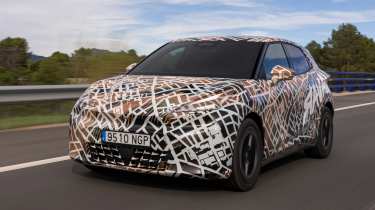
It’s been four long years since the first concept of the Cupra Raval was unveiled, but finally the sporty electric supermini is ready and will make its world debut in February.
Named after a district in its maker’s hometown, Barcelona, the Raval is the more athletic and chiselled cousin of the Volkswagen ID. Polo that’s also coming soon. In fact, the Cupra will be the first of several cars to use the VW Group’s new MEB+ platform.
As you would expect, the Raval is said to have a sportier feel than its siblings, and Cupra’s boss promises it combines everything the brand stands for: “emotion, striking design, electrifying performance and as always, driver-focused.” It will offer up to 280 miles of range plus there’s going to be a hot VZ version with 227bhp and a limited-slip differential.
Denza B5 4x4
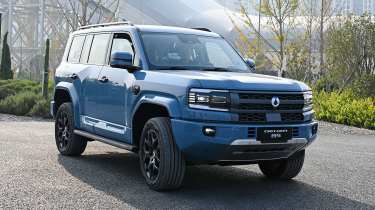
The Land Rover Defender is adored by Brits for very good reason – it’s absolutely brilliant – but newcomer Denza thinks it can do better. The premium technology-focused sister brand of BYD arrives in the UK this year and one of the three models it’s bringing to our shores is the plug-in hybrid Denza B5 4x4.
The nearly three-tonne behemoth pumps out 677bhp and 761Nm of torque from its DMO (Dual Mode Off-Road) Super Hybrid set-up, making it more powerful than any Defender, including the almighty V8-powered OCTA. The B5 has locking differentials and modes for tackling various off-road terrains, but also a 31.8kWh battery that offers a pure-electric driving range of around 50 miles.
Hoping to compete with heavyweights including Mercedes, BMW and even Porsche, Denza is also bringing a near-1,000bhp shooting brake estate and a luxury MPV here. Plus the company will be launching its own charging network, offering lightning-fast speeds supposedly at an incredibly affordable price.
DS No8
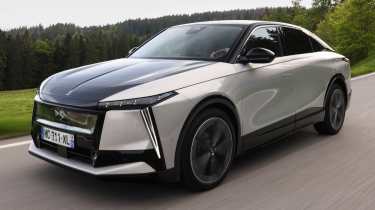
The DS No8 represents the start of a new era for the premium brand DS, which is refusing to throw in the towel in its fight against the likes of BMW, Audi and Mercedes. The elegant pure-electric coupe-SUV focuses on luxury, comfort and what the marque refers to as “serene” qualities. It also promises an enormous range of up to 466 miles, and with prices starting from just over £50k, it significantly undercuts potential rivals including the Polestar 4 and Audi Q6 e-tron.
Ferrari Elettrica
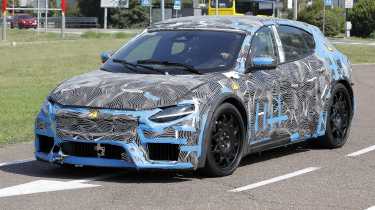
If you thought Ferrari putting a V6 into a supercar was borderline blasphemous, brace yourself, because the first EV to ever wear the legendary prancing horse will be revealed this summer. Known as the Elettrica – although that’s probably not what it’ll actually be called – this car will represent the culmination of more than a decade of innovation in electrified vehicle technology by Ferrari.
Every major component has been developed in-house by the brand’s engineers, including the four independent electric motors – two on each axle – which will work together to deliver just over 1,000bhp. The motors will also have a voice of their own, and the sound they emit will be pumped into the cabin to intensify the driving experience.
Although we know a lot about the tech that’ll power the Elettrica, we don’t know what it looks like yet. All we know is that it will be a four-door, four-seater that “can be used by the family, by friends,” rather than just a supercar.
Fiat Panda Fastback
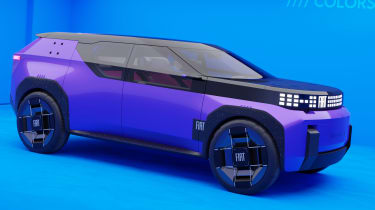
Fiat’s dream of building an entire family of Panda-inspired models will start to become a reality this year. Joining the award-winning Grande Panda we all fell for last year will be a pair of giant Pandas, starting with a rather dashing ‘fastback’ coupe-SUV that will offer a rakish alternative to the Nissan Qashqai and Dacia Bigster.
If that’s not your style, don’t worry, because Fiat is also launching a chunky mid-size SUV nicknamed the GigaPanda, which should have the unashamedly boxy shape as the Grande Panda but with more space inside.
We expect both cars will look very similar to the concept models we saw back in 2024, and will use the same ‘Smart Car’ platform that underpins the Grande Panda, plus the Citroen C3 Aircross and Vauxhall Frontera. These will be the biggest cars yet to sit on this platform, which should help make them more affordable than the competition, and means customers can expect a choice of hybrid and pure-electric power.
Genesis GV60 Magma
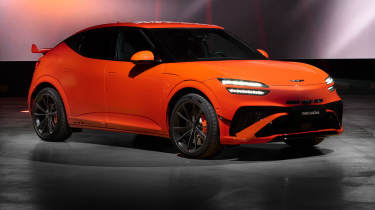
The flaming-hot Genesis GV60 Magma is the classier sister car of the exhilarating Hyundai Ioniq 5 N, and the first model from the luxury brand’s new performance and motorsport division. The Alpine A390 rival spits out 641bhp, enabling it to hit 62mph in just 3.4 seconds, and features a virtual gearshift system in a bid to provide a more engaging driving experience. However, the GV60 Magma is expected to cost between £75,000 and £80,000, which would make it more expensive than a Porsche Macan Electric.
Honda 0 Series Saloon
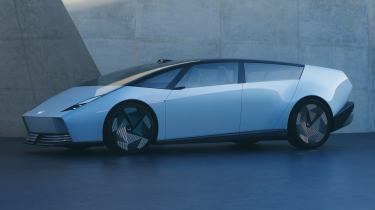
Honda has been behind the curve with electric cars for a long time now, but that’s all about to change. The 0 Series isn’t just one car, it’s a diverse range of no fewer than seven brand-new EVs that the Japanese brand plans to launch in rapid succession over the next few years.
Unsurprisingly, the first 0 Series model will be an SUV, but following hot on its heels will be a far-out flagship saloon that looks like a Lamborghini Gallardo from another dimension. Underpinning the wedge-shaped show-stopper will be a brand-new, bespoke architecture that’s been designed from the ground up around a core set of principles: “light, thin and wise”.
Honda Prelude
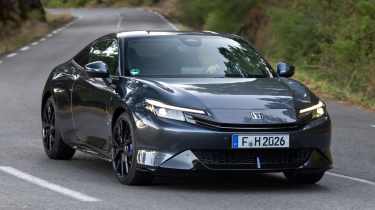
After an absence of more than two decades, the Honda Prelude has returned. The sleek two-door coupe is based on the latest Civic hatchback, which is by no means a bad thing. The new sixth-generation Prelude features hybrid power and virtual gearbox technology, which Honda calls ‘S-Shift’. It’s designed to simulate the sound and feel of shifting gears in a sports car with an automatic gearbox. The stunning design didn’t change all that much as the Prelude went from concept to road-going BMW 2 Series rival, which is now available to order from £40,995.
Hyundai Ioniq 3
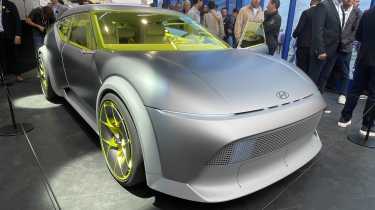
Meet the next addition to Hyundai’s range of futuristic, fully electric models: the Ioniq 3 family hatchback. It’s set to arrive this year and will rival the likes of the Volkswagen ID.3, Renault Megane and Cupra Born. The Concept Three presented at the 2025 Munich Motor Show showed the direction the brand may take with the new model: it’s quite sporty and bold-looking, so expect a dynamic look rather than a plain one. We also expect excellent battery tech plus a high-performance Ioniq 3 N version.
Hyundai Tucson
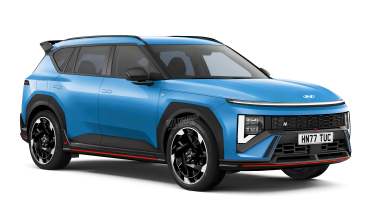
The next-generation Hyundai Tucson is expected to arrive in the second half of the year and assert itself as the head of the family-SUV pack. It will employ the brand’s bold new ‘Art of Steel’ design language, which can be seen in elements of our exclusive image such as the much more upright nose, clamshell bonnet and chunky wheelarch cladding.
Meanwhile the interior will be centred around keeping the driver’s eyes on the road, and being a comfortable and calm place to be. In other words, the new Tucson won’t feature some kind of multiplex-style tech fest. As with the current model, Hyundai will find to try the right balance between screens and physical controls, plus the new car should provide lots of space.
The upcoming Tucson will also feature Hyundai's next-generation hybrid technology that was introduced last year, and offers improvements in fuel efficiency and refinement.
Jaguar four-door GT
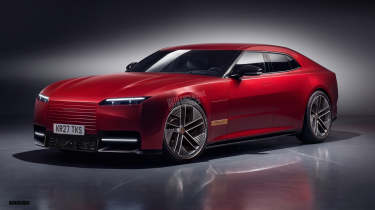
It's about time this big Jag was let out of the bag. Never mind that it was supposed to be revealed last year, the Jaguar four-door GT is on track for a blowout summer reveal and we've even had a very early sneak peek. So even though we still don’t know what the emperor’s new EV will be called, our exclusive image shows what the incredibly opulent GT could look like.
The four-door GT’s design will take its lead from the polarising Type 00 concept, while underneath the skin are a bespoke EV platform called the Jaguar Electrified Architecture and a tri-motor powertrain offering around 1,000bhp. Real-world range will apparently be around 400 miles, but lightning-fast charging abilities should see 200 miles of range able to be added in around 15 minutes. And the price for all this opulence and splendor? At least £120,000.
Jeep Recon
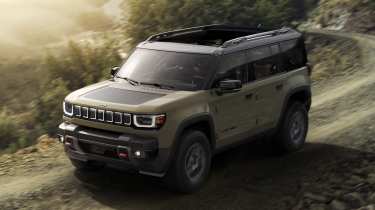
The Jeep Wrangler is dead – or at least it is on this side of the Atlantic. But fear not, because the all-new, all-electric Jeep Recon is coming to fill the void for lovers of that ‘dirt in the hair’ driving experience.
It's purpose-built to give the extreme off-road capability Jeep is renowned for, proudly earning the brand’s coveted ‘Trail Rated’ certification, just like the legendary Wrangler. Crucially though, the Recon promises to be equally capable on the open road, which is where the old Wrangler was never quite so good.
The super-boxy 4x4 manages to look both tough yet approachable while retaining all of Jeep's signature design cues. Power comes from two e-motors, delivering permanent four-wheel drive, a monumental 641bhp, and 0-62mph in a frankly ridiculous 3.7 seconds.
Kia EV2
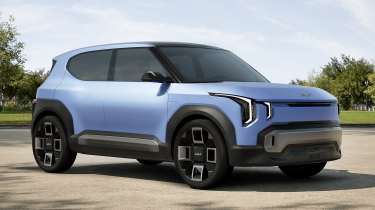
The new Kia EV2 will be the latest, smallest and most affordable member of the brand’s highly regarded EV line-up yet. It’s been designed for Europe and is being unveiled to the world on 9 January. So make sure you head to autoexpress.co.uk then for all the details on the baby SUV.
What you see here is the EV2 Concept presented last year, but we’re confident the road-going version is going to look almost identical. The chunky little electric crossover will rival the Renault 4, the next-generation Nissan Juke and the forthcoming Skoda Epiq, among many others.
Roominess is one of the EV2’s priorities. The concept had a folding, sliding and reclining rear bench, which lifted up like the one in the Honda Jazz and could be a handy feature for the production model. Around 300 miles of range seems possible, as does a circa-£25,000 starting price.
Lotus Emira Hybrid
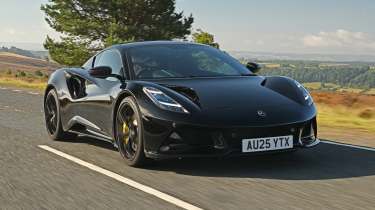
The Lotus Emira was due to go out of production in 2027 but it recently received an indefinite stay of execution. Not only that, the British-built sports car will also be receiving two new powertrains – a plug-in hybrid set-up and an “upgrade” on the V6 engine – which should allow it to live beyond the end of the decade. The hybrid is likely to mirror the Ferrari 296 GTB and other supercars; these use electric motor generators shoehorned between the engine and transmission to boost power and harvest some energy for a modest battery.
Mazda 6e
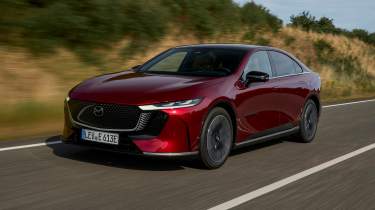
The all-new Mazda 6e saloon will arrive in the UK in 2026 to take a swing at the Tesla Model 3, as the Japanese brand starts to up its EV game. Unfortunately, it's not off to a terrific start, because the 6e’s claimed range of up to 342 miles is nearly 100 less than the Tesla’s. At least Mazda is promising the handsome saloon will deliver “the sort of road behaviour one would expect from a manufacturer with decades of experience building fun-to-drive cars”. There’ll also be a high-riding, presumably more practical, SUV sister model called the Mazda CX-6e.
McLaren W1

First there was the F1, then the P1, and now the McLaren W1 has arrived to show the world what Woking is capable of – on top of back-to-back Formula One constructors’ championship wins, that is. A direct rival to the Ferrari F80 that arrived last year, the W1 features a twin-turbo 4.0-litre V8 hybrid powertrain that sends all its 1,258bhp to the rear wheels only.
To stop it taking off, the “Formula One-inspired ground-effect aerodynamics” can create 1,000kg of downforce at 174mph. Put it all together and the W1 is the fastest-accelerating, fastest-lapping, road-legal machine the British outfit has ever produced.
MG2
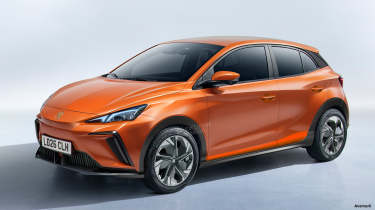
MG has been busy launching more upmarket offerings recently, but the brand’s bread and butter is still affordable yet highly capable and impressive-value cars – and that’s exactly what the all-new MG2 is expected to be.
The wallet-friendly electric supermini is likely to cost from around £20,000 and will serve as the brand’s challenger to the BYD Dolphin Surf and Citroen e-C3. We’re expecting the MG2 to be revealed by the time summer rolls around, although we've yet to see a single prototype testing on the road, and details remain thin on the ground.
Our exclusive image blends styling elements from the popular MG4 EV and the petrol-powered MG3 into one smart-looking supermini to show what the MG2 could look like. David Allison, MG Motor UK’s Head of Product and Planning, has also told us “I’ve seen it already. I don’t see any reason why it shouldn’t fly [off the shelves].”
Mercedes-AMG GT XX
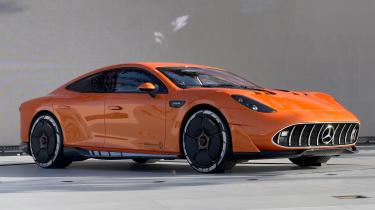
The Mercedes-AMG GT XX Concept we saw last year was the equivalent of the shark fin poking out of the water in Jaws, because the production version is coming soon and it’s looking to take a big old bite out of the established Porsche Taycan.
The as-yet-unnamed apex predator will be AMG’s most powerful and advanced super-saloon ever, featuring a trio of bleeding-edge axial-flux motors developed by British firm Yasa. These should produce around 1,000bhp – almost as much as the F1-derived AMG One hypercar.
Sure, it won’t have a V8, but we’ve seen this car go sideways like a proper hooligan. We’ve also been promised driving this car will deliver the same noise, vibration and hardness as customers would expect from any AMG product. And unlike other performance EVs, this won’t get tired the harder you push it. It’s meant to be absolutely “relentless”. You have been warned.
Nissan Juke
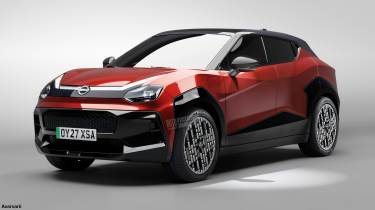
Like it or loathe it, the Nissan Juke is a very important car in the UK, which is why the arrival of the next generation is such an important event. The small SUV is still expected to have its own particular sense of style, as our exclusive image shows. There will be plenty of wild angles and a new interpretation of the Juke’s signature, cartoonishly large headlights.
Underneath, the new Juke will be based on the same CMF-EV platform that underpins the next-generation Leaf that went on sale last year. It’s going to use the same battery and motor combinations too, meaning certain versions could offer way more than 350 miles, which will give it a serious advantage against rivals such as the forthcoming Skoda Epiq.
Nissan Leaf
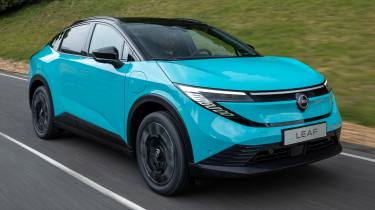
As the first mass-market EV, the Nissan Leaf was a true pioneer, but fell by the wayside in recent years due to more advanced, generally superior rivals.
To increase its kerb appeal, the family hatchback has morphed into a swoopy SUV that’s powered by the same technology as former Auto Express Car of the Year, the Nissan Ariya.
The sleek profile combined with some other trickery has made the new Leaf the most aerodynamic car the Japanese brand has produced, and range reaches up to 286 miles as a result. That’s with a pretty reasonable 75kWh battery, so running costs should stay as low as you’d expect from a car with this name, and it’s available to order now from £32,249.
Nissan Micra
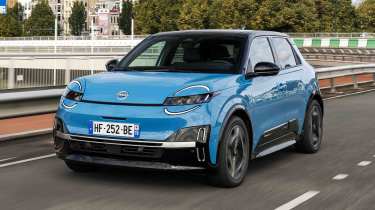
This is the all-new Nissan Micra, and if you’re thinking that looks suspiciously like the new Renault 5 that’s because it’s basically a rebadged, renosed version of the fancy Frenchman.
Nissan has ditched the R5’s square headlights and vertical tail-lights for comically large circular ones, similar to those on the famous Mk3 Micra. There’s also redesigned bumpers, a new rear windscreen, and as you’d expect, Nissan has added its own badging and wheel designs. But that’s about it. The battery options, range speeds, performance, chassis, practicality and interior are the same as on the Renault. So is the £21,495 starting price.
Peugeot E-208 GTi
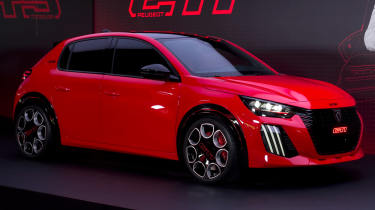
Peugeot has been out of the hot hatch fight for a few years, but it’s finally getting back in the ring with the new E-208 GTi. To have a chance of landing a knockout blow on the Alpine A290, the feisty Frenchman has 276bhp on tap from the electric motor which, as is traditional, will drive the front wheels.
Also among the performance upgrades is a limited-slip differential to boost agility, tuned suspension, larger front brakes and more responsive steering. The styling is angrier too, of course, while the 18-inch ‘Hole’ wheels are a nod to the iconic 205 GTi.
Polestar 5
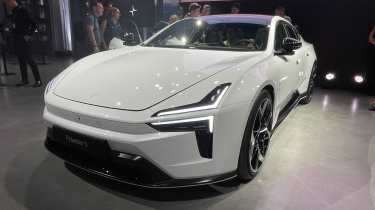
It’s been five years since the dramatic Polestar Precept concept was revealed, but at last the Volvo offshoot is ready to launch its rival to the Porsche Taycan and Lotus Emeya: the Polestar 5. Very few design changes have been made for the production model, and as with the concept there is no rear window in an effort to maximise rear cabin space – just like the Polestar 4 coupe. Sadly, though, one detail that didn’t make the cut was the original concept’s ‘suicide’ coach doors. The cabin, meanwhile, features an extremely clean design full of clever and thoughtful material choices.
Rather than using an existing architecture, the Polestar 5 relies on a bespoke extruded and bonded-aluminium platform that was created in the UK, where the flagship EV was also developed. Every model has a dual-motor powertrain that can deliver up to 874bhp and more than 400 miles of range. Prices start from £89,500.
Polestar 7
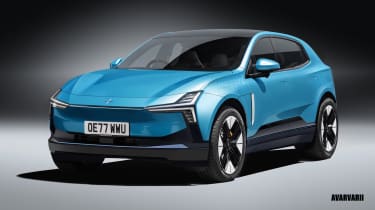
If you hadn’t already guessed, the Polestar 7 will be the seventh model from the Swedish brand, but more importantly, will be its answer to the Tesla Model Y. The “premium compact SUV” will be built in Europe, is due to arrive in 2028 and could be priced from around £40,000. The 7 will also be the first model based on Polestar’s next-generation architecture and technology, with the brand set to use this platform for all its models in the future to reduce complexity, costs, and investments.
Porsche 718 Cayman and Boxster

It’s make or break time for the next-generation Porsche 718 Cayman and Boxster, which have been in development for what feels like an eternity. During that time, not only has the current version of the much-loved sports car gone out of production, Porsche had a change of heart and decided the pair won’t be ditching petrol power after all.
Late last year, the company confirmed that the top-tier, most hardcore GT4 and RS models will have a good old-fashioned petrol engine – most likely, the brand’s familiar flat six. This U-turn will have resulted in additional investment and extensive modifications to the cars' EV-dedicated architecture, but at least customers will be satisfied.
However, there will still be electric versions, featuring a battery pack located behind the passenger cell. Not putting the batteries under the floor will help create the ideal weight distribution and achieve a suitably low-slung seating position.
Porsche Cayenne Electric
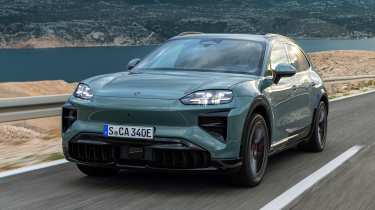
First the Porsche Macan went electric, and now the brand’s original, landmark SUV has followed suit. However, it’s worth noting that the Porsche Cayenne is still available with petrol and hybrid power, sold alongside the all-new Cayenne Electric that has a different look, interior and platform.
Underneath, the Cayenne Electric uses the same PPE platform and 800V architecture as the Macan Electric, but benefits from an even bigger 113kWh battery that provides nearly 400 miles of range and can be charged wirelessly. You simply park over a special charging pad to top-up the car, with no cables required. Dual motors and active suspension come as standard on every model, with the Turbo version pumping out a colossal 1,139bhp and 1,500Nm of torque. Prices start from £130,900.
Range Rover Electric
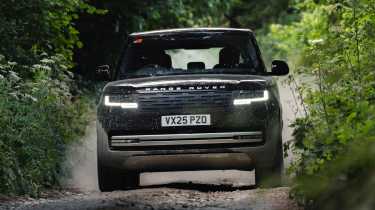
The Range Rover is the original luxury SUV, and more than a half a century on, it’s still the king of the jungle. But for the first time in its history, there’s going to be a Range Rover Electric. JLR’s director of product engineering, Thomas Müller, has said, “We are on target to create the quietest and most refined Range Rover ever. The magic ingredients that underpin the success of Range Rover remain unchanged – now offered with zero tailpipe emissions.” It should cost around £150,000, offer around 300 miles of range from a single charge and still be incredibly capable on and off road, like any combustion-powered Range Rover that’s come before.
Range Rover mid-size SUV
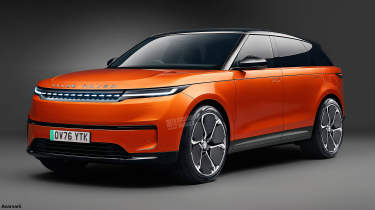
Not one, but two, fully electric Range Rovers are due to arrive this year: the highly anticipated (if slightly overdue) Range Rover Electric and a brand-new groundbreaking mid-size electric SUV. The latter will introduce a fresh design language and JLR’s very latest technology, including a new vehicle architecture known as EMA (Electric Modular Architecture).
JLR is keeping its cards close to its chest about the mid-size Range Rover EV, but we know that it will be a similar size to the existing Range Rover Velar, which means it’ll rival the new BMW iX3 and Porsche Macan Electric. Based on the prototypes we’ve seen, the design will be even sleeker than the already dramatic Velar’s, too.
Renault Twingo
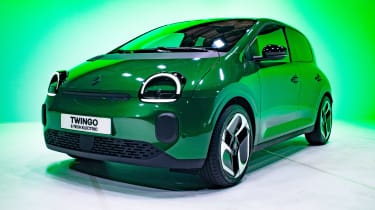
Renault’s retro reboots have been bona fide automotive gold. The Renault 5 and Renault 4 won big in the most recent Auto Express New Car Awards and are among the best small cars to buy. So to say we have high expectations for the new Renault Twingo would be an understatement. But we doubt the French firm has anything to worry about.
The new car’s design pays homage to the original frog-eyed Renault Twingo from the nineties, but with a contemporary spin, so it doesn't look or feel like a cheesy facsimile. The same goes for the flexible and playful interior, which offers space for four people and the latest tech. Sure, it has a range of 163 miles at most, but that’s plenty for the city streets this charming EV was designed to conquer and it might only cost around £17,000 when it goes on sale.
Rivian R2
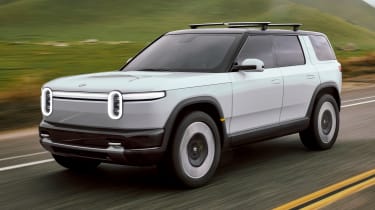
Pioneering American EV start-up Rivian, maker of the world’s first all-electric pick-up truck, will finally enter the UK market in 2027, but not with a truck. Its first model sold here will be the Rivian R2: an electric mid-size SUV that’ll rival the Tesla Model Y, among many others. We also expect the Rivian R3 hatchback and R3X hot hatch to come to our shores some time later.
Subaru E-Outback
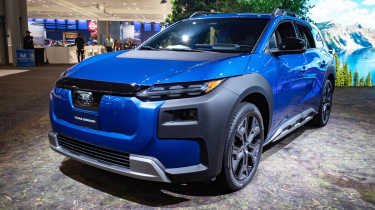
The latest Mk7 Subaru Outback isn’t coming to the UK, or Europe at all for that matter. However, we are getting an all-electric alternative: the ruggedly handsome, if unimaginatively named, new E-Outback.
This was the first Subaru EV designed in-house, and is more focused on versatility and off-road capability than the Solterra family SUV that was launched a couple of years ago. The E-Outback is much boxier and more estate car-like, for starters, and has faux skid plates, roof rails and large sections of black plastic cladding just about everywhere.
Compared with the Solterra, the E-Outback should have better range when cruising on the motorway, less noise and vibrations, plus improved handling thanks to some updates to the brand’s e-SGP platform. This being a Subaru, it has permanent, symmetrical all-wheel drive courtesy of two e-motors, which also deliver a healthy 375bhp.
Toyota GR GT
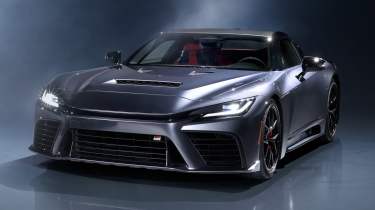
It’s amazing to think the first GR-branded Toyota was the Mk5 Supra that was launched in 2019, because now those two letters adorn Japan’s answer to the Mercedes-AMG GT, Aston Martin Vantage and Porsche 911 Turbo S. This is the Toyota GR GT, and it’s the most jaw-dropping car we’ve seen in quite some time.
Much like the Lexus LFA and Toyota 2000 GT that came before, the GR GT is a completely bespoke creation that started as a clean sheet of paper. Its twin-turbo cross-plane-crank 4.0-litre V8 is brand new, and works with an electric motor to reduce any lag, plus deliver a combined 641bhp peak power figure and 850Nm of torque.
Toyota had to prioritise a function-over-form approach when designing the GR GT because it always planned to turn it into a GT3 racer. The car looking this stunning was just a glorious coincidence, we guess.
Volkswagen ID. Cross
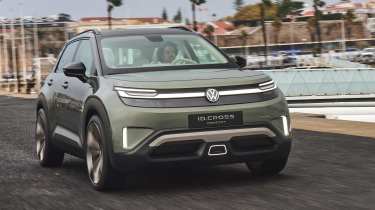
As you may have guessed from its name, the Volkswagen ID. Cross is the all-electric counterpart to the brand’s hugely popular T-Cross small SUV. It’s also the taller, chunkier and more practical sister of the ID. Polo supermini. A concept of this new Renault 4 rival was revealed at the 2025 Munich Motor Show and the road-going version is set to arrive before the end of this year, likely costing from around £25,000.
Volkswagen ID. Polo
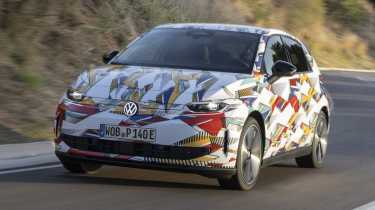
There’s a lot of pressure on the well proportioned shoulders of the Volkswagen ID. Polo, and not just because the electric supermini has to challenge the best-selling Renault 5. It’s also supposed to prove that the brand has learned from the mistakes of the ID.3 and its other recent models with a fresh, more friendly design language, a more functional and higher-quality interior, better software and a simply more enjoyable driving experience.
We sometimes forget that cars are almost always an emotional purchase. Recognising this, VW has leaned into its heritage and the ID. Polo will offer customers some level of nostalgia – not as overtly as some rivals, perhaps, but with clever touches that refer to the VWs of old without falling into pastiche.
The ID. Polo should cost from around £22,000, will offer up to 280 miles of range, and there’s going to be a hot version with 227bhp bearing the hallowed GTI badge.
Volvo EX60
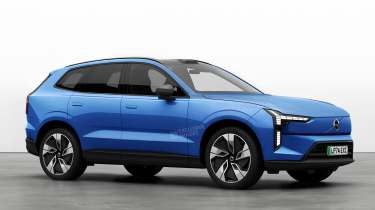
The all-new Volvo EX60 is set to be revealed on 21 January and is quite possibly the most important car the Swedish firm has launched since the original XC90. For starters, it’s the zero-emission alternative to Volvo’s global best-seller, the XC60, and the first model to feature its innovative new ‘multi-adaptive safety belt’ technology.
But more importantly, the EX60 will be the first car based on Volvo’s next-generation SPA3 electric-car architecture. This is said to have big benefits for range, efficiency and cabin space. And because this platform is scalable, Volvo will use it to build EVs of all sizes.
The BMW iX3 rival will supposedly boast the longest range of any Volvo EV, meaning more than 435 miles at least, and its fastest charging speeds to date. Plus, while the XC60 already offers enough space for all the family, the EX60 will be even more spacious and “deliver a groundbreaking user experience”, the company claims.
Tell us which new car you’re interested in and get the very best offers from our network of over 5,500 UK dealers to compare. Let’s go…