Best car news and reviews 2025: What happened in the world of cars between July and December?
2025 was a jam-packed year in the automotive industry, here's what happened in the second half of the year.

It's fair to say that 2025 was an action-packed year in the automotive world, and our expert team of road testers travelled across the globe to bring you everything from exclusive industry scoops to verdicts on the very latest cars.
Below we have rounded up the news stories and reviews which stood out the most between July and December 2025. Whether you’re here to fill in any knowledge gaps or simply refresh your memory, read on to discover our highlights from 2025.
July
New Micra Nismo hots things up
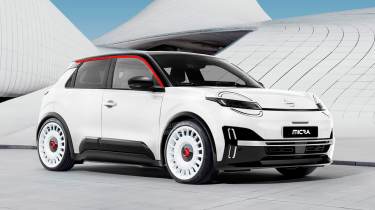
Nissan’s model line-up hasn’t exactly been grabbing the headlines for its appeal recently, but a mooted Nismo version of the Micra certainly piqued our interest when we uncovered the story in July.
Nissan hinted to us that the Micra EV, which borrows heavily from its Renault 5 sibling, is apparently also in line for a sporty makeover. The blueprint is already there in the form of the hugely entertaining Alpine A290 GTS, and our exclusive image showed how the new Micra Nismo could look.
Stunning styling defines Ferrari's new GT supercar
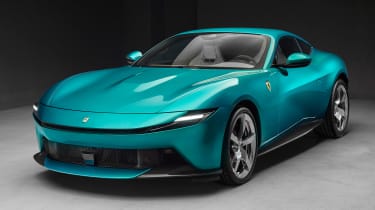
When Ferrari gives its new car a name instead of a number, you know it’s going to be a looker. The Amalfi might be as gorgeous as the Italian coast it’s named after, and while it’s largely a Roma underneath, Ferrari’s tweaks certainly warranted the updated moniker. The supercar maker fitted a new ECU, revised braking systems and retuned springs and dampers – all designed to give the Amalfi more exciting dynamics, without losing the car’s grand-tourer appeal. Naturally, there was a bit more power too: 631bhp versus the Roma’s 612bhp.
New IM sub-brand lifts MG into Tesla territory
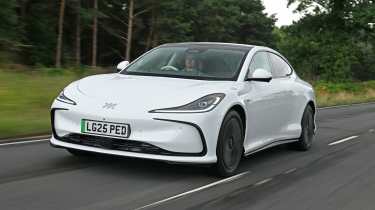
MG’s rise in recent years has been nothing short of astonishing, with the MG4 proving the firm can offer an affordable family EV that’s good to drive. Cars like the MG HS have showcased its talents in the plug-in hybrid SUV sector, too. Looking to get a foothold at the premium end of the market, the IM5 saloon and IM6 SUV were launched in the summer, and we took them both for a test drive.
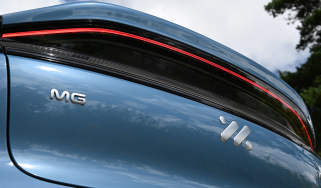
Badged ‘IM’ rather than straight MGs, the new name stands for 'Intelligence in Motion'. In fact, we didn’t find any MG logos on either car; that's a bold move given the gravitas MG holds – something most new Chinese firms would love to show off.
As for the cars, not only were they similar to look at, but to drive as well. That’s no bad thing, though, because we found plenty of positives on the road. First up, the performance. In the range-topping and appropriately named ‘Performance’ trim of both you get a dual-motor set-up with 742bhp.
That means 0-62mph in as little as 3.2 seconds – in an MG! You pay the price when it comes to range, however: despite having a whopping 100kWh battery, the IM5 Performance manages 357 miles on a single charge and the IM6 tops out at 313.But it was the ‘Long Range’ models that caught our attention.
When it launched, the IM5 Long Range could go further on a charge than any Model 3 (Tesla has since fought back with more range), topping out at an incredible 441 miles before needing to be plugged in. Even the IM6 provided a not-too-shabby 388 miles on the WLTP cycle.
Being two brand-new cars from what is essentially an unknown marque here in the UK, both IM interiors were new to us as well. The large central touchscreen and minimalist dash are par for the course these days, meaning we spent more time taking in the car’s floor mats – covered in a bizarre crushed-velvet material, they were a pig to photograph.
EVs account for one-in-four sales
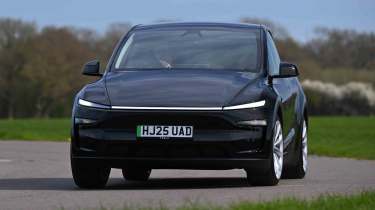
All-electric vehicles sales hit a big milestone in July, with one-in-four cars sold being pure EV. A lot of the sales were attributed to the Tesla Model Y, which was not only the best-selling electric car, but also the third most popular overall. The Model Y’s facelift started to trickle on to UK roads with pre-orders kicking in around this time, too. It’s worth remembering this was all shortly before the government’s Electric Car Grant as well, which helped towards an EV sales total of 26.5 per cent in August.
Axial-flux motor tech for AMG GT XX concept
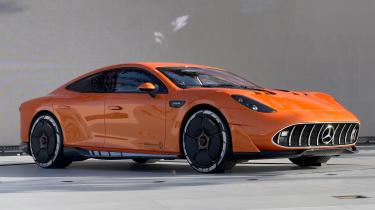
The tri-motor AMG GT XX concept was unveiled in July, showing off wild exterior design and a crazy interior. An evolution of the Vision One from 2022, the GT XX pumps out a whopping 1,341bhp. Those three electric motors come from British company Yasa and use cutting-edge axial flux tech, making them smaller and more energy-dense than motors found on most EVs. Another fascinating element was the charging speed of 850kW – allowing 250 miles of range to be added in just five minutes.
Mazda saloon returns with new 6e
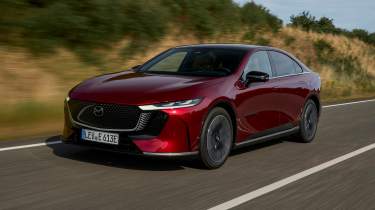
Having waved goodbye to the likeable Mazda 6 back in 2022, we were greeted with a new saloon from the Japanese brand this year, in the shape of the electric 6e. Built in China as part of Mazda’s joint venture with automotive giant Changan, the 6e will go on sale in 2026. Refinement was up there with the best executive saloons, the interior fit and finish felt premium, and the car was spacious too. But we also felt it lacked Mazda’s traditional sharp handling, and the range and charging speeds left a little to be desired, too.
Honda Prelude driven at Goodwood Festival
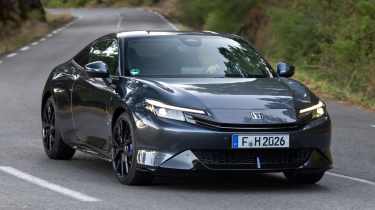
The much-missed Prelude name returned in 2025 after a 24-year hiatus, and while it’s still a svelte two-door coupé, it’s changed a bit underneath. The powertrain is the same as in the latest Civic hatch – a 181bhp hybrid four-cylinder – but matched to a CVT with artificial ratios. A day after the new Prelude’s dynamic debut at the Goodwood Festival of Speed, we headed to Thruxton Circuit to see how it fared – and it felt surprisingly natural. Borrowing some suspension trickery from the Type R without sacrificing ride comfort was a nice element, too.
XC60 facelift gives best-seller a boost
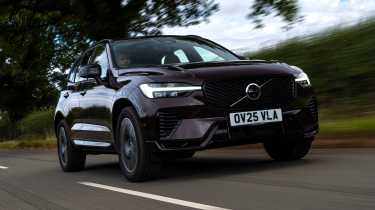
Greeting us in Sweden to celebrate the country’s ‘Midsommar’ event was the facelifted Volvo XC60. The mid-size SUV is not only the company’s most popular model currently, but having recently passed 2.7 million sales, it's now the best-selling Volvo in history – surpassing the iconic 240.
The XC60’s design hasn’t changed much, but that’s usually the case for Volvo’s understated family cars. We liked the new infotainment set-up, and in a world where most cars prioritise a sporty drive over comfort, the XC60’s refinement was a breath of fresh air.
August
Big changes inside for MK2 VW T-Roc
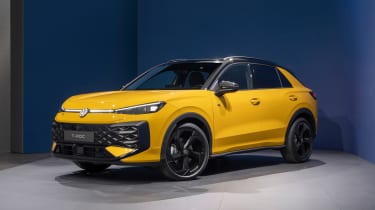
An integral part of Volkswagen’s line up, the T-Roc was given a thorough overhaul for its second generation in 2025. But when we went out to Munich, Germany, for a closer look earlier this year, it was evident VW had played it safe – the Mk2 T-Roc was a classic case of evolution rather than revolution.
While the exterior of the new T-Roc might have passers-by thinking not much has changed, the same can’t be said about the interior. There’s heavy influence from the latest Passat and Tiguan; on the dashboard you’ll find a 10.2-inch touchscreen or, on higher-trim versions, a 12.9-inch unit instead. We were pretty impressed with the new cabin of the T-Roc, both from our initial viewing in the studio and later when we drove it in November. The build quality is a big improvement over recent Volkswagens, too, with surfaces that feel properly screwed together and plenty of premium materials.
Volkswagen appears to have acknowledged its mistakes regarding haptic buttons, and although you still get a touch-sensitive slider for volume and climate control below the main screen, there are at least physical buttons on the steering wheel. A new element is the programmable centre-console knob for driving modes, volume and other features.
The newcomer sits on a revised MQB evo platform shared with the Golf and is powered by a selection of mild-hybrid four-cylinder engines that we’ve seen used in a few other VWs already.
There’s no plug-in hybrid version for now, but a full-hybrid is set to join the range in summer 2026. The T-Roc will be the first VW Group car to get this powertrain, which pairs a 1.5-litre four-cylinder petrol engine with a hybrid module. The e-motor is said to be powerful enough to enable pure-electric driving, and while there is no specific EV mode, the motor won't have a speed restriction.
Like every other T-Roc, power will be delivered to the front wheels exclusively via a seven-speed DSG automatic gearbox, and the full-hybrid will be offered with 134bhp or 167bhp power outputs. The T-Roc has a bunch of rivals, including the Toyota C-HR and MINI Countryman, but we reckon it’ll provide stiff competition in upcoming group tests.
Digital driving licences on the way

Physical driving licences have been around for 120 years, but the Government is looking to give us a supplementary digital version. The ‘digital driving licence’ will provide all the same information as the physical card, but virtually, so you can add it to your smartphone wallet.
While the Government hasn’t said when it’ll roll out the licences, we’ve been told to expect them very soon. As with any personal information in the digital sphere, the big question is security: biometric technology will allow access to the documentation with face recognition, fingerprint or password encryption.
McLaren plotting SUV rival to Aston’s DBX
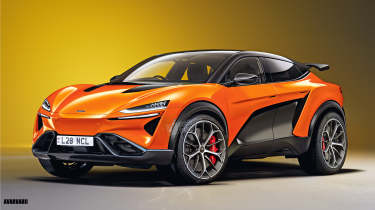
Despite an illustrious history, McLaren Automotive as we know it today only started in 2010. Since then it’s launched some truly wonderful supercars, but in a move to diversify, there’s now talk of a McLaren SUV to rival the Aston Martin DBX and Ferrari Purosangue.
While rumours died down after CYVN Holdings acquired the business in April, murmurs in August confirmed plans were in motion and that we could see the SUV as soon as 2027. It will be McLaren’s first electric vehicle, although new CEO Nick Collins told us the manufacturer isn’t looking to go full-EV just yet.
New Tucson on the way, but don’t expect a full EV yet
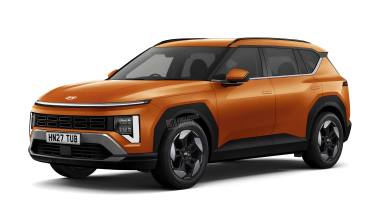
The Hyundai Tucson is a regular in the UK’s top 10 best-selling cars list, so any news about it is important – especially an all-new model. We were excited to learn of a new Tucson back in the summer, and doubly so when we found it testing on the road in Germany shortly after – albeit underneath rather elaborate camouflage.
Despite the secrecy of the car’s design, it’s sure to take some inspiration from the hydrogen-powered Nexo, plus the rugged Santa Fe. Hyundai’s chief exterior designer, Simon Loasby, told us: “Art of Steel is our next-generation design language that we launched last year, and you’ll see that on multiple new models.”
With that in mind, we created an exclusive render of the Mk4 Tucson. Our images showed an upright, traditional SUV profile paired with some eye-catching details, such as a clamshell bonnet and chunky wheelarch cladding.
Hyundai revealed its next-generation hybrid system in April, allowing us to deduce some key information about what might power the next Tucson. It’s all but certain the SUV won’t go fully electric just yet; a range of mild-hybrid and plug-in hybrid powertrains – similar to the ones used on the current model – are expected to be offered, along with a new line-up of full-hybrid engines.
Hyundai says the forthcoming 1.6-litre hybrid has two electric motors – one in the gearbox and another as a starter-generator – improving fuel efficiency by more than four per cent. The firm subsequently announced that it will add range-extender powertrains to its line-up in 2027, although whether this new technology eventually makes it to the Tucson remains to be seen.
We still haven’t seen inside the new SUV, but Hyundai has given us guidance on what to expect. Loasby told us there will be a welcome mix of digital and physical buttons.
Hot YU7 Performance piques our interest

There are lots of interesting cars coming out of China, but the Xiaomi YU7 Performance really stood out for us. The numbers – 749bhp, a 3.2-second 0-62mph time, 156mph top speed, 471 miles on a charge, and a lighting-quick 500kW charge rate – tell only part of the story. In China the YU7 starts from just 253,000 RMB (roughly £27,000). We’re certain Xiaomi could charge double that sum over here and it would still look like a bargain.
Temerario test leaves us thrilled
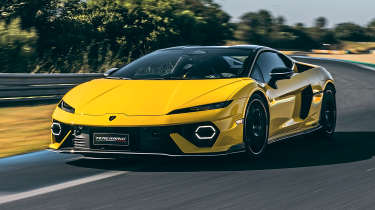
An all-new Lamborghini doesn’t come around often, so we snapped up the chance to drive the Temerario at Estoril circuit in Portugal in the summer. There were doubts about whether the new mid-engined supercar could live up to the excitement dished out by the old Huracán – switching its naturally aspirated V10 for a twin-turbo hybrid V8 – but we needn’t have worried. The ability to rev to 10,000rpm gave the Lambo a wonderfully crazy soundtrack.
September
Munich show Stars deck the halls with style
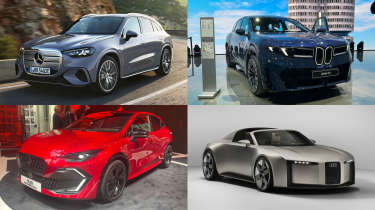
This year’s Munich Motor Show certainly didn’t disappoint. Indeed, it was difficult for us to know where to look at times. Audi brought along its stunning Concept C – a sleek two-door coupé widely reported as a successor to the iconic TT. The production version will herald the introduction of Audi’s new design language, with CEO Gernot Döllner insisting the company “won’t show studies anymore. Every concept we show will have a production design behind it”.
Elsewhere, Renault pulled the covers off its new Clio. Despite the Renault 5 grabbing all the headlines over the past year or so, a new Clio is always a huge moment in the automotive world; we’d spied the sixth-generation car testing a few times and knew a notable design change was on the cards – but the reality was something to behold. A fresh hybrid powertrain nabbed from the Captur should add further appeal. The interior looks more upmarket, too with inspiration from the Rafale and Austral SUVs.
Mercedes brought its new GLC to Munich as well. The GLC with EQ Technology marked a significant moment for Mercedes’ global best-seller, with pure-electric power for the first time. It sits on the new MB.EA platform, giving a 435-mile range and charging speeds of 330kW. As a replacement for the old EQC, the electric GLC looks like a strong competitor in the mid-size premium SUV class.
Not to be outdone, BMW’s iX3 was also in attendance. The first car on BMW’s Neue Klasse platform and the first to receive the new design language, the iX3 boasts a whopping 500 miles of range and can charge at up to 400kW.
Hyundai’s sporty-looking electric hatch, the Concept Three, pointed towards a rival for the Volkswagen ID. Polo in 2026, with funky touches like a pixelated grille, green-tinted windows and speakers at the back that are shaped like exhausts.
We also got a glimpse of the next Octavia’s design thanks to Skoda’s Vision O concept. Then there was the chunky Volkswagen ID. Cross Concept that previews a £25k small electric SUV next year, that may well line up alongside the long-awaited ID. Polo.
Ferrari brings back a name from the past with new Testarossa
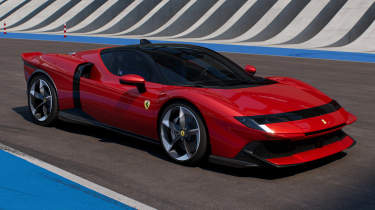
Now here’s one that rustled a few feathers back in September. As Lamborghini discovered when it brought back the Countach name on a rebodied Aventador not that long ago, you’re going to upset a few people when you relaunch an icon. Despite its new car putting out an extraordinary 1,035bhp, Ferrari found this out the hard way when it bestowed the legendary Testarossa name on its latest plug-in hybrid V8 supercar. We’re sure it’ll drive brilliantly, but does it have the same visual impact as the original eighties poster car? We’ll leave that up to you.
Manual loses favour as auto L-tests boom
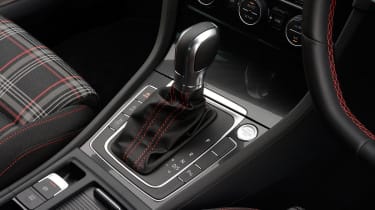
Models with manual gearboxes now account for just 19 per cent of new car sales, and it appears the shift to automatic begins with driving tests. One-in-four (25 per cent) driving tests are now done in an automatic car; a decade ago, that number was just seven per cent. With the future very much electric and all EVs featuring automatic gearboxes, the idea of learning how to drive a manual car doesn’t seem to be all that tempting for new drivers.
Subaru hints at full EV future
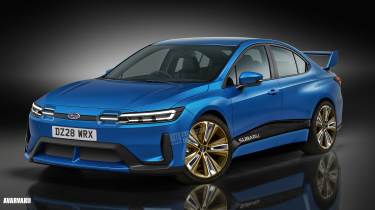
Alongside the incoming Solterra update and e-Outback, we got giddy at the thought of Subaru reinventing the old Impreza WRX a few months back. David Dell Stritto, Subaru’s general manager for Europe, told us: “EVs are coming and they’re making things we’ve been dreaming of possible again, so we’re seeing almost a rebirth of that sort of blue car with the yellow paint. It’s becoming possible again.”
That reference to blue and yellow was a nod to the iconic colour scheme of Subaru’s rally-honed Imprezas from the nineties. This was enough for us to create our exclusive image of what a four-door electric Subaru could look like in the coming years.
Subaru has been working in partnership with Toyota for its recent cars, like the all-electric bZ4X-based Solterra and upcoming Uncharted SUV, which will be a sister car to the big-selling C-HR. But the company is working hard to ensure its cars feel “more Subaru-y” and pointed to the 146 differences between the Solterra and bZ4X as evidence of its efforts. Yet for the Impreza-inspired halo car, we expect Subaru to go its own way.
Playing on the Impreza’s iconic four-wheel-drive capability that helped provide the base of three World Rally Championship victories, the all-electric model will almost certainly send power to both axles – likely from a dual-motor source. Subaru already has a twin-motor layout in the Solterra, producing up to 338bhp in its most potent form. Changes would be needed for the chassis and suspension though; even Subaru would admit the Solterra is no sports car.
ID. Tiguan suggests names will live on at VW
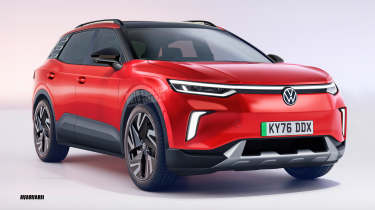
Volkswagen is keen for its iconic nameplates to live on into the electric era, and in 2026 we’ll see that come to fruition with the introduction of the ID. Polo supermini. The ID. Tiguan is another model to get a ‘proper’ name, essentially replacing the ID.4 in the process.
Volkswagen’s Head of Design, Andreas Mindt, told us in September: “In my opinion, you have to have names. This is what we want to chase; this human element on a Volkswagen.” An ID. Golf will come later, with plenty of pressure on VW’s most hallowed badge.
MG3 in Euro NCAP seat rail shocker
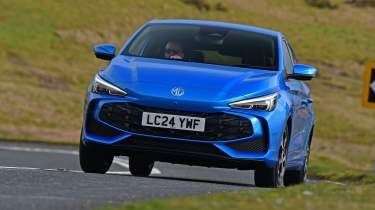
The MG3 is a great supermini, offering space, performance and efficiency for under £20,000. But Euro NCAP couldn’t care less about all that; in September, the safety-testing organisation found an unprecedented fault with the MG3. In a controlled collision, the driver’s seat latch failed, leading to “poor” leg protection and only “adequate” head protection. While the star rating gives us a good indication of a car’s overall safety, it’s always worth checking the finer details of NCAP’s safety-test scores.
BYD expands into hybrid market with Seal 6 executive estate
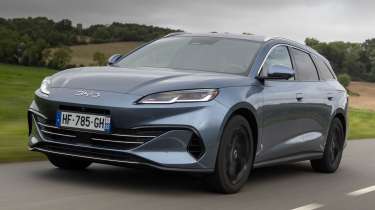
BYD may be building a strong foothold in the electric-car market, but the new Seal 6 DM-i showed us the Chinese giant is ready to compete in the plug-in hybrid executive segment too. The car is also available as a saloon, but the ‘Touring’ estate we drove was a handsome thing with the numbers to back up its good looks. A 19kWh battery allowed up to 62 miles of electric range, while the estimated price of £37,000 seemed pretty keen. We concluded that the estate struck a reasonable balance between comfort and handling, too.
Revised Toyota Aygo X gets new hybrid power
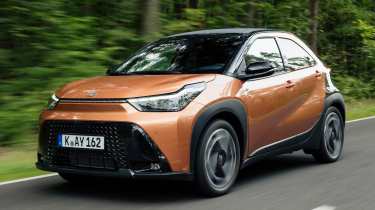
The petrol-powered city-car sector is struggling for fresh blood these days, so we were keen to try out the new Toyota Aygo X when it arrived earlier this year. It was heavily facelifted with a new hybrid engine, and the numbers looked promising. With a significant bump in power to 115bhp, a 9.2-second 0-62mph time (rapid compared with the old car) and efficiency of 76.3mpg, it looked like Toyota was onto a winner. Familiar issues regarding rear space and a basic cabin layout were still obvious, but we thought Toyota’s new hybrid powertrain suited the little Aygo brilliantly.
October
Dacia Hipster causes a stir
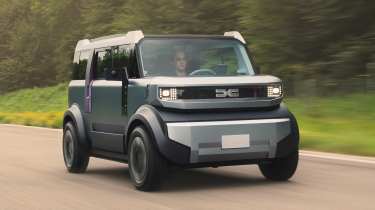
Sometimes, a concept car can make waves not because of its crazy design or futuristic interior, but because of what it represents. The Dacia Hipster that we revealed in October is one such a car, given that it previewed to the firm’s customers – and competition – how it plans to build a low-cost EV with the potential of mobilising millions of people across the world.
The Hipster was designed to elicit conversation about everything from regulation within the European Union, to the social impact a £13,000 EV would have on European car buyers. One of the main topics it tackled surrounded a new regulation that’s currently being negotiated between the EU and European car manufacturers, with the aim of making cars cheaper to buy and build.
Sitting underneath the current Spring in Dacia’s range, the Hipster would be designed to be low-cost – but not ‘cheap’ – from the outset. But, as we found out, the final form is still open to interpretation: “We’re going to dig into whether this becomes a production vehicle or whether it turns into another type of vehicle”, Frank Marlotte, Dacia’s marketing boss told us back in October. This openness to the regulations was a very timely response to the ongoing conversation around this class of car, and it’s one Dacia was first to approach.
The Hipster would plug the gap between cars like the Citroen Ami and Fiat Topolino, which are considered ‘quadricycles’, and traditional electric superminis. It’s a segment that’s taking inspiration from the Japanese ‘Kei car’, which is designed to do the same thing: allow car manufacturers to create cars that are cheap to build and buy.
Yet, being a Dacia, clever, cost-effective design is also part of the deal, and in this respect the Hipster has a rugged and upright form to the benefit of packaging and cost. Speaking with Dacia’s executives at the time, we discovered this car was designed in the most cost-effective way possible, with clever innovations like rear lights built into the luggage compartment, and as few expensive painted metal panels as possible.
There’s practical innovation too: the interior is designed to be useful above all else, either with seats for four people, or folding them away for a large van-like load area. Dacia has long been known to do these sorts of things well – it’s just as innovative as any new supercar or luxury saloon.
What’s just around the corner for SEAT?
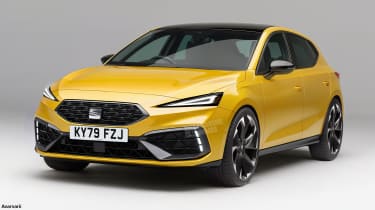
One of the big question marks around the Volkswagen Group this year was what to do with SEAT – the previously popular Spanish brand that, in the shadow of sporty sister Cupra, has struggled to keep its head above water. We finally got our answers in October, when the maker announced it would soon be back firing on all cylinders with a brand-new hybrid-powered Leon in 2029. Rather than being VW’s value option, SEAT will lean right back into its Spanish heritage, leaving plenty of space for Cupra to flourish as the Group’s fashionable tech leader.
JLR cyber attack halts production for weeks
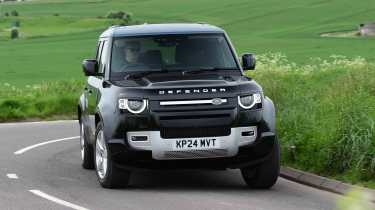
A story that stole headlines across the media was the huge cyber attack that temporarily brought Jaguar Land Rover to its knees. It halted JLR production for around five weeks, costing the company an estimated 24 per cent drop in revenue over the third quarter this year. We reported that the event cost the British economy somewhere between £1.6 and £2.1bn when taking all the supply chains into account – affecting the livelihoods of more than 100,000 people.
Honda Super-N steals the show in Tokyo
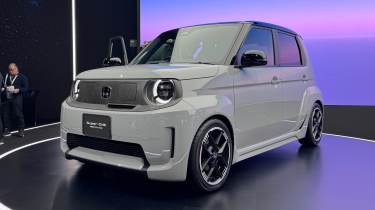
Honda’s electric future looks bright if it can bring its dinky Super-N to market at a competitive price. The tiny, yet charismatic EV stole our hearts when the covers came off at this year’s Tokyo Mobility Show, something exaggerated by the engaging handling we found when we had a go in a prototype at the firm’s HQ in Japan. With cute looks and a fabulous barrel-chested virtual engine and gearshift, its appeal seemed to lie in the fact that unlike many rivals, it just doesn’t take itself too seriously.
On the road in Kia’s first van – the PV5
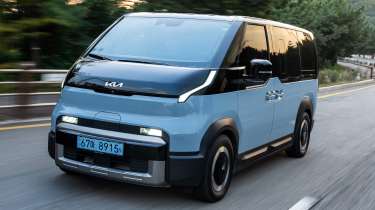
One of the most surprising new cars of 2025 was the Kia PV5, a cargo van and MPV that looks and drives like it’s from the future. In passenger format, it impressed us with a car-like driving experience and impressive efficiency for such a big vehicle. Its huge cabin and funky Star Wars-like design turned plenty of heads, but the biggest boon was its price: £20k less than a Volkswagen ID. Buzz. Our test in Kia’s home market of South Korea confirmed the brand had built yet another EV smash hit.
Volvo moves upmarket with luxury new ES90
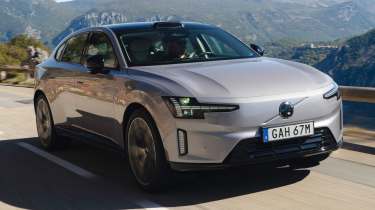
The Volvo estate might be dead, but what about a luxury, high-end saloon? Volvo has run that gauntlet with its new ES90, a large and luxurious four-door liftback based on the same underpinnings as the EX90 SUV and Polestar 3. On roads around Monaco, we found Volvo’s move into the luxury space to be well founded, with a comfortable ride and high-quality interior. However, the ES90 was far from perfect, with limited rear-seat space and some bug-ridden technology common to other Volvo EVs.
Citroen C5 Aircross proves worth the wait
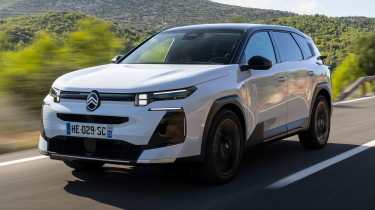
Citroen promised lots with its aggressively priced C5 Aircross, but how did it stack up when we took the wheel? Very well, in fact; this large, versatile and comfortable SUV proved to be a hugely talented all-rounder when we drove it on the international launch in Mallorca. We found interior space and comfort to be highlights, but it was the sharp tech and electric powertrains that backed up an already impressive package. And with the UK Government’s electric-car grant applied, it’s since been crowned an absolute bargain, undercutting rivals by thousands of pounds.
November
Twingo keeps Renault on a retro roll
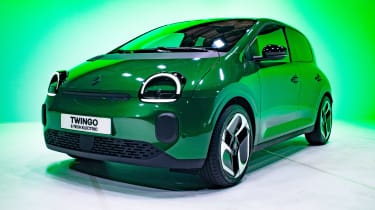
Renault’s been playing a blinder with its retro-inspired small cars over the past 12 months. First, to much fanfare, came the supremely talented Renault 5, with the more practical but just as loveable R4 arriving towards the middle of this year. But nothing could prepare us for the fabulously striking, yet incredibly relevant new Twingo.
That relevancy is important, because at first glance we questioned its place alongside the R5 and R4: why did Renault need another battery-electric small car? But a quick look at the ‘just-right’ tech specs and it all made sense. A smaller battery and motor, dinkier dimensions and a proposed £17k starting price? This was the car to truly democratise electro mobility.
Using the same AmpR platform as its EV relatives, Renault claimed the Twingo’s 27.5kWh battery was good for just 163 miles of range. But with a front motor producing just 80bhp and a 12.1-second 0-62mph time, it was clear from the outset that this car put urban suitability ahead of all else.
True to form, Renault made very few changes taking the Twingo from concept to reality. Design chief Laurens van den Acker told us he wanted to make the car recognisable without being a “copy and paste”. He certainly did that: the half-moon daytime running lights, short front and rear overhangs, and even the three-slot air vent on the bonnet made it to production. Unlike the original, the new Twingo gets a family-friendly five-door body, but otherwise this looked like the ultimate retro remake.
Of course, Renault had given the city car a modern makeover inside, with a 10-inch central touchscreen running its OpenR Link infotainment. When the car is launched, that’ll mean access to Google-native apps, plus ChatGPT functionality and Renault’s new virtual assistant, catchily named Reno.
While the production car was obviously built to a price with lots of hard black plastic dotted around the cabin, splashes of colour gave it a modern look. There was just enough space in the back for six-foot-tall adults to squeeze in for short journeys, too. It will be a little while yet before we get a chance to drive the new Renault Twingo, but we cannot wait to get behind the wheel.
Mazda Vision X-Compact wows Tokyo
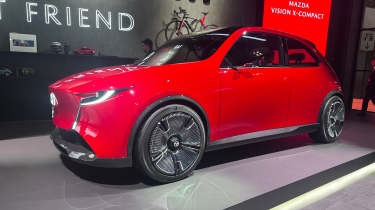
Mazda blew us all away at the Japan Mobility Show with its Vision X-Compact – a statement of intent that hinted at a future supermini rival for cars like the Volkswagen Polo and Peugeot 208. But the Mazda wasn’t another soulless EV, it’s a petrol and hybrid small car for 2027.
The X-Compact previewed a new design language that built on the foundations laid by the current Mazda 3. A bold front with sharp daytime running lights was only the start; the unique wheels, neat proportions and sloping, almost snail-like roofline gave us a hint at the forthcoming hatch. Swap out the wafer-thin door mirrors for something more substantial, and you’d be looking at the next Mazda 2.
Inside was a dramatic departure from Mazda’s current cabin design, with the dark trim swapped out for flashes of colour. The back-to-basics digital interface featured a simple instrument cluster, plus a second, smartphone-like display next to it. It’s not yet clear how this will translate into the production car, or whether it was simply for show.
Another thing we’ll need to wait a bit longer to learn more about is the rev counter, shift paddles and physical gear lever on the centre console. These all hint towards a combustion engine hiding under the bonnet, but as yet, no powertrain information has been revealed.
We know that making money on small cars is harder than ever, but Mazda could be onto a winner. “If it makes production and arrives in Europe with petrol power, many buyers will be glad of the extra choice,” our editor-at-large Phil McNamara said at the time.
Not wanting to be branded boring, Mazda also unveiled the Vision X-Coupe in Tokyo – a jacked-up two-door with a rotary plug-in hybrid powertrain and looks to die for. It’s still in its development stages, but Mazda claimed clever tech and sustainable fuels could make the X-Coupe a carbon-negative car.
Exclusive proves next Juke’s set to stand out
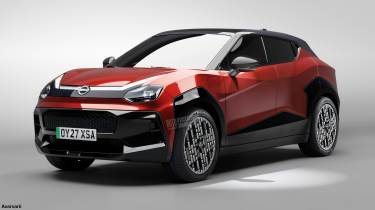
The Nissan Juke has never been the shy or retiring type, and our exclusive scoop story last month revealed the next-generation model will continue to do anything but blend into the background.
Based on brand-new spy pictures and a previously issued teaser image, we drew up a pair of renders showing how the EV-only third-generation Juke might look. It’ll be built in Sunderland from next year alongside the new Leaf and next Qashqai, with its sights set firmly on the Ford Puma Gen-E and Renault 4.
Latest Cayenne tops 911 Turbo S for power
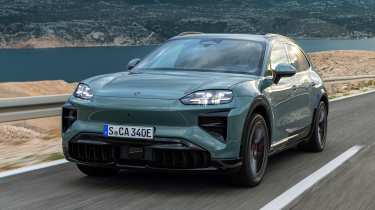
The Porsche Cayenne has always been “the 911 of SUVs” – ever since the original landed in the early noughties. But the new one laid claim to some pretty crazy stats when the covers came off in November.
The flagship version gets 1,139bhp, and can do 0-62mph in 2.5 seconds – making this more powerful than the latest 911 Turbo S, and every bit as fast in a straight line. Throw in some trick curved-screen tech inside, and some might argue this new super-SUV is worth every last penny of its £130k starting price.
Mitsubishi gearing up for return to UK
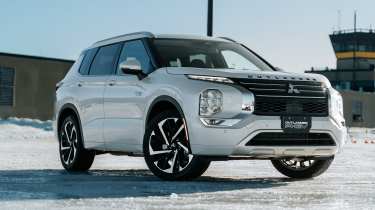
We thought we’d seen the last of Mitsubishi in the UK, but in November news came that the maker was returning, and we could see cars back in dealers as soon as next summer. With a range in Europe now spanning a series of rebadged Renaults, it’s likely the brand will relaunch with a selection of mainstream hybrid and electric cars. Whether it stands a chance against cheap Chinese brands remains to be seen, but maybe Mitsubishi will change tack and bring back the 4x4s and pick-ups it’s famed for.
Exclusive first test of RAV4 PHEV
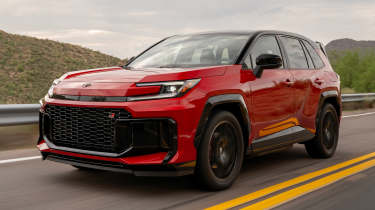
Here at Auto Express, we aim to bring you the very latest news and reviews week in, week out – and our drive of the new Toyota RAV4 is evidence of that. We bent over backwards to ensure we were among the very first media to try the new plug-in hybrid family car, bringing you an exclusive first test of the evergreen SUV.
Our verdict was simple: we liked the infotainment and powertrain upgrades, but there was no avoiding the fact that Toyota could have gone further to move the needle in this hotly contested segment.
Blown away by Hyundai Ioniq 6 N
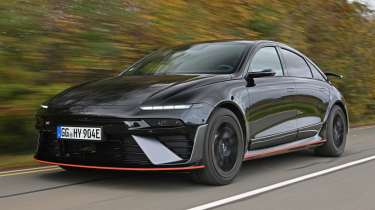
We fell in love with the Hyundai Ioniq 5 N when we drove it two full years ago, so hopes were very high indeed for its sleeker sibling, the Ioniq 6 N, when we took the wheel last month.
Our first chance to try the fiery facelifted saloon was on UK roads, and we were blown away by its incredible balance; somehow, the masters at N had managed to make a car that offers sharp handling and a comfortable ride. Subtly tweaked software made it even more engaging than its hatchback counterpart, too.
Alpine A390 is full of contrast
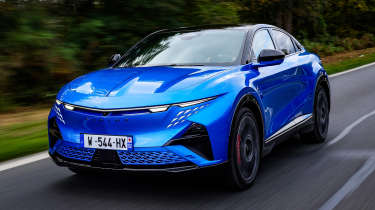
The Alpine A390 is the only tri-motor SUV this side of £100k, so we were eager to drive the new fastback. In many ways, it didn’t disappoint, offering engaging performance, exhilarating handling, and more than holding its own in bends.
Yet in areas such as range and charging, plus infotainment lifted from a Renault Scenic, it felt like it was lacking. But we’re still looking forward to trying it again on UK roads in 2026.
MGS6 impresses and is less taxing now, too
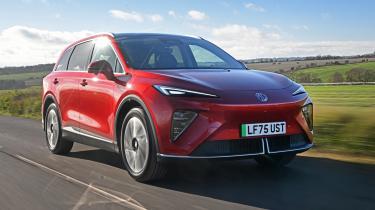
The MGS6 was the first of two MGs revealed accidentally via Euro NCAP this year. Not deterred, the manufacturer pushed its new electric SUV to market in double quick-time, and within weeks we were driving the Volkswagen ID.4 rival on UK roads.
We were impressed with the MGS6’s space and standard kit, and it drove pretty well, too. Our one major complaint was that the Trophy Long Range failed to fall below the £40k threshold for ‘luxury car’ VED; that figure has since risen to £50k, making a massive difference to the car’s appeal.
Did you know you can sell your car through Auto Express? We’ll help you get a great price and find a great deal on a new car, too.